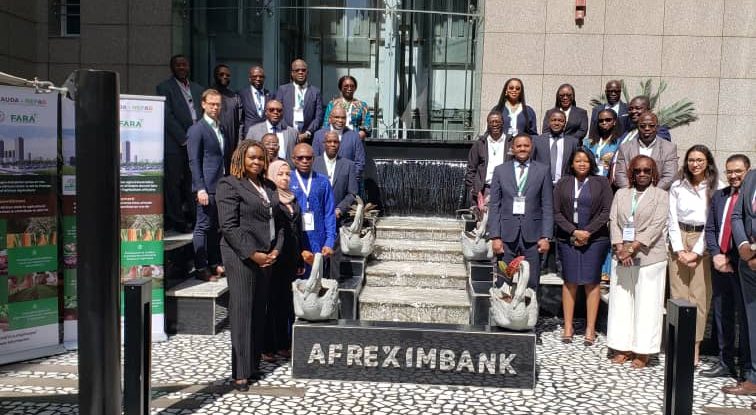
The AFREXIMBANK Headquarters played host to a significant technical engagement on March 15th and 16th, 2024. The event brought together key stakeholders from the Common African Agro-Parks (CAAPs), with a particular focus on representatives from the Zambia-Zimbabwe CAAP (ZimZam CAAP) and the Cote d’Ivoire-Ghana Cocoa CAAP (CIG CAAP).
Chaired by Dr. Janet Edeme, Head of Department at the African Union Commission (AUC), and Mr. Zitto Alfayo, Head of Project Preparation Unit at AFREXIMBANK, the meeting focused on the readiness of CAAPs projects for funding through AFREXIMBANK.
The meeting commenced with a series of key messages outlining the significance of CAAPs in advancing agro-industrial development across Africa. AFREXIMBANK reaffirmed its commitment to collaborate with AUC and CAAPs stakeholders to mobilize $20.8 million for the implementation of the 7 CAAPs Programme Clusters, with a particular focus on kickstarting ZimZam and CIG CAAPs initiatives.
Updates and prospects regarding CAAPs were presented, highlighting its alignment with Agenda 2063 aspirations and the endorsement of CAAPs as a flagship program. Challenges in securing stable financial resources for CAAPs coordination activities were acknowledged, prompting discussions on leadership commitments and the establishment of a CAAPs Fund at AFREXIMBANK.
The meeting also addressed funding modalities through the Project Preparation Facility (APPF) and the proposed Joint Project Preparation Facility (JPPF), emphasizing the need for tailored approaches to accommodate the unique requirements of CAAPs projects.
Updates on ZimZam CAAP and CIG CAAP showcased progress in project preparation, with discussions focused on finalizing feasibility studies and securing necessary approvals. Action plans were outlined to expedite project readiness and engage relevant stakeholders.
Dr. Janet Edeme expressed optimism about the outcomes of the meeting, stating, “This engagement marks a crucial step forward in realizing the potential of CAAPs projects to drive sustainable development and intra-African trade. The collaboration between AFREXIMBANK, AUC, FARA and other stakeholders underscores our collective commitment to transforming the agricultural landscape in Africa.”
Looking ahead, the CAAPs Secretariat at FARA will continue to work closely with AFREXIMBANK and other partners to ensure the timely implementation of CAAPs projects, further advancing the continent’s agro-industrialization agenda.
This request for expression of interest (REOI) follows the General Procurement Notice for this Project that appeared on the African Development Bank Group’s Internet Website (www.afdb.org) 1st August 2022.
The International Institute of Tropical Agriculture (IITA) has received financing from the African Development Bank toward the cost of the Technical Assistance for Agricultural Transformation in Countries in Transition (TSF III) and intends to apply part of the agreed amount for this grant to payments under the contract for the Individual Consultants for the Development and Packaging of Gender-Sensitive Info-Packs and Audio-Visual Materials. IITA signed a sub-agreement with Forum for Agricultural Research in Africa (FARA) as implementing partner for CDTO Compact.
The assignment is to engage an individual consultant for the Development and Packaging of Gender-Sensitive Info-Packs and Audio-Visual Materials. The objective of this assignment is to provide content to support outreach and extension service delivery by undertaking the development and packaging of gender-sensitive info-packs and audio-visual materials for at least one selected proven climate-smart agricultural production technologies along targeted commodity value chains to enhance agricultural productivity in target countries of DRC, Burkina Faso, Mali, Togo, Guinea Bissau and South Sudan, and for the larger online stakeholders across Africa. The selected consultant will: Identify and map the target audience (including IPs) for each technology in DRC, Burkina Faso, Mali, Togo, Guinea Bissau and South Sudan in line with the appropriate package for each commodity; Identify and map out dissemination channels to be used to ensure that the technology reaches the target audience; develop and package (infopack and audiovisual) the technology package based on the needs and preferences of the target audience; facilitate a webinar session with each Compact stakeholder and selected users to validate packages, participate and disseminate packages at a side event in an African extension conference.
The duration of the assignment is 15-man days and would commence in April 2024. Selected consultant will report to the CDTO Compact Coordinator.
The selected consultant should possess at least a bachelor’s degree in agriculture, agricultural communications, agribusiness, agricultural extension, knowledge management or a related field is highly beneficial – specialized degrees in technology, engineering, or business can also be valuable; Expertise in agricultural technologies, knowledge management of agricultural development, such as precision farming, automation systems, etc. Knowledge of the latest trends and innovations in the agricultural sector, including sustainable and climate-smart technologies; Prior experience working in the agriculture industry, including working on farms, with agricultural technology companies, extension service delivery or in research and development related to agriculture; Knowledge of the TAAT programme is an added advantage; Familiarity with product development processes, from ideation to prototyping, testing, and final packaging; understanding of market research and consumer needs to create viable and marketable agricultural technologies; Proficiency in business planning, financial analysis, and budgeting. Ability to create a comprehensive business strategy for launching and marketing agricultural technologies. Knowledge of supply chain management and distribution channels for agricultural products; Strong verbal and written communication skills to effectively convey technical information to clients, investors, and stakeholders; Ability to develop clear and concise product documentation and user manuals; Capacity to identify agricultural challenges and develop innovative solutions using technology; Analytical skills to assess the feasibility and viability of agricultural technology projects; An entrepreneurial mindset is valuable for managing projects, clients, and resources effectively; Building a network within the agricultural and technology sectors can provide valuable opportunities for collaborations and project partnerships. The ideal candidate should possess fluency in either English or French, with a working knowledge of the other language.
FARA now invites eligible individual consultants to indicate their interest in providing these services. Interested consultants must provide information indicating that they are qualified to perform the services (including their detailed CV, workplan and financial proposal).
INTERNATIONAL INSTITUTE OF TROPICAL AGRICULTURE (IITA)
TECHNICAL ASSISTANCE FOR AGRICULTURAL TRANSFORMATION IN COUNTRIES IN TRANSITION (TSF III)
CAPACITY DEVELOPMENT TECHNOLOGY OUTREACH (CDTO) COMPACT
FORUM FOR AGRICULTURAL RESEARCH IN AFRICA (FARA)
REQUEST FOR EXPRESSIONS OF INTEREST
INDIVIDUAL CONSULTANT SERVICES
SECTOR: Agriculture
CONSULTANCY SERVICES: Individual Consultant to develop web-based tools and protocols for accreditation of agro-input dealers on maize, wheat, rice and cassava, and aquaculture.
This request for expression of interest (REOI) follows the General Procurement Notice for this Project that appeared on the African Development Bank Group’s Internet Website (www.afdb.org) 1st August 2022.
The International Institute of Tropical Agriculture (IITA) has received financing from the African Development Bank toward the cost of the Technical Assistance for Agricultural Transformation in Countries in Transition (TSF III) and intends to apply part of the agreed amount for this grant to payments under the contract for the Individual Consultants to develop web-based tools and protocols for accreditation of agro-input dealers on maize, wheat, rice and cassava, and aquaculture. IITA signed a sub-agreement with Forum for Agricultural Research in Africa (FARA) as implementing partner for CDTO Compact.
The assignment is to engage an individual consultant to undertake the development of web-based tools and protocols for accreditation of agro-input dealers on maize, wheat, rice and cassava, and aquaculture, to enhance agricultural productivity in target countries of DRC, Burkina Faso, Mali, Togo, Guinea Bissau and South Sudan, and for the larger online stakeholders across Africa. These and protocols should be linked and compatible with the Farmer Registration database and interoperable with FARADataInformS. The consultant is to: develop the mock-up, information architecture and detailed plan to execute the task; work with the TST Compacts and partners to develop the database based on the mock-up; organize a workshop for accreditation of database; and develop database user guide, migration and submission of final.
The duration of the assignment is 10-man days and would commence in April 2024. Selected consultant will report to the CDTO Compact Coordinator.
The selected consultant should possess a minimum of a university diploma in IT, web development, Knowledge Management, agricultural information management and/or relevant advanced degree in Agriculture and relevant related fields; Strong proficiency in designing and developing databases, particularly relational databases like MySQL, PostgreSQL, or Microsoft SQL Server; Knowledge of database design principles, normalization, indexing, and data integrity; Proficiency in relevant programming languages such as Python, Java, or C# for creating the backend logic and APIs; Experience with web development frameworks like Django, Flask, or Spring Boot to build the application’s backend; Familiarity with data security best practices, encryption methods, and techniques to ensure the protection of sensitive farmer information; Understanding of data privacy regulations and compliance requirements, such as GDPR or HIPAA; Ability to design an intuitive and user-friendly interface for farmer registration and data management; Knowledge of front-end technologies such as HTML, CSS, JavaScript, and relevant frameworks like React or Angular; Experience with data import/export processes and integration with external systems, if necessary; Understanding of data transformation, data cleansing, and data validation techniques; Knowledge of geospatial databases (e.g., PostGIS) and geospatial libraries (e.g., Leaflet, Mapbox) could be valuable; Strong project management skills to ensure the development process is well-organized, milestones are met, and the project stays on track; Effective communication skills to understand the requirements of stakeholders, gather feedback, and explain technical concepts to non-technical team members; Familiarity with agriculture and farming processes to better understand the specific needs and functionalities required in the farmer registration database; Ability to identify potential challenges, propose solutions, and think creatively to address unique requirements; Ability to provide references or examples of previous projects that demonstrate the consultant’s ability to develop similar databases or applications; S/he must possess fluency in either English or French, with a working knowledge of the other language.
FARA now invites eligible individual consultants to indicate their interest in providing these services. Interested consultants must provide information indicating that they are qualified to perform the services (including their detailed CV, proposed workplan and financial proposal).
Recruitment of an External Audit firm to audit FARA Secretariat for the financial years 2024-2026
Procurement Ref:
FARA/EXT-AUDIT/CS/LCS/2024/01
Issue Date:
Friday, March 15, 2024
Submission Deadline:
Friday, March 29, 2024
Established in 2002 by Sub-regional Agricultural Research Organizations, the Forum for Agricultural Research in Africa (FARA) serves as the African Union Commission’s technical agency for agricultural research and development. It implements CAADP Pillar IV and the Science Agenda for Africa Agriculture (S3A), collaborating with organizations like ASARECA, CCARDESA, CORAF, and AFAAS. FARA advocates for Science, Technology, and Innovation (STI) application in agriculture, facilitates knowledge exchange, and fosters partnerships. Independent audits ensure fund accountability. FARA seeks an Auditing Firm to audit implementation program accounts, promoting transparency and responsible financial management.
This request for expression of interest aims at engaging a consultant to carry out the following functions:
Funds are diligently utilized according to specified conditions and agreements, ensuring economic efficiency. Counterpart funds are used as stipulated, and procurement follows guidelines. Thorough documentation is maintained, establishing clear links between records and financial reports. Designated Accounts adhere to relevant conditions. Financial statements reflect accepted accounting principles, providing a true representation of the institution’s financial position. A review assesses compliance with financial covenants and release conditions for tranches.
The Executive Director of FARA invites interested consultants to express interest in carrying out this assignment.
Consultants interested in the call must submit a concise Expression of Interest (10 pages max) detailing firm information, references, experience, knowledge evidence, and a proposed timeline.
The consultant shall be selected in accordance with the “Least-Cost Selection” method set out in the procedures defined in the Procurement Guidelines of FARA.
Please download the Terms of Reference in the link below, for further information on this opportunity.
Expressions of Interest should be submitted electronically to [[email protected]] and addressed to Dr. Aggrey Agumya, Executive Director of FARA, No 7 Flower Avenue, New Achimota, Mile 7, Accra, Ghana, no later than Friday, March 29, 2024, at 16h00 GMT. Tel: +233 302 772823/744888.
The RMRN Project is funded by the European Union (EU) as part of its Regional Multi-year Indicative Programme (MIP) for Africa. The MIP will support strengthening the consortia of Africa based institutions to lead interventions in Africa in several domains including multi-stakeholder partnerships to bring agroecological innovations to scale, using co-learning, co-creation, and multi-stakeholder approach. The Africa-based and Africa-led research organisations include FARA, CORAF, ASARECA, CCARDESA, universities under the RUFORUM Network and Africa in general and other research institutions. The proposed actions will promote partnership with relevant institutions such as Farmer organizations under the Pan African Farmers Organization (PAFO), extension institutions under the African Forum for Agricultural Advisory services (AFAAS), NGOs, CSOs, the private sector, and financial institutions. The project targets countries in Eastern, Western, Southern and Central Africa. The initiative fits within the EU’s alignment to the 2030 Agenda on Sustainable Development Goals, the Paris Agreement and the Convention on Biological Diversity to help eradicate poverty, reduce inequalities, and achieve sustainable development. The proposed action is also highly relevant to the AU-EU partnership on agriculture and food systems development priorities.
Group photo of Partner representatives and participating organizations
Agroecology has been suggested as a promising concept for reconciling agricultural production and environmental sustainability by optimizing ecological processes that deliver ecosystem services (ES) to replace external inputs. Agroecology, defined as the application of ecological concepts and principals in farming is one of the holistic approaches that has been identified to enable understanding agriculture within the context of various interacting economic, environmental, and social systems and contribute to food security and improved livelihood among the rural communities. The transition towards agroecological food systems and the development of both productive and resilient farming systems and value chains are complex processes and requires new knowledge, competencies, and policies to address complex problems, co-create solution based on agroecological principles and integrate scientific and local knowledge.
Dr. Aggrey Agumya, Executive Director (FARA) addressing partners and participants during Day 1 of the RMRN Inception Meetings and Field visits to NaCORI and RUFORUM
All institutions in the project pledged commitment and synergies to ensure that the initiative contributes to a sustainable food system for Africa.On their part, Prof. Patrick Okori, Executive Secretary of RUFORUM and Dr. Aggrey Agumya, both leaders of the continental implementing institutions emphasized how this initiative will further strengthening and existing collaborationand synergies among the Africa Agricultural Research, Education, and Innovations Institutions (AAREII). On behalf of the African Union Commission, Mr. Ibrahim Gariba, a Senior Communications Specialist representing the AUC, pledged the full commitment of the Commission to the realization of the project’s objectives.
Dr. Aggrey Agumya, Executive Director (FARA) shaking hand with Prof. Patrick Okori following the project MoU signing.
To officially launch the Project, theMinister of State for Animal Industryof the Republic of Uganda, Hon. Bright KanyontoreRwamirama,stated that, “we are no longer talking about production but productivity due to the challenges faced by increased population. Science is the way to go and where renowned scientists are gathered like this, it is an opportunity to think differently and do things differently to achieve and sustain Africa’s prosperity.”Also present at the inception meeting were the Executive Directors and/or representatives of AFAAS, CCARDESA, CORAF, ASARECA, PAFO/EAFF, NARO and delegation from the EU including EC-JRC, EC-INTPA and the EC-Delegation to Uganda.
Hon. Bright Kanyontore Rwamirama, Minister of State for Animal Industry of the Republic of Uganda
As outlined by the Coordinator of the Project, Dr. Kwaku Antwi, the project has three main objectives :
Strengthened scientific and technological capacities of RMRNs in Agroecology to produce, collect, access, process, share data / information and carry out research activities using a gender-sensitive approach.
Increased RMRNs contribution in agroecology through transformative quality research and scientific knowledge generation and dissemination.
Enhanced gender-sensitive support to agroecology practitioners, scientists, and policymakers.
Dr. Kwaku Antwi addressing the congregation of partners and participants
At the end of the three years of the project, technical capacities and skill of researchers and scientists would have been built to carry out scientific studies in agroecology; improved infrastructural access by the RMRNs to carry out quality research and studies in Agroecology; available and accessible quality agroecology knowledge products and information; platform for knowledge exchange and information sharing/exchange would have been established; improved research-policy linkage; strengthened collaboration between the RMRNs and the Pan-African Network for economic Analysis of Policies (PANAP), and increased Advocacy for agroecology principles and practices; he concluded.
By Dr. Abdularazak Ibrahim & Mrs. Bridget Kakuwa-Kasongamulilo
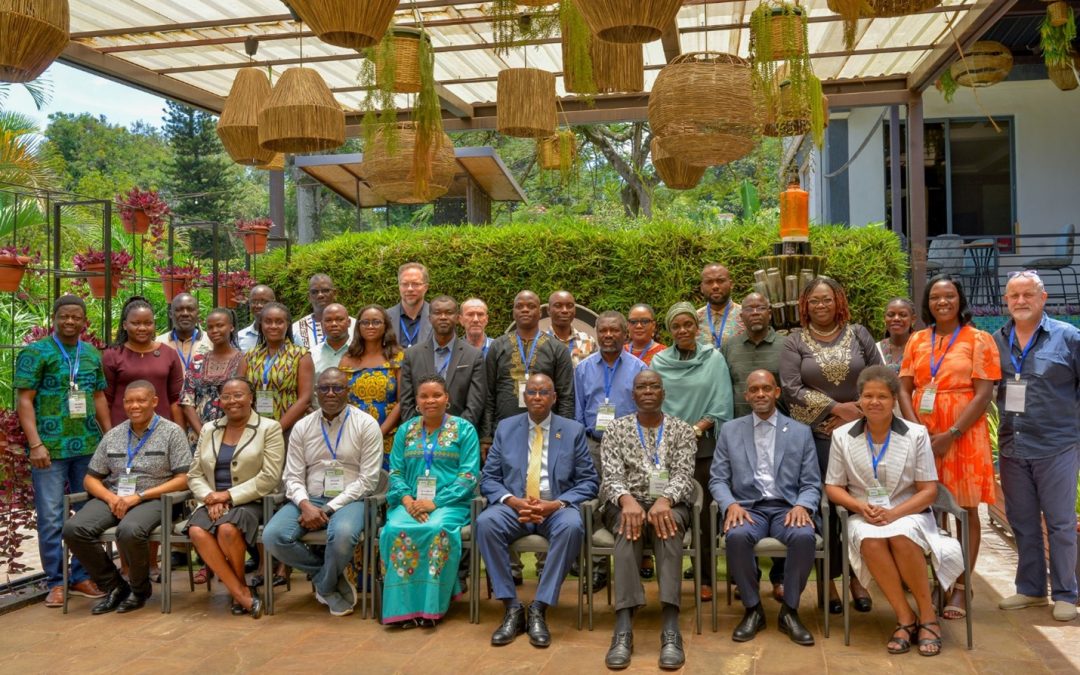
In Lusaka, forty-seven (47) stakeholders, including policymakers, scientists, farmer groups, youth, and women groups, gathered for a three-day workshop on Regional Foresight for Food Systems Training Workshop. Representatives across the region exchanged ideas, hopes, and dreams for a sustainable and resilient food future in the Southern African Development Community (SADC) region.
Following a series of presentations on the fundamentals of foresight and the food systems framework, the workshop discussed innovative solutions to transform the existing food systems. Armed with tools such as causal loops, trend analysis, and scenario mapping, the participants engaged in deep discussions to uncover the region’s untapped potential.
Drawing insights from the Food and Agricultural Organization’s (FAO) series. The Future of Food and Agriculture—Drivers and Triggers for Transformation and its associated dashboard, stakeholders reviewed domains relevant to the SADC region.
In the heart of these foresight discussions emerged a revelation: millet and sorghum, ancient grains often overlooked, held the key to a resilient and thriving food system. Through rigorous analysis and collaborative brainstorming, the participants envisioned a future where these hardy grains took center stage, outshining maize in their ability to withstand climate challenges, conserve water, and offer enhanced nutritional benefits.
Ms Lilly Singano, owner of Lilly Meals, a Sorghum and Millet Processing and Packaging company, was excited with the workshop direction. She said, “Both sorghum and millet are not just substitutes for maize but are superior in many ways, offering higher nutritional values, with millet being rich in fiber and essential minerals like magnesium, phosphorus, and manganese.”
In supporting the discussion, Dr. Noah Mwanza from the Climate Change Association of Zambia (CCA)said, “Sorghum and millet are remarkable for their drought tolerance, making them ideal crops for ensuring food security in arid and semi-arid regions where maize cannot thrive.”
The foresight-driven dialogue unveiled a tapestry of possibilities as participants identified key drivers, enablers, frictions, and turners that would pave the way for millet and sorghum’s transformative journey. Mr Dalisto Mbewe, the CAADP Representative from Zambia, added that “Given their adaptability to poor soils and low water requirements, sorghum and millet represent sustainable alternatives to maize cultivation, reducing the need for irrigation and input-intensive farming practices.”
Causal loops painted intricate connections between climate resilience, biodiversity conservation, and the flourishing of these resilient grains. Trend analysis highlighted the rising global demand for healthier, sustainable food options, positioning millet and sorghum as the answer to the changing culinary landscape. “The versatility of sorghum and millet, from traditional dishes to gluten-free options, highlights their potential in modern diets and as a solution to the challenges of climate change and food security.”, emphasized Dr. Matita, a lecturer at the Lilongwe University of Natural Resources in Malawi.
Through scenario mapping, the participants envisioned a future where millet and sorghum became the flag bearers of Southern Africa’s food revolution, contributing to food security, economic empowerment, and cultural preservation. This collective foresight illuminated a path where these ancient grains could break free from the shackles of neglect and shine as the heroes of a sustainable food future. Mr. Nelson Mavuso, Director of Extension in Eswatini, stressed that “Incorporating sorghum and millet into diets can diversify our food sources and help combat micronutrient deficiencies, as these grains are packed with vital nutrients often lacking in maize.”
As the workshop concluded, the participants left with a newfound passion for millet and sorghum, armed with a shared vision and a roadmap for implementation. Sorghum and millet are remarkable for their drought tolerance, making them ideal crops for ensuring food security in arid and semi-arid regions where maize cannot thrive. “Harvesting Tomorrow: Foresight Fields of Millet and Sorghum in Southern Africa” became not just a title but a rallying cry, echoing across the fields and communities, inspiring a movement towards a brighter and more sustainable future for all.
The authors are Foresight Focal point persons for CCARDESA and FARA, respectively.