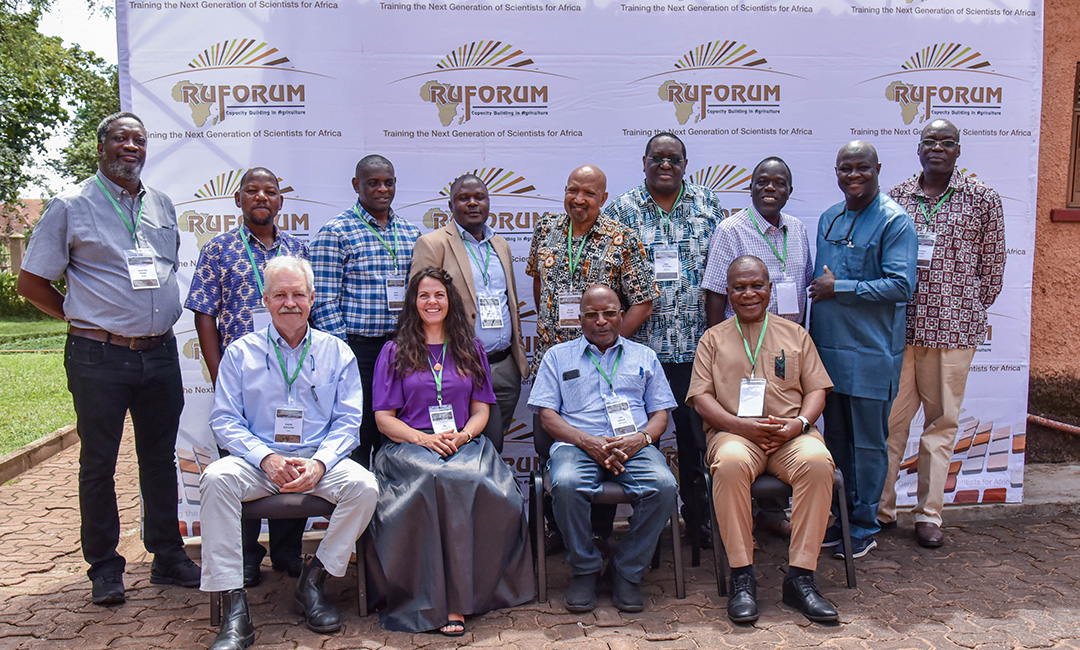
In a bid to ensure that the Soil Initiative for Africa (SIA) is operationalized to deliver its planned social and economic benefits, a group of experts on the subject of Human Capital gathered for three days (4-6th April 2024) at the RUFORUM conference Hall at the Makerere University, Kampala Uganda.
The gathering discussed the role Human Capital in ensuring the management of the Africa soil for increased but sustainable agricultural productivity, coherent ecosystem services while retaining the integrity of the Africa soil as its prime production asset.
Prof. Patrick Okori, Executive Secretary, RUFORUM; addressing the gathering of experts and stakeholders
This expert gathering was unprecedented in the history of Human Capital development for the management of the Africa soil. Human capital is a composite nomenclature, it refers to the skills, knowledge, and experience possessed by individuals or populations; the institution that governs their use, and the cost and the value it adds to the organization or country. The human capital needed for soil management will encompass issues like; (a). Availability of knowledge and skill to generate appropriate technologies and innovation for sustainable use of soils. (b). Availability of teaching and training institutes for continuous development of skillful human resources for innovation. (c). Capacity and infrastructure for knowledge transfer and use. (d). The existence of a system for technology and knowledge demand and supply between users and generators of new knowledge. and (e). Linkages between system components and the management of the soil ecosystem.
It became clear that Human Capital development for soil only be effective when it gives attention to channeling training efforts to farmers and other soil users for effective management of soil, rather than training soil scientist only. It was clear that enrolment for specialization in soil science is very low in most tertiary institutions; possibly due to the inability of the system to absorb them, apparently, majority of those trained in the last three decades are diffused into other disciplines or ancillary area to soil science. The puzzle is how many soil scientists are truly needed per thousand farmers or a million individuals in the population? The right answer to this question will inform the right action and the investment needed to achieve the aspirations of Soil initiative for Africa and the Africa fertilizer and Soil Health Action Plan (AFSH-AP).
In a bid to have appropriate human capital development for managing Africa soils,there is the need totrain fewer scientists with globally competitive skills and access to infrastructure to generate new solutions on the continent. The training of soil users within the civil society, especially the smallholder farmers, is essential for progress in managing Africa soil. There is the need to develop or optimize the existing knowledge demand mechanism on soil management at different levels. Investment in awareness creation/communication on the need to effectively manage Africa soil is vital to successful mobilization of civil society to halt the pace of land degradation. Lastly, Africa will need to develop the right institution that will incentivize ethical use of the soil and disincentivize the abuse of soil resources.
Through a joint intervention easily referred to as AIRTEA, the Association for Strengthening Agricultural Research in Eastern and Central Africa (ASARECA), the Forum for Agricultural Research in Africa (FARA), and the East Africa Farmers Federation (EAFF) are supporting farmers in Central Uganda to access noble life transforming innovations.
Gomba Farm and Environmental Association is a community of 29 farmers, youth, and women committed to advancing sustainable farming practices in Gomba, Mpigi district in Uganda. They have formed a cooperative society through which they jointly own and operate Gomba Farm Innovation Hub, which focuses on promoting sustainable agriculture and environmental conservation. The Cooperative is led by the former Member of the Ugandan Parliament, Hon. Sam Rwakoojo, who also serves as an elite farmer through whom best practices are easily and practically translated to the cooperative members and other spill-over beneficiaries.
AIRTEA is the acronym for the Strengthening Agricultural Knowledge and Ecosystem Innovation for Inclusive Rural Transformation in Eastern Africa (AIRTEA) project funded by the European Union (EU)—ACP Innovation Fund through the Office of the Organization of African Caribbean and Pacific States (OACPS).
Through the Project, ASARECA, FARA and EAFF have mobilized the capacities and resources of the 50 organizations to implement 11 innovation projects that include public agriculture research institutions, public and private universities, private sector firms, farmer organizations, ministries of agriculture and district local governments.
The Gomba Farm Innovation Hub is one of the transformative initiatives of the AIRTEA project that is helping to build a morerewarding and sustainable future for dairy farmers.
Hon. Sam Rwakoojo, Chairperson of Gomba Farm and Environmental Association Cooperative
Through the intervention, Gomba Farm and Environmental Association received support and resources to enhance their capacity to promote sustainable agricultural practices and environmental conservation in their community. The projectalso provided the Cooperative access to new research, technologies, and information on best agriculture practices, opportunities for farmers to network, share knowledge, and learn from each other. The hub offers a range of training, mentorship, and peer-to-peer learning programs that enhance the growth of the farming community. Hon. Rwakoojo, the Chairman of the group, brings a wealth of experience andknowledge that add value to the activities of the farmers.
AGRENES demonstrating to Project partners how the Biogas Digester works
The AIRTEA third party project on Retaining Next Generation Farmers in Agribusiness through Enhanced Knowledge Sharing Platforms along the Dairy and selected Grain Value Chains in Uganda is one of eleven third-party projects that receive technical and financial support from the (EU). It is implemented by Agriculture Environment and Ecosystem (AGRENES) in partnership with FLEED TECH, AGRILIV, NARO, Makerere University, AGRITECH, and other key stakeholders, including local multipliers such as the Uganda Muslim Women Civilization Initiative (UMWCI) and Dairy Farmers Network (DAFAN).
The activities of the Cooperative have transformed the agricultural value chains to impact on livelihoods through its cutting-edge innovations that promote efficiency and productively. Some of the innovations are profiled below:
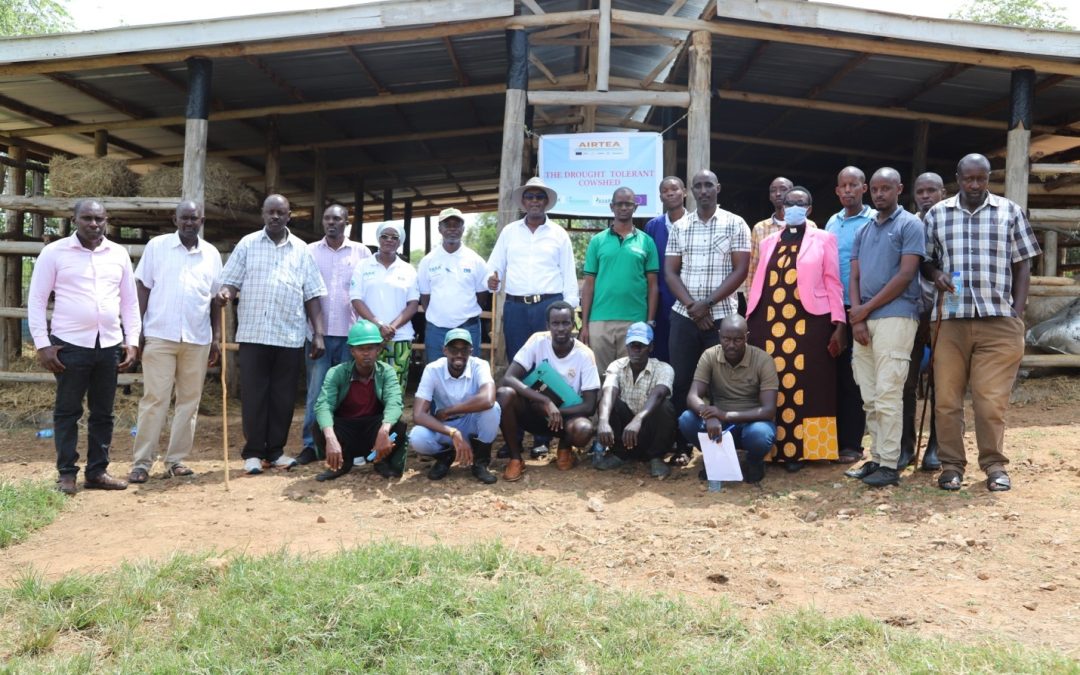
Drought Tolerant Cowshed and Zero Grazing System
Drought Tolerant Cow Shed
Zero grazing of cattle in the drought tolerant shed
This innovative technology helps to improve cattle breeding by introducing more productive and disease-resistant breeds of cows. Farmers use the zero-grazing system, which involves keeping the animals in the specially designed, drought-tolerant cowshed, to manage these breeds. This system not only increases the productivity of the animals but also makes them more resilient to diseases.
Biogas digester
The Biogas digester is a revolutionary innovation that has brought positive change to the lives of farmers. Farmers in the hub have been supported to set up bio digesters in their homes, which have helped them in cooking without having to cut down trees for fuel. This has not only saved them time and energy, but has also supported the group’s efforts to conserve the environment.
Biogas digester an Innovation funded by the project
AGRENES demonstrating the functionality of the Biogas digester
The bio-digester works by breaking down organic waste such as cow dung, kitchen waste, and other organic waste into biogas. The gas produced is used for cooking, lighting, heating and other domestic uses. . This has helped them save money on energy bills and has provided them with a clean and sustainable source of energy.
Use of Silage Bags
The technology is a revolutionary method of storing cattle feed for extended periods. It involves the use of airtight bags.
Silage bags used for storage
This technology is especially useful during drought spells when there is a shortage of feed. Farmers in cooperatives have embraced this method as it allows them to pick up the feed as needed for their animals. Individual farmers have also adopted this technology on their farms, as it offers a reliable and convenient way to store and access feed for their animals.
Pasture Demonstration Garden
The pasture demonstration garden serves as a source of fodder for cows, with a range of crops grown including lablab, forage sorghum, millet, grain sorghum, hay, and domesticated silage.
Pasture Field site
Vegetables for Consumption
In addition to supplying vegetables for home consumption, the garden also provides a valuable educational and demonstration resource for farmers in the cooperative. Those who were previously not familiar with the various types of fodder have had the opportunity to cultivate them on their farms and expand their knowledge. Overall, the garden serves as a multifunctional tool for both feeding livestock and advancing agricultural knowledge among local farmers.
Hay Storage Unit
The cooperative has set up a dedicated hay storage unit for use during times of drought. This helps ensure that all farmers have access to feed for their livestock, even when the weather conditions are unfavorable. The unit promotes sustainability in the farming community and supports the local economy.
Hay Storage Unit
Figure 12: AIRTEA Monitoring and Evaluation team together with implementing partner AGRENES
During a recent monitoring and evaluation visit by FARA, ASARECA and EAFF, the team observed positive changes in livelihoods through farmers’ feedback and testimonies. The team also learnt of some challenges including over reliance on intermediaries to sell milk, leading to low income.
The team resolved to provide the corporative with a milk cooling facilityto help farmers keep the milk until they are ready to sell it to competitive markets.
Despite the abundant resources that Africa is endowed with, the continent has been faced with several challenges, among them, access to markets, access to finance, and climate change, among others.
To offer solutions to the predicament African countries are faced with resulted in the actualisation of the Malabo Declaration in 2014. The Malabo declaration aim is to transform the agriculture sector. To enable the transformation and growth of the agriculture sector, The Malabo Declaration is anchored on seven pillars, which include; first, Recommitment to the principles and values of the CAADP process. Second, Enhancing investment finance in agriculture. Third, Ending hunger by 2025. Fourth, Halving poverty agriculture by 2025. Fifth, Boosting Intra-Africa trade in agricultural commodities and services. Sixth, Enhancing resilience to climate change and seventh, Enhancing mutual accountability for actions and results.
The pillars seek to collectively contribute to Africa’s agricultural transformation, poverty reduction and shared prosperity.
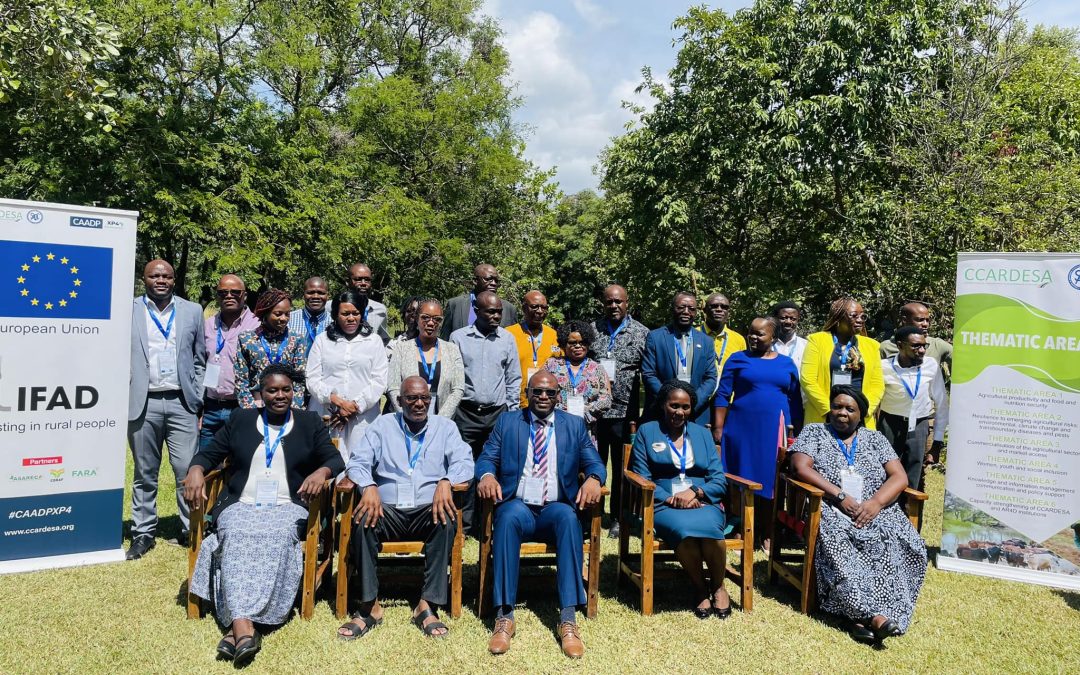
During the National Knowledge Management, Data capture, and monitoring/reporting Malabo commitments training workshop in Lusaka, Zambia from March 25 to 27, 2024 organised by Centre for Coordination of Agricultural Research and Development for Southern Africa (CCARDESA) with financial support of the EU-funded CAADP-X4 Programme, Indaba for Agricultural Policy Research Institute Senior Researcher Auckland Kuteya, offered some insights into the implantation of the Malabo commitment, noting that Zambia had made strides in reviewing the National Agriculture Plan 2014-2018 to inform the formulation of the second National Agriculture Investment Plan (2NAIP).
“The lessons learnt were useful in the formulation of the Comprehensive Agricultural Transformation Support Programme (CATSP) and the NAIP which has already been validated,” Mr Kuteya said.
Auckland Kuteya, Senior Researcher, IAPRI
Mr. Kuteya said the major programmes under the 2NAIP/CATSP are already being implemented and are aligned to the Eighthly National Development Plan (2002-2026).
He also said a national technical working group was already constituted as well as trained and established the reporting process to help track activities in line with the Malabo declaration, adding that even data clusters were established to facilitate data collection and validation.
Mr. Kuteya explained that one of the pillars focused on achieving 10 percent allocation to the agriculture budget thereby making significant gains and also timely releases.
“The budgetary allocation to the agriculture sector has been steadily going up nominally,” said Mr. Kuteya.
Ministry of Fisheries and Livestock under Department of Policy and Planning Information Department Assistant Director Timothy Tonga stated that government has established a livestock breeding centre.
Timothy Tonga, Assistant Director, Ministry of Fisheries & Livestock
Mr. Tonga explained that government has invested US50million in aquaculture. The funds have also been made available to players in the value chain under the aquaculture seed fund.
“Farmers are accessing funds at 12 percent which is affordable meant to upscale their aquaculture activities,” he said.
Mr. Tonga noted that the increased investment in the aquaculture value chain is meant to promote more farmers embark on aquaculture, as it has attracted interest from Botswana.
And Ministry of Fisheries and Livestock Principal Statistician Mweembwa Chijoka concurred that there was increased support to fingerlings production.
Mweembwa Chijoka, Principal Statistician, Ministry of Fisheries and Livestock
“There has been tremendous increase of fingerlings from over 200 million in 2020 to over 400 million in 2023,” Mr. Chijoka said.
He revealed that some neighbouring countries have shown interest and potential, which is a glimmer of hope given the increased market to produce and export.
While, to improve the seed system in Zambia, there is need to continuously support farmer communities to harness indigenous seeds.
As CIAT Zambia Country Representative Emily Banda acknowledges that though Zambia is regarded as having a good seed system, stating that Zambia is among the top three countries in Africa, there is need to embrace indigenous seed and also promote indigenous foods in communities.
Emily Banda, Country Representative, CIAT Zambia
And Comprehensive Africa Agriculture Development Programme Youth Network Zambia Susanna Phiri says raising pasture must be prioritised in farming communities so that its available within communities to avoid depletion of grazing areas.
Susanna Phiri, Comprehensive Africa Agriculture Development Programme (CAADP) Youth Network Zambia
Achieving the Malabo commitments in the long-term requires the participation of various players across sectors to work collaboratively in driving the agriculture agenda, only then will the transformation and growth of the agriculture sector be attained.
Authored by the Principal Agricultural Information Officer for the National Agricultural Information Services (NAIS)
The agriculture sector is critical to unlocking Africa’s potential, given that over 60 percent of the continent’s population is dependent on it. Despite Africa’s abundant potential, enormous challenges exist, such as poor access to inputs and markets and unsustainable practices. To address some of these concerns, the Comprehensive Africa Agriculture Development Programme (CAADP) framework aims to transform the agriculture sector.
The need to raise awareness of the Malabo and CAADP frameworks is apparent. Therefore, the Centre for Coordination of Agricultural Research and Development for Southern Africa (CCARDESA), through an EU-funded CAADP-XP4 Programme, organized a National Knowledge Management, Data capture, and monitoring/reporting Malabo commitments training workshop in Lusaka, Zambia, from March 25 to 27, 2024. The workshop drew participants from government ministries, researchers, and various stakeholders, including non-state actors such as farmer organizations.
The objective of the meeting was to familiarise the participants with knowledge management and data capture guidelines. More importantly, there was a need to establish a Knowledge Management Community of Practice that understands and can facilitate better monitoring of the national implementation of the Malabo declaration and sensitize the public to food security commitments. In addition, for the stakeholders to stay up to date, they need to disseminate Zambia’s 4th Biennial Review Report performance results. Ultimately, the media is mandated to raise awareness on key issues that impact communities and ensure coherence by promoting collaboration among national stakeholders in addressing the Malabo declaration commitments.
Ministry of Agriculture Chief Agriculture Officer Morton Mwanza said the Malabo commitments enhance resilience and production in African countries, including Zambia. They provide a visionary direction to ensure the growth of the agriculture sector despite some problematic issues, such as poor access to markets and inputs.
Mr. Mwanza explains that the agriculture sector employs over 70 percent of the workforce. This indicates that the sector has the potential to positively contribute to poverty reduction and employment.
“The Malabo Commitments are a vehicle to transforming the agriculture sector. This is the reason the government needs to track the Malabo commitments and at what stage we are at and strive to meet and reflect on how we have reached the stage we are at,” Mr. Mwanza clarified.
Mr. Kapulu Ndashe, Deputy Director, Zambia Agriculture Research Institute
In his official remarks, Zambia Agriculture Research Institute Deputy Director Kapulu Ndashe stated that the Malabo declaration and CAADP are not only frameworks but are well aligned to national development aspirations as they embody the significance of the agriculture sector.
Dr. Ndashe said that there is a need to invest in the agriculture sector to prioritize and address the youthful pathway. The importance of reflecting on the Malabo and CAADP performance for Zambia is that they are some of the initiatives which offer us a road map towards a more prosperous, sustainable, and food secure future”, Dr Ndashe said.
He reiterated the need for key players to commit themselves to attain the Malabo targets, knowing that the country’s collective efforts today will shape the agricultural landscape of Zambia for generations to come,” Dr Ndashe echoed.
He also acknowledged that knowledge management is the “cornerstone upon which the pillars of the Malabo declaration rest.”
Knowledge management offers a repertoire of information that harnesses collective wisdom, experiences, and innovations of Africa to foster an agricultural revolution that is not only inclusive but also sustainable.
Dr Ndashe says that addressing specific regional needs and challenges requires leveraging data and information, which is better placed to enforce appropriate interventions.
Simply put, the impacts of investments are informed by what information is shared on learning platforms to ensure that funds are directed towards the most effective and transformative interventions.
Dr. Frank Kayula, President, National Association for Small-Scale Farmers (Zambia)
“The commitment to ending hunger by 2025 requires a concerted effort to improve food security across our diverse landscapes,” Dr Ndashe reaffirmed.
CCARDESA Information, Communication, and Knowledge Management Officer Bridget Kakuwa-Kasongamulilo emphasized the role CCARDESA is playing through a systematic approach: contributing to social and economic growth through information provision and fostering collaboration.
Mrs. Kasongamulilo added that including women and youth helps support and strengthen the capacity of government, farmer organizations, researchers, and all 16 member states.
Responding to a question on whether CCARDESA plans to engage in fisheries programs, Dr. Frank Kayula, President of the National Association for Small-Scale Farmers and also a CCARDESA Board Member, said, “Previously, there were no fisheries programs, but now several project proposals handling components targeting fisheries and eco-rangelands have been developed to ensure all critical sectors are comprehensively included.”
To achieve some of the aspirations of the Malabo Declaration, Zambia needs to focus on strengthening the agricultural extension services, research institutions, farmer organizations, and policy coordination mechanisms. This should be reinforced by investing in institutional capacity building at both local and national levels; only then will tangible results be achieved.
Authored by the Principal Agricultural Information Officer for the National Agricultural Information Services (NAIS).
INTERNATIONAL INSTITUTE OF TROPICAL AGRICULTURE (IITA)
TECHNICAL ASSISTANCE FOR AGRICULTURAL TRANSFORMATION IN COUNTRIES IN TRANSITION (TSF III)
CAPACITY DEVELOPMENT TECHNOLOGY OUTREACH (CDTO) COMPACT
FORUM FOR AGRICULTURAL RESEARCH IN AFRICA (FARA)
REQUEST FOR EXPRESSIONS OF INTEREST
INDIVIDUAL CONSULTANT SERVICES
SECTOR: Agriculture
CONSULTANCY SERVICES: Individual Consultant to Undertake Scoping Studies and Develop Inclusive Business Model to Strengthen Agricultural Innovation Platforms
This request for expression of interest (REOI) follows the General Procurement Notice for this Project that appeared on the African Development Bank Group’s Internet Website (www.afdb.org) 1st August 2022.
The International Institute of Tropical Agriculture (IITA) has received financing from the African Development Bank toward the cost of the Technical Assistance for Agricultural Transformation in Countries in Transition (TSF III) and intends to apply part of the agreed amount for this grant to payments under the contract for the Individual Consultants to undertake scoping studies and develop inclusive business model to strengthen Agricultural Innovation Platforms. IITA signed a sub-agreement with Forum for Agricultural Research in Africa (FARA) as implementing partner for CDTO Compact.
The assignment is to engage an individual consultant to undertake scoping studies and develop inclusive business model to strengthen Agricultural Innovation Platforms. The objective of this assignment is to strengthen Innovation Platforms (IPs) by undertaking assessments, collecting data, and developing an inclusive business model for establishing and operationalizing Agribusiness Learning Alliances to support Innovation Platforms for five value chains in Burundi, DRC, Guinea Bissau, Kenya, Togo, and Zimbabwe. Specifically, the consultant will, among others: conduct assessment of IPs in Burundi, DRC, Guinea Bissau, Kenya, Togo, and Zimbabwe; collect up-to-date data about the platforms; develop an inclusive business model for establishing and operationalizing Agribusiness Learning Alliances; participate in field assessments for Innovation Platforms when needed; support the establishment of agribusiness learning alliances by facilitating the application of the business model developed; support the implementation of the business model to enhance market access and profits for the innovation platform members and service providers (SMEs). The consultant will also facilitate a 2-day interactive seminar with innovation platforms, business service providers, and extensionists from target countries on establishing and operationalizing agribusiness learning alliances.
The duration of the assignment is 15-man days, and would commence in April 2024. Selected consultant will report to the CDTO Compact Coordinator.
The selected consultant should possess an advanced university degree in agriculture economics, business and administration, development studies, or any other related disciplines. The ideal candidate should be highly knowledgeable in agribusiness development in Africa, with demonstrated experience working on innovation systems approaches and innovation platforms in particular; experience in the development, testing, and operationalization of business models in the African context, and should have adequate knowledge and skills to undertake assignments remotely such as conducting studies virtually. The consultant should have a track record in conducting field-based studies, with demonstrated capacity to facilitate international workshops on agricultural development issues in Africa, and strong writing skills with experience in donor reporting. S/he must possess fluency in either English or French, with a working knowledge of the other language.
FARA now invites eligible individual consultants to indicate their interest in providing these services. Interested consultants must provide information indicating that they are qualified to perform the services (including their detailed CV, Workplan and financial proposal).
INTERNATIONAL INSTITUTE OF TROPICAL AGRICULTURE (IITA)
TECHNICAL ASSISTANCE FOR AGRICULTURAL TRANSFORMATION IN COUNTRIES IN TRANSITION (TSF III)
CAPACITY DEVELOPMENT AND TECHNOLOGY OUTREACH (CDTO) COMPACT
FORUM FOR AGRICULTURAL RESEARCH IN AFRICA (FARA)
REQUEST FOR EXPRESSIONS OF INTEREST
INDIVIDUAL CONSULTANT SERVICES
SECTOR: Agriculture
CONSULTANCY SERVICES: Individual Consultant to Validate a Template and Develop a Gender-Sensitive Web-Based Database for Registration of Farmers and Other Value Chain Actors.
This request for expression of interest (REOI) follows the General Procurement Notice for this Project that appeared on the African Development Bank Group’s Internet Website (www.afdb.org) 1st August 2022.
The International Institute of Tropical Agriculture (IITA) has received financing from the African Development Bank toward the cost of the Technical Assistance for Agricultural Transformation in Countries in Transition (TSF III) and intends to apply part of the agreed amount for this grant to payments under the contract for the Individual Consultants to Validate a Template and Develop a Gender-Sensitive Web-Based Database for Registration of Farmers and Other Value Chain Actors. IITA signed a sub-agreement with Forum for Agricultural Research in Africa (FARA) as implementing partner for CDTO Compact.
The assignment is to engage an individual consultant to validate a template and develop a Gender-Sensitive Web-Based Database for Registration of Farmers and other value chain actors to enhance agricultural productivity in target countries of DRC, Burkina Faso, Mali, Togo, Guinea Bissau and South Sudan, and for the larger online stakeholders across Africa. The consultant will among others: organize the validation of the draft Farmer registration template and develop a mock-up for the database with clear linkage with the existing FARADataInformS IP portal; work with the Commodity Compacts and partners to develop the database based on the mock-up; organize a workshop to validate the database; develop database user guide, migration and submission of final report including source code, and organize a webinar to present and validate the draft template and receive feedback to finalize the mock-up with initial participants target from AFAAS, PAFO network, IPs and stakeholders especially from DRC, Burkina Faso, Mali, Togo, Guinea Bissau and South Sudan.
The duration of the assignment is 15-man days, and would commence in April 2024. Selected consultant will report to the CDTO Compact Coordinator.
The selected consultant should possess a Bachelor’s degree in Computer Science, Computer Applications, Information Technology, Web Design, Social Science Discipline or its equivalent; Strong proficiency in designing and developing databases, particularly relational databases like MySQL, PostgreSQL, or Microsoft SQL Server; Knowledge of database design principles, normalization, indexing, and data integrity; Proficiency in relevant programming languages such as Python, Java, or C# for creating the backend logic and APIs; Experience with web development frameworks like Django, Flask, or Spring Boot to build the application’s backend; Familiarity with data security best practices, encryption methods, and techniques to ensure the protection of sensitive farmer information; Understanding of data privacy regulations and compliance requirements, such as GDPR or HIPAA; Ability to design an intuitive and user-friendly interface for farmer registration and data management; Knowledge of front-end technologies such as HTML, CSS, JavaScript, and relevant frameworks like React or Angular; Experience with data import/export processes and integration with external systems, if necessary; Understanding of data transformation, data cleansing, and data validation techniques; Knowledge of geospatial databases (e.g., PostGIS) and geospatial libraries (e.g., Leaflet, Mapbox) could be valuable; Strong project management skills to ensure the development process is well-organized, milestones are met, and the project stays on track; Effective communication skills to understand the requirements of stakeholders, gather feedback, and explain technical concepts to non-technical team members; Familiarity with agriculture and farming processes to better understand the specific needs and functionalities required in the farmer registration database; Ability to identify potential challenges, propose solutions, and think creatively to address unique requirements; Ability to provide references or examples of previous projects that demonstrate the consultant’s ability to develop similar databases or applications; with Sample links to databases developed in the past, if any. The ideal candidate should possess strong writing skills with experience in donor reporting, with fluency in either English or French, with a working knowledge of the other language.
FARA now invites eligible individual consultants to indicate their interest in providing these services. Interested consultants must provide information indicating that they are qualified to perform the services (including their detailed CV, Workplan and Financial proposal)