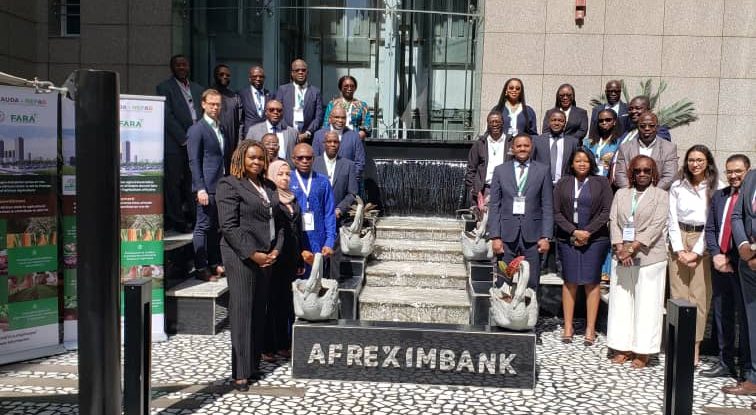
The AFREXIMBANK Headquarters played host to a significant technical engagement on March 15th and 16th, 2024. The event brought together key stakeholders from the Common African Agro-Parks (CAAPs), with a particular focus on representatives from the Zambia-Zimbabwe CAAP (ZimZam CAAP) and the Cote d’Ivoire-Ghana Cocoa CAAP (CIG CAAP).
Chaired by Dr. Janet Edeme, Head of Department at the African Union Commission (AUC), and Mr. Zitto Alfayo, Head of Project Preparation Unit at AFREXIMBANK, the meeting focused on the readiness of CAAPs projects for funding through AFREXIMBANK.
The meeting commenced with a series of key messages outlining the significance of CAAPs in advancing agro-industrial development across Africa. AFREXIMBANK reaffirmed its commitment to collaborate with AUC and CAAPs stakeholders to mobilize $20.8 million for the implementation of the 7 CAAPs Programme Clusters, with a particular focus on kickstarting ZimZam and CIG CAAPs initiatives.
Updates and prospects regarding CAAPs were presented, highlighting its alignment with Agenda 2063 aspirations and the endorsement of CAAPs as a flagship program. Challenges in securing stable financial resources for CAAPs coordination activities were acknowledged, prompting discussions on leadership commitments and the establishment of a CAAPs Fund at AFREXIMBANK.
The meeting also addressed funding modalities through the Project Preparation Facility (APPF) and the proposed Joint Project Preparation Facility (JPPF), emphasizing the need for tailored approaches to accommodate the unique requirements of CAAPs projects.
Updates on ZimZam CAAP and CIG CAAP showcased progress in project preparation, with discussions focused on finalizing feasibility studies and securing necessary approvals. Action plans were outlined to expedite project readiness and engage relevant stakeholders.
Dr. Janet Edeme expressed optimism about the outcomes of the meeting, stating, “This engagement marks a crucial step forward in realizing the potential of CAAPs projects to drive sustainable development and intra-African trade. The collaboration between AFREXIMBANK, AUC, FARA and other stakeholders underscores our collective commitment to transforming the agricultural landscape in Africa.”
Looking ahead, the CAAPs Secretariat at FARA will continue to work closely with AFREXIMBANK and other partners to ensure the timely implementation of CAAPs projects, further advancing the continent’s agro-industrialization agenda.
The African Export-Import Bank (AFREXIMBANK) and the African Union Commission (AUC) have formalized a strategic partnership by signing a Memorandum of Understanding (MoU) to implement the Common African Agro-Parks (CAAPs) initiative. This landmark agreement, inked at the 37th AU Summit in Addis Ababa, solidifies the commitment of both entities to catalyze agricultural development and agro-industrialization across the African continent following the endorsement of CAAPs as one of the Flagship initiatives of the AU during the 2023 Summit.
Led by H.E. Commissioner Amb. Josefa Sacko, Commissioner for Agriculture, Rural Development, Blue Economy, and Sustainable Environment, and Prof. Oramah, President of AFREXIMBANK, the ceremony underscores the pivotal role of collaboration in achieving sustainable development for Africa. The CAAPs initiative, adopted by the 37th AU Assembly as a flagship program for the next ten years of the AU Agenda 2063, is a strategic response to enhance local agricultural production and trade under the AfCFTA.
This partnership signifies a shared vision to create regional agro-industrial hubs, aligning with the AU Agenda 2063 objectives. Cross-border mega agro-park projects, a focal point of the collaboration, aim to stimulate economic growth, enhance food security, and foster industrialization. AFREXIMBANK’s financial commitment of USD 20.8 million demonstrates a concrete step toward realizing the ambitious CAAPs goals, with an overarching objective to implement 15 CAAPs mega projects within the next decade.
You may visit https://faraafrica.org/caaps/ for details about the CAAPs initiative.
For media inquiries and further information, please contact the CAAPs Secretariat through:
Anselme Vodounhessi – [email protected]
Benjamin Abugri – [email protected]
To catalyse economic development and enhance trade in Africa, requires actualising appropriate strategies and policies. This notion led to the conception of the Common Agro Industrial Park (CAIP) as part of the continental Common Africa Agro Parks (CAAPs) ratified by the African Union. The CAAP aspires to promote regional integration and trade among countries in Africa.
Zambia and Zimbabwe embarked on establishing the first-ever Common Agro Industrial Park (CAIP) in 2021 in Africa. The initiative focuses on maize and dairy value chains, as both countries offer their distinct comparative advantages, which are expected to enhance intra-trade and regional trade. Historically, the two countries have been producers of maize and dairy producing hubs. Despite being major producers, their trade patterns for these value chains have predominantly been raw materials with low product value addition and diversification, thereby resulting in value chain stagnation and curbing efforts to be food secure locally and on the global market.
To successfully implement CAIPs and achieve the desired results, Zambia and Zimbabwe undertook studies aimed at strengthening the maize and dairy chains in two phases. The first phase was held in Harare in 2022 and the second phase was held in Lusaka recently. The objective of the meeting was for government and stakeholders to provide an expert review and provide feedback on two reports to adequately inform and strengthen the value chain development between the two countries agreed value chains.
Speaking in Lusaka, Agriculture Minister Reuben Mtolo reiterated that the two studies undertaken under Phase 2 of the project is to strengthen member states’ capacities to develop regional agricultural value chains will enhance diversification and intra-African trade being piloted under the joint industrialisation cooperation between Zambia and Zimbabwe.
“Phase 1 of the project focused on regional value chain selection and assessment which culminated in a report that was validated in Harare in August 2022,” Mr Mtolo said.
H.E Reuben Mtolo Minister for Agriculture Zimbabwe
Mr Mtolo explained that the CAIP was set-up under the joint industrialisation cooperation programme between the two countries. The Common Market for Eastern and Southern Africa (COMESA) is pioneering the initiative in partnership with Economic Nations Economic Commission for Africa (UNECA) and UNIDO anchored on article 99 of the COMESA treaty. This encourages member states to cooperate in industrial development to achieve broad objective of self-sustained and balanced growth and transformation.
He reaffirmed that this programme would make use of “complementaries of national resources, value addition skills, technology and marketing capabilities to produce [world class] goods and services that will be competitive on the regional and global arena.”
Mr Mtolo stated that drastic strides have been made towards the establishment of the CAIP, which the Ministry of Commerce, Trade and Industry has been coordinating.
“Maize and dairy value chains were initially the selected commodities to anchor the development of the CAIP, and the Ministry of Lands, Agriculture, Water, Fisheries and Rural Development is leading the initiatives to further develop these value chains to become more competitive and diversified as well as provide a smooth launchpad for CAIP,”Mr Mtolo said.
Consultant Andrew Mulenga stressed the importance of strengthening the policy implementation framework by providing adequate human and financial resources.
Dr Mulenga also emphasized the need for policy consistence to attract investors and also incentivise key players. “Investors are attracted when policies in place are consistent; we need to follow-up on consistency and also ensure regular review to avoid duplication and conflict. When policies keep changing, it doesn’t inspire investors,” Dr Mulenga said.
Dr Andrew Mulenga, Zambian Consultant
He pointed out the need to enhance stakeholder consultation and policy transparency. This entails making decisions with a consultative approach and maximise on attracting key players.
Dr Mulenga also called for the streamlining of agriculture budgets to support the drivers of productivity and value addition.
A Consultant from Zimbabwe Kingstone Mujeyi also emphasised the need for the two value chains to be produced for the regional market, and beyond the two countries’ capacity.
“The CAIPs are coming in as pilot projects among countries in Africa. The Zimbabwe and Zambia agreement has to succeed; and also develop further into regional agriculture value chains,” Dr Mujeyi said.
Dr Kingstone Mujeyi – Zimbabwean Consultant
Ministry of Commerce, Trade and Industry Director Musokotwane Sichizuwe explained the need to enhance competitiveness of the maize and dairy industries in both countries through upgrading all infrastructure, access to finance and promote public-private partnerships.
“We also need to sensitise the private sector on the CAIPs ad its relevance coupled with the inherent tangible,” Mr Sichizuwe.
H.E. Situmbeko Musokotwane, Zambia Minister of Commerce, Trade and Industry
Mr Sichizuwe underscored the importance of the CAIP as it is a pilot project recognised by the African Union (AU) aimed at promoting economic integration and also enhance opportunities for trade.
Mr Sichizuwe also paid gratitude to UNECA, COMESA and consultants for the extensive work conducted so far which is meant to implement the CAIP effectively.
It is gratifying to see the extensive work conducted in ensuring the success of this value chain development. It is also key to involve all key stakeholders in this validation process in order to implement a comprehensive CAIP strategy.
The success of CAIP initiative hinges on the realisation of the high performing high value chain. The identified value chains need to provide diverse and innovative products which can compete effectively on the regional and global export market. –
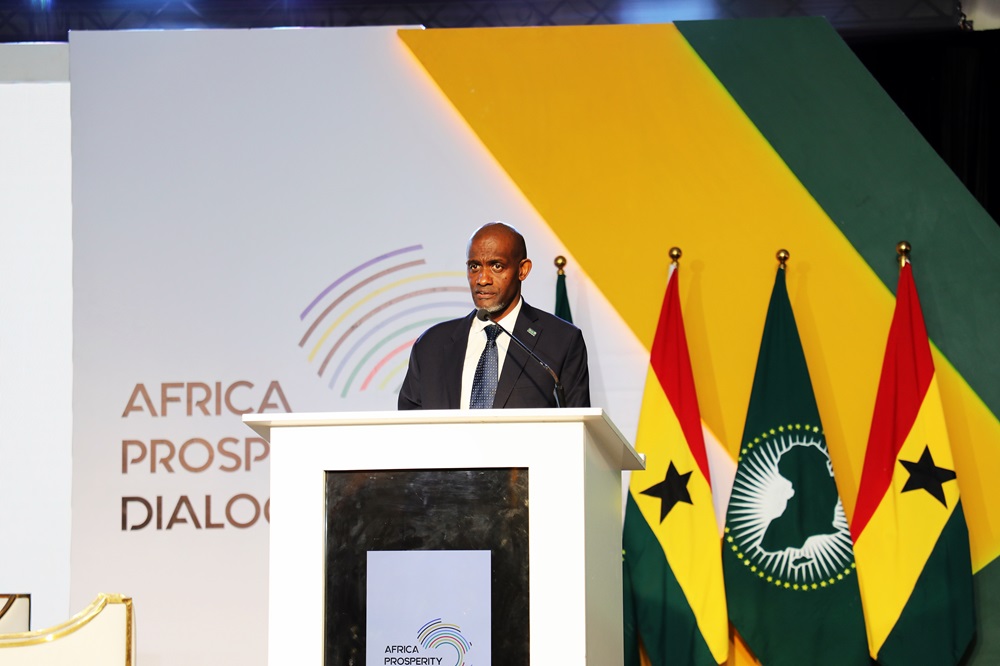
In a Keynote Statement delivered on her behalf by the Forum for Agricultural Research in Africa’s Executive Director Dr. Aggrey Agumya, the African Union’s Commissioner for Rural Development, Blue Economy and Sustainable Environment, HE Ambassador Josefa Sacko calls on African state Leaders and High-Level Business Executives for collaborative efforts to address Africa’s food security and boost agribusiness during the Africa Prosperity Dialogues 2024 hosted by the President of Ghana H.E Nana Akuffo Addo at the Peduase Presidential Lodge in Accra.
Forum for Agricultural Research in Africa’s Executive Director Dr. Aggrey Agumya delivering the Keynote speech on behalf of the AUC-DARBE Commissioner H.E Amb. Josefa Sacko.
“Your Excellencies, this reality has compelled us to rethink our approach and take decisive actions. It’s time to break free from the chains of dependency and create a resilient and self-sustaining agricultural ecosystem,” her speech read, rallying African governments and the private sector to support the African Union’s Common African Agro-Parks Programme (CAAPs) initiative, which aligns with the goals of the African Continental Free Trade Area (AfCFTA).
The initiative was developed in collaboration with key High-Level partners on the continent, the AUDA-NEPAD, AfCFTA, AFREXIMBANK, and FARA. The CAAPs initiatve has gained momentum “with two Demonstration Projects set to commence this year— the Zambia-Zimbabwe CAAP for maize and dairy products, and the Cote d’Ivoire-Ghana CAAP for Cocoa transformation” her speech read.
These projects are the steppingstones to the establishment of the five large agro-industrial zones with transboundary mega agro-industries and food supply corridors, strategically positioned in each of the five geographical regions of Africa that will reshape the landscape of African agriculture,” she noted.
Dr. Aggrey Agumya (FARA) with the Executive Secretary of the Cote d’Ivoire-Ghana Cocoa Initiative, a panel speaker at the High-Level Panel II of the Africa Prosperity Dialogues
“CAAPs represents more than just a development initiative; they embody the resilience, determination, and collective will of the African continent to control its destiny. Our request for your full support and blessing is not just for the CAAPs but for a future where Africa leads in agriculture, agro-industrialization, and economic prosperity” she added.
A section of High-Level Delegates at the Africa Prosperity Dialogues 2024
Assuring the participating audience of its high success rate, H.E Amb. Sacko says stakeholders “can establish a vibrant business platform under the CAAPs, utilizing the instruments of the AfCFTA to secure our place in the global food market.”
Therefore, “CAAPs are not just a roadmap; they are the vehicle for an agro-industrial revolution that Africa urgently needs. Let us pledge our commitment to this vision, supporting the CAAPs as the flagship program of the AU Agenda 2063”.
Dr. Aggrey Agumya
Dr. Aggrey Agumya on the choice of FARA as secretariat for the CAAPs, reiterated the role of FARA as the apex continental organization responsible for coordinating and advocating for agricultural research for development (AR4D) in Africa while serving as the technical arm of the Africa Union Commission on matters concerning agriculture science, technology and innovation.
The President of Ghana, Nana Addo Dankwa Akufo-Addo addressed the congregation as well. He took the chance to commend all participants in attendance and the organizers, the Africa Prosperity Network for putting together such an important and unique platform for the deliberation and discussion of comprehensive policies aimed at boosting intra-African Trade. He also announced Ghana’s commitment to implement a visa-free policy for all Africans traveling to the country in 2024.
The President disclosed that the government has initiated processes to implement the policy within the year.
H.E Nana Addo Dankwa Akuffo Addo, the President of the 4th Republic of Ghana
He stated that “I know that many of you had to acquire a visa to come to this event; we made a special arrangement for this conference. We reduced the visa acquisition fee by 50%, and we were thus able to receive your visa on arrival. The Government of Ghana is committed to ensuring visa-free access for all Africans travelling into our country, and the process has begun to implement the policy this year.”
A section of High-Level Delegates and the President of Ghana at the Africa Prosperity Dialogues 2024
The Africa Prosperity Network (APN) in collaboration with the Africa Continental Free Trade Area Secretariat hold The Africa Prosperity Dialogues 2024, at the Peduase Presidential Lodge in Aburi, Ghana from January 25th to the 27th, hosting top business leaders, heads of international development institutions, social change markers, including heads of states among other diplomatic delegations. A few honorable mentions are the Ex-President of the Republic of Mozambique, Joachim Chissano, Executive Secretary of the AfCFTA, Wamkele Mene, Dr Amany Asfour, the President of the Africa Business Council, Dr. Abebe Haile-Gabriel, the assistant Director General of the FAO, Dr. Bryan Acheampong, the Minister of Food and Agriculture Ghana, Dr. Ibrahim Mahama, Mme. Patricia Poku-Diaby among others.
FOLLOWING calls by the African Union to enhance trade in Regional Economic Communities (RECs) through the implementation of Common African Agro Parks Programme (CAAPs), Zimbabwe and Zambia signed a trade agreement in 2021 valued over US$12million, which is about to bear fruit.
Speaking in Lusaka during the just ended inaugural coordination meeting of Regional Economic Communities (RECs) for the implementation of the Common African Agro-Parks programme, Ministry of Industry and Commerce, Chief Director Florence Makombe from Zimbabwe, explained that the trade agreement between Zimbabwe and Zambia rides on the already existing bilateral trade, which has culminated in a series of meetings and talks between the two countries aimed at actualizing the agro park to boost food production and trade.
Ms. Makombe disclosed that the agriculture industrial park between the two countries includes the following value chains: Soybean, dairy, wheat, horticulture, maize and fisheries.
Ms. Florence Makombe, Chief Director of Ministry of Industry and Commerce
“There has been progress made on the Zimbabwe and Zambia trade agreement which is expected to blossom in terms of food production. Now, there is need to adjust from the last meeting held in Harare recently, which looked at the legal framework,” She revealed.
The Director of the Ministry of Commerce, Trade, and Industry of Zambia, Musokotwane Sichizuwe said Zambia has the capacity in terms of the agriculture sector given also the favorable weather.
Mr. Sichizuwe says once a feasibility study is conducted in Zambia, it will help unpack most of the criteria requirements.
“Zambia has prioritized farm blocks. Initially, the focus was on special economic zones but now extended to farm blocks. It aligns well given that we are trying to do some of these things at a regional level,” he disclosed.
Mr. Brian Ngandu from Ministry of Agriculture of Zambia said that Zambia and Zimbabwe have enjoyed a long-lasting trade relationship. This is advantageous to both countries as their identified trade agreement is likely to stimulate increased trade.
The Director of the Ministry of Commerce, Trade, and Industry of Zambia, Musokotwane Sichizuwe (left) and Mr. Brian Ngandu, Ministry of Agriculture of Zambia (right)
Although, Zambia and Zimbabwe may not have the same land polices, the implication is that both countries may need to reform policies to align with the goals of CAAPs and to also strengthen this agro park initiative to attract and unlock business opportunities in order to enhance trade between the two countries.
It is clear that CAAPs are critical if trade is to be enhanced intra and regionally in a bid to make the African continent food secure and also produce surplus for export.
Principal Advisor, Value chains, Office of the Secretary General Themba Khumalo explained that CAAPs involves agreed actions between two countries to identify trade opportunities.
“Our target is to have excess food for trade and where there are domestic projects will be supported, CAAPs aims to promote regional integration and trade,” Mr Khumalo said.
r. Themba Khumalo, Principal Advisor, Value chains, Office of the Secretary General, AfCFTA
To catalyze CAAPs, countries need to justify their projects within their Regional Economic Communities (REC) for the implementation of the Common African Agro-Parks programme. Once countries identify and concretize their projects, they need to sign agreements and trade. For these CAAPs to be viable and translate into tangible results, there is need to ensure private sector investment.
Mr Khumalo said, “when pursuing these investments, there will be need for private sector players to be able to present their projects and mobilize resources to actualize trade agreements”.
He clarifies whatever projects exist in countries aside the identified CAAPs continues, although it is better to enshrine them in the regional investment plans for purposes of recognition as a CAAPs regional integration plan.
“We need to radically change the way we work to actualize and achieve the goals of the CAAPs,” Mr. Khumalo said.
He advised that countries need to look at their own domestic interests, what is existing and how best it can be scaled up. This should be coupled with a commitment to create an enabling policy environment and trade among others so as to avoid any barriers between countries wanting to promote trade in their RECs.
Mr Khumalo explained that for the CAAPs to be recognized and supported, certain criteria need to be met as spelled out in the Abuja declaration.
The Abuja declaration criteria outlines some of the critical elements of setting up a CAAPs within a RECs. Among them, is taking into account the nature of strategic importance in relation to integration, economic growth and food security. Further, there is need to ascertain what is on the ground within the context of feasibility of projects, as there must be a base to engage some of the partners for a pre-feasibility.
This means when looking at most entities, there will be need for feasibility study, which will entail the community having basic information to make decisions and demonstrate the ability to promote regional boosting. Overall, there is need to look at whether countries are able to commit from a policy point of view as a country, outside investor zones to enable the private sector to make informed decisions. It is key for countries to critically look at their comparative advantages and harmonize their investments with financial commitment towards agreed value chains.
Common African Agro-Parks (CAAPs) are vehicles aimed at driving cross border projects to leverage on initiatives which focus on priority or strategic commodities. It is envisioned this approach will spur economic development and transformation in Africa, as espoused within the framework of the African Union (AU) Agenda 2063. – National Agricultural Information Service
THE Common African Agro-Parks Programme (CAAPs) prospects to externalize about US$50 billion per year from imported food commodities from outside the continent, it has been revealed.
CAAPs was established in 2019 as on of the initiatives of the Comprehensive African Agricultural Development Programme (CAADP) and given the mandate to boost local processing and regional trade for agricultural commodities and their value chains.
However, the trend is about to change owing to the promotion of intra-trade in Africa.
The Common Market for Eastern and Southern Africa (COMESA) assistant secretary general in charge of the programme Mohammed Kadah said CAAPs seeks to reverse externalization of funds by promoting cross-border agriculture value chains and attracting investments in agro-industrialization.
Dr. Kadah was speaking during the opening of a coordination meeting of CAAPs recently.
“Over the last five years, African countries have collectively spent approximately US$50 billion annually to import food products. Shockingly, this figure is expected to rise to US$110 billion per year by 2025…” he said.
He said with the projected increase in Africa’s population by 2050, there will be need for significant increase in agricultural production to ensure sufficient, affordable, healthy and nutritious food for all Africans.
Dr. Kadah said Africa should draw lessons from the disruption of supply chains caused by the COVID-19 pandemic, which exposed the continent’s vulnerability to external shocks.
He said the crisis in Ukraine also highlighted Africa’s dependence on external sources for food products and agricultural inputs.
Dr. Kadah said the two episodes demonstrate the need to break free from dependence on international food markets.
“It is clear that Africa’s inability to claim its food market, which is currently outsourced from the rest of the world, is a significant source of concern for African countries and international partners” he said.
Dr. Kadah also said lack of Industrial capacity to process and add value to raw agricultural products results in post-harvest losses and meagre revenues for farmers.
He thanked the African Union (AU) for the initiative to establish five common agro-industrial zones in the five geographical regions of the continent.
And African Union Development Agency (AUDA-NEPAD) head of Environmental sustainability division Mamadou Diakhite said full implementation of CAAPs strategies will promote regional agro-forestry industrialization in Africa.
The CAAPs programme was ratified as a flagship initiative of the AU Agenda 2063 during its 36th Summit in February 2023 to create transboundary mega agro-industrial hubs across Africa.
This falls within the CAADP framework and the AU Agenda 2063.