The African Development Bank Group (AfDB) has approved $102.79 million in funding for a pioneering initiative aimed at promoting sustainable agriculture across Guinea, Senegal, and Togo. This substantial investment will bolster the Multinational Program for Promoting Sustainable Agricultural Value Chains in Special Agro-Industrial Processing Zones (SAPZ), focusing on areas like climate change adaptation and renewable energy integration.
The funding will drive several key projects, including the Togo Agro-Industrial Transformation Project, Senegal’s Agropole-Sud, and the Boké and Kankan Special Agro-Industrial Transformation Zones Development Program in Guinea. These initiatives are set to enhance climate resilience and reduce greenhouse gas emissions in the respective regions.
One of the main components of the investment includes supporting small-scale irrigation systems, covering around 39,179 hectares of agricultural land. Additionally, the program will install renewable energy equipment, such as 2.59 megawatts (MW) of solar power and 10.24 MW of biogas energy, both of which will play a crucial role in powering irrigation systems and facilitating biogas production from livestock manure. These improvements are expected to significantly increase energy efficiency and reduce the carbon footprint.
“Climate change risk has escalated across the continent, and this financing from the Green Climate Fund (GCF) will address the urgent need to support rural communities facing climate-related challenges by leveraging proven technologies,” said Kazuhiro Numasawa, Division Manager of SAPZ Operations at the African Development Bank.
The initiative also places a strong emphasis on supporting women and youth in the agriculture and food sectors. It includes training programs for women to adopt innovative irrigation methods, as well as access to climate information services and low-carbon technologies for drying, processing, and packaging agricultural produce.
The program is expected to directly benefit over 1 million farmers, while indirectly impacting a total of 5.6 million people across the three countries. At least 50% of the beneficiaries are anticipated to be women, reflecting the project’s strong commitment to gender equality.
Each of the target countries stands to gain unique advantages from the initiative:
In Guinea, the fresh produce sector is ripe with potential but faces challenges due to infrastructure limitations and restricted access to finance. By addressing these issues, the program will help enhance Guinea’s export capabilities for products like bananas, pineapples, and mangoes.
Senegal, with its favourable climate for agriculture, continues to expand its fruit and vegetable exports. Initiatives like the urban micro gardens program in Dakar highlight the country’s efforts in local food production, even as it works to improve export capabilities.
Togo is focusing on developing agricultural zones to boost production efficiency. Programs like the Agricultural Development Support Programme (PADAT) and the West Africa Agricultural Productivity Program (WAAPP-Togo) are helping to enhance productivity and provide essential training to farmers.
This investment by the AfDB is a critical step in addressing climate change, empowering rural communities, and fostering sustainable agricultural development across the region.
The Common African Agro-Parks Programme (CAAPs) is aimed at boosting regional trade for agricultural commodities by increasing locally processing of key agricultural products. The CAAPs will help Africa take over the African Food Import Market of about USD50 billion per annum that is currently outsourced to the rest of the world. Read more at https://faraafrica.org/caaps/
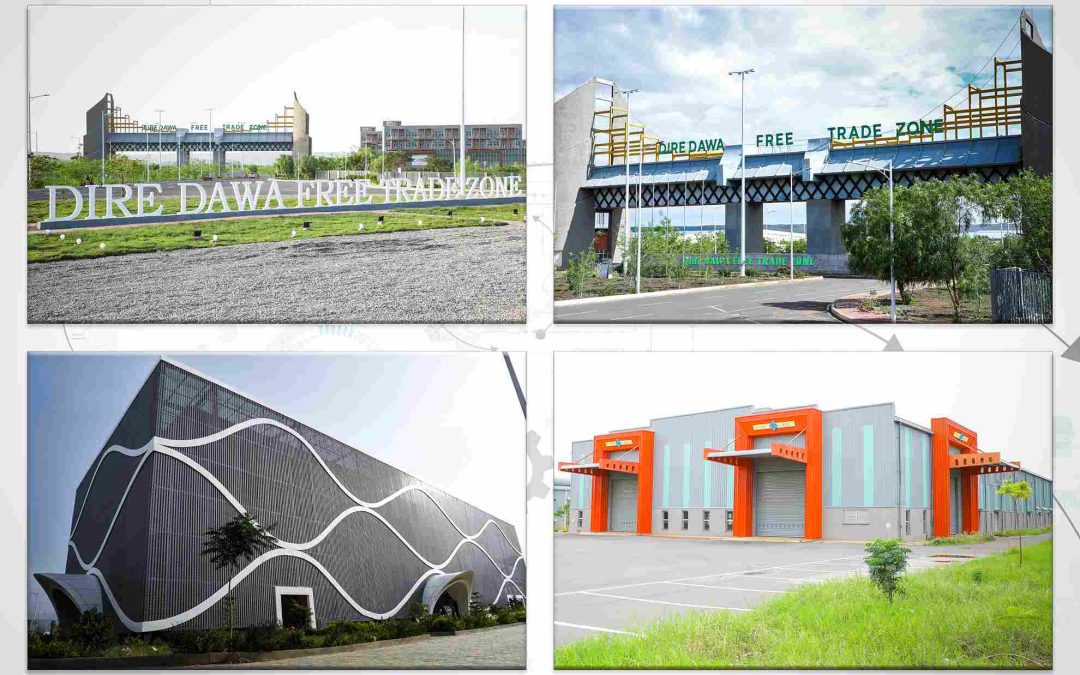
The management teams of the country’s industrial parks have been given short notice to transition into Special Economic Zones following the federal government’s policy change.
Officials at the Ethiopian Investment Commission (EIC) revealed details of the transition plans during a recent round of discussions with foreign investors operating in the flagship Hawassa Industrial Park (HIP).
Investors told The Reporter the Commission has given all industrial parks that fulfill the requirements to be designated as SEZs 20 days to finalize the transition.
EIC officials declined to comment on the issue but their counterparts at the Industrial Parks Development Corporation (IPDC) confirmed the decision and the short window for transition.
They told The Reporter they have differences with EIC officials.
“As per the new legislation, almost all existing industrial parks can fulfill the criteria to become Special Economic Zones. However, so far, IPDC has designated only Dire Dawa Industrial Park to become an SEZ. SEZs have additional features like logistics and other full-fledged economic activities integrated in one area. If other industrial parks fulfill all these, we will gradually designate other industrial parks to become zones,” said an official at IPDC, who spoke anonymously. “But the approach EIC is taking is a bit different from ours.”
Although IPDC is mandated to develop and administer industrial parks, there is also an industrial parks division department under EIC led by the Deputy Commissioner. Zeleke Temesgen (PhD), EIC deputy commissioner for industrial parks division and Dagato Kumbe, EIC deputy commissioner for investment operations division, traveled to Hawassa town and held meetings with HIP investors on august 20, 2024.
A new project office has been established to oversee the transition of industrial parks to SEZs.
The Special Economic Zone Proclamation recently ratified by Parliament lays out new criteria for an industrial park to be considered an SEZ.
It defines an SEZ as a geographical area designated so by the Ethiopian Investment Board and subject to customs control, and attended by business enabling policies, trade facilitation services, infrastructure and utilities, and amenities including a one-stop shop, duty and tax free privileges, and other special incentives.
An SEZ may comprise one or more industry parks, free trade and logistics zones, science and technology parks, service parks, agriculture and livestock zones, and similar investments.
An existing company that intends to be upgraded into an SEZ can apply to EIC, according to the proclamation. The legislation explicitly states an industrial park will not be required to submit a designation application or undergo designation procedures to attain a special economic zone status.
However, an industrial park must have ample land available (50 hectares minimum) and meet other critical infrastructure requirements to gain SEZ designation.
Applicants are also expected to commit a minimum equivalent exchange of USD 75 million as capital.
The capital may be financed through proven cash contribution, machinery, building, working capital, or debt financing, according to the proclamation.
Exporters operating within an SEZ are also eligible to retain 100 percent of the forex they generate, according to a recent directive from the National Bank of Ethiopia (NBE). Other exporters can only retain half of their forex earnings.
“The investors inside HIP were delighted. This is a big deal for investors,” said a HIP administrator.
However, both the administrators of industrial parks and investors observe the revised retention rate will benefit them only if Ethiopia is reinstated to the African Growth and Opportunity Act (AGOA).
Washington delisted Ethiopia from the preferential trade deal during the two-year northern conflict. The move proved detrimental to the tenants of industrial parks, particularly textiles manufacturers who benefited most from duty free exports to the US.
EIC officials hinted at renewed hopes for AGOA reinstatement during their discussions with HIP investors and administrators.
“Since Ethiopia is agreeing to the peaceful resolution of conflicts and also agreeing to open up its economy to foreigners, there is hope America will reinstate Ethiopia’s AGOA privileges. This was the reason why America delisted AGOA. America wants liberalization even more than the peace talks,” said the HIP administrator.
Today, Dr. Henry Musa Kpaka, the Minister of Agriculture for Sierra Leone, hosted a high-level delegation from the African Union (AU) and the People’s Republic of China. This significant meeting marks a pivotal step in advancing agricultural development in West Africa, focusing on the integration of Perennial Rice (PR) into large-scale rice production under the Common African Agro-Parks (CAAPs) initiative.
The delegation, comprising esteemed representatives from the African Union Commission (AUC), the CAAPs-Secretariat (FARA), and Chinese agronomists, convened to explore collaborative opportunities to boost rice production in the region. This initiative aligns with the AU’s Agenda 2063, emphasizing sustainable agricultural practices and enhanced food security. Key attendees included Mr. Anselme Vodounhessi, CAAPs Coordinator at FARA, along with ZHANG Zihua, First Secretary of the Mission of China to the African Union.
The primary goal of this mission is to foster dialogue and collaboration between Sierra Leone, the AU, and China. Key discussions revolved around introducing and cultivating Perennial Rice (PR) in Sierra Leone and beyond, exploring China’s involvement in establishing a rice CAAPs for West Africa, assessing the potential benefits of PR adoption for enhancing agricultural productivity and food security, and developing a strategic partnership roadmap for implementing the rice CAAPs and mainstreaming PR initiatives in Sierra Leone. Dr. Kpaka emphasized the significance of this collaboration, stating, “The integration of Perennial Rice into our agricultural framework holds immense promise for enhancing food security and economic prosperity in Sierra Leone and West Africa. We are committed to leveraging innovative technologies and strategic partnerships to position our nation at the forefront of sustainable agricultural development.”
Dr. Musa Kpaka also expressed Sierra Leone’s commitment to engage with neighboring countries such as Guinea, Liberia, and others to establish Rice-CAAPs, aiming for a sustainable rice value chain across West Africa as part of the next ten-year implementation of the AU Agenda 2063. This regional collaboration is expected to strengthen agricultural practices and enhance food security in the region.
The agenda for the meeting included courtesy visits to government officials and relevant stakeholders, working sessions on understanding CAAPs, the introduction of a rice-CAAP in Sierra Leone, and the benefits of PR, as well as roundtable discussions to explore collaboration opportunities. On the second day, the delegation visited potential PR demonstration plots and consulted with local agricultural experts, researchers, and farmers. The discussions culminated in the development of a joint action plan for initiating the rice-CAAPs and mainstreaming PR initiatives.
The delegation’s visit underscores the commitment of the AU, China, and Sierra Leone to enhance agricultural productivity through innovative solutions like Perennial Rice. This initiative is poised to significantly contribute to the overarching goals of the AU’s Agenda 2063, promoting sustainable agricultural development and food security across the continent.
For more information, please contact:
CAAPs-Secretariat (FARA)
African Union Commission
Ministry of Agriculture, Sierra Leone
About CAAPs: The Common African Agro-Parks (CAAPs) initiative is a flagship program of the AU’s Agenda 2063, aimed at integrating modern agricultural practices, technology, and partnerships across Africa to foster sustainable agricultural development and food security.
About Perennial Rice (PR): Developed by Chinese agronomists, Perennial Rice offers significant advantages, including reduced replanting requirements, improved soil health, and heightened climate resilience, making it a strategic investment for enhancing agricultural productivity in Africa.
Date: July 8, 2024 Venue: African Union Commission (AUC), Addis Ababa, Ethiopia
Addis Ababa, Ethiopia – July 8, 2024: In a pivotal moment for Africa’s agriculture research and innovation, H.E. Amb. Josefa Sacko, the Commissioner for Agriculture, Rural Development, Blue Economy, and Sustainable Environment (ARBE) at the African Union Commission (AUC), hosted Dr. Aggrey Agumya, the Executive Director of the Forum for Agricultural Research in Africa (FARA), for a high-level meeting on July 8th, 2024. This crucial engagement took place at the AUC headquarters in Addis Ababa, Ethiopia, where the future of Africa’s agricultural research and development was at the forefront of discussions.
Commissioner Sacko warmly welcomed Dr. Agumya to the AUC, expressing her commitment to reinforcing the strategic partnership between the AUC and FARA. The meeting was a platform to highlight the progress and achievements of FARA-hosted programmes of the African Union and align on key areas for future collaboration.
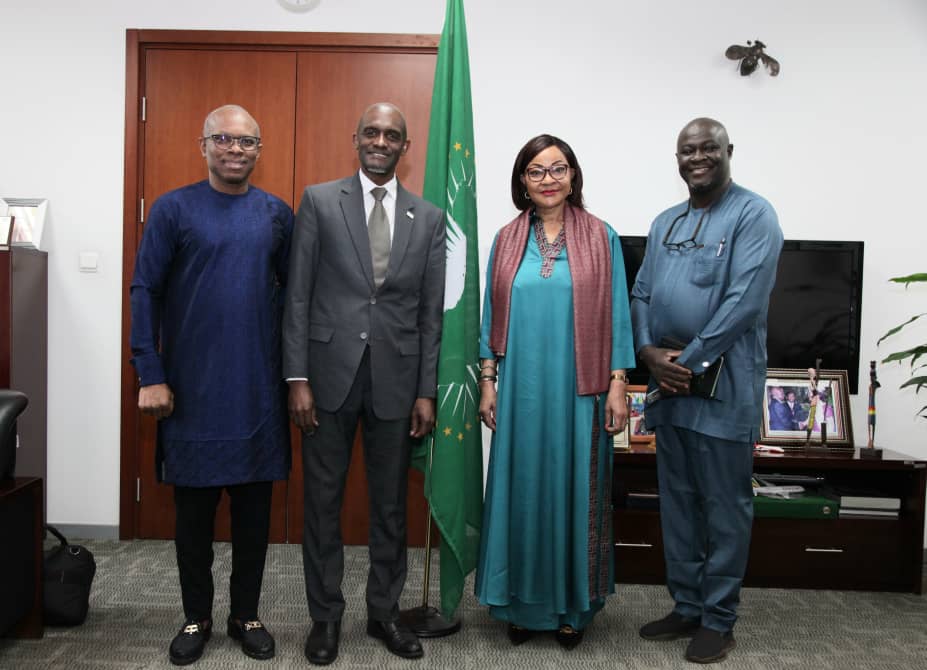
From left to right, CAAPs and FARA M&E Coordinator Anselme Vodounhessi, FARA Executive Director Dr. Aggrey Agumya, AUC DARBE Commissioner H.E Amb. Josefa Sacko and FARA Ag. Director for Research and Innovation, Dr. Wole Fatunbi.
Significant updates included (i) the Soil Initiative for Africa (SIA), the Africa fertilizer and Soil health Action Plan (AFSH-AP) and the Nairobi Declaration of May 2024, with detailed discussions on preparations for implementation, funding, and roadmap development; (ii) the Common Africa Agro Parks (CAAPs) Programme, where discussions focused on recent progress, ongoing consultations, and engagements with funders. The strategic importance of CAAPs for agricultural transformation in Africa was underscored as a critical initiative.
(iii) the African Seed and Biotechnology Partnership Platform (ASBPP), where discussions focussed on the Partnership for Integrated Seed Systems in Africa (PISSA) and the platform efforts to mobilise investments in PISSA; (iv) the involvement of FARA in the process of crafting the Post-Malabo agenda and in its implementation including the CAADP research and innovation strategy; (v) the Africa climate smart agriculture initiative which is currently in early stages of conceptualisation.
The high-level dialogue included H.E. Commissioner Sacko and senior advisors from AUC, key personnel from FARA, including Dr. Aggrey Agumya, and Dr. Wole Fatunbi and Mr. Anselme Vodounhessi from FARA. Both parties reaffirmed their dedication to driving strategic initiatives that will lead to sustainable agricultural transformation across Africa. HE Commissioner Sacko, emphasized her determination to strengthen Africa organizations to lead the realization of the vision for Africa agricultural development, i.e., CAADP.
Commissioner Sacko emphasized, “This meeting marks a significant step forward in our collaborative efforts with FARA. Together, we are committed to addressing the critical challenges and leveraging opportunities to transform agriculture in Africa.”
This engagement underscores the AUC and FARA’s unwavering commitment to enhancing African agricultural research and development. It signifies a strengthened partnership to foster sustainable agricultural practices and promote economic growth across the continent.
For media inquiries, please contact:
Forum for Agricultural Research in Africa (FARA)
About FARA:
The Forum for Agricultural Research in Africa (FARA) is the apex organization for agricultural research and innovation in Africa. It is a technical organisation of the African Union Commission and the African Union Development Agency (AUDA-NEPAD) on matters concerning agriculture research and innovation. It provides a continental platform for advancing the deployment of science, technology and innovation towards achievement of the national, regional and continental food systems and agriculture transformation targets. FARA’s mission is to contribute to the sustainable improvement of food security, incomes, resilience and environmental management in Africa through the improvement of agricultural systems’ productivity, competitiveness, markets and agricultural ecosystems.
About AUC-DARBE:
The Department of Agriculture, Rural Development, Blue Economy, and Sustainable Environment (ARBE) at the African Union Commission (AUC) is responsible for driving the African Union’s agricultural and rural development agenda. The department focuses on enhancing food security, promoting sustainable agricultural practices, and fostering economic growth through agriculture and rural development.
The Africa Export-Import Bank (Afreximbank), and the Forum for Agricultural Research in Africa (FARA) mark a significant milestone as the Common African Agro-Parks (CAAPs) Project Agreement is officially endorsed at the Tunisia Africa Business Meetings.
This groundbreaking collaboration between the International Islamic Trade Finance Corporation (ITFC), Afreximbank and FARA, supports the visionary CAAPs Programme.
“Together, we’re set to transform agricultural productivity across Africa by creating innovative agro-industrial parks that promote cutting-edge technology transfer and drive economic development.”
Signatories were Prof. Benedict Oramah, President and Chairman of the Board of Afreximbank and Chair of the AATB Executive Committee Eng. Hani Salem Sonbol, CEO of International Islamic Trade Finance Corporation (ITFC) and the Arab Africa Trade Bridge (AATB) Secretary General.
The Head of Rural Development Division (ARBE) and Chair of the CAAP-TWG (AUC), Dr. Janet Edeme, has reiterated that establishing regional agro-industrial hubs will reduce Africa’s $50 billion yearly food imports.
This will also enhance agricultural productivity and stimulate economic growth among African countries, as this aligns with the “broader vision of the African Union to achieve sustainable development and prosperity for all its citizens,” she explained.
Speaking at the 2024 Planning Retreat of the CAAPs Technical Working Group in Harare, Dr Edeme acknowledged the hurdles in transforming Africa’s agricultural landscape and called on stakeholders to “remember that our success depends on our ability to work together, share knowledge, and leverage the strengths of each partner. The challenges we face are significant, but so are the opportunities.”
She further stated that the “outcomes of this retreat will shape the future of the CAAPs initiative. We aim to finalize comprehensive plans, secure commitments, and outline a clear roadmap for the implementation of our demonstration projects. These projects, as models of integrated agro-industrial development, will pave the way for large-scale investments and policy innovations across Africa.”
Group Photo of CAAPs TWG members
About the CAAPs
The Common African Agro-Parks Programme (CAAPs) was initiated in 2019 as one of the concrete initiatives of the Comprehensive African Agricultural Programme (CAADP) to be implemented within the framework of the African Union (AU) Agenda 2063 in order to achieve the CAADP Malabo commitments, particularly the commitment to “triple intra-African trade in agricultural commodities and services.”
CAAPs emerged from the major recommendations of the inaugural CAADP-Biennial Review (BR) Report presented to the 2018 AU Assembly of Heads of States, where recommendations were formulated for the AU Commission to initiate continental actions that shall aim at: i)- boosting regional trade for agricultural commodities by increasing locally processing of key agricultural products and their respective value chains; ii)- promoting and facilitating increased consumption of locally and regionally produced agricultural commodities; iii) -achieving self-sufficiency and lowest possible importation of key agriculture commodities in Africa; and iv)-stimulating local and regional private sector investments in agriculture. The implementation of the CAAPs will assist Africa in reclaiming the roughly USD50 billion per year African Food Import Market, which is currently outsourced to the rest of the world.