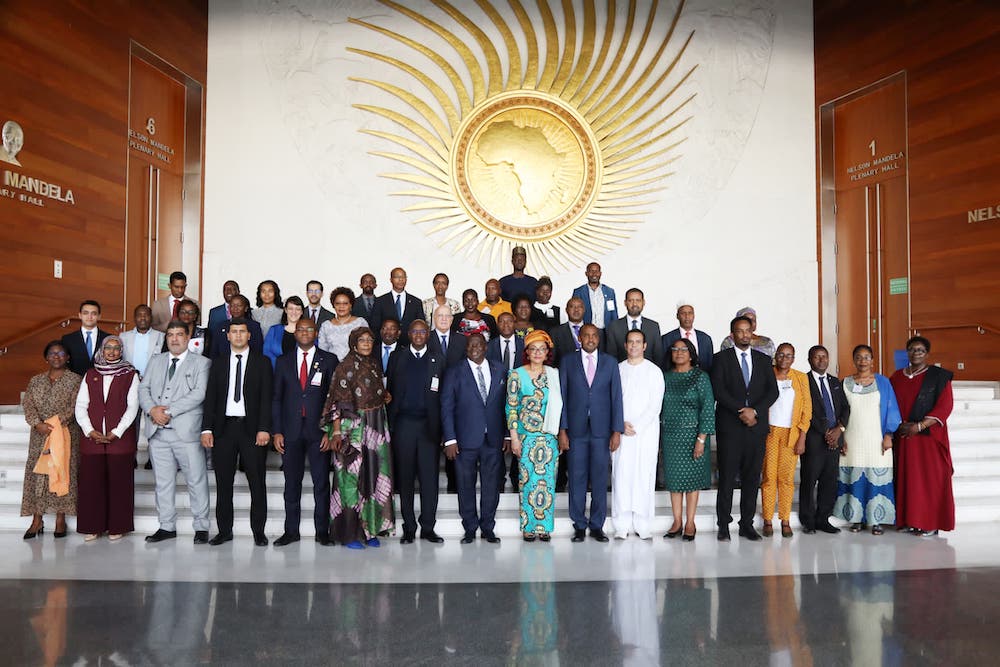
The Ministerial Segment of the Extraordinary Session of the Specialized Technical Committee (STC) on Agriculture, Rural Development, Water, and Environment (ARDWE) opened today with powerful interventions from African Union leaders and partners, as they gathered to deliberate on the future of Africa’s agricultural transformation. With a strong focus on post-Malabo initiatives, including the Common African Agro-Parks #CAAPs and the Soil Health Initiative for Africa (SIA), the session also paid tribute to the leadership of H.E. Amb. Josefa Sacko, AU Commissioner for Agriculture, Rural Development, Blue Economy, and Sustainable Environment.
AUC-DARBE Commissioner H.E Amb. Josefa Correia Sacko
In her opening address, Amb. Sacko emphasized the urgent need for Africa to address critical challenges such as food insecurity, climate change, and economic shocks. “We are not on track to meet the targets of the Malabo Declaration or the Sustainable Development Goals related to hunger and nutrition. However, with the right leadership and continued collaboration, we can reverse this trajectory,” she stated. Amb. Sacko also celebrated the collaborative spirit of African leaders, expressing optimism that the continent can realize its agricultural potential through strong political will and partnerships.
Dr. Honore Tabuna,Commissioner for the Environment, Natural Resources, Agriculture and Rural Development of the Economic Community of Central African States (ECCAS)
In an impassioned statement, Dr. TABUNA Honoré, Commissioner for the Environment, Natural Resources, Agriculture and Rural Development of the Economic Community of Central African States (ECCAS), spoke on behalf of all the Regional Economic Communities (RECs) of the African Union. He lauded Amb. Sacko for her dynamic leadership and enormous contributions during her tenure, noting her courage and commitment to driving Africa’s agricultural agenda forward. Dr. TABUNA also voiced concerns about the poor progress of many African member states in achieving the goals of the Malabo Declaration. He emphasized the need for a more coordinated, African-led approach to ensure the successful realization of the targets outlined in the post-Malabo agenda.
“The RECs are concerned by the slow progress in meeting the continental goals enshrined in the Malabo Declaration. We call for stronger cooperation and leadership from African states to ensure that the post-Malabo framework achieves its intended goals,” Dr. TABUNA stated, urging for deeper collaboration between national governments, RECs, and the African Union to drive more tangible results.
Hon. Frank Tumwebaze, Minister for Agriculture, Animal Industry and Fisheries of Uganda
The Chair of the STC, Hon. Frank Tumwebaze, Minister for Agriculture, Animal Industry and Fisheries of Uganda, echoed these sentiments, stressing the importance of an actionable post-Malabo process. “The post-Malabo agenda must not remain a set of aspirations on paper; we need actionable plans and commitments from every member state to drive agricultural transformation and ensure food security for all Africans,” Hon. Tumwebaze remarked.
Amb. Sacko also reflected on the critical importance of the Africa Food Safety Agency, which is being considered for final endorsement during this session. “The operationalization of the Africa Food Safety Agency is integral to our goals under the Africa Continental Free Trade Area (AfCFTA),” she said. “It will play a pivotal role in ensuring that our agricultural products meet international standards, opening doors for global market access.”
As the conference continues, African Ministers, development partners, and key stakeholders will deliberate on key policy decisions that will shape the future of Africa’s agricultural landscape, paving the way for the AU Special Summit in January 2025 in Kampala, Uganda.
The Mediterranean region of Africa, including Morocco, Tunisia, Algeria, Egypt, Libya, and Mauritania, faces unique soil challenges. While their soils share similarities with the rest of Africa, they also experience added pressures from low moisture levels, limited vegetation, and biomass yield.
These lands, initially arid, have now become hyper-arid. Key challenges include water scarcity, drought, soil salinization due to irrigation, desertification, erosion, nutrient depletion, low organic carbon, overgrazing, land degradation, soil compaction from mechanized farming, reduced biological activity, and the impact of climate change.
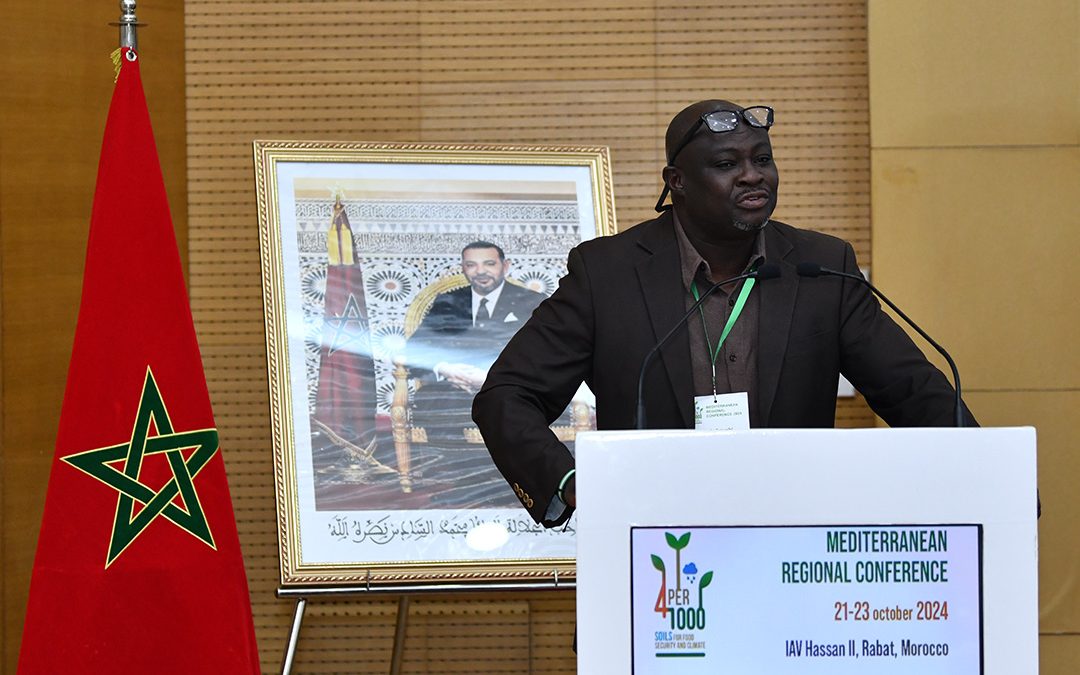
The 4Per1000 Initiative hosted the Mediterranean Regional Conference from October 22-25, 2024, at the Institute of Agriculture and Veterinary, Hassan II, in Rabat, Morocco. During the conference, Prof. Wole Fatunbi, representing the ORCaSa Project and Africa’s International Research Consortium on Soil Carbon (IRC-OC), emphasized the need for Africa to develop its agriculture based on sound science. He noted that Africa must design strategies that reflect its natural resources and socio-economic realities.
Prof. Fatunbi questioned the Agroecology approach of reducing external inputs, which is promoted in some Western and Asian countries. He argued that while this may work elsewhere, Africa needs to incorporate organic fertilizers, biofertilizers, and organic materials to improve soil properties. Without this, mineral fertilizers won’t be as effective. He also stressed that mineral fertilizers must be used according to the crop’s specific nutrient needs. This approach would help maintain crop yields and reduce nutrient imbalances.
Prof. Wole Fatunbi, Acting Director of Research and Innovation, FARA
To support this, Prof. Fatunbi proposed the creation of a robust Soil Information System (SIS), which could guide farmers and land users by providing data-driven recommendations on fertilizers and agronomic practices.
Key actions identified to improve soil health and stop land degradation include:
Developing knowledge and technology to align with nature-based solutions.
Advancing the Soil Information System for better decision-making.
Introducing adaptable mechanization for fragile soils in smallholder systems.
Promoting the use of ICT, remote sensing, drones, and robotics in smallholder farming.
Developing nature-friendly soil amendments, such as organic and biofertilizers and eco-friendly mineral fertilizers.
For Africa to succeed in these efforts, stakeholders and member states must collaborate to implement continental frameworks like the Soil Information System (SIS) and the African Fertilizer and Soil Health Action Plan (AFSH-AP), a ten-year initiative to advance soil health.
By: Bridget Kakuwa, Benjamin Abugri & Alida Nadinga
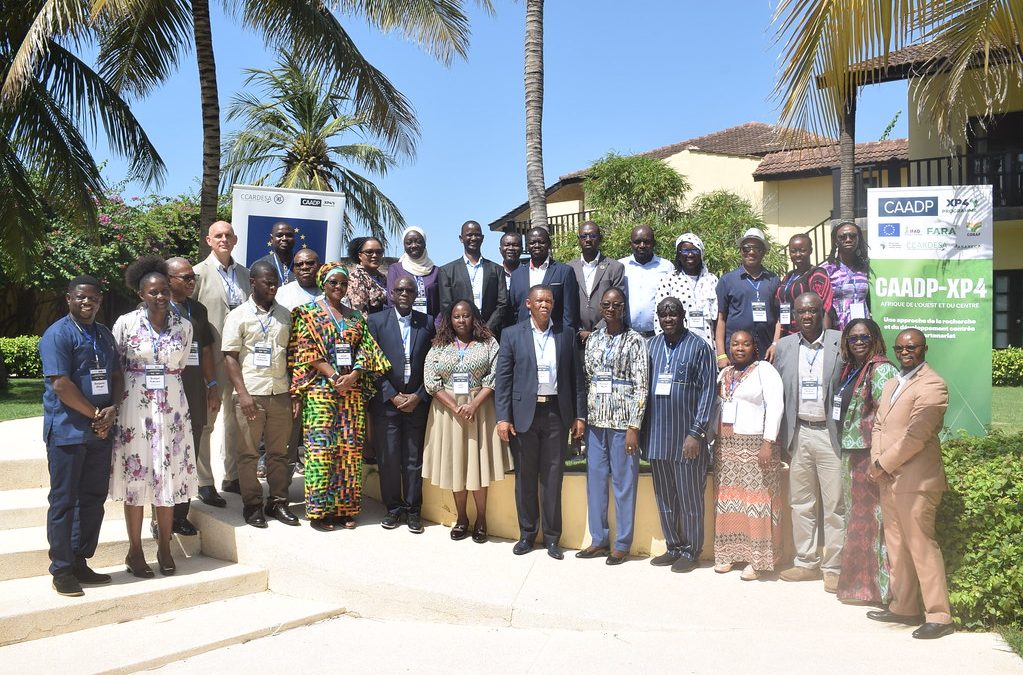
October 15 – Sally, Senegal—The vibrant discussions of the CAADP-XP4 Consortium echoed through the halls of the Rhino Resort Hotels & Spa as representatives from across Africa gathered for a crucial Joint Portfolio Review and Planning Meeting from October 13 to 15, 2024. The air was charged with anticipation as stakeholders aimed to finalize strategies for the project’s final year, focusing on sustainable agricultural development and the integration of pressing issues such as agroecology and digitalization.
In opening remarks, Mr. Amine Belhamissi, IFAD Technical Advisor, set the tone for the meeting by stressing the need for clarity in communication. “We need to know the SROs’ priorities. It appears that you know what your priorities are, but you have not clearly communicated what we need to know,” he stated. His call for establishing robust communication channels resonated with the audience, underscoring the importance of collaboration for collective success.
Dr. Emmanuel Njukwe, Director of Research, CORAF.
Dr. Emmanuel Njukwe, Director of Research of CORAF expressed gratitude to the consortium members for their contributions, celebrating the shared commitment to impactful agricultural initiatives. “By fostering partnerships and focusing on emerging issues like agroecology and digitalization, the CAADP-XP4 consortium is ensuring Africa’s agricultural future remains resilient and adaptable to global challenges,” said Dr Njukwe Emmanuel, Director of Research and Innovation of CORAF. “The no-cost extension will give us the time and resources needed to maximize the project’s impact and prepare for a successful transition beyond 2025.
Prof. Oluwole Fatunbi, Acting Director of Research and Innovation. FARA
Adding to the spirit of collaboration, Prof. Oluwole Fatunbi, Acting Research and Innovation Director at FARA reflected on the power of joint efforts. “Our collective work must push us to engage more actively in continental frameworks, ” he said.
Dr. Lillian Lihasi, AFAAS
The meeting also provided a platform for Dr. Lilian Lihasi of AFAAS to advocate for unity in purpose. “If you want to go far, you must move with others,” she remarked. “We believe we can only be as strong as our weakest link. Mobilizing resources together is essential as CAADP-XP4 ends; our deliverables will speak for us and pave the way for our next steps.”
Dr. Baitsi Podisi, CCARDESA
Dr. Baitsi Podisi from CCARDESA emphasized the importance of inclusivity, acknowledging the significant strides made despite challenges. “CCARDESA is committed to the CAADP-XP4 mandate,” he stated. “We have learned immensely from our interactions with regional partners. Gender is a key area for us, and I applaud the Gender Technical Working Group for its achievements. We must push for deliberate recruitment of women and affirmative action.” Dr. Podisi also said, “We are excited to launch the soil initiative in the CCARDESA region, and we have also reinforced our alignment with the post-Malabo agendas, ensuring that our work translates into real benefits for SADC Member states.”
Mr. Benjamin Abugri, speaking on behalf of FARA’s Director of Research and Innovation as part of closing remarks, highlighted the necessity of visibility for the consortium’s efforts. “As we approach the final year, it’s essential that we prioritize all key deliverables,” he urged. “Aligning our strategies with agroecology and digitization is crucial. Our achievements must be visible—they serve as proof of our existence for future projects.” Said Mr Abugri.
In his closing remarks, Mr. Moses Odeke, Acting Programme Director from ASARECA, reinforced his commitment to the meeting’s decisions. “Failure is not an option; we must succeed in this venture,” he asserted, thanking CORAF for its role in the gathering. His playful invitation to a “revenge visit” to his country added a lighthearted note, exemplifying the camaraderie developed during the meeting.
The meeting yielded a strong collective resolve to enhance resource mobilization and strategic partnerships. The path forward for the CAADP-XP4 Consortium appeared bright, with members expressing optimism about leveraging their collaborative successes to drive innovation and sustainable agricultural practices across the continent.
As the meeting came to a close, the CAADP-XP4 Consortium emerged with a set of pivotal outcomes that will shape its final year and ensure the sustainability of its initiatives. Participants reached a consensus on the strategic need for a one-year no-cost extension, allowing more time to finalize essential tasks and incorporate emerging priorities such as agroecology and digitalization into the project framework.
The consortium collectively agreed on a detailed final work plan that integrates both existing and new priority areas, ensuring that the project remains relevant to current agricultural needs. Additionally, a structured approach for project closure was outlined, complete with timelines for report submissions and preparations for the European Commission audit, all in alignment with the latest guidelines.
The discussions culminated in the formulation of a forward-looking sustainability strategy that emphasizes resource mobilization and strengthens partnerships with key stakeholders, particularly One-CGIAR.
This strategy aims to enhance synergies among consortium members and formalize working arrangements under the AARIEIs framework. Furthermore, a comprehensive joint program plan was established to guarantee that all deliverables are met before project closure, ensuring the consortium’s efforts leave a lasting impact on agricultural research and development across Africa. With these outcomes, the CAADP-XP4 Consortium is well-equipped to advance its mission and foster continued collaboration in the years to come.
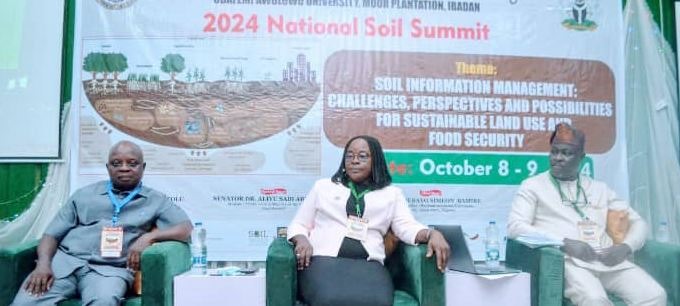
An expert in the field of agriculture, Dr. Wole Fatunbi, has identified low household income, poor social capital, low educational level and Nigeria gross domestic product (GDP) as the factors responsible for food insecurity affecting Nigeria while also stating that the Federal government is not sincere with the allocation of the countries budget for agriculture.
Dr. Fatunbi of the Forum of Agricultural Research In Africa (FARA) Ghana stated this while delivering a keynote address during the 2024 National Soil Summit held at the Institute of Agricultural Research and Training (IART) Ibadan.
While speaking at the summit with the theme Soil Information Management: Challenges, Perspectives and Possibilities for Sustainable Land Use and Food Security, he maintained that the Federal government needs to take proactive measures to tackle food shortages and develop partnership for capacity building.
While enumerating the factors that will boost food security, Dr. Fatunbi stated that partnership for capacity building on soil information science, promotion of the research of experts, enhancement of the existing political will to have soil information system are capable of boosting food security.
Other factors according to him, include the establishment of national soil information system, supporting tools from the soil information system and the development of the policies of researchers for data sharing and data use.
The Chief host, Vice Chancellor Obafemi Awolowo University Ile-Ife Prof. Simeon Bamire who was represented by the Dean, faculty of agriculture Prof. Akeem Tijani stated that proper education on the importance of soil to healthy crop, advocacy and concrete actions in the field are the best way to maintain healthy soil and that water management strategies formulation and implementation as well as soil survey and land evaluation remain the best way to achieve soil information system.
“The role of IART as an institution with national mandate for soil research over years has contributed to developing improved soil management technologies affordable and adaptable to agro-ecologies of Nigeria.
“The potentials of the institute in research for development has endeared the government and private organisations to rely on her services in the area of soil and agro chemical testing / validation, soil and water management strategies formulation and implementation as well as soil survey and land validation” he remarked.
While welcoming the experts in the field of agriculture to the summit the Director of IAR&T, Prof. Veronica Obatolu emphasised that soil is experiencing a yearly decline despite the availability of improved technologies.
This, according to her has led to increased food insecurity, environmental challenges and economic crisis, she however added that addressing the ongoing issues affecting sustainable land use and agricultural development in the country is crucial at this moment.
“Soil often overlooked is the unsung hero of our ecosystem, it provides 95 per cent of our food, filters our water and regulate the climate, yet soil degradation affects over 33 percent of global land, affecting human health, food security and economic stability” she stated.
Prof. Obatolu disclosed that the summit represents a pivotal moment in various stakeholders’ innovative collective journey to enhance soil health and fertility and to promote sustainable agriculture practices and to foster resilient ecosystem and communities.
In his remark the Minister of Agriculture who was represented by the Oyo State Coordinator, Federal Ministry of Agriculture and Food Security, Dr. Florence Kakulu commended the leadership of IAR&T, especially Prof. Veronica Obatolu for working in the line of the ministry to achieve food sufficiency and urged her to continue working with other sister institutions and collaborate with the Federal Government to achieve food sufficiency.
She said the theme of the summit is in tandem with the Federal Government plan to boost food sufficiency in the country and urged Nigerians to utilise any little space within their homes to plant domestic crops.
The summit was supported by Indorama, GIZ, Soil values, SASAKAWA Africa Association and OCP.
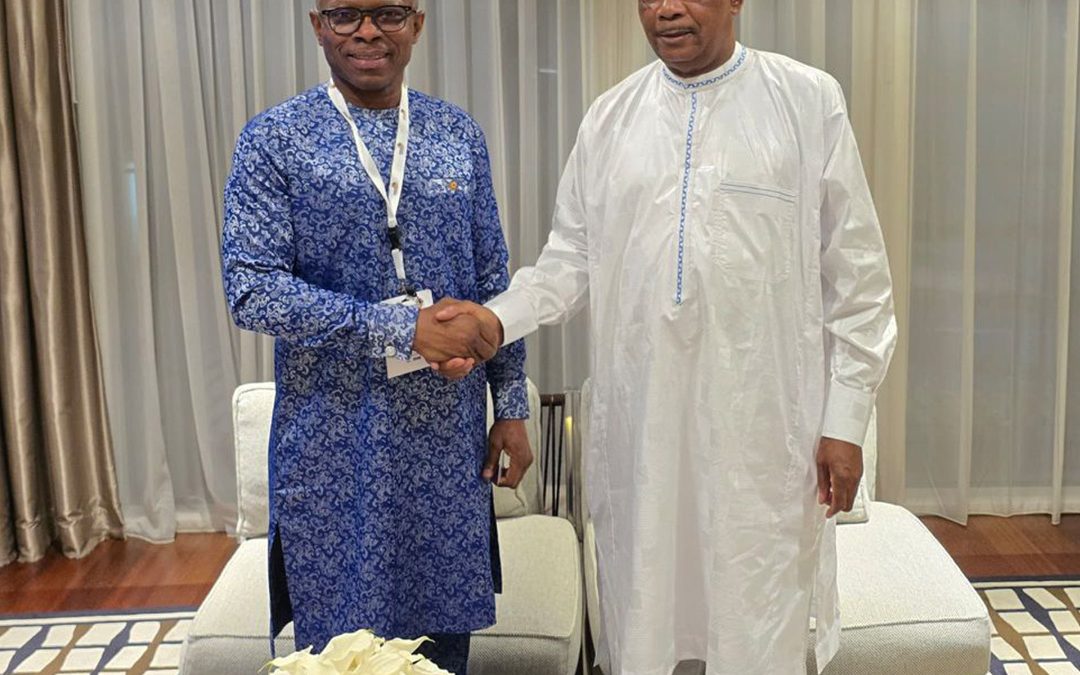
On the sidelines of the Biashara Afrika 2024 Forum, Mr. Anselme Vodounhessi, Coordinator of the Common African Agro-Parks #CAAPs Programme, held a high-level discussion with His Excellency Mahamadou Issoufou, Champion of the AfCFTA, on the development of #CAAPs zones in Africa within the AfCFTA framework.
During the meeting, His Excellency Issoufou underscored the significance of the #CAAPs programme in addressing Africa’s agricultural challenges, specifically pointing out that the continent spends over 70 billion euros annually on food imports. He reaffirmed his support for the #CAAPs agenda and committed to advancing it under the AfCFTA, recognizing it as crucial for Africa’s economic independence in the agro-industrial sector.
A key topic of discussion was the development of a #CAAPs Zone for Livestock in the Tri-Border Region of Burkina Faso, Niger, and Mali. His Excellency stressed the urgency of this initiative, given its potential to strengthen local economies, improve food security, and mitigate regional tensions.
His Excellency emphasized the need for ongoing collaboration to ensure the success of the #CAAPs initiative in unlocking Africa’s agricultural potential through the AfCFTA framework.
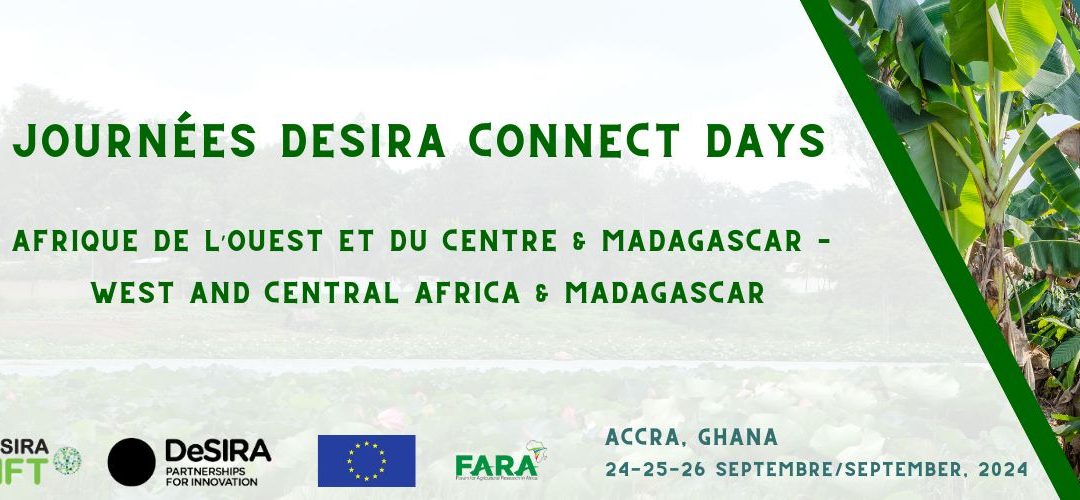
We are pleased to invite you to the DeSIRA CONNECT Days Western Africa, Central Africa & Madagascar, which will occur from September 24 to 26, 2024, at the ISSER Conference Hall, University of Ghana, Accra.
This event is organised by the European Commission through the DeSIRALIFT initiative and the Forum for Agricultural Research in Africa (FARA).
About the Event:
The DeSIRA CONNECT Days bring together African and European organisations involved in research and innovation for sustainable agriculture and various stakeholders in the region and Africa, including NGOs, farmer organisations and policymakers.
This three-day event is designed to share lessons and outcomes from DeSIRA (Development-Smart Innovation through Research in Agriculture) projects and explore pathways for scaling innovations in agricultural and food systems.
Participants will have the opportunity to engage in a series of dynamic activities to present their projects; jointly reflect on key topics including participatory innovation with civil society and the private sector and mechanisms for responsible innovation; discuss the role of research in agricultural innovation, education, knowledge and job creations as well as in policy making.
The event is the second in Africa after the one organised last July during the Science and Partnerships for Agriculture Conference – SPAC – in Kigali, Rwanda.
It will provide participants with insights on innovation mechanisms and scenarios for a climate resilient agriculture – healthy for the planet and the people – to build a long-lasting impact on food security, poverty alleviation, and socio-economic and gender-balanced inclusion while protecting biodiversity and ecosystems.
The DeSIRA Connect Days will feed the broader agenda of EU-Africa and other international initiatives, policies and strategies in support of sustainable agriculture and food systems
For more information, updates, and the full event program, please visit the DeSIRA website or contact us at [email protected]
Virtual Registration
You can join us online by pre-registering for the event via the Zoom Link below
Media representatives are invited to join us for the opening and closing ceremonies on Tuesday 24th at noon and Thursday 26th at 1 pm. For specific requests, please contact [email protected] copying [email protected] and [email protected].
The DeSIRA Initiative aims to promote innovation in agricultural and food systems to support sustainable transitions and improve resilience to climate change in Africa, Asia, and Latin America. Through participatory research and multi-stakeholder engagement, DeSIRA projects drive innovation to enhance food security, nutrition, and livelihoods.
The Forum for Agricultural Research in Africa (FARA) coordinates agricultural research for development (AR4D) across Africa. Established in 1997, FARA unites fragmented agricultural research systems to strengthen them under a shared agenda. Based in Accra, Ghana, it supports continent-wide initiatives like the Comprehensive Africa Agriculture Development Programme (CAADP) and represents Africa in global forums.