In Africa, the agriculture sector contributes to the economic development and livelihood improvement of a majority of the population. In 2022, this sector contributed 17% of sub-Saharan Africa’s GDP. As a continent with a vibrant youth population and productive land, Africa possesses the potential to provide sufficient and nutritious food for its people, thereby mitigating hunger and poverty. However, challenges such as insufficient resources, climate change, inability to leverage and implement technological innovations, limited access to knowledge and many others continue to hinder advancement within the sector.
With the rise in innovation technologies, it is inherent for the sector to leverage some of these to improve agricultural yield. Innovation platforms (IPs) serve as a space for learning, experience sharing, collaboration, identification of challenges, and provision of possible solutions. These platforms bring together different stakeholders from every level of the agricultural value chain to discuss issues towards attaining a common objective. Based on data from the Observatory for Africa Agriculture Knowledge Hub, FARADataInformS, there are more than 400 agricultural Innovation Platforms established across Africa. Some countries with the highest number of IPs include Nigeria (93), Kenya (43), DRC (40) and Ghana (31). However, some of the stakeholders within these IPs lack the required capacity and resources to maintain and support the scaling of technologies and good practices for which they were formed in the first place. This is often due to low engagement among stakeholders at different levels of the value chain, discordant views and understanding of the IPs and their visions, as well as paucity of up-to-date information to allow them to thrive.
There is therefore a need to provide these stakeholders with the required capacity and opportunity to network and collaborate to ensure synergy amongst these actors. This will contribute to providing them with a better understanding of the IP model, address working in silos, and provide a close link between technology providers and those who will take up and upscale these technologies.
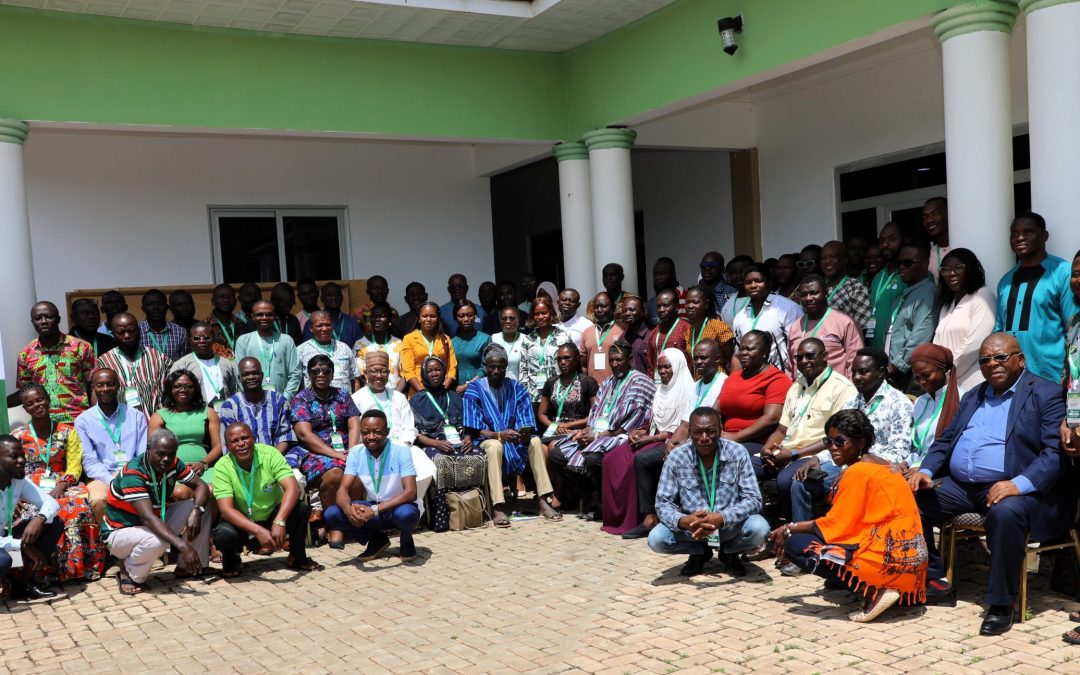
In a stakeholders’ training of trainers’ workshop held at the Pioneer Hotel in Tamale, Ghana, the Technologies for African Agricultural Transformation (TAAT) through its Capacity Development and Technology Outreach (CDTO) compact and partners, including IITA, AATF, World Vegetables, FARA and CSIR-SARI, sought to address some of these IP challenges. The workshop, which was held between September 2nd and 6th, 2024, brought together over 120 stakeholders of the maize, rice, soybean, and vegetable value chains to strengthen their capacities in the establishment and management of IPs to facilitate the adoption of proven technologies for sustainable impact in the agricultural sector.
In their welcome and introductory remarks, the speakers commended the participants for their commitment and admonished them to be ambassadors in promoting good agricultural practices in Ghana.
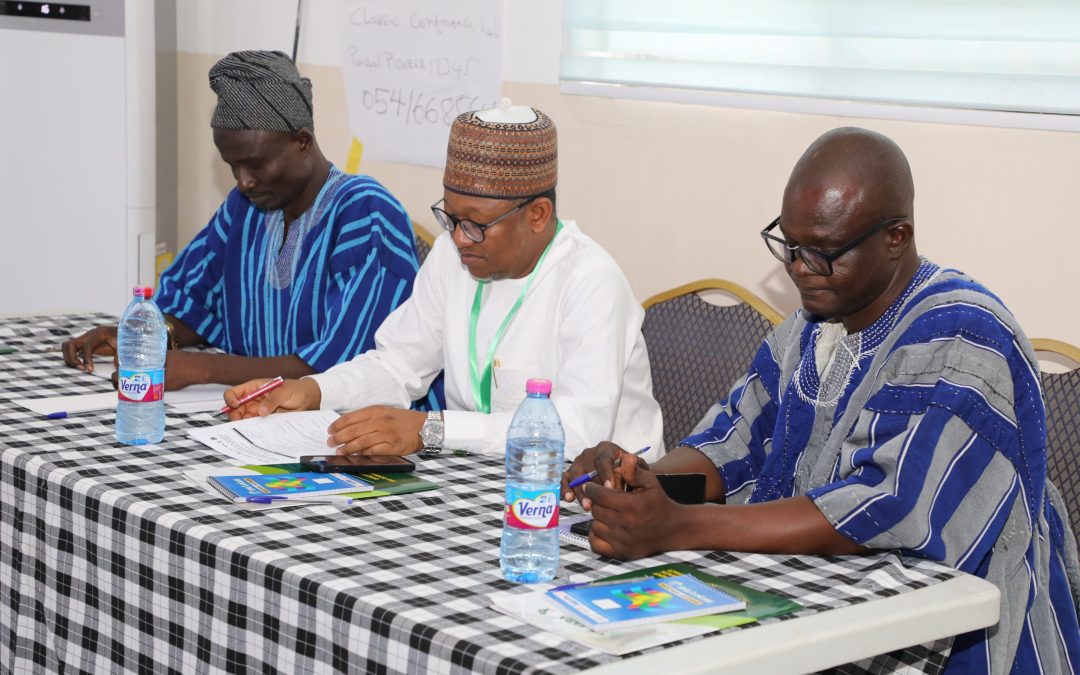
The highly interactive sessions were filled with discussions, teamwork, case studies, and presentations, and aimed at fostering a culture of experience sharing and peer learning among participants. The modules covered included setting up an IP, governance of an IP, and resource mobilization in an IP, amongst others. Through these sessions, participants were able to understand the fundamentals of an IP, including key concepts and principles, setting up, functioning, facilitation, governance, monitoring, evaluation, and learning, conflict management, negotiation, and contracting.
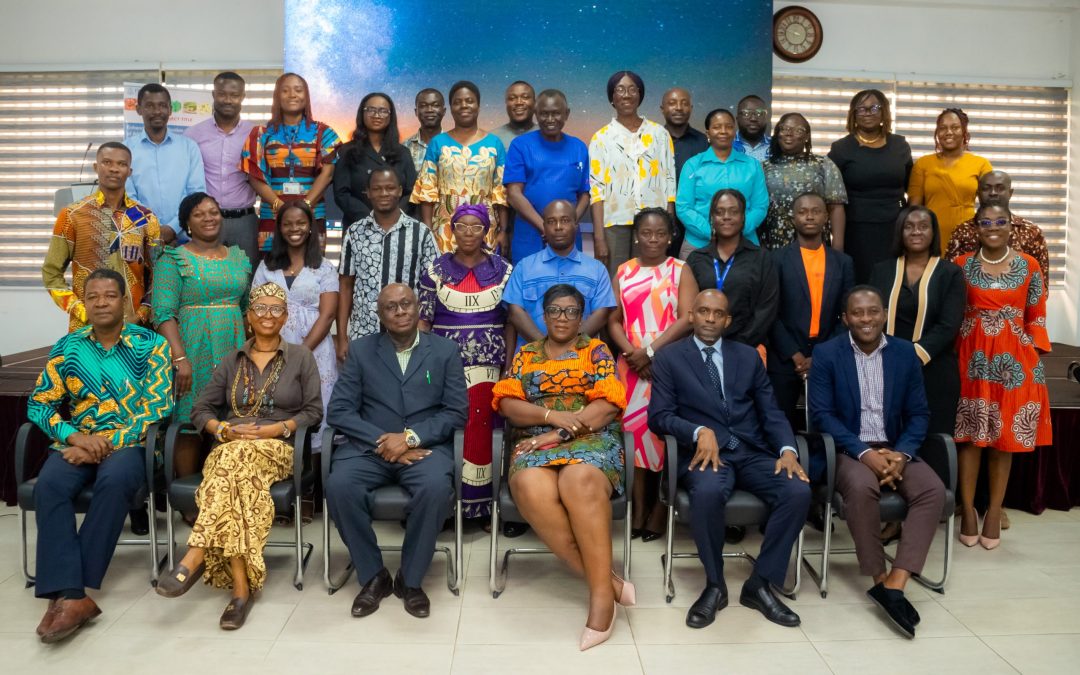
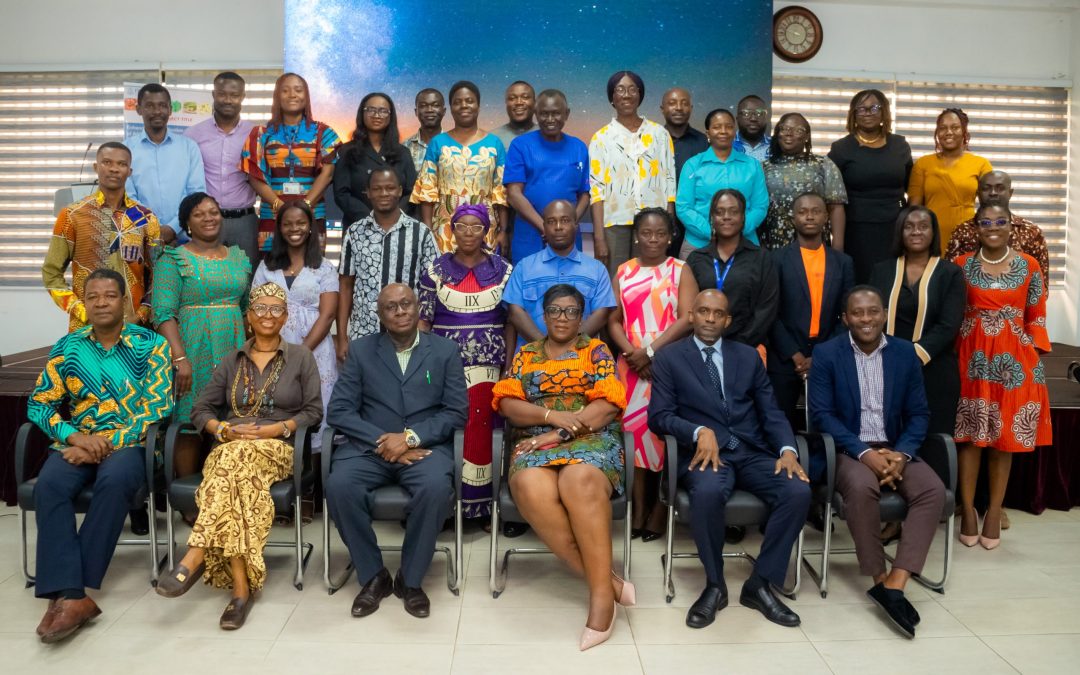
Group of Maize IP Members pose for Picture during the Training workshop
Despite their significance, Innovation Platforms (IPs) cannot operate effectively without stakeholders’ ability to mobilize and manage resources. To address this, participants engaged in sessions on resource mobilization, financial models within IPs, and business plan development. Through value chain analysis exercises, participants identified key activities and stakeholders at each stage of the value chain, mapped the relationships and functions between them, and highlighted the challenges faced by each stakeholder. This practical exercise allowed participants to apply the theoretical knowledge they gained during the sessions, bridging the gap between theory and practice.
The module on conflict management sparked very interesting discussions and diverse perspectives from participants who shared their experiences on some conflicts they had been involved in and how they tackled them.
‘A difference in perception is at the heart of conflicts.’ – Dr Latifou Idrissou, Lead IP Trainer and Facilitator, University of Parakou, Benin.
The discussion on innovation versus invention brought thought-provoking examples and explanations for participants’ understanding of the two concepts.
An important workshop highlight was a session during which various Commodity Compacts (maize, soybean, rice, and vegetables) collaborated in teams to develop work plans, applying the concepts learned throughout the five-day program. These work plans enabled each group to identify key stakeholders, outline objectives, define indicators, plan activities, assign roles and responsibilities, estimate costs, set timelines, and project expected results.
Several actions common to all compacts focused on strengthening the capacity of seed producers and enhancing partnerships and collaboration across all levels of the value chain to boost yields and reduce post-harvest losses. These efforts align with the primary objectives of the training.
“If Africa is an agrarian community, we can’t rely on the West to feed us. The jobs that most of us are looking for are within our reach. All we need to do is to adopt the strategies and knowledge we have gained and within the next 12 months, we will have improved.” – Omikunle Oluwaseun Ayoola, Soybean compact representative, IITA.
“I came as a trainee and I can say that I am well equipped on how to establish, run, and govern an IP and I believe the stakeholders are also well equipped.” – Joyce Njuguna, Maize compact representative, AATF.
In his concluding remarks, Dr Abdulrazak Baba Ibrahim, Lead Specialist for Capacity Development and Future Scenarios, and the TAAT-CDTO Coordinator assured participants of the commitment of all compacts to the activities and sustainability of the IPs. To close the event, Chief Mohammed Rashad Abdulai, Secretary to the Paramount Chief of the Gukpegu Traditional Council, Tamale, commended the participants and organizers for their active participation. He emphasized the need to think outside the box to support the advancement and sustainability of Ghana’s agricultural transformation agenda.
“We must put into practice all that we have learned from here and bear in mind that there is more room to learn. To realize our full potential, we need to start self-organizing and avoid relying solely on donor agencies for support”, Chief Rashad concluded.
Author Affiliations
[1] Mabel Shu Lum is KM4AgD Fellow, Certified KM Manager for Sustainable Development and the Knowledge Management Assistant at the West Africa Civil Society Institute (WACSI)
[2] Benjamin Abugri is a KM and Project Management Practitioner and the KM, Digitalization and Learning Cluster Lead Specialist at the Forum for Agricultural Research in Africa (FARA)
[3] Abdulrazak Ibrahim is a Scientist and Capacity Development and Futures Cluster Lead Specialist at the Forum for Agricultural Research in Africa (FARA)
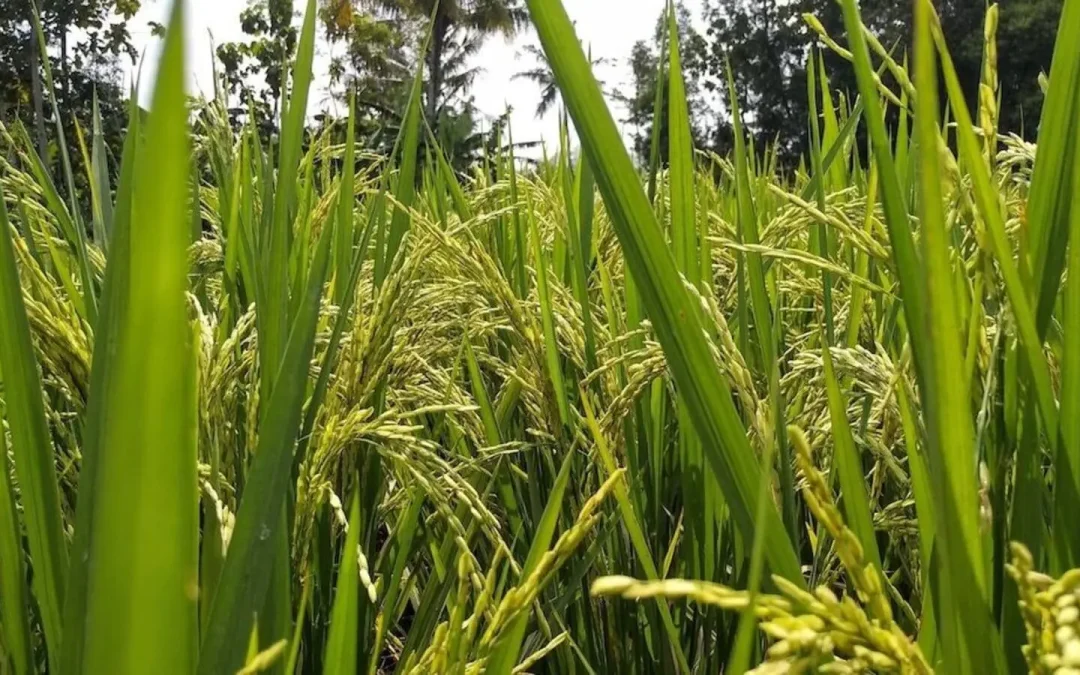
GABON – The Gabonese National Program for Selection and Varietal Improvement-Seed Production (PNSAV-PS) has successfully developed five new rice varieties tailored to Gabon’s unique soil conditions promising to enhance food security and reduce the economic burden of rice imports.
This milestone was achieved through a collaborative effort with the Japanese International Cooperation Agency (JICA), AfricaRice, and Kafaci, a South Korean intergovernmental organization.
Launched in 2018, the PNSAV-PS initiative has focused on selecting rice varieties capable of thriving in Gabon’s diverse agricultural landscapes. The research and development phase took place in Kougouleu, a village located approximately fifty kilometers from Libreville.
Speaking during the launch, Dr. Yonelle Déa Moukoumbi, the project leader, revealed that the five non-fragrant but high-quality varieties are ready for approval and registration in Gabon’s first national catalog of rice varieties.
“These varieties were developed using a genetic background from South Korea, where initial crosses were made. We received the material and followed research protocols to identify seeds that adapt well to Gabonese soils,” she noted.
The seven-year effort aims to revitalize rice production in Gabon and reduce the country’s heavy reliance on imported rice.
According to the Gabonese Shippers’ Council, Gabon imported more than 95,286 tonnes of rice worth over 41 billion FCFA (approximately US$70 million) in 2023.
In addition to the non-fragrant varieties, the project has also introduced five fragrant varieties, focusing on premium types such as Super Basmati and Basmati.
“Next, we will proceed with the actual production by distributing these seeds to various producers,” Dr. Moukoumbi added.
Despite some skepticism due to the failure of a similar initiative in the past, Dr. Moukoumbi remains optimistic. She assures that the project will succeed with the necessary financial support.
This comes at a time when The Food and Agriculture Organization of the United Nations (FAO) reports that African rice consumption is projected to reach 34.9 million tonnes of milled rice by 2025.
However, current African rice production cannot satisfy the consumer demand in quantity and quality, with the gap filled by imports, predominantly of Asian origin, to approximately USD 5.5 billion annually.
According to FAO, the rice sector represents a pathway out of poverty in Africa, as rice availability and prices have become major determinants of the welfare of the poorest sections of African consumers.
This means that the continent needs to strengthen the local rice value chains to achieve better production, nutrition, an environment, and a better life in the target countries. This is where public–private partnerships (PPP) come in play.
The management teams of the country’s industrial parks have been given short notice to transition into Special Economic Zones following the federal government’s policy change.
Officials at the Ethiopian Investment Commission (EIC) revealed details of the transition plans during a recent round of discussions with foreign investors operating in the flagship Hawassa Industrial Park (HIP).
Investors told The Reporter the Commission has given all industrial parks that fulfill the requirements to be designated as SEZs 20 days to finalize the transition.
EIC officials declined to comment on the issue but their counterparts at the Industrial Parks Development Corporation (IPDC) confirmed the decision and the short window for transition.
They told The Reporter they have differences with EIC officials.
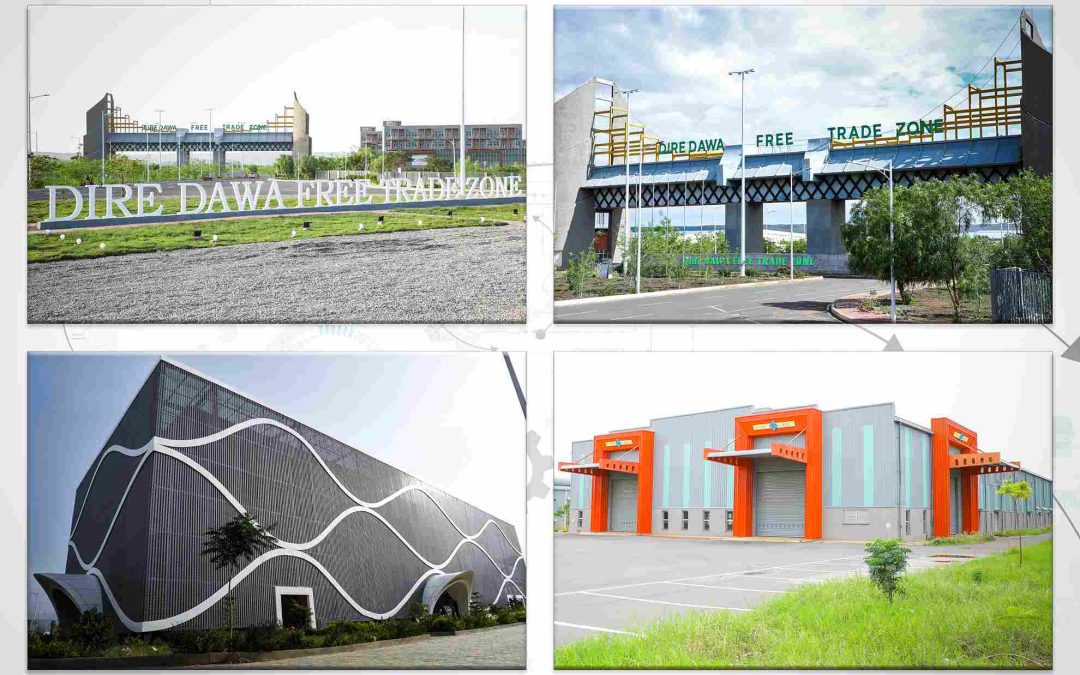
“As per the new legislation, almost all existing industrial parks can fulfill the criteria to become Special Economic Zones. However, so far, IPDC has designated only Dire Dawa Industrial Park to become an SEZ. SEZs have additional features like logistics and other full-fledged economic activities integrated in one area. If other industrial parks fulfill all these, we will gradually designate other industrial parks to become zones,” said an official at IPDC, who spoke anonymously. “But the approach EIC is taking is a bit different from ours.”
Although IPDC is mandated to develop and administer industrial parks, there is also an industrial parks division department under EIC led by the Deputy Commissioner. Zeleke Temesgen (PhD), EIC deputy commissioner for industrial parks division and Dagato Kumbe, EIC deputy commissioner for investment operations division, traveled to Hawassa town and held meetings with HIP investors on august 20, 2024.
A new project office has been established to oversee the transition of industrial parks to SEZs.
The Special Economic Zone Proclamation recently ratified by Parliament lays out new criteria for an industrial park to be considered an SEZ.
It defines an SEZ as a geographical area designated so by the Ethiopian Investment Board and subject to customs control, and attended by business enabling policies, trade facilitation services, infrastructure and utilities, and amenities including a one-stop shop, duty and tax free privileges, and other special incentives.
An SEZ may comprise one or more industry parks, free trade and logistics zones, science and technology parks, service parks, agriculture and livestock zones, and similar investments.
An existing company that intends to be upgraded into an SEZ can apply to EIC, according to the proclamation. The legislation explicitly states an industrial park will not be required to submit a designation application or undergo designation procedures to attain a special economic zone status.
However, an industrial park must have ample land available (50 hectares minimum) and meet other critical infrastructure requirements to gain SEZ designation.
Applicants are also expected to commit a minimum equivalent exchange of USD 75 million as capital.
The capital may be financed through proven cash contribution, machinery, building, working capital, or debt financing, according to the proclamation.
Exporters operating within an SEZ are also eligible to retain 100 percent of the forex they generate, according to a recent directive from the National Bank of Ethiopia (NBE). Other exporters can only retain half of their forex earnings.
“The investors inside HIP were delighted. This is a big deal for investors,” said a HIP administrator.
However, both the administrators of industrial parks and investors observe the revised retention rate will benefit them only if Ethiopia is reinstated to the African Growth and Opportunity Act (AGOA).
Washington delisted Ethiopia from the preferential trade deal during the two-year northern conflict. The move proved detrimental to the tenants of industrial parks, particularly textiles manufacturers who benefited most from duty free exports to the US.
EIC officials hinted at renewed hopes for AGOA reinstatement during their discussions with HIP investors and administrators.
“Since Ethiopia is agreeing to the peaceful resolution of conflicts and also agreeing to open up its economy to foreigners, there is hope America will reinstate Ethiopia’s AGOA privileges. This was the reason why America delisted AGOA. America wants liberalization even more than the peace talks,” said the HIP administrator.
A Postharvest Technology Specialist, Department of Crop Science, University of Ghana, Dr. Gloria Essilfie, has rallied support of the private sector to partner academia in implementing research findings. This she said is critical to national development as many valuable research outcomes which could propel national development remain untapped.
Dr. Essilfie who is Project Lead, “Enhancing the production and consumption of African indigenous fruits and vegetables (AIFVs) to improve diets in Ghana and Mali, was speaking to GBCNEWS, during a recently held validation workshop and policy dialogue on enhancing consumption of indigenous fruits and vegetables to improve diets in Accra.
Postharvest Technology Specialist, Department of Crop Science, University of Ghana, Dr. Gloria Essilfie
With funding from the Feed the Future Innovation Lab for Horticulture, the University of Ghana is collaborating with the Forum for Agricultural Research in Africa, FARA, to implement various activities and engagements to promote the production and consumption of indigenous vegetables and fruits in Ghana and Mali. The goal is to improve the nutritional status of Ghanaians and Malians by encouraging the use and consumption of local fruits and vegetables.
Dr. Essilfie, said under the project some nutritious products are being developed which would require such critical collaboration to promote acceptance and consumption for the general well-being of citizens.
“Research is doing its bit, we hope that there’ll be the buy in of the private sector so that they would also promote these commodities so that we can consume them”
She hinted that the project would produce a food composition table, detailing the nutritional value of different fruits and vegetables to promote their consumption among the population in the project countries.
“We are all saying it’s nutritious, but how nutritious? So we will have the data to show to people that it’s nutritious. Then when it comes to policy, we can actually show them that this is the data”
Dr. Essilfie, also mentioned that under the project grants will be offered to youth and women led enterprises to expand their businesses. She explained that, “We’ll put an advert out for these enterprises mainly for women and the youth who would apply. If their business plan is good enough around these indigenous crops, we support them with 10, 000 dollars to help set up their business, but they have to already be in the business of producing something so that when they apply and get the money they just continue with what they are doing and work to promote the consumption of these indigenous crops”
The three year project she added will also train farmers to empower them to improve their livelihoods.
“After we’ve done the value chain where we have interacted with them, we now go back and say, we are training based on what we found in the value chain. We are training you on what you don’t have so that you will be able to use that to improve your own livelihood”
Executive Director, Forum for Agricultural Research in Africa, FARA, Dr. Aggrey Agumya, stated that investing in indigenous fruits and vegetables will strengthen the resilience of the country’s food system.
Executive Director, Forum for Agricultural Research in Africa, FARA, Dr. Aggrey Agumya
“Indigenous, fruits and vegetables are also essential in strengthening the resilience of our food systems. They are important as potential opportunities for generating revenue for especially for our farmers”
He said the African Union Commission and the African Union Development Agency, which are the top political organs on the continent are crafting the next phase of the Comprehensive African Agriculture Development Program, which will guide agricultural development on the continent. The framework which he said will be implemented from 2026, will strongly feature indigenous fruits and vegetables.
“Resilience is a big part of the coming agenda and recommendations have been crafted calling for the integration of indigenous food systems and knowledge into national and regional food and nutritional security plans and resilience plans.”
Dr. Agumya, also emphasized the need for stronger collaboration between research, academia, particularly at country level, for maximum benefits.
The Forum for Agricultural Research in Africa (FARA) is the apex continental organization responsible for coordinating and advocating for agricultural research for development. FARA serves as the technical arm of the African Union Commission on matters concerning agriculture science, technology and innovation.
The workshop aims at enhancing rice, vegetable, soybean and maize production through the strengthening of Innovation Platforms (IP) within the country by bringing together strategic stakeholders who will be trained on IP setting-up and running for downstream dissemination.
Innovation platforms which serve as a space for learning, experience sharing, co-creation, business relationship building, problem solving and decision making also facilitate the promotion of innovations, interactions, and collaboration among multiple actors such as agricultural producers, researchers, extensionists, and policymakers. They are therefore critical in promoting interactions among stakeholders to generate, test, and disseminate innovations that will provide solutions to constraints that hinder the performance of agricultural value chains.
The target audience for the workshop includes rice, vegetables, soybean, and maize value farmers and producers, agricultural extension workers, research institutions, academia, government agencies involved in agriculture, private sector actors and traditional authorities. These stakeholders will be taken through sessions on setting up innovation platforms, monitoring, evaluation and learning, governance, knowledge management and resource mobilization on innovation platforms.
The 5-day workshop which will include presentations, discussions, teamwork, and role playing based on practical cases seeks to achieve the following:
Empower a network of farmers and stakeholders with the necessary skills in setting-up and running innovation platforms for enhancing the rice, maize, soybean and vegetable value chains in Ghana.
Establish/support and strengthen rice, soybean, maize, and vegetable Innovation Platforms in Ghana.
Strengthen the agribusiness capacity of stakeholders within the rice, soybean, maize, and vegetable value chains, especially women and youth, for improved profitability.
Promote collaboration, knowledge exchange, and innovation within the rice, soybean, maize, and vegetable value chains
The secretary to the Paramount Chief of Gukpegu (Tamale Traditional Council) and Kpalung Zobogu Naa, Mohamed Rashad Abdulai
The secretary to the Paramount Chief of Gukpegu (Tamale Traditional Council) and Kpalung Zobogu Naa, Mohamed Rashad Abdulai welcomed all participants to the Northern regional capital and assured them of the Traditional Council’s support for the event and the promotion of improved agricultural practices in the Northern region.
Dr Issah Sugri, Deputy Director at the CSIR-SARI
In his opening speech, Dr Issah Sugri, Deputy Director at the CSIR-SARI, speaking on behalf of the Director, expressed his gratitude to donors for contributing to food security across all levels and stressed the need for training on access to technology and knowledge building for capacity development and the creation of more learning platforms to increase reach. He also encouraged participants to adapt and implement these technologies to increase productivity for more sustainable livelihoods.
This workshop hosted at the Pioneer Hotel in Tamale, is set to produce a strengthened network of digitally connected farmers empowered with IP thinking through capacity building, knowledge, and experience sharing, enabling farmers to adopt best practices and improve their productivity.
The University of Ghana (UG) in partnership with the Forum for Agricultural Research in Africa (FARA) and its Partners, working under the Feed the Future Innovation Lab for Horticulture project – “Enhancing the production and consumption of African indigenous fruits and vegetables to improve nutrition in Ghana and Mali” are advocating for the consumption of indigenous crops with particular reference to fruits and vegetables.
Indigenous fruits and vegetables which are grown locally usually on a small scale, are known to have high nutritive value, are often resistant to diseases and tolerant to environmental stresses. However, they have not been mainstreamed in the staple diets due to the fact that consumers complain about their unavailability in large quantities, poor postharvest management as well as the lack of awareness of their nutritional quality.
Stakeholders met in the University of Ghana to validate findings from the analysis of the value chain of the four indigenous fruits and vegetables (namely turkey berries, cocoyam leaves, garden eggs and okra) and engage in meaningful discussions to formulate actionable policy recommendations that will support the integration of these indigenous fruits and vegetables into the diets of Ghanaians.
The well patronized workshop brought together representatives from the Project Consortium Partners, various sector Ministries, Private Sector, Regulatory agencies, Civil Society Organizations, the Media, and farmer groups among others.
In his opening remarks, the Executive Director of FARA, Dr Aggrey Agumya stated that “It is important to recognize the strategic significance of the event, in that, Indigenous fruits and vegetables not only improve diets, they are also essential in strengthening the resilience of food systems. They also provide opportunities for smallholder framers to generate income”
Executive Director of FARA, Dr Aggrey Agumya
He mentioned that the African Union Commission and AUDA are coordinating the crafting of the agenda for the next phase of CAADP, wherein indigenous vegetables feature strongly in this agenda within the nutrition agenda and the resilience agenda. Recommendations have been crafted calling for the integration of indigenous food systems and knowledge into national and regional food and nutrition security plans and in resilience plans.
He expressed concern that scientists in the tertiary education institutions are spread very thin across the growing number of colleges and universities. The very rapid growth in student enrollment in most colleges and universities has meant that faculty are fully programmed with teaching responsibilities. With few research facilities, little budget, and little time available for academic staff to allocate to research activities, the scale and scope of agricultural research at the colleges and universities is quite limited.
He underscored the need for stronger collaboration between research, extension and education actors at country level. He said ‘this need is demonstrated by these numbers: It is estimated by IFPRI that 80% of funding for agricultural research goes to the NAROs (and 20% to the universities), facilities, infrastructure; while 80% of the Africa’s agricultural scientists qualified to do serious research are located at colleges and universities.
The Consultant, Eric Worlanyo Deffor, sharing highlights of his findings, noted that although the four crops studied have immense potential, they are confronted with some challenges.
He indicated that “The project is basically looking at the value chain for indigenous crops, looking at okra, kontomire, garden eggs, and turkey berry, from the production right up to the marketing and consumption. From the highlights, there is potential for growing these crops, but for now farmers still have lots of challenges. Challenges related to access to finance and inputs.”
Eric Worlanyo Deffor
He added, “The whole agenda is also to make sure that we can promote turkey berries, especially as an export commodity within Ghana, because of the health values that are associated with it.”
Speaking to some of the recommendations, Mr. Deffor, said, “We want to look at how we can modernize our transport system to be able to convey our vegetables from the farm gate to the farms so that we still keep them intact and also maintain safety along the value
The Project lead, Dr. Gloria L. Essilfie who is a Postharvest and Food Safety Specialist at the Department of Crop Science, University of Ghana, said the project “Enhancing the production and consumption of African Indigenous fruits and vegetables to improve diets in Ghana and Mali” covers five areas, including identification and characterisation of selected indigenous fruits and vegetables, conducting value chain analysis of the selected indigenous crops, as well as improving postharvest handling and preservation of indigenous fruits and vegetables.
Project lead, Dr. Gloria L. Essilfie
Other areas are the establishment of an Incubator for enterprises involved in or would be involved in the selected indigenous fruit and vegetables and finally, the dissemination of processes, technologies, and methods for prolonging the shelf-life of selected indigenous fruits and vegetables and creating awareness of the importance of indigenous fruits and vegetables.
This she noted will go a long way to influencing policy to enhance the production and consumption of the fruit and vegetables to improve diets.
Dr. Essilfie explained that the value chain component of the project will provide a better understanding of the vegetable and fruit value chain for large-scale production.
According to her, “They are nutritious, but you know, some are volunteer crops and thus are not produced intentionally, making them unavailable in large quantities. So, we are conducting this value chain analysis to really understand the whole value chain, provide a better understanding of the different nodes of the value chain, leverage points in terms of investment and entrepreneurship opportunities, and policy, legal and governance frameworks affecting the trade of indigenous produce markets.”
She called for concerted efforts in creating awareness on the benefits of Indigenous vegetables and fruits.
The Director of the Food Research Institute of the Council for Scientific and Industrial Research (CSIR), Prof. Charles Tortoe, who delivered the keynote address during the policy dialogue on the theme “The Role of Indigenous Fruits and Vegetables in Enhancing Ghana’s Food System” indicated that indigenous vegetables and fruits have immense potential yet untapped, adding that linkages in the value chain must be enhanced for maximum benefit.
“We can also look at them in the sense of superfoods. That means they have this quality of nutrition of which we can tap in and make good use in terms of our nutrition needs as a country and even beyond our jurisdiction. There are some that come with very interesting antioxidants and anti-inflammatory as well as anti-carbohydrate properties.”
Executive Director- Food Research Institute of CSRI Prof. Charles Tortoe
He said it is unfortunate that deforestation, bush burning, and illegal mining are contributing to the extinction of most Indigenous crops.
“A lot of these indigenous crops, which I’m sure when you were a kid you were familiar with, go back to your community and you can’t find them again. These are the challenges we are facing with illegal logging, deforestation, and bushfires, especially the dry season, is also another challenge.”
Prof. Tortoe said data on the nutritional value of these indigenous crops could significantly improve its acceptance and called for investment in the sector. Prof. Tortoe encouraged the public to integrate indigenous fruits and vegetables into their eating habits.
“We need to integrate our indigenous crops into our food system so we can gain from it. We do agree that the indigenous crops in Ghana hold immense potential to enhance our food system, to promote our health and to support sustainable agriculture” He said investing in effective harvesting and storage technologies would also go a long way in addressing some of the challenges that confront the sector.
There was a panel discussion where discussants advocated deliberate plans and strategies that would help promote indigenous vegetables and fruits. Some recommendations were generated to be translated into policies.


 “There is a need for capacity strengthening of farmers on access to technology, knowledge building, and the creation of more learning platforms to increase reach to the wider audience.” – Dr Issah Sugri, Deputy Director, CSIR-SARI.

 “If Africa is an agrarian community, we can’t rely on the West to feed us. The jobs that most of us are looking for are within our reach. All we need to do is to adopt the strategies and knowledge we have gained and within the next 12 months, we will have improved.” – Omikunle Oluwaseun Ayoola, Soybean compact representative, IITA.