The uptake of research evidence in the policy-making process has become the front burner of global discourse on approaches and strategies for development. It is therefore not surprising that international development agencies and other research funders, are placing increasing emphasis on the need to communicate research evidence to policy makers.
This has resulted in a flurry of activities aimed at supporting knowledge management and communication of research evidence to policymakers. For example, a study commissioned by UNESCO in Tanzania in 2002 assessed the research–policy linkages of science-related ministries and their research organizations, with the objective to understand mechanisms for interacting with policymakers, and users of research outputs. In the agricultural sector in Ghana, the USAID Agriculture Policy Support Project is being implemented with the purpose of increasing the capacity of the Government of Ghana (GOG), the private sector, and Civil Society Organizations to contrivance evidence-based policy formation, research, and advocacy implementation, and rigorous monitoring and evaluation of agricultural programs, implemented under the Medium-term Agriculture Sector Investment Plan (METASIP).
While efforts are being made to devise mechanisms for bridging research policy gap, it is important to note that policymaking is inherently a political process. Hence, many factors jostle with evidence to take center stage in policy formation, at an individual level and organizational level. For example, time constraints will affect the mechanisms available to mobilize.
On May 27th, 2022, the Ghana KM4AgD Implementation Joint Team in collaboration with the CSIR-Institute for Scientific and Technological Information (CSIR-INSTI) and Ministry of Food and Agriculture (MOFA ), partnering with The Forum for Agricultural Research in Africa (FARA), held knowledge talks with leaders and CEREMONY FOR THE DONATION OF AUDIO-VISUAL EQUIPMENT in the CSIR-INSTI conference room towards strengthening Capacities, outreach and Knowledge Management for Agricultural Development (KM4AgD) Agenda in Ghana.
Through TAAT Africa initiative, the Forum for Agricultural Research in Africa (FARA), procured audiovisual equipment with smartphones for strengthening capacity for technology, Knowledge Management for Agricultural Development Agenda delivery, and outreach in countries such as Ghana, Nigeria, Senegal, Rwanda, Mali, DR Congo, Malawi, Tanzania, and Zambia. This equipment comprises five Samsung Galaxy A5l smartphones, one hand-held projector (DCS 1000) with accessories (solar panel, Bluetooth speaker, keyboard, power bank, tripod stand and a projector screen).
During the opening remarks for the ceremony, Dr. Seth Manteaw (Ph.D.)Director, of CSIR – INSTI Ghana noted, “There is no doubt that Internet penetration will continue to grow among farm communities. What is perhaps more important for EAS providers, funders, researchers and universities is to provide enterprise mechanisms using the Internet that maximize all technology use. Essentially, the Internet remains the cornerstone because it can connect the more educated participants in EAS throughout the world so that these participants do a better job working with farmers. Moreover, Benjamin Abugri , Lead specialist for Knowledge Management , Learning and Communication at FARA also stated that “The researchers and policymakers are coming up with a variety of solutions to help farmers to manage risks but the outreach and promotion of these solutions need a well-structured and effective medium. In this context, agricultural extension services play a very crucial role in bridging these gaps, through effective capacity building and awareness creation as highlighted in the #KM4AgD agenda. The KM4AgD agenda emphasizes the need to curb Fake News and ensure Quality information standards in empowering stakeholders to take informed action.
“Digital extension methods have received renewed attention with the onset of the COVID-19 pandemic. Based on our empirical research, videos and podcasts used to deliver information and advice to farmers are key in the effort to make agriculture attractive to the youth and create more jobs. We at the extension directorate of MOFA, are most appreciative of the toolbox equipment, which presents an interactive process in which information, knowledge and skills, relevant for development are exchanged between farmers, extension/advisory services are disseminate” Mr. Paul Siameh, Director extension directorate of MOFA, noted.
It is worth recognizing the Ghana KM4AgD’s team resilience in assisting farmers and other stakeholders, to manage these risks through KM4AgD Agenda tools box need closer collaboration with the Monitoring and Evaluation officers at MoFA, Mr. Patrick Twumasi mentioned. For example, extension services can effectively disseminate information about climate change, and promote technologies that can help farmers to mitigate various on-farm and off-farm risks. With the above background, KM4AgD Ghana champions call for institutionalizing and mainstreaming a learning framework to improve sectoral learning.
All the participants from these institutions are committed to KM4AgD agenda, in educating and training using this AUDIO-VISUAL EQUIPMENT for sustainable and relevant knowledge dissemination practices, in the field of duty. They recognize the support by the African Development Bank through the TAAT programme.
Please find the Accra Declaration on the KM4AgD Agenda for Africa published at this link: https://lnkd.in/gR9BjBuy
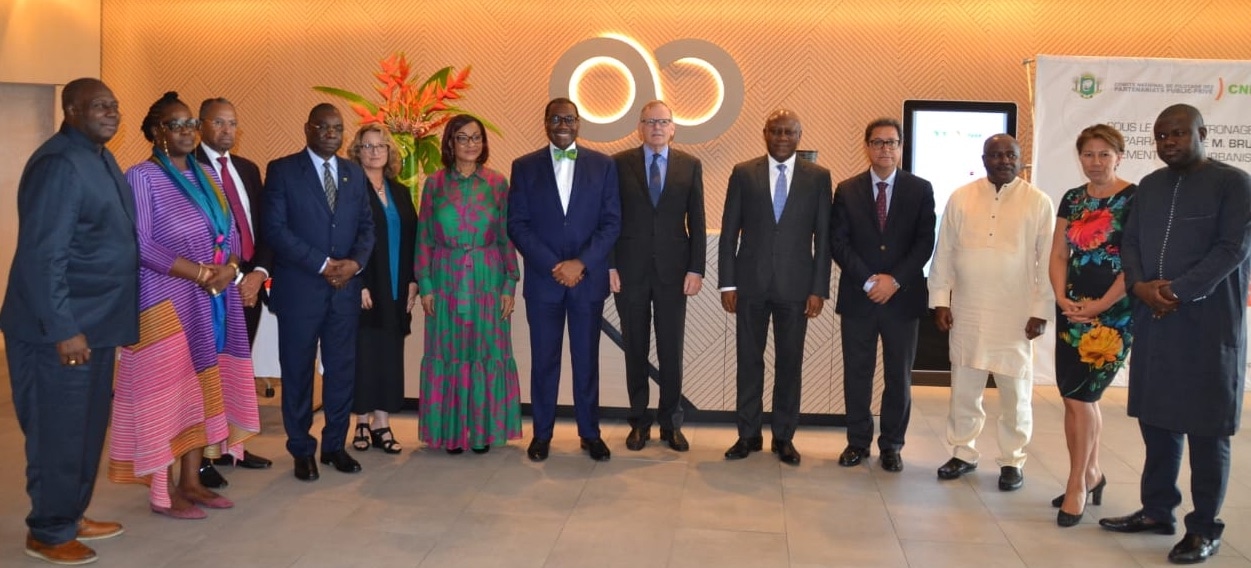
Les réunions tenues à Abidjan portaient sur le renforcement de la recherche et de l’innovation dans le domaine agricole dans le cadre de la réforme en cours du CGIAR vers sa transformation en « One CGIAR ».
Une série de réunions de haut niveau tenues à Abidjan (Côte d’Ivoire) ont contribué à harmoniser les programmes de recherche et d’innovation du CGIAR et de l’Afrique. Le CGIAR a dans ce cadre renouvelé son engagement à renforcer la capacité des institutions africaines à faire face aux menaces croissantes sur les systèmes alimentaires.
Lors de ces consultations de haut niveau baptisées « Abidjan I et Abidjan II », les orateurs ont montré comment le CGIAR peut continuer à appuyer les priorités africaines au cours de la période de transition vers le « One CGIAR ». La réforme en cours du CGIAR vers sa transformation en « One CGIAR » permettra à l’organisation d’avoir un plus grand impact sur les agriculteurs grâce à une approche holistique systémique de la recherche et de l’innovation.
« Il est évident que le « One CGIAR » jouera un rôle clé dans la transformation et l’amélioration du système de recherche agricole du continent. Il permettra également de renforcer la performance et la réactivité » a affirmé S.E.M. Kobenan Adjoumani, ministre de l’Agriculture de la Côte d’Ivoire et invité d’honneur de la réunion de haut niveau. « Je suis profondément convaincu que le “One CGIAR” a été conçu de manière à prendre en compte les préoccupations de l’Afrique et à renforcer ses institutions de recherche. »
Selon S.E. Mme Josefa Leonel Correia Sacko, Commissaire à l’économie rurale et à l’agriculture à la Commission de l’Union africaine (CUA), « les conclusions de la réunion sont très importantes. Elles contribueront à préparer le terrain pour le programme et la structure de la recherche et de l’innovation agricoles en Afrique dans les années à venir. Nous attachons un grand prix à la contribution que le CGIAR a apportée durant plus de 50 ans, depuis la création des centres ».
Dr Akinwumi Adesina, Président de la Banque africaine de développement (BAD), a demandé au CGIAR d’appuyer, d’impliquer et de classer les besoins et les préoccupations de l’Afrique par ordre de priorité. « Le travail des centres du CGIAR en Afrique est d’une importance décisive pour la réalisation de la sécurité alimentaire sur le continent » a-t-il expliqué » aux participants à la réunion de Abidjan II sur le CGIAR. « Nous sommes seulement à huit ans de 2030 et l’Afrique doit atteindre la « Faim zéro » d’ici là. Par conséquent, vos réformes doivent prendre en compte les objectifs que l’Afrique cherche à atteindre. »
Dr Adesina a souligné l’importance de fournir des technologies aux agriculteurs grâce à des programmes tels que le projet Technologies pour la transformation de l’agriculture en Afrique (TAAT) financé par la BAD. Il a plaidé pour que les centres « One CGIAR » en Afrique soient mobilisés et considérés comme des piliers clés de la réforme du CGIAR. En outre, il a insisté sur la nécessité d’une meilleure représentation de l’Afrique aux postes de direction du CGIAR et d’une transition vers le « One CGIAR » permettant de renforcer les centres nationaux et régionaux de recherche en Afrique sur le plan institutionnel.
Selon Dr Marco Ferroni, Président du Conseil d’administration du Système CGIAR, « la réforme du CGIAR vise à produire davantage de résultats pour l’Afrique et le reste du monde. Les centres « One CGIAR » seront renforcés à mesure que nous investissons dans le CGIAR en tant que structure décentralisée et unissons nos capacités pour mener la recherche et proposer des innovations qui permettent de transformer les systèmes alimentaires et d’appuyer les agriculteurs ».
Les réunions d’Abidjan s’inscrivent dans le cadre d’une série de consultations ayant pour but d’examiner et de façonner la transition vers le « One CGIAR ». Elles font suite aux appels des partenaires invitant le CGIAR à renforcer sa collaboration avec les parties prenantes nationales et régionales. Ces efforts comprennent notamment la formation d’un Groupe consultatif de haut niveau, l’élaboration d’un plan de mobilisation du CGIAR et le déploiement de son Cadre pour la mobilisation des partenariats et le plaidoyer – en vue d’un plus grand impact. En outre, l’équipe de direction du CGIAR a récemment adopté une série d’engagements de l’équipe de la haute direction destinés à clarifier certains aspects de la transition notamment le rôle important que continuent à jouer les centres « One CGIAR » et leurs directeurs généraux.
Dr Yemi Akinbamijo, Directeur exécutif du Forum pour la recherche agricole en Afrique (FARA) a expliqué que « la transition vers le « One CGIAR » est la restructuration la plus profonde à laquelle le CGIAR a procédé. D’ailleurs, cette restructuration offre à nous tous la meilleure possibilité de reconcevoir et de restructurer, au niveau institutionnel, le système de recherche et d’innovation dans le domaine agricole en Afrique pour un impact à grande échelle. À cet égard, les partenaires africains se réjouissent de cette réforme. »
Dr Akinbamijo a ajouté que « la réunion d’Abidjan I avait permis à la direction du « One CGIAR » de mieux comprendre les perspectives et les préoccupations quant à la pratique en cours en Afrique. Elle a également offert une plateforme de dialogue et des options permettant de répondre à ces préoccupations. Des progrès considérables ont été réalisés. »
Le CGIAR a une présence à l’échelle continentale. Tous les centres mènent des recherches sur le terrain en vue de trouver des solutions pour les petits exploitants africains en association avec un vaste réseau de partenaires. Les Directeurs régionaux, dont trois se trouvent en Afrique, fournissent un mécanisme clair permettant de donner suite aux possibilités, de répondre aux priorités et aux besoins pertinents au niveau local.
Les participants à la réunion ont reconnu que le contexte extérieur était difficile. L’Afrique fait face à des menaces systémiques, de plus en plus complexes et interdépendantes contre sa sécurité alimentaire, y compris le changement climatique, les pandémies et l’impact de la guerre en Ukraine.
« Pour demeurer pertinent et collaborer plus efficacement avec ses partenaires en vue de relever les défis, le CGIAR évolue pour répondre aux nouveaux besoins des pays aux côtés desquels nous œuvrons » a expliqué Dr Claudia Sadoff, Coordonnatrice du comité de direction du CGIAR et Directeur général, Prestation de recherche et impact du CGIAR. « La réforme du CGIAR peut être un tremplin permettant de renforcer le système de recherche et d’innovation agricole de l’Afrique. »
Les principales conclusions de la réunion et les recommandations visant à renforcer la recherche et l’innovation dans le domaine agricole dans le cadre de la réforme en cours du CGIAR vers sa transformation en « One CGIAR » feront l’objet d’un communiqué officiel qui sera publié dans les prochaines semaines.
Les consultations étaient organisées par la BAD en partenariat avec le FARA, la CUA et le CGIAR. Les organisations participantes comprenaient l’Alliance pour une révolution verte en Afrique (AGRA), l’ADUA-NEPAD, les organisations sous-régionales de recherche (CORAF, ASARECA, CCARDESA, NAASRO) et le Forum africain des services de conseil agricole (AFAAS).
L’initiative bénéficiera à 20 millions de petits agriculteurs africains qui recevront des semences et auront un meilleur accès aux engrais pour produire rapidement 38 millions de tonnes de denrées alimentaires.
Le Conseil d’administration du Groupe de la Banque africaine de développement (BAD) a approuvé une facilité de 1,5 milliards de dollars pour aider les pays africains à prévenir une crise alimentaire imminente.
Dans une déclaration publiée vendredi, la Banque indiquait qu’en raison de la perturbation des approvisionnements résultant de la guerre entre la Russie et l’Ukraine, l’Afrique était désormais confrontée à une pénurie d’au moins 30 millions de tonnes de denrées alimentaires, en particulier de blé, de maïs et de soja importés de ces deux pays.
Le communiqué indique que « la Facilité africaine de production alimentaire d’urgence de 1,5 milliard de dollars de la Banque africaine de développement est une initiative globale sans précédent, visant à aider les petits exploitants agricoles à combler le déficit alimentaire ».
Selon le communiqué, les agriculteurs africains ont un besoin urgent de semences et d’intrants de haute qualité avant le début de la saison agricole en mai, afin d’accroître immédiatement les approvisionnements alimentaires.
La Facilité africaine de production alimentaire d’urgence fournira des semences certifiées à 20 millions de petits exploitants agricoles africains. Elle élargira l’accès aux engrais et leur permettra de produire rapidement 38 millions de tonnes de denrées alimentaires. Cela représente une augmentation de 12 milliards de dollars de la production alimentaire en seulement deux ans.
Dr Akinwumi Adesina, président du Groupe de la Banque africaine de développement, a déclaré : « L’aide alimentaire ne peut pas nourrir l’Afrique. L’Afrique n’a pas besoin de demander l’aumône. L’Afrique a besoin de semences agricoles et de moissonneuses mécaniques pour récolter les denrées alimentaires produites en abondance localement. L’Afrique se nourrira par elle-même avec fierté, car il n’y a aucune dignité à mendier de la nourriture. »
Pour le lancement de la Facilité africaine de production alimentaire d’urgence, des consultations ont été tenues avec les parties prenantes, notamment avec les producteurs d’engrais et séparément avec les ministres africains de l’Agriculture et des Finances plus tôt ce mois-ci.
Dr Adesina a expliqué que les ministres sont convenus de mettre en œuvre des réformes pour s’attaquer aux obstacles systémiques qui empêchent les marchés d’intrants modernes de fonctionner efficacement.
Le prix du blé a grimpé de plus de 45 % en Afrique depuis le début de la guerre en Ukraine.
Selon le Président de la BAD, « les prix des engrais ont augmenté de 300 %, et le continent est confronté à une pénurie d’engrais de 2 millions de tonnes. De nombreux pays africains ont déjà enregistré une hausse des prix du pain et d’autres produits alimentaires. Si ce déficit n’est pas comblé, la production alimentaire en Afrique chutera d’au moins 20 % et le continent pourrait perdre plus de 11 milliards de dollars en valeur de production alimentaire ».
Possibilités
La stratégie dotée de 1,5 milliard de dollars de la Banque africaine de développement permettra de produire 11 millions de tonnes de blé, 18 millions de tonnes de maïs, 6 millions de tonnes de riz et 2,5 millions de tonnes de soja.
La Facilité africaine de production alimentaire d’urgence fournira à 20 millions d’agriculteurs des semences certifiées, des engrais et des services de vulgarisation. Elle soutiendra également la croissance du marché et la gestion post-récolte.
Le Conseil d’administration a indiqué que « la Banque africaine de développement fournira des engrais aux petits exploitants agricoles de toute l’Afrique au cours des quatre prochaines campagnes agricoles, en usant de son influence auprès des grands fabricants d’engrais, de garanties de prêt et d’autres instruments financiers ».
La facilité créera également une plateforme pour plaider en faveur de réformes politiques essentielles afin de résoudre les problèmes structurels qui empêchent les agriculteurs de recevoir des intrants modernes.
Cela inclut le renforcement des institutions nationales chargées de superviser les marchés des intrants.
La facilité dispose d’une structure de collaboration avec les partenaires multilatéraux au développement. Cela permettra un alignement et une mise en œuvre rapides, une portée accrue et un réel impact. Elle augmentera la préparation et la réactivité techniques. En outre, elle comprend des mesures à court, moyen et long terme pour répondre à la fois à l’urgence de la crise alimentaire et à la durabilité et à la résilience à long terme des systèmes alimentaires africains.
Mme Beth Dunford, vice-présidente de la Banque africaine de développement chargée de l’Agriculture et du Développement humain et social, a déclaré : « La Facilité africaine de production alimentaire d’urgence s’appuie sur les enseignements tirés du programme Riposte de la stratégie “Nourrir l’Afrique” face à l’impact de la Covid-19 de la Banque africaine de développement. Ce programme a fourni une feuille de route stratégique pour soutenir le secteur agricole africain et préserver la sécurité alimentaire contre l’impact de la pandémie. »
Au cours des trois dernières années, l’initiative Technologies pour la transformation de l’agriculture africaine de la Banque a fourni des variétés de blé résistantes à la chaleur à 1,8 million d’agriculteurs dans sept pays, augmentant ainsi la production de blé de 2,7 millions de tonnes, pour une valeur de 840 millions de dollars.
Plan de viabilité à long terme
Selon le communiqué, une phase de montée en puissance de cinq ans suivra la mise en place de la Facilité africaine de production alimentaire d’urgence, qui durera deux ans. Elle s’appuiera sur les acquis précédents et renforcera l’autosuffisance en blé, maïs et autres cultures de base, tout en élargissant l’accès aux engrais agricoles.
La phase quinquennale permettra de fournir des semences et des intrants à 40 millions d’agriculteurs dans le cadre du programme « Technologies pour la transformation de l’agriculture africaine ».
En avril, le Secrétaire général des Nations Unies, António Guterres, a nommé Dr Adesina au sein d’un comité de pilotage restreint du Groupe de réponse à la crise mondiale.
La sous-commission des crédits du Sénat américain chargée de l’État et des opérations étrangères a récemment convié Dr Adesina à faire une présentation sur la Facilité africaine de production alimentaire d’urgence.
Selon le communiqué, « l’Alliance mondiale pour la sécurité alimentaire, pilotée par le gouvernement allemand, constitue une excellente tribune pour la Facilité africaine de production alimentaire d’urgence, qui s’inscrit dans le cadre d’un effort coordonné et collectif des partenaires au développement et des pays pour accélérer la production alimentaire à court terme tout en restant concentrée sur les actions à moyen et long terme pour renforcer la résilience. »
Meetings in Abidjan focused on strengthening Africa’s agricultural research and innovation in the context of the One CGIAR reform
A series of high-level meetings in Abidjan, Côte D’Ivoire, has delivered progress towards a strengthened alignment between CGIAR and Africa’s research and innovation agenda, with further commitment from CGIAR to build capacity in African institutions to respond to growing threats to food systems.
The high-level consultations, dubbed Abidjan I and Abidjan II, saw speakers articulate how CGIAR can continue to better support African priorities during its transition to a ‘One’ CGIAR. The One CGIAR reform will position the organization to deliver more impact for farmers through a holistic ‘systems’ approach to research and innovation.
“It is clear that One CGIAR will play a pivotal role in the transformation and improvement of the research and agricultural system of the continent, enhancing performance and responsiveness,” said S.E.M. Kobenan Adjoumani, Minister of Agriculture of Côte D’Ivoire and guest of honor at the high-level event. “I have no doubt that One CGIAR, in its design, will capture key concerns of Africa and strengthen Africa’s research institutions.”
H.E. Josefa Leonel Correia Sacko, Commissioner for Rural Economy and Agriculture, African Union Commission (AUC), said, “The outcome of this meeting is very important. It will help to shape the terrain for the African agricultural research and innovation agenda and architecture for years to come… We highly value the contribution that CGIAR has made in over 50 years since the Centers were created.”
Dr. Akinwumi Adesina, President of the African Development Bank (AfDB), called on CGIAR to support, engage, and prioritize the needs and concerns of Africa. “The work of the CGIAR Centers in Africa is critical for achieving food security on the continent,” he told participants of the Abidjan II meeting, addressing CGIAR. “We are just eight years away from 2030, and Africa must achieve zero hunger by then. Thus, your reforms must hold you accountable to targets that Africa seeks to achieve.”
Dr. Adesina highlighted the importance of delivering technologies to farmers through programs such as the AfDB-financed Technologies for African Agricultural Transformation (TAAT) program. He also called for the One CGIAR Centers based in Africa to remain strong and be considered as key pillars in CGIAR’s reform. In addition, he highlighted the need for greater African representation in CGIAR’s senior leadership, and for the One CGIAR transition to institutionally strengthen Africa’s national and regional agricultural research centers.
Dr. Marco Ferroni, Chair of the CGIAR System Board, said, “The purpose of the CGIAR reform is to deliver more for Africa and the rest of the world. All One CGIAR Centers will be strengthened as we invest in CGIAR as a distributed organization, joining capabilities to deliver research and innovations that transform food systems and support farmers.”
The Abidjan meetings are part of a series of consultations designed to review and shape the One CGIAR transition. They follow calls from partners for CGIAR to deepen engagement with country and regional stakeholders. This effort includes the formation of a high-level advisory panel, the development of a CGIAR engagement plan, and the roll-out of its Engagement Framework for Partnerships & Advocacy – Toward Greater Impact. In addition, CGIAR’s leadership team recently agreed a set of Senior Leadership Team Commitments designed to clarify aspects of the transition, including the continued important role of One CGIAR Centers and their Director Generals.
Dr. Yemi Akinbamijo, Executive Director of the Forum for Agricultural Research in Africa (FARA), said, “The transition to the One CGIAR is the most far-reaching reorganization the CGIAR has undertaken. By the same token, it offers all of us the best opportunity for the agricultural research and innovation system in Africa to institutionally retool, rewire, reengineer itself for large scale impact. And in this regard, African partners do welcome these reforms.”
“The [Abidjan I] meeting improved the understanding of the One CGIAR leadership of both the perspectives and concerns of the African practice, it also provided a platform for dialogue and options for resolving these concerns – and there’s been considerable progress,” Dr. Akinbamijo added.
CGIAR has a continent-wide presence with all Centers engaged in research on the ground to find solutions for African smallholders in tandem with a wide network of partners. Regional Directors, three of which are in Africa, provide a single entry-point for engagement – and clear mechanisms to respond to locally relevant opportunities, priorities and needs.
Participants of the meetings acknowledged the challenging external environment. Africa faces increasingly complex and interconnected, systemic threats to its food security, including climate change, pandemics, and the impact of the conflict in Ukraine.
“To stay relevant and to work more effectively with all our partners to meet these challenges head-on, CGIAR is evolving to respond to the changing needs of the countries we work with,” said Dr. Claudia Sadoff, Convener of CGIAR’s Executive Management Team and Managing Director, Research Delivery and Impact. “The CGIAR reform can be a springboard that will strengthen Africa’s agriculture research and innovation system.”
A formal communiqué to capture key outcomes from the meetings and recommendations for strengthening Africa’s agricultural research and innovation in the context of One CGIAR reform will be issued in the coming weeks.
The consultations were hosted by AfDB, in partnership with FARA, AUC, and CGIAR. Participating organizations included the Alliance for a Green Revolution in Africa (AGRA), AUDA-NEPAD, and sub-regional research organizations, CORAF, ASARECA, CCARDESA, NASRO, and the Africa Forum for Agricultural Advisory Services (AFAAS).
The initiative will provide 20 million African smallholder farmers with certified seeds and will increase access to fertilizers and enable them to rapidly produce 38 million tons of food
The African Development Bank (AfDB) Group’s board of directors announced that it approved a $1.5 billion facility to help African countries avert a looming food crisis in the continent.
In a statement issued by the bank on Friday, the bank said with the disruption of food supplies arising from the Russia-Ukraine war, Africa now faces a shortage of at least 30 million metric tons of food, especially wheat, maize, and soybeans mostly imported from both countries.
“The African Development Bank’s $1.5 billion African Emergency Food Production Facility is an unprecedented comprehensive initiative to support smallholder farmers in filling the food shortfall,” the bank’s statement read.
It said African farmers urgently need high-quality seeds and inputs before the planting season begins in May to immediately boost food supplies.
According to the statement, the initiative will provide 20 million African smallholder farmers with certified seeds and that it will increase access to agricultural fertilizers and enable them to rapidly produce 38 million tons of food.
“This is a $12 billion increase in food production in just two years,” the bank said.
Akinwumi Adesina, AfDB group president was quoted to have said: “Food aid cannot feed Africa. Africa does not need bowls in hand. Africa needs seeds in the ground, and mechanical harvesters to harvest bountiful food produced locally. Africa will feed itself with pride for there is no dignity in begging for food.”
He said the African Emergency Food Production Facility has benefited from stakeholder consultations, including those with fertilizer producers and separately with African Union agriculture and finance ministers earlier this month.
Mr Adesina explained that the ministers agreed to implement reforms to address the systemic hurdles that prevent modern input markets from performing effectively.
He said the price of wheat has soared in Africa by over 45 per cent since the war in Ukraine began.
“Fertilizer prices have gone up by 300%, and the continent faces a fertilizer shortage of 2 million metric tons. Many African countries have already seen price hikes in bread and other food items. If this deficit is not made up, food production in Africa will decline by at least 20% and the continent could lose over $11 billion in food production value, ”the AfDB president said.
Potentials
The African Development Bank’s $1.5 billion package will lead to the production of 11 million tons of wheat; 18 million tons of maize; 6 million tons of rice; and 2.5 million tons of soybeans, the statement said.
It said the initiative will provide 20 million farmers with certified seeds, fertilizer, and extension services and that it will also support market growth and post-harvest management.
“The African Development Bank will provide fertilizer to smallholder farmers across Africa over the next four farming seasons, using its convening influence with major fertilizer manufacturers, loan guarantees, and other financial instruments,” the AfDB board said.
The statement highlighted that the facility will also create a platform to advocate for critical policy reforms to solve the structural issues that impede farmers from receiving modern inputs.
This, it said, includes strengthening national institutions and overseeing input markets and that the facility has a structure for working with multilateral development partners.
“This will ensure rapid alignment and implementation, enhanced reach, and effective impact. It will increase technical preparedness and responsiveness. In addition, it includes short, medium, and long-term measures to address both the urgent food crisis and the long-term sustainability and resilience of Africa’s food systems,” the bank said.
In her remarks, Beth Dunford, AfDB vice president for Agriculture, Human and Social Development, said: “The Africa Emergency Food Production Facility builds on lessons learned from the African Development Bank’s Feed Africa Response to Covid-19 program.”
The program, she said, has provided a strategic roadmap to support Africa’s agriculture sector and safeguard food security against the pandemic’s impact.
Over the past three years, the AfDB said its Technologies for African Agricultural Transformation initiative has delivered heat-tolerant wheat varieties to 1.8 million farmers in seven countries, increasing wheat production by 2.7 million metric tons worth $840 million.
Long-term sustainability plan
The statement noted that a five-year ramp-up phase will follow the two-year African Emergency Food Production Facility, with the view to build on previous gains and strengthen self-sufficiency in wheat, maize, and other staple crops, as well as expand access to agricultural fertilizers.
It said the five-year phase will deliver seeds and inputs to 40 million farmers under the “Technologies for African Agricultural Transformation program”.
The statement said in April, UN Secretary-General António Guterres, appointed Mr Adesina to a select Steering Committee of the Global Crisis Response Group.
It noted that the U.S. Senate Appropriations Subcommittee on State and Foreign Operations recently invited Mr Adesina to make a presentation about the African Emergency Food Production Facility.
“The Global Alliance for Food Security spearheaded by the Government of Germany provides an excellent forum for the African Emergency Food Program Facility, which is part of a coordinated and collective effort by development partners and countries to accelerate food production in the short term while remaining focused on medium- and longer-term actions to build resilience.” the statement added.