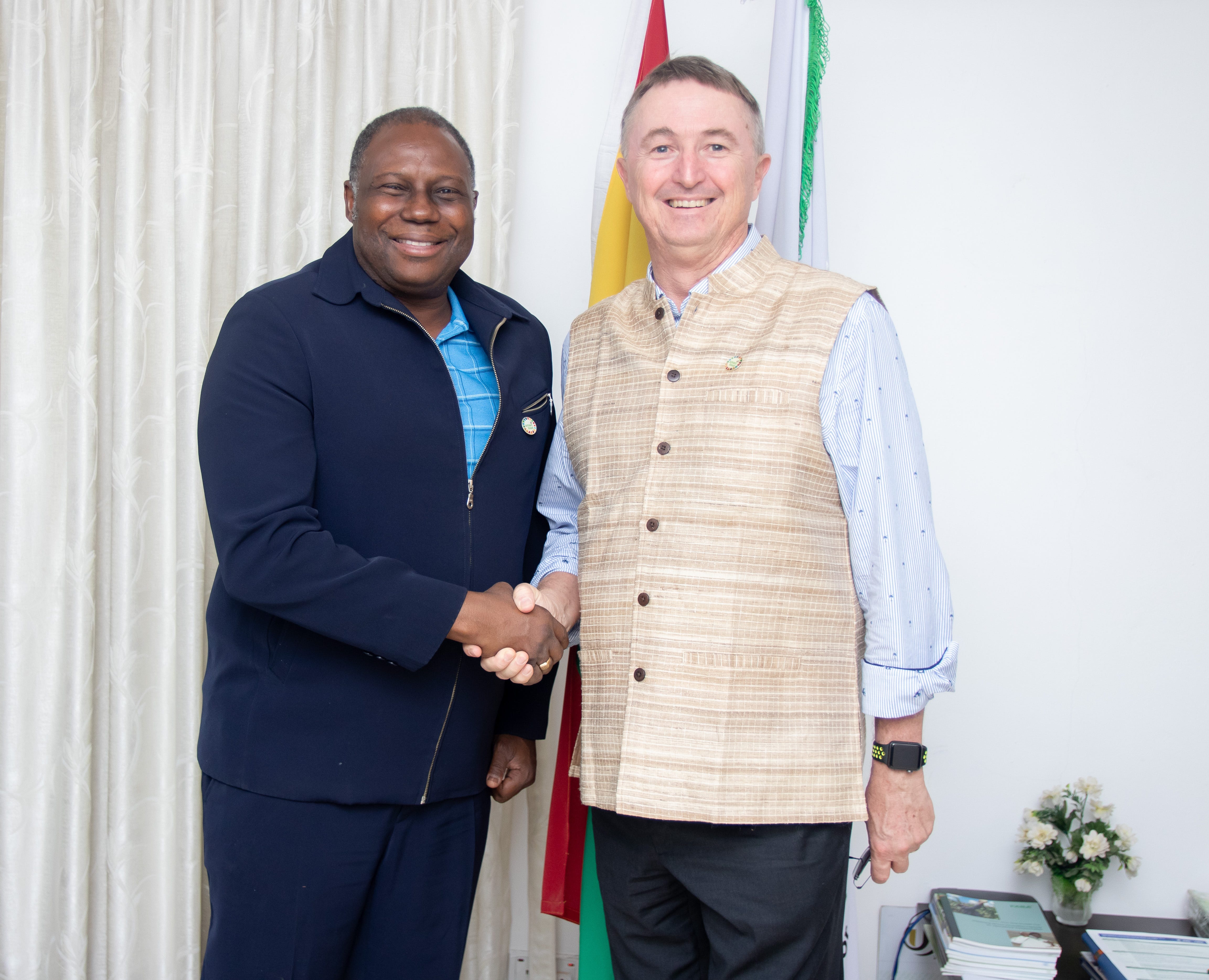
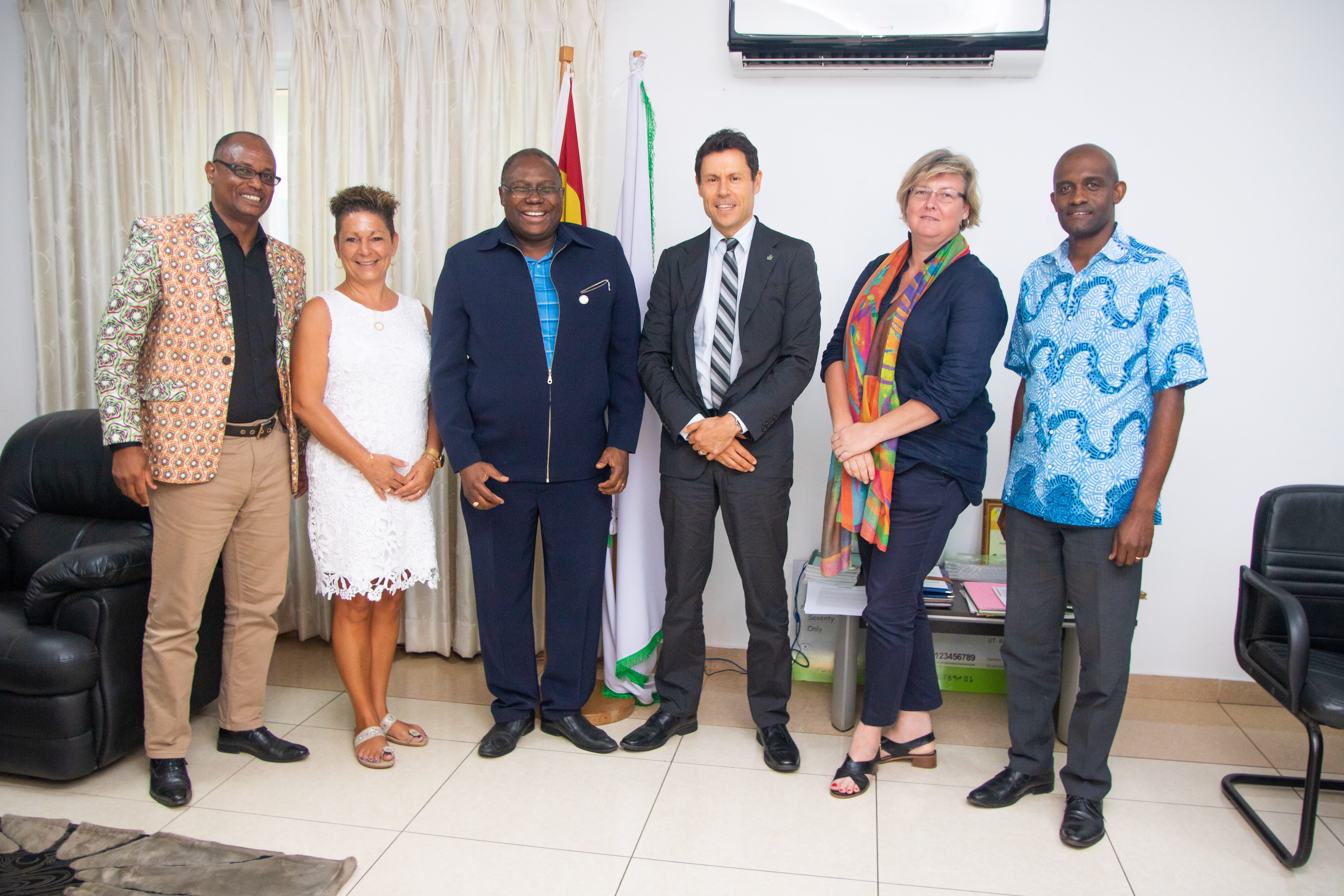
Within the context of the further scaling up of the Science Agenda, the Arewa Research and Development Project (ARDP), a development platform and think tank in Northern Nigeria, will partner with the Forum for Agricultural Research in Africa (FARA) in strategic areas of agricultural research and capacity development. During a courtesy visit on FARA’s Executive Director, Dr Yemi Akinbamijo, ARDP’s convener, Dr. Usman Bugaje expressed the think tank’s commitment to consolidating the gains of the ARDP-FARA partnership which began in 2018. It would be recalled that the Holistic Empowerment for Livelihoods Program (HELP) strategy was launched by FARA in partnership with ARDP in Kaduna in August 2018, during a capacity development workshop supported by the Nigeria Incentive-Based Risk Sharing for Agricultural Lending (NIRSAL) and Jigawa State Government of Nigeria. HELP is a holistic model driven by global partnership for strengthening strategic human capital formation, Agricultural Knowledge & Innovation System (AKIS) and Agripreneurship to deliver livelihood by leveraging on South-South & Triangular Cooperation (SSTC).
In the context of HELP, ARDP will be mobilizing its partners, including governors, universities, research institutes and private sector, to leverage on FARA’s network of experts, initiatives and tools. In particular, ARDP will galvanize key partners to take advantage of the capacity development opportunities offered by FARA’s Agricultural Research and Innovation for Africa (ARIFA) initiative, which aims to train at least 5,000 Africans in the context of the SSTC. The Brazilian complement of ARIFA will be launched on the 12th of November 2019 on the margins of the 7th Brazil-Africa Forum. Under this scheme, FARA will be supporting a cohort of 181 fellows to pursue Master’s degrees and short training courses in Universidade Federal de Viçosa (UFV), Brazil beginning in 2020.
The Forum for Agricultural Research in Africa (FARA) and the Yam Improvement for Income and Food Security in West Africa (YIIFSWA) project, are collaborating to address challenges which impact yam production in the sub-region; and to help improve incomes and livelihoods of value chain actors.
The West African sub-region tops the global yam production chart with Nigeria as the leading producer and Ghana identified as the major exporter of the staple to the world. The initial stages of the YIIFSWA project have seen major breakthroughs in developing seed yam varieties and production technologies including tissue culture, minisett technology, vine technology, aeroponic and hydroponics systems.
The YIISFWA project which is currently running in Ghana and Nigeria, is coordinated by the IITA and funded by the Bill & Melinda Gates Foundation.
The collaborative discussions were held on how to bring the project’s outputs to scale for improved livelihoods along the yam value chain. Among other things, possible entry points for the collaboration between FARA and the YIISFWA project have been discussed. The parties agreed to adopt the FARA Innovation to Impact Framework to scale-out project outcomes. These include FARA’s expertise in Innovation Platforms and Capacity Development, Policy and Knowledge Management.
The Forum for Agricultural research in Africa (FARA) is collaborating with it partners under the Programme of Accompanying Research for Agricultural Innovation (PARI) which is part of the One-World-No Hunger” (SEWOH) initiative of the German government, to create investment opportunities in the area of Post-harvest and Market-linkages for youth in Africa.
FARA is co-leading the study under the Investment Clusters of PARI, which is aimed at identifying investment opportunities and leveraging points for job creation focusing on post-
Dr. PaulBoadu; Research Fellow, Innovation Systems, FARA
harvest of selected country priority commodities/crops. Based on available and projected data, the study will propose mechanisms to promote rural-urban market linkages to stimulate production and rural development on the continent.
Dr. Paul Boadu, Research Fellow (Innovation Systems) at FARA, is currently leading the study which is being conducted in seven African countries including Ghana, Nigeria, Benin, Burkina Faso, Ethiopia, Tunisia and Togo.
L-R: Dr. Yemi Akinbamijo; Executive Director, FARA, Dr. Okezie Ikpeazu; Executive Governor, Abia State, Mr. Endi Ezengwa; Coordinator, Education for Employment.
Within the context of FARA’s Holistic Empowerment for Livelihoods Program (HELP), a holistic model driven by global partnership to deliver livelihood by leveraging the South-South & Triangular Cooperation (SSTC), the Abia State of Nigeria has pledged to adopt FARA’s Science Agenda for Agriculture in Africa (S3A). This was declared by Dr. Okezie Ikpeazu, the Executive Governor of Abia State on 24th September 2019, when Dr. Yemi Akinbamijo, the Executive Director of FARA, paid him an official visit in Umuahia, the capital of Abia State.
During the meeting, FARA offered its network of experts to support the state’s attempt at transforming and diversifying its economy using its Innovation to Impact Pathways, by taking advantage of the entrepreneurial potentials of the state. Receiving a strategy document dubbed ‘Abia Agripreneurs’; developed by FARA, in which strategic commodities (cassava, ugwu, tomato, plantain and poultry) are prioritized for developing an action plan aligned to HELP, Dr. Ikpeazu thanked FARA and pledged to provide all the needed support in implementing the plan. It is expected that the strategy will usher in New Cassava for Economic Development in Abia State (NCEDA) and support the training of at least 150 Abians in FARA’s capacity development program-ARIFA, in the next 3 years.
Thanking FARA for the opportunity, Mr. Endi Ezengwa, the Coordinator of Education for the Employment (E4E) initiative, indicated that the opportunity for partnership with FARA represents one of the converging points in the agricultural sector, where the state already houses the biggest cattle market In Nigeria. This is also the vehicle through which key interventions in Agricultural Research for Development (AR4D) as outlined in this document, may be implemented.
On the Margins of the 2019 African Green Revolution Forum (AGRF) last week, the FARA Secretariat welcomed diverse organisations to discuss matters relating to Agricultural Research, Science and Innovation in Africa.
The Courtesy calls were in line with FARA’s commitment to lead the Science Agenda for Africa’s Agricultural Transformation.
I-F:1
I-F:1 Mr. Willem-Albert Toose, Managing Director of Agro Eco West Africa paid a courtesy call on the Executive Director of FARA, Dr. Yemi Akinbamijo, ahead of the 5th West African Organic conference starting from 12–15 November, 2019.
The conference is being organized in the context of mainstreaming organic agriculture based on the resolution of the African Heads of States and Governments to support organic farming in Africa.
I-F:2
I-F:2 On the margins of the recently concluded AGRF 2019, Dr. Peter Carberry, Director General, International Crops Research Institute for the Semi-Arid Tropics (ICRISAT) paid a courtesy visit to Dr. Yemi Akinbamijo at the FARA Secretariat. Among other things, the two leaders discussed areas of mutual interest between the two institutions.
It is noteworthy that Dr. Akinbamijo is a member of the Executive Committee of the Smart Food Initiative.
I-F:3
I-F:3 CGIAR leadership led by the Executive Director Elwyn Grainger-Jones (3rd from right) called on Management of FARA to discuss issues of mutual interest.
The discussion dwelt on developments concerning the CGIAR’s reform process and the opportunities the reform presents to strengthening collaborative work between the CGIAR and key constituents of FARA, notably the National Agricultural Research Institutions (NARIs) and sub-regional agricultural research organisations. Dr. Grainger-Jones welcomed FARA’s undertaking to gather feedback from its stakeholders on the draft recommendations from CGIAR System Reference Group to the System Council.
The Centre for Coordination of Agricultural Research and Development for Southern Africa (CCARDESA) has constituted a new board of directors as part of its governance restructuring process.
CCARDESA was established by SADC Member States to coordinate the implementation of agricultural research and development (R&D) in the SADC region. As one of the sub-regional organisations under the FARA umbrella, its goal is to sustainably reduce food insecurity and poverty in the region as captured in SADC’s Regional Indicative Strategic Development Plan (RISDP), the Dar es Salaam declaration on food security, and the Comprehensive Africa Agricultural Development Programme (CAADP), developed by the African Union’s New Partnership for Africa’s Development (AU-NEPAD). It operates within the framework of CAADP Pillar 4 which has the objective of enhancing the livelihoods of African farmers and pastoralists.
As one of its constituent Sub-regional organizations, CCARDESA has leveraged continuous support from the Forum for Agricultural Research in Africa (FARA), in the area of institutional governance. In recent times, FARA has contributed to the restructuring of the CCARDESA Board of Directors, which is currently in a transition stage.
The Old Yields to New
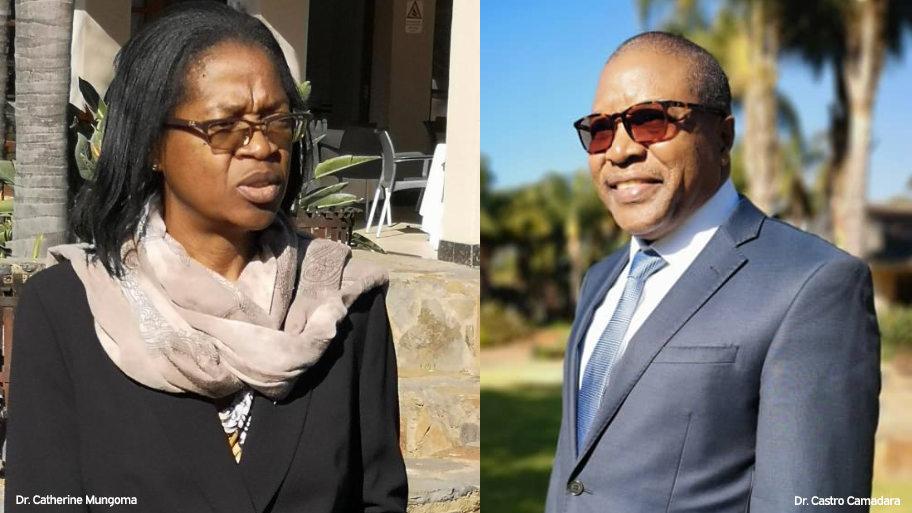
The incumbent board of directors of CCARDESA is in the process of being replaced by a new one. In this transition phase, about seven members of the current Board, including the chairperson, Dr. Catherine Mungoma, who has been rendering commendable service to the southern African entity since 2017, will be replaced by a new one. Dr. Castro Camadara takes over from Dr. Mungoma as the new board chairperson.
Dr. Camadara started his work in academia and research at the Agostinho Neto University, for some 14 years in – Angola; where he was Professor and Vice-Rector of the University Centre of Huambo and coordinated the CGIAR-SADC led National Grain Legume Programme. He was a member and founder of the 1st National Research Council of Angola and also worked as Advisor to the Minister of Agriculture for more than a year. He is a founding member of ADRA (an Angolan NGO on Rural Development and Environment). He worked as a freelance consultant for a while, doing consultancy work for EU, World Bank, INGOs, Government, among others, before joining FAO.
Dr. Castro Camadara was with the FAO for more than seventeen years as FAO Representative in various countries managing multidisciplinary teams and large country and regional portfolios covering Agriculture, Livestock, Fisheries, Forestry, Environment and Rural Development in general.
One of his postings with FAO was in Addis Ababa-Ethiopia where besides being Sub-regional Coordinator for Eastern Africa, in charge of Coordinating 8 Countries, he also represented FAO at the African Union and UNECA. He is presently back in Angola and involved in consultancy and agribusiness.
 In the context of HELP, ARDP will be mobilizing its partners, including governors, universities, research institutes and private sector, to leverage on FARA’s network of experts, initiatives and tools. In particular, ARDP will galvanize key partners to take advantage of the capacity development opportunities offered by FARA’s Agricultural Research and Innovation for Africa (ARIFA) initiative, which aims to train at least 5,000 Africans in the context of the SSTC. The Brazilian complement of ARIFA will be launched on the 12th of November 2019 on the margins of the 7th Brazil-Africa Forum. Under this scheme, FARA will be supporting a cohort of 181 fellows to pursue Master’s degrees and short training courses in Universidade Federal de Viçosa (UFV), Brazil beginning in 2020.