“It goes without saying that the most emblematic of the flagship projects of Agenda 2063 is the African Continental Free Trade Area, AfCFTA. The AfCFTA has the ambition in the final analysis, to establish a continental market. The idea goes back to 1963, with the establishment of an African Economic Community.”– African Union Commission (AUC) Chairperson Mr Moussa Faki Mahamat, speaking at the official opening ceremony of the 35th Ordinary Session of the Executive Council in Niamey’’.
Niamey, Niger 4 July 2019– The African Union will launch the operational phase of the AfCFTA on the 7th of this month in Niamey, at an Extraordinary Summit of Heads of State and Government. Mr Moussa Faki Mahamat Chairperson of the AUC hailed the upcoming launch as a “remarkable” and “historic” achievement. The launch will be part of a series of statutory and technical meetings were held in the Nigerien capital from the 4th to the 8th, which also includes the 8 July first coordination meeting between the AU and the Regional Economic Communities (RECs).
The launch of the AfCFTA follows the coming into force of the trade area on the 30th of May, after the deposit of the required minimum of 22 ratifications by member states of the AU. Since then three more instruments of ratification have been deposited, bringing the total number of countries that have ratified the AfCFTA to 25.
With the launch of the operational phase from July 2019, traders across Africa will be able to make use of preferential trading arrangements offered by the AfCFTA, with the understanding that the trade transactions are among the Member States that have deposited the instruments of ratification and those that conform to the provisions on rules of origin governing trade in the AfCFTA.”
It is also expected that at the launch, to be held at Heads of State and Government level, “The Assembly will decide on the location of the Secretariat of the AfCFTA which will have the principal function of implementing the agreement. Seven member states Egypt, Eswatini, Ethiopia, Kenya, Ghana, Madagascar and Senegal have submitted bids to host the secretariat.
During his opening remarks, Mr. Mahamat also reiterated the commitment of the AUC to work in close cooperation with the Permanent Representatives Committee, to strengthen the implementation of programmes, and to take immediate measures to ensure the recommendations of the internal and external auditors are implemented and enforced.
On a broader level, the African Union meeting in Niamey is considering other issues under the institutional reform programme that will allow the Union to achieve the vision and goals of its Agenda 2063 development framework. In its two-day session from 4th to 5th July, the Executive Council will consider and adopt the African Union’s budget for 2020 and the legal instruments pertaining to the African Union Development Agency (formerly known as NEPAD), as well as reviewed the proposed new organisational structure of the AU Commission which is to be finalised by February 2020.
The Council will elect four board members of the African Union Advisory Board on Corruption (AUABC) and prepare the draft agenda and decisions for the 12th Extraordinary Assembly that will launch the AfCFTA. Additionally, it will discuss the scale of contributions to the AU Peace Fund. The Chairperson of the Commission announced that US$120 million out of the expected US$400 million for the Peace Fund has so far been received, and he expressed the Commission’s appreciation to member states for their contributions.
The Executive Council will also review the preparations for the 1st mid-year coordination meeting between the African Union and the Regional Economic Communities (RECs). In line with the Institutional Reforms agenda which recommended the rationalisation of the number of meetings held by the AU, a decision was made to have one summit per year, and a coordination meeting mid-year, instead of the previous two summits per year, in order to ensure the efficient implementation of AU summit outcomes and decisions. As this will be the first such meeting, discussions will centre on the drafting of the rules of procedure, drafting proposals on the division of labour between the AU, RECs and member states, and revision of the protocol on relations between the AU and the RECs.
Today’s opening ceremony was presided over by Mr Sameh Shoukry, Minister of Foreign Affairs of the Arab Republic of Egypt in his role as the Chairperson of the Executive Council, and was addressed by Niger’s Minister of Foreign Affairs, Cooperation, African Integration and Nigeriens Abroad, Mr Kalla Ankourao. Their statements are available at www.au.int.
For additional information on the meeting: Mrs Wynne Musabayana, Head of Communication; African Union Commission; E-mail: [email protected]
For interviews: Mr. Molalet Tsedeke; Directorate of Information and Communication; AU Commission; Tel: 0911- 630631; Email: [email protected]
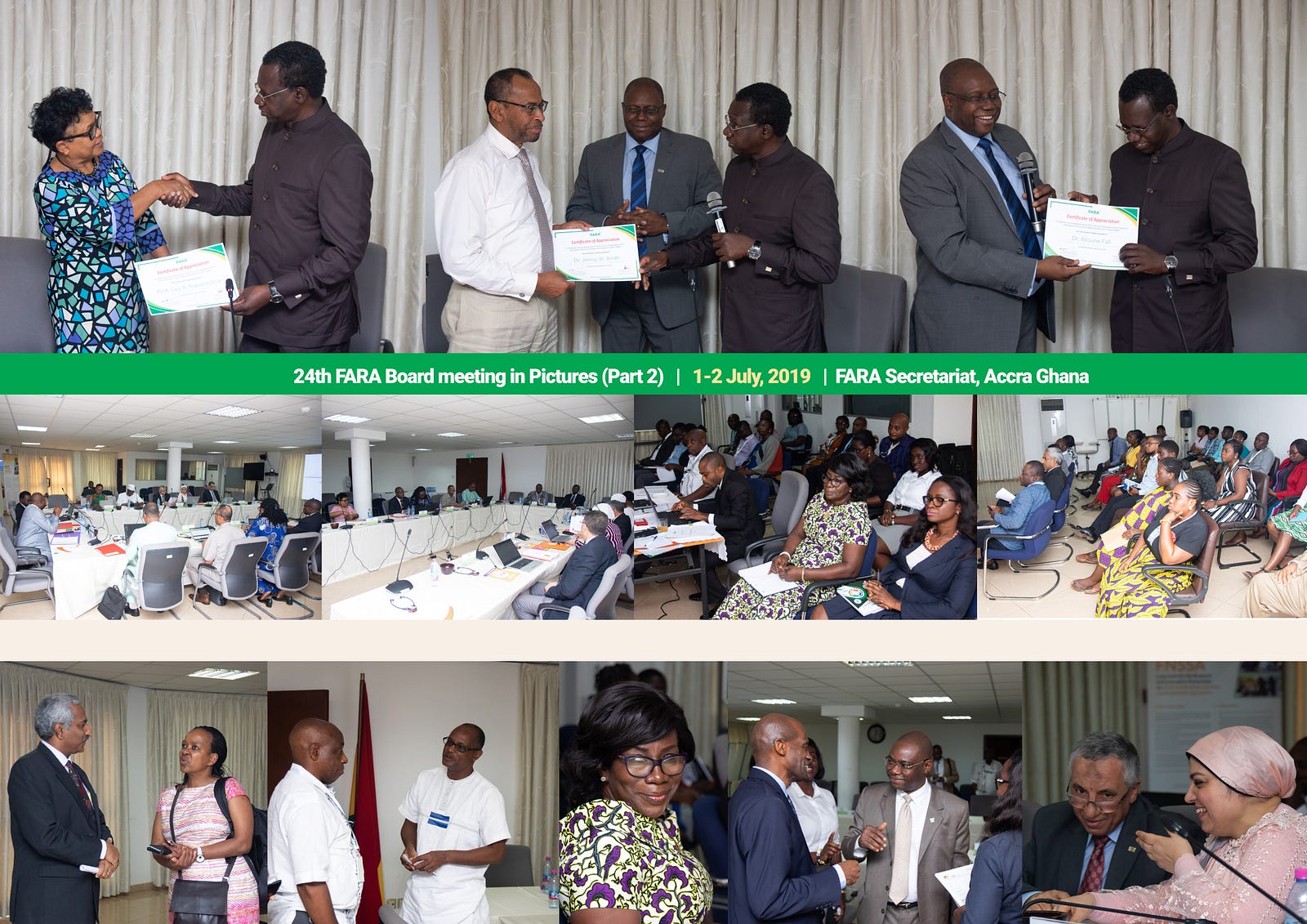
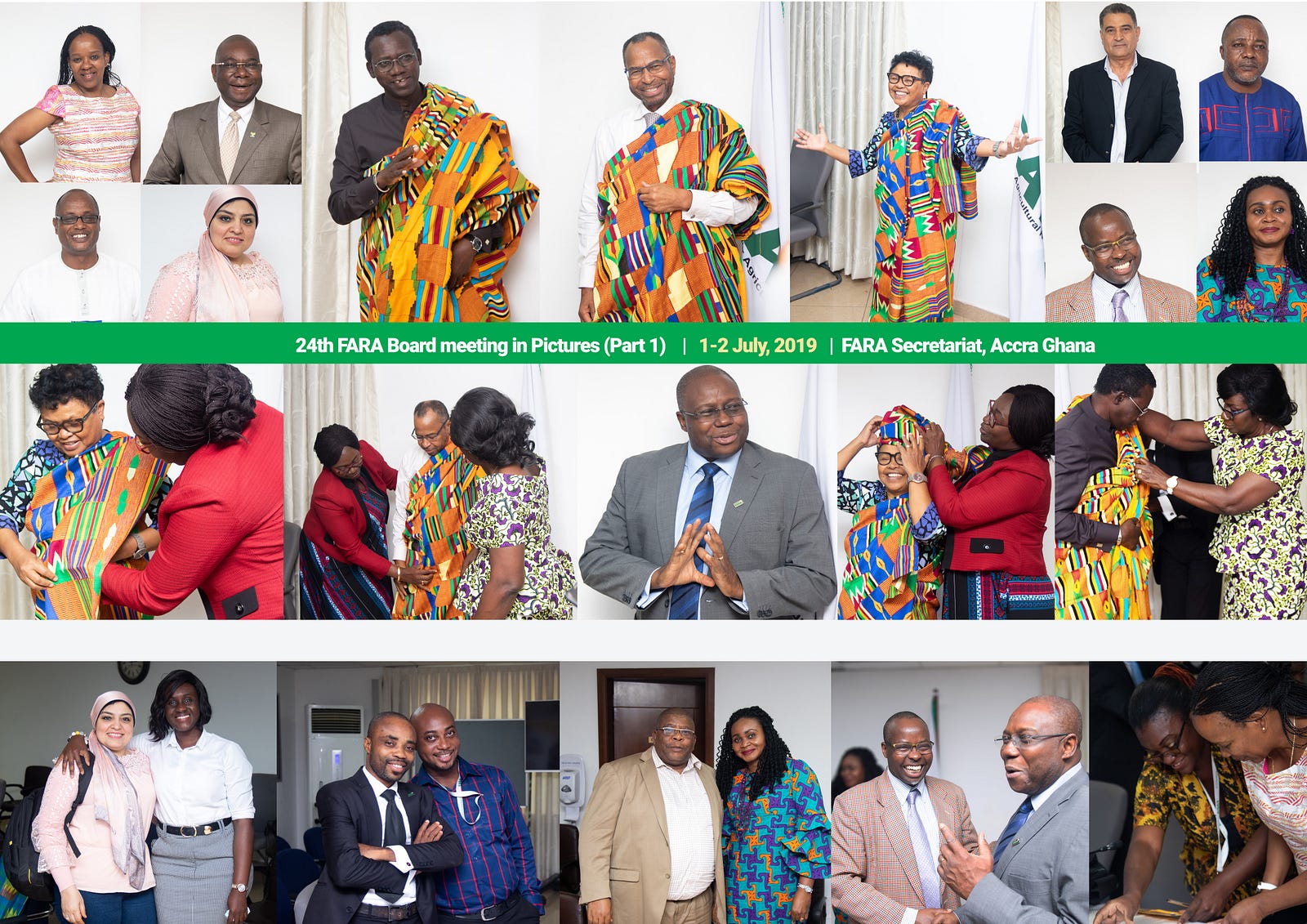
The 24th Ordinary session of the Board of Directors of the Forum for Agricultural Research in Africa (FARA), ended in Accra, on July 2, 2019; with a call on members to put their best foot forward towards projecting FARA as the leading light in agriculture science, technology and innovation research on the continent. The two-day meeting discussed, among other things, the annual programme progress and performance report for 2018, with projections for the ensuing year. It also provided the strategic guidance required for the organizational development of FARA.
Delivering his closing remarks, the newly appointed Chairperson ad interim, of the board of directors of FARA, Dr. Alioune Fall, assured the staff of the board’s commitment to FARA, its vision and activities. He indicated,
“…as you know, the board is very dedicated to working on issues related to FARA; FARA is our business, our organization. We all belong to FARA, so all we have to do to let FARA go forward, we will do it”.
He also underscored the preparedness of the sub-regional organizations (SROs), partners and other stakeholders to continue to work to put FARA where it belongs.
“…all the members who are here, the SROs, development partners, NGOs, private sector, universities, NARs, all we can do for FARA to be representing research in Africa, we’d do it”.
The meeting also marked the end of tenure of some members of the board, notably, Dr. Ephraim A. Mukisira, Chairperson, Dr. Alioune Fall, Vice Chairperson Dr. Jimmy W. Smith, representative of the scientific partners/CGIAR and Professor Lilia Rahajaharitompo Rabeharisoa of ASARECA.
16 – 17 May 2019. Bonn, Germany. Federal Office for Agriculture and Food (BLE). “Shaping the nutritional environment to promote a balanced diet (“Food environments for improved nutrition”.The German Ministry for Food and Agriculture (BMEL) promotes the development of “Research Cooperation for Food Security and Nutrition” with agricultural and nutritional research institutions in partner countries and in Germany.
BLE organized a workshop to further specify the topics of the ministry’s third call for proposals and to clarify the research needs in the area of “food environments for improved nutrition” especially for Sub-Saharan Africa and South East Asia. The overall goal is to improve nutrition in the face of the double burden of malnutrition in the partner countries
Participants during the two-day workshop helped the BLE to identify research gaps, research areas which are already sufficiently addressed and essential subsets of research questions to be considered under the following broad themes:
Consumer markets: access to markets in rural and urban regions, the characteristics of the direct sales environment, questions of supply; the increasing importance of supermarkets.
Influence of nutrition education on consumer buying decisions and opportunities to optimise both in terms of a healthy diet in the target regions.
Influence of the structure and shape of food systems on nutrition.
Importance and use of information and communication technology (ICT) in “food environments”; Is there room for target-group-specific improvements using ICT?
What are the limits? Under what circumstances do consumer markets fail?
Which feasible, practical Government interventions to influence food markets and to improve diets (combat the double burden of malnutrition: overweight and obesity as well as stunting and lack of micronutrients) are already implemented? What are their weaknesses and successes with a view to promoting healthy nutrition?
Twenty-nine experts made of eight from Africa, four from South East Asia and rest from German institutions participated in the workshop. FARA was represented by Benjamin Abugri, Knowledge Management & Outreach Officer. The final call is expected to be launched through the German ministry’s website www.ble.de/foodsecurity on July 14 , 2019.
The Forum for Agricultural Research in Africa was among the recipients of Ghana’s Council for Scientific and Industrial Research (CSIR) Awards, during a ceremony to honour scientists, champions of science and research and industry players who have made outstanding contributions to Ghana’s scientific and industrial development over the past 60 years. Held on Friday, 17th May 2019 at the Coconut Grove Hotel in Accra, the event was one of the activities organised to mark the 60th anniversary of the CSIR. It was graced by, among others, Mr. Yaw Osafo Marfo, Senior Minister who was the special guest of honour; Professor Kwabena Frimpong-Boateng, the Honourable Minister of Environment, Science, Technology and Innovation; and Professor Robert Kingsford-Adaboh, the Chairman of CSIR’s Governing Council.
FARA’s award was received by Dr. Aggrey Agumya, Director for Stakeholder Engagement and Communication on behalf of the Executive Director, Dr Yemi Akinbamijo.
Left to right: Prof. Kingsford-Adaboh (CSIR Council Chair), Dr Aggrey Agumya (FARA) and Dr Wilhelmina Quaye (Director, CSIR-STEPRI)
Among the awardees was the 94-year-old Dr. Leticia Obeng, a heroine scientist in Water and Environment, the first Research staff to be recruited by the CSIR and the first Female President of the Ghana Academy of Arts and Sciences. Dr. Obeng is also a recipient of Ghana’s highest national award, the Order of the Star of Ghana (2006). Professor Kwabena Frimpong-Boateng received a citation for scientific excellence in medicine.
Mr. Osafo Marfo commended CSIR for its immense contributions towards the socio-economic development of the nation, especially, for producing improved varieties of the country’s main staples. He urged it to ensure these varieties become easily accessible to farmers and industry players. He announced that Cabinet had approved an increase in spending on science and technological research from 0.3 per cent of GDP to one per cent.
Prof. Frimpong-Boateng acknowledged the distinguished scientists, stakeholders and former staff of CSIR for contributing substantially to the growth of the country over the past 60 years. He underscored the instrumental role of science and technology to the attainment of the President’s vision of an industrialized nation that is also beyond aid. He pointed out that this will require stronger coordination among the relevant sectors and actors.
Professor Victor Kwame Agyeman, Director-General of CSIR, welcomed the strong support the government has extended to scientists and suggested the introduction of a “Science Day” to commemorate and increase the visibility of the work of scientists in the country.
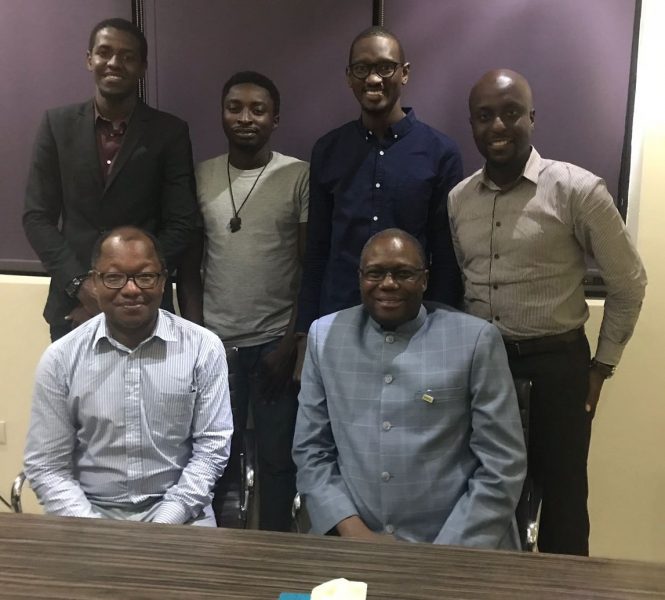
The Forum for Agricultural Research in Africa (FARA) will partner with Verdant Agritech Nigeria Limited, a technology start-up that specializes in delivering online extension services to small scale farmers. During a courtesy visit to its Abuja office by the Executive Director of FARA in Abuja, Dr Yemi Akinbamijo, expressed delight at the ongoing activities of start-up companies like Verdant, which combine the power of information technology and the knowledge of rural economy, to assist rural farmers attain improved food productions using mobile phones. This is done by deploying agricultural data science, market information, managerial support, and access to financial services. The ED praised the company’s effort of generating the much-needed Big Data that would be useful for governments and decision makers to confront agricultural challenges such as climate change and post-harvest losses within the context of value chain.
Standing: L-R Ibrahim Magaji, Reuben Abel Nyaze, Nasir Yammama and Abubakar Abdullahi from Verdant Agritech, Nigeria: Seated L-R: Dr Abdulrazak Ibrahim & Dr Yemi Akinbamijo, FARA
Dr Akinbamijo added that part of the consequences of the ongoing 4th industrial revolution in Africa, is an increasing demand on science and technology in Africa to confront the disruptive transformations taking place and key players in this respect are young entrepreneurs and start-up companies like Verdant. The ED encouraged the company and pledged FARA’s support in its initiatives in the continental move towards making Africa more food and nutrition secure.
Responding, the CEO of Verdant, Mr Nasir Yammama, a creative technologist known globally, thanked FARA for the visit and added that the launching of the FARA-led Science Agenda for Agriculture in Africa (S3A), provides a unique opportunity for Verdant to align to continental Agricultural Research for Development (AR4D) agenda that would vigorously deepen the application of Science Technology and Innovation (STI) in agriculture, for the benefit of the over 70% African population that depends on agriculture for its livelihood. Mr Yammamama indicated that while Verdant is planning to deliver their services across the continent, the establishment of their first technology hub in Nigeria was informed by the fact that the country constitutes ¼th of the continent and that solving agricultural problem in Nigeria, amounts to solving it in 1/4th of the continent.
Pursuing the FARA-Verdant partnership, the company will be joining FARA on a mission to Cuba where workable Cuban technologies and knowledge products will be pursued for use in Africa using the value chain approach. Verdant will also be partaking in consolidating the development of FARADataInformS, an S3A flagship program that will establish a repository of relevant STI indicators and metrics with analytical features for agriculture to serve as resource from which various information services and products in AR4D are made available.
About FARA
FARA is the apex continental organization responsible for coordinating and advocating agricultural research for development and serves as the technical arm of the Africa Union Commission on matters concerning agriculture science, technology and innovation.
For more information:
Website: www.faraafrica.org
Blog: http://faraafrica.wordpress.com
Facebook Page: Forum for Agricultural Research in Africa. https://www.facebook.com/FARAAfrica/
FARA Social Media Team (Facebook Page): https://www.facebook.com/groups/aasw6smt/
Twitter: @FARAinfo. https://twitter.com/FARAinfo
Youtube: FARA Africa. https://www.youtube.com/channel/UCEJQGxNwCCFuEHCTDOljeqg
Instagram: fara.africa. https://www.instagram.com/fara.africa/
Google Group: https://groups.google.com/a/cgxchange.org/forum/#!forum/fara-smt-group
Flickr: FARA Africa. https://www.flickr.com/photos/farafotos/albums
LinkedIn: Forum for Agricultural Research in Africa – FARA. https://www.linkedin.com/company-beta/476676/