One case of salt losing its sweetness in nature is in the salinization of the soil, a growing concern in Africa. This is becoming a reality in Africa where the proportion of soil with high salt content is gradually approaching a critical threshold that requires considerable effort. Africa is reported to possess 60% of the remaining arable land globally. Arable land implies a land lot with complementary properties suitable for crop cultivation and livestock rearing. A key property of any arable land is healthy soil, containing adequate levels of essential crop nutrients, water, air, and a thriving microbial population essential for crop production. The core determinant of soil functionality lies in its nutrient-water balance, which controls the availability of nutrients in the soil water for the use of the plant. There are instances where nutrients exist in the soil but are unavailable for plant use; in scientific terms, these elements may be immobilized in the soil colloids due to the presence of higher concentrations of other nutrients.
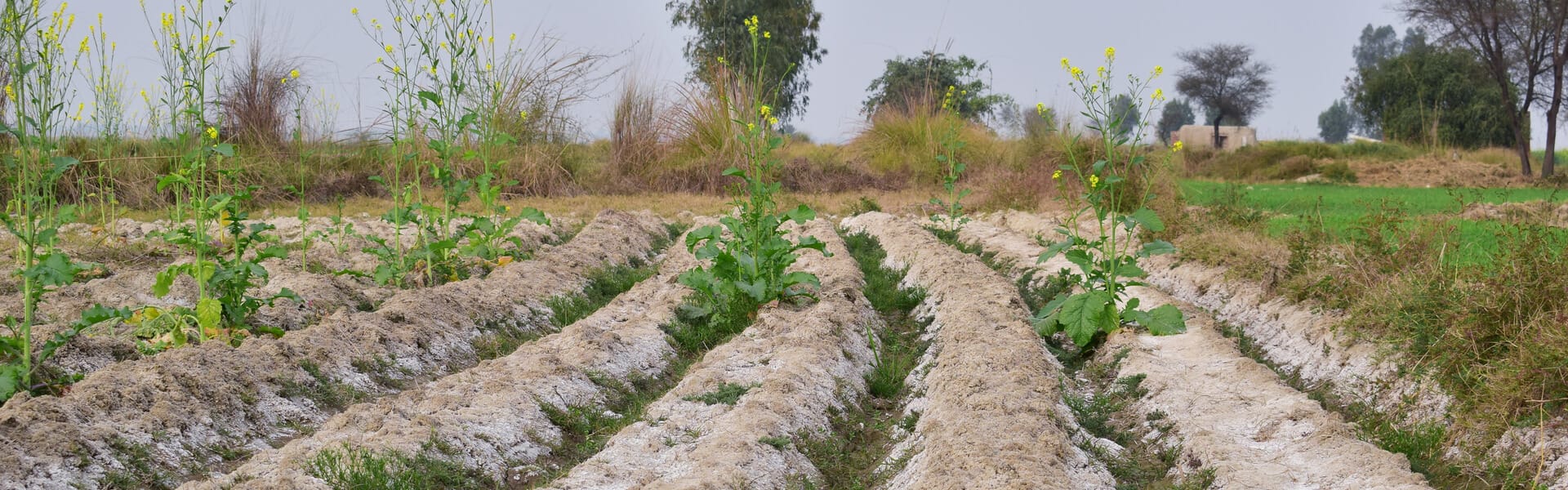
Salinized plot of soil
A primary catalyst for nutrient immobilization is “salinization”: it is defined as a condition where the salt concentration in the soil water surpasses a critical threshold, preventing crop productivity, environmental health, and economic welfare. According to a 2014 report from the United Nations University, more than 5,000 Acres of land are lost globally each day due to soil salinization. Similarly, FAO reported that 11% of the arable land in Africa is affected by varying degrees of salinization (FAO,2019). The consequences of salinization is reported to include loss of vegetation, structural instability, erosion, and contamination of groundwater.
The cause of salinization includes irrigation with water from sources with a high content of salts, especially sodium. Misuse of fertilizers, poor drainage, loss of vegetation cover, deforestation, improper tillage practices, and overexploitation of land. The bottom line for the control of salinization is having an appropriate knowledge of the soil ecosystem and the best practices for its sustainable use. Overexploitation of the tropical soil found in Africa is a key cause of degradation; while this soil has an intrinsic disadvantage of the predominance of low-activity clay minerals, its use should be managed to ensure continued support for crop growth and other ecological services. The application of organic materials to increase the colloidal properties of the soil is essential to ensure the functionality of the soil system, including the optimization of the fertilizer applied for crop growth.
The continental efforts for managing the African soil is packaged in the Soil Initiative for Africa (SIA), the SIA is the African Union initiative developed to ensure sustainable management of the soil to achieve sustainable agricultural intensification and optimization of the ecological services from the soil. The implementation of the SIA is facilitated through the Africa Fertilizer and Soil Health Action Plan (AFSH-AP), a ten-year plan to coordinate actions at different governmental levels.
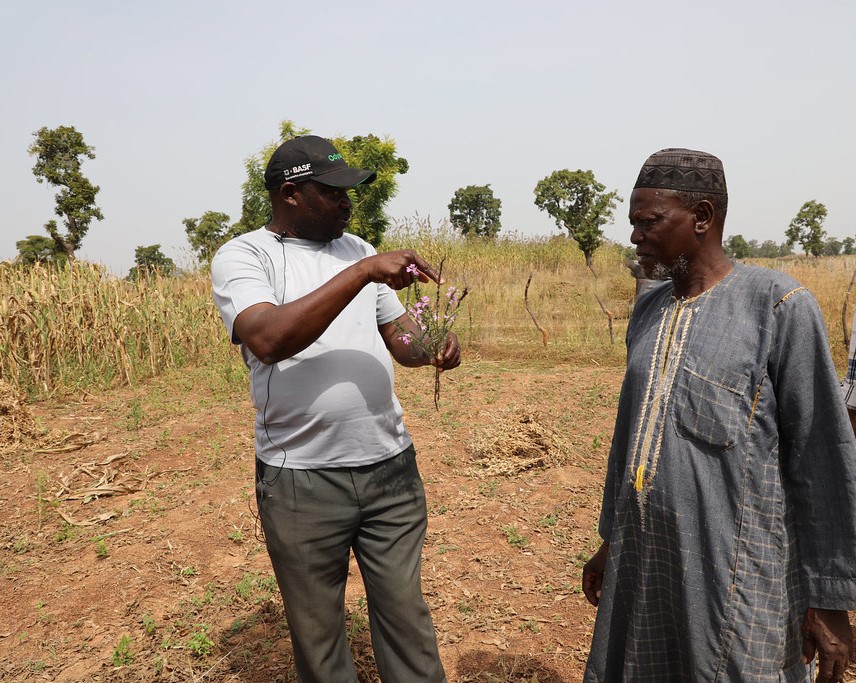
A farmer in Northern Ghana demonstrating how he has practiced Integrated Soil Fertility Management and consistently improved yield over the past 10 years
The SIA and the AFSH-AP will be launched at the upcoming Africa Fertilizer and Soil Health Summit, slated for next year 2024 in Nairobi, Kenya.
In commemoration of the 2023 World Soil Day, the Forum for Agricultural Research in Africa (FARA) and its partner organizations advocate for a cautious use of African soil to ensure sustainable production of food and fiber, productivity of the agrarian livelihood, ensuring food, and nutritional security, and continental prosperity.
Over the years, farming activities and projects in Ghana have targeted the alleviation of food insecurity and malnutrition especially in Northern Ghana by promoting crop-specific agroecological systems and sustainable development practices.
FARA, for the past two decades, hosted by the government of Ghana, has supported in youth capacity development programs and activities through YPARD, provided support in mainstreaming the culture of knowledge co-creation for sustainable agriculture, strengthened multi-stakeholder partnerships through innovation platforms and mainstreamed the Science Agenda for Agriculture (S3A) in Ghana’s government flagship programmes.
So much more can be achieved overtime when farmers and farm activities are strongly considered under centre stage of policy making priorities.
Join FARA pay tribute to the hardworking farmers of Ghana.
President Bola Tinubu yesterday promised a new era in the country’s agricultural sector, vowing that it would no longer be business as usual as his administration seeks to boost food security as well as diversify the economy from over-reluance on petroleum.
Speaking at the opening of the 6th Africa – Wide Agricultural Extension Week (AAEW), with the Theme: “Harnessing Agricultural Extension and Advisory Services in Scaling Regenerative Agriculture and Nature-Based Solutions for Food System Transformation in Africa”, the president emphasised the huge potential of agriculture as a key driver of the economy.
Represented by the Minister of State for Agriculture and Food Security, Senator Aliyu Sabi Abdullahi, Tinubu also maintained that agriculture remained a potent tool to fight unemployment, hunger and poverty.
He said it was against this background that his present administration unveiled an 8-point agenda which include food security; poverty eradication; growth, job creation and access to capital among others.
The president reiterated his commitment to restructuring the economy from unnecessary borrowing to finance government programmes as well as create jobs, achieve economic growth, end poverty and ensure prosperity for all Nigerians.
He said going forward, agriculture must now be market-oriented, and move away from the subsistence farming culture currently been practiced by smallholder farmers.
To achieve this, he stated that the government came up with programmes including the National Agriculture Growth Scheme-Agro-pocket, where millions of farmers are supported through training on Good Agricultural Practices (GAP), certified inputs such as improved seeds and organic and inorganic fertilizers and irrigation equipment at highly subsidised prices to enhance their production, increase productivity and ultimately higher incomes to farmers.
The president specifically noted that agricultural extension plays a critical role in bringing relevant and improved technologies developed by National Agricultural Research Institutions (NARIs), inputs suppliers and marketers to farmers.
He said to strengthen agricultural extension delivery services in the country, the Federal Ministry of Agriculture and Food Security has put together the first ever Harmonised Extension Manual in Nigeria and National Agricultural Extension Policy – both of which he also launched during the event.
He explained that the harmonised extension manual focuses on how to effectively disseminate and deploy agricultural innovations/technologies to end-users using appropriate extension methods.
He said the document would be of great benefit to extension administrators, subject matter specialists, extension agents as well as farmers along the agricultural value chains.
Similarly, the agricultural extension policy seeks to provide a pragmatic, effective and efficient demand driven plurastic, ICT-enabled and market-oriented extension service to all stakeholders including youths, women, and people with special needs to optimally use resources to promote sustainable agriculture and socio-economic development of the country.
Tinubu, also reassured Nigerians of his government’s renewed commitments towards attaining food security in line with the Renewed Hope Agenda.
He said, “Our resolve is to develop the agricultural sector towards the attainment of the objectives of the Sustainable Development Goals (SDGs) especially those of zero hunger and to improve agriculture and rural productivity.
“Nigeria’s current plan is to achieve self-sufficiency in food production and reduce dependency on food imports.”
He added that the present administration remained open to suggestions that could, “enhance our efficiency and effectiveness in repositioning Nigeria agriculture and I hope this conference will come up with actionable solutions to agricultural challenges in Nigeria.”
He hailed the African Forum for Agricultural Advisory Services, (AFAAS) for coming up with the conference as well as development partners including USAID, GIZ, IFPRI, among others for their support to creating a platform where African countries interact to channel the best course of action aimed at agricultural extension service delivery for agricultural prosperity.
He also commended their efforts that culminated in the production of Harmonised extension services manual and policy framework.
FOLLOWING calls by the African Union to enhance trade in Regional Economic Communities (RECs) through the implementation of Common African Agro Parks Programme (CAAPs), Zimbabwe and Zambia signed a trade agreement in 2021 valued over US$12million, which is about to bear fruit.
Speaking in Lusaka during the just ended inaugural coordination meeting of Regional Economic Communities (RECs) for the implementation of the Common African Agro-Parks programme, Ministry of Industry and Commerce, Chief Director Florence Makombe from Zimbabwe, explained that the trade agreement between Zimbabwe and Zambia rides on the already existing bilateral trade, which has culminated in a series of meetings and talks between the two countries aimed at actualizing the agro park to boost food production and trade.
Ms. Makombe disclosed that the agriculture industrial park between the two countries includes the following value chains: Soybean, dairy, wheat, horticulture, maize and fisheries.
Ms. Florence Makombe, Chief Director of Ministry of Industry and Commerce
“There has been progress made on the Zimbabwe and Zambia trade agreement which is expected to blossom in terms of food production. Now, there is need to adjust from the last meeting held in Harare recently, which looked at the legal framework,” She revealed.
The Director of the Ministry of Commerce, Trade, and Industry of Zambia, Musokotwane Sichizuwe said Zambia has the capacity in terms of the agriculture sector given also the favorable weather.
Mr. Sichizuwe says once a feasibility study is conducted in Zambia, it will help unpack most of the criteria requirements.
“Zambia has prioritized farm blocks. Initially, the focus was on special economic zones but now extended to farm blocks. It aligns well given that we are trying to do some of these things at a regional level,” he disclosed.
Mr. Brian Ngandu from Ministry of Agriculture of Zambia said that Zambia and Zimbabwe have enjoyed a long-lasting trade relationship. This is advantageous to both countries as their identified trade agreement is likely to stimulate increased trade.
The Director of the Ministry of Commerce, Trade, and Industry of Zambia, Musokotwane Sichizuwe (left) and Mr. Brian Ngandu, Ministry of Agriculture of Zambia (right)
Although, Zambia and Zimbabwe may not have the same land polices, the implication is that both countries may need to reform policies to align with the goals of CAAPs and to also strengthen this agro park initiative to attract and unlock business opportunities in order to enhance trade between the two countries.
It is clear that CAAPs are critical if trade is to be enhanced intra and regionally in a bid to make the African continent food secure and also produce surplus for export.
Principal Advisor, Value chains, Office of the Secretary General Themba Khumalo explained that CAAPs involves agreed actions between two countries to identify trade opportunities.
“Our target is to have excess food for trade and where there are domestic projects will be supported, CAAPs aims to promote regional integration and trade,” Mr Khumalo said.
r. Themba Khumalo, Principal Advisor, Value chains, Office of the Secretary General, AfCFTA
To catalyze CAAPs, countries need to justify their projects within their Regional Economic Communities (REC) for the implementation of the Common African Agro-Parks programme. Once countries identify and concretize their projects, they need to sign agreements and trade. For these CAAPs to be viable and translate into tangible results, there is need to ensure private sector investment.
Mr Khumalo said, “when pursuing these investments, there will be need for private sector players to be able to present their projects and mobilize resources to actualize trade agreements”.
He clarifies whatever projects exist in countries aside the identified CAAPs continues, although it is better to enshrine them in the regional investment plans for purposes of recognition as a CAAPs regional integration plan.
“We need to radically change the way we work to actualize and achieve the goals of the CAAPs,” Mr. Khumalo said.
He advised that countries need to look at their own domestic interests, what is existing and how best it can be scaled up. This should be coupled with a commitment to create an enabling policy environment and trade among others so as to avoid any barriers between countries wanting to promote trade in their RECs.
Mr Khumalo explained that for the CAAPs to be recognized and supported, certain criteria need to be met as spelled out in the Abuja declaration.
The Abuja declaration criteria outlines some of the critical elements of setting up a CAAPs within a RECs. Among them, is taking into account the nature of strategic importance in relation to integration, economic growth and food security. Further, there is need to ascertain what is on the ground within the context of feasibility of projects, as there must be a base to engage some of the partners for a pre-feasibility.
This means when looking at most entities, there will be need for feasibility study, which will entail the community having basic information to make decisions and demonstrate the ability to promote regional boosting. Overall, there is need to look at whether countries are able to commit from a policy point of view as a country, outside investor zones to enable the private sector to make informed decisions. It is key for countries to critically look at their comparative advantages and harmonize their investments with financial commitment towards agreed value chains.
Common African Agro-Parks (CAAPs) are vehicles aimed at driving cross border projects to leverage on initiatives which focus on priority or strategic commodities. It is envisioned this approach will spur economic development and transformation in Africa, as espoused within the framework of the African Union (AU) Agenda 2063. – National Agricultural Information Service
Common African Agro-Parks (CAAPs) are vehicles aimed at driving cross border projects to leverage on initiatives which focus on priority or strategic commodities. It is envisioned this approach will spur economic development and transformation in Africa, as espoused within the framework of the African Union (AU) Agenda 2063.
Principal Advisor, Value chains, Office of the Secretary General Themba Khumalo explains that CAAPs involves agreed actions between two countries to identify trade opportunities.
“Our target is to have excess food for trade and where there are domestic projects that will be supported, CAAPs aims to promote regional integration and trade,” Mr. Khumalo said.
Mr. Themba Khumalo, Principal Advisor, Value chains, Office of the Secretary General, AfCFTA.
To catalyze CAAPs, it’s about countries justifying their projects within their Regional Economic Communities (REC) for the implementation of the Common African Agro-Parks programme. Once countries identify and concretize their projects, they need to sign agreements and trade. For these CAAPs to be viable and translate into tangible results, there is a need to ensure private sector investment.
Mr. Khumalo says when pursuing these investments, there will be a need for private sector players to be able to present their projects and mobilize resources to actualize trade agreements.
He clarifies whatever projects exist in countries aside the identified CAAPs continues although it is better to be enshrined in the regional investment plans for purposes of recognition as a CAAPs regional integration plan.”
“We need to radically change the way we work to actualize and achieve the goals of the CAAPs,” Mr. Khumalo says.
He advised that countries need to look at their own domestic interests, what exists and how best it can be scaled up. This should be coupled with a commitment to create an enabling policy environment for trade and, among others, to avoid any barriers between countries wanting to promote trade in their RECs.
Mr. Khumalo explained that for the CAAPs to be recognized and supported, a certain criterion needs to be met as spelled out in the Abuja declaration.
The Abuja declaration criteria outlines some of the critical elements of setting up a CAAPs within a RECs. Among them is considering the nature of strategic importance in relation to integration, economic growth, and food security. Further, there is a need to ascertain what is on the ground in the context of feasibility of project, as there must be a base to engage some of the partners for pre-feasibility.
This means when looking at most entities, they will be needed for feasibility study, which will entail the community having basic information to decide and demonstrate the ability to promote regional boosting. Overall, there is need to look at whether countries can commit from a policy point of view as a country outside investor zones to enable private sector to make those decisions. It is key for countries to critically look at their comparative advantages and harmonize their investments with financial commitment towards agreed value chains.
A typical case of a CAAPs is the trade agreement between Zimbabwe and Zambia dubbed “Common Agriculture Industrial Park (CAP)” signed between the two countries in 2021. The partnership between the two countries is valued at over US$12 million.
Speaking in Lusaka during the inaugural coordination meeting of Regional Economic Communities (REC) for the implementation of the Common African Agro-Parks programme, Ministry of Industry and Commerce, Chief Director Florence Makombe from Zimbabwe, explains that the trade agreement rides on the already existing bilateral trade.
Chief Director Florence Makombe, Ministry of Industry and Commerce, Zimbabwe
Ms. Makombe disclosed that the agriculture industrial park between the two countries includes the following value chains: Soyabean, dairy, wheat, horticulture, maize, and fisheries.
“There has been progress made on the Zimbabwe and Zambia on the agreement. There is need to adjust from the last meeting held in Harare were looking at the legal framework,” She said.
Ministry of Commerce, Trade and Industry, Director Industry, Musokotwane Sichizuwe says Zambia has the capacity in terms of the agriculture sector also given the favorable weather.
Mr. Musokotwane Sichizuwe (left), Zambian Ministry of Commerce, Trade and Industry with colleague Chipoka Mulenga (right)
Mr. Sichizwe says once a feasibility is conducted in Zambia, it will help unpack most of these criteria requirements.
“Zambia has prioritized farm blocks. Initially, the focus was on special economic zones but now it is extended to farm blocks. It aligns well given that we are trying to do some of these things at a regional level,” he disclosed.
Mr. Brian Ngandu, Ministry of Agriculture, Zambia
Ministry of Agriculture, Brian Ngandu says Zambia and Zimbabwe have enjoyed a long-lasting trade relationship. This is an advantage to both countries as their identified trade agreement is likely to stimulate increased trade.
While, Zambia and Zimbabwe may not have same the land polices, the implication is that both countries may need to reform policies to align with goals of CAAPs and strengthen this agro park initiative to attract and unlock business opportunities in order to enhance trade between the two countries. – National Agricultural Information Services
AFRICA is spending about US$50 billion every year importing food from other parts of the world. This situation poses an opportunity for African countries to reposition themselves in a bid to make the continent food secure.
This led the African Union Commission to conceptualise the Common African Agro-Parks (CAAPs) aimed at attracting private investments to establish transboundary mega agro industrial hub on the continent.
The Common African Agro-Parks is a mega initiative of the African Union to create regional agro-industrial hubs aimed at responding to the continent’s demand for interventions at boosting local processing and regional trade for agricultural commodities and their value chains.
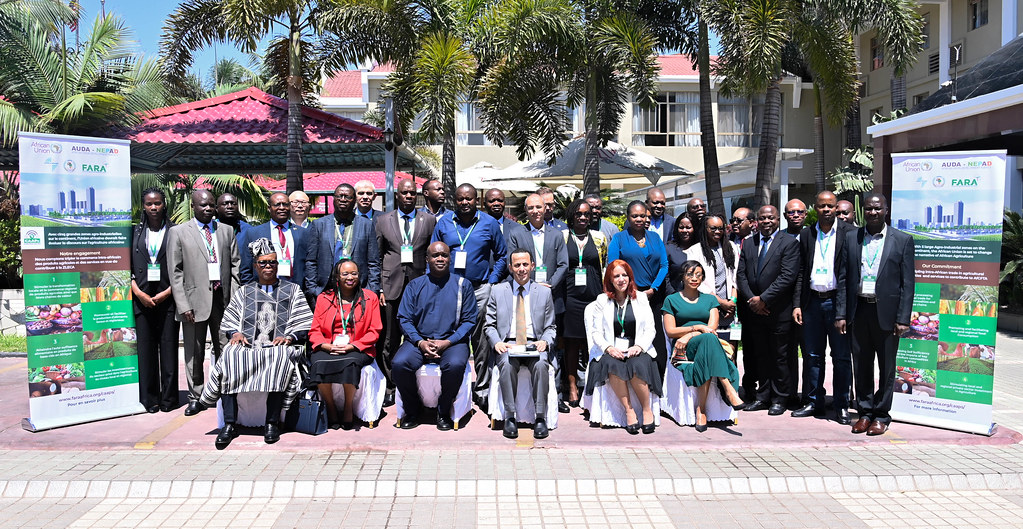
To come up with innovative solutions to drive the CAAPs, Common Market for Eastern and Southern Africa (COMESA) hosted member states who convened in Lusaka recently to share ideas and experiences to better address the intra and regional trade meant to enhance agricultural commodities and value chains.
The CAAPs will help the agro-allied sector of the Africa economy to deliver on the AU Agenda 2063 aspirations within the framework of the Africa Continental Free Trade Agreement (AfCFTA).
Initiated in 2019, CAAPs is one of the initiatives of Comprehensive African Agricultural Programme (CAADP) to be implemented within the framework of the African Union (AU) agenda 2063 to achieve the CAADP Malabo commitments, particularly the commitment to “triple intra-African trade in agricultural commodities and services.”
The programme seeks to promote and facilitate local and regional as well as food production. In this way, achieving self-sufficiency of key agriculture commodities in Africa remains a critical milestone.
CAAPs Programme Coordinator, FARA Anselme Vodounhessi explains that CAAPs aspires to stimulate local and regional private sector investment in agriculture.
Mr. Vodounhessi says Africa has abundant resources but need to actualise economic opportunities by aggressively engaging in value chains in the agriculture sector which are viable and profitable.
He reaffirms Africa has lots of arable and abundant land which needs to be exploited in order to create and build a desired Africa.
Generally, Africa has good strategies but the major bottleneck is the implementation. According to Chief, Regional Division for Africa, UNIDO Victor Djemba explains that coordination of key actors in the implementation process of value chains in the agriculture sector remains problematic.
Mr. Djemba acknowledges that the private sector does a lot work but in isolation, hence the need for them to work in a concerted manner with sector players. This, he argues requires the proposed industrial parks to work effectively, needs inclusivity of private sector participation from project inception within the existing structures.
“It’s not the work of one entity but all entities need to be involved for a successful development of key players in the establishment and development of industrial parks,” he said.
Mr. Djemba said key players need to be involved in the whole process of implementation.
“Involving investors from inception requires embracing the laws and rules of both countries to provide an enabling environment for industrial parks to thrive,” he said.
Rural Development, Agro-Industries Agro-Industrial Parks Unit, UNIDO Project Officer Andrew Goodwin explains that everything which is set-up in agro-processing zones is business focused and has to be a long-term approach. Therefore, there must be commitment to develop agro-processing zones in industrial parks. It is obvious this approach needs an enabling environment to succeed.
Mr. Goodwin further says industrial parks are able to flourish through leases and services offered to the public.
For instance, industrial parks in Ethiopia and Senegal have been successful because they make their revenue from generation developers as they have invested in building sheds, installed power, water and other necessities within the parks.
These processing companies provide services such as commercial services, resource centres, among others which enable them to broaden resource base and maximise on their profits. Its also imperative to take cognizant of the prevailing climate change conditions. This should inform sector players to build climate resilience.
Mr Goodwin said these integrated agro-food parks refers to central processing hubs which strive to reach out to rural areas from world transformation centres. For example, breeding, storing, collection centres at farmer level and cooperatives would also have these centres for processing.
He further said it was impressive that farmers in Ethiopia and Senegal are developed with cooperative unions, which closely work with the Ministry of Agriculture and also have bidding bilateral agreements.
With the success model of Ethiopia and Senegal, it is clear agriculture is the answer to creating prosperity and will always be the most economically viable sector to focus on for generations to come.
CAAPs aspirations is for member states to mobilise domestic resources to invest these into agro-parks and ensure a food secure continent. It is imperative to take into account the success of this programme needs a lot of resource mobilisation. The member states can co-create and unlock opportunities for the transboundary setting to enable Africa flourish. – National Agricultural Information Services.


 The cause of salinization includes irrigation with water from sources with a high content of salts, especially sodium. Misuse of fertilizers, poor drainage, loss of vegetation cover, deforestation, improper tillage practices, and overexploitation of land. The bottom line for the control of salinization is having an appropriate knowledge of the soil ecosystem and the best practices for its sustainable use. Overexploitation of the tropical soil found in Africa is a key cause of degradation; while this soil has an intrinsic disadvantage of the predominance of low-activity clay minerals, its use should be managed to ensure continued support for crop growth and other ecological services. The application of organic materials to increase the colloidal properties of the soil is essential to ensure the functionality of the soil system, including the optimization of the fertilizer applied for crop growth.