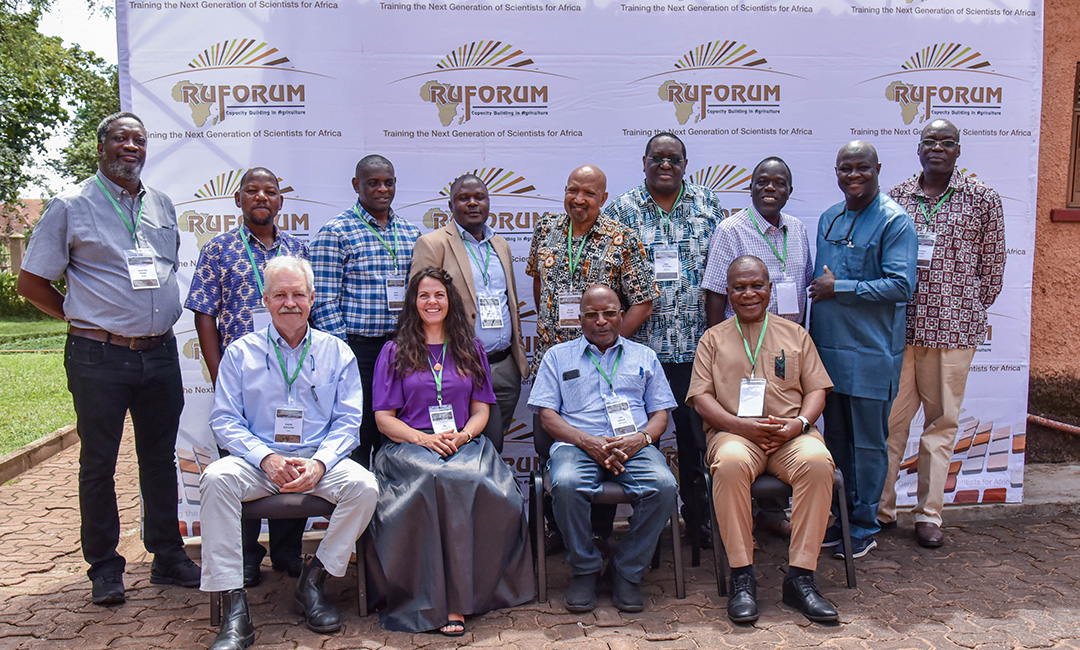
In a bid to ensure that the Soil Initiative for Africa (SIA) is operationalized to deliver its planned social and economic benefits, a group of experts on the subject of Human Capital gathered for three days (4-6th April 2024) at the RUFORUM conference Hall at the Makerere University, Kampala Uganda.
The gathering discussed the role Human Capital in ensuring the management of the Africa soil for increased but sustainable agricultural productivity, coherent ecosystem services while retaining the integrity of the Africa soil as its prime production asset.
Prof. Patrick Okori, Executive Secretary, RUFORUM; addressing the gathering of experts and stakeholders
This expert gathering was unprecedented in the history of Human Capital development for the management of the Africa soil. Human capital is a composite nomenclature, it refers to the skills, knowledge, and experience possessed by individuals or populations; the institution that governs their use, and the cost and the value it adds to the organization or country. The human capital needed for soil management will encompass issues like; (a). Availability of knowledge and skill to generate appropriate technologies and innovation for sustainable use of soils. (b). Availability of teaching and training institutes for continuous development of skillful human resources for innovation. (c). Capacity and infrastructure for knowledge transfer and use. (d). The existence of a system for technology and knowledge demand and supply between users and generators of new knowledge. and (e). Linkages between system components and the management of the soil ecosystem.
It became clear that Human Capital development for soil only be effective when it gives attention to channeling training efforts to farmers and other soil users for effective management of soil, rather than training soil scientist only. It was clear that enrolment for specialization in soil science is very low in most tertiary institutions; possibly due to the inability of the system to absorb them, apparently, majority of those trained in the last three decades are diffused into other disciplines or ancillary area to soil science. The puzzle is how many soil scientists are truly needed per thousand farmers or a million individuals in the population? The right answer to this question will inform the right action and the investment needed to achieve the aspirations of Soil initiative for Africa and the Africa fertilizer and Soil Health Action Plan (AFSH-AP).
In a bid to have appropriate human capital development for managing Africa soils,there is the need totrain fewer scientists with globally competitive skills and access to infrastructure to generate new solutions on the continent. The training of soil users within the civil society, especially the smallholder farmers, is essential for progress in managing Africa soil. There is the need to develop or optimize the existing knowledge demand mechanism on soil management at different levels. Investment in awareness creation/communication on the need to effectively manage Africa soil is vital to successful mobilization of civil society to halt the pace of land degradation. Lastly, Africa will need to develop the right institution that will incentivize ethical use of the soil and disincentivize the abuse of soil resources.
15th – 17th February 2024: Alisa Hotel, Tema, Accra, Ghana
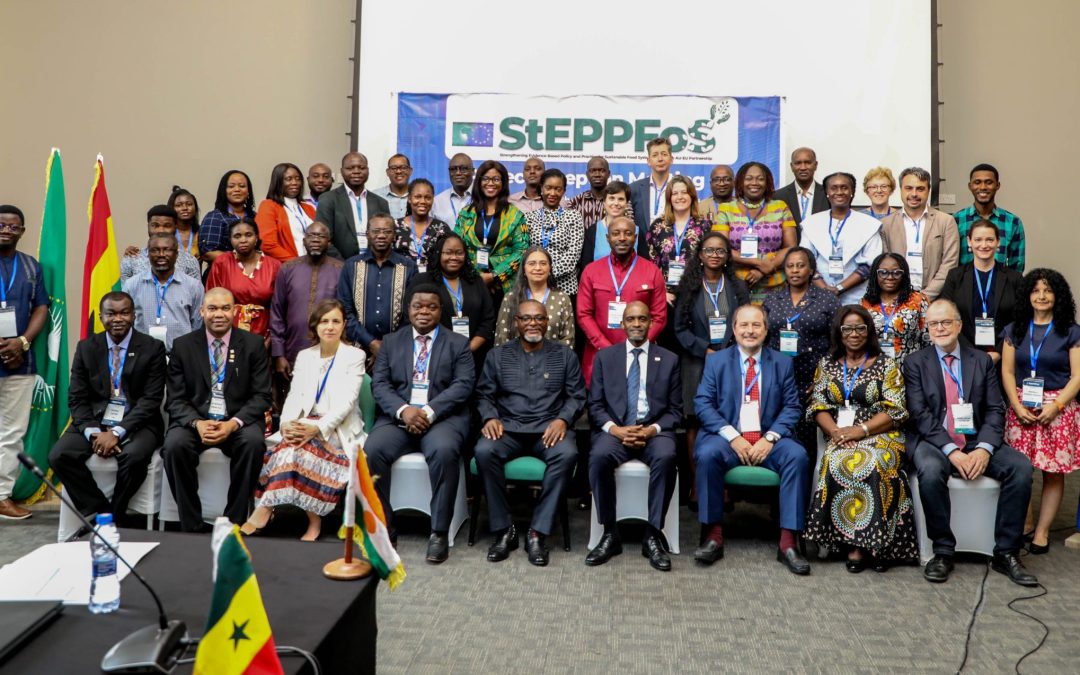
The African Union and the European Union together with a number of implementing partners on the African continent and across Europe launched the Strengthening Evidence-Based Policy Practice for Sustainable Food Systems under the EU-AU Partnership #StEPPFoS Project at the Alisa Hotel in Tema, Accra-Ghana.
StEPPFoS Implementing Partners General Assembly, Alisa Hotel Tema, Accra-Ghana
The #StEPPFoS Project is designed to promote policy coherence and alignment across the Pan-African Network for Economic Policy Analysis of Policies PANAP and Food and Nutrition and Sustainable Agriculture #FNSSA to contribute towards minimizing the fragmentation of policy initiatives in the agri-food sector at national and regional levels across the African Continent.
The Strengthening Evidence-Based Policy Practice for Sustainable Food Systems under the EU-AU Partnership is a 4-year project running from January 2024 till December 2027.
Dr Stephen Onakuse, Dr Kwaku Dei Antwi, Dr Kwamena Quaison, Paola De Caro, Dr. Aggrey Agumya and Raffaele Quarto
Funding for the implementation of the project is granted by the European Union as part of the Green Deal’s “From Farm to Fork” strategy (Horizon Europe budget envelope), which forms a crucial part of the EU’s “Global Gateway” strategic vision, aiming at establishing sustainable and reliable connections serving citizens and the planet.
Raffaele Quarto, European Union
A total of 18 participating organizations come together to make up the StEPPFoS implementation partnership, populated by a wide range of experts and stakeholders (including researchers, NGOs, donors, extension workers, etc.) involved in the field of Policy research analysis, capacity building and food and nutritional security and sustainable agriculture.
Ibrahim Gariba, African Union Commission
At the event were the European Union Delegation Representative to Ghana, Raffaele Quarto, Ibrahim Gariba, a Senior Communication Specialist representing the African Union Commission, Paola De Caro of the European Commission, the REA_EC Project Officer Adelma Di Biasio Biaso and Kwamena Quaison, a Chief Director representing the Ministry of Environment, Science, Technology and Innovation (MESTI) Ghana.
Kwamena Quaison, Ministry of Environment, Science, Technology & Innovation of Ghana
The project is coordinated by the Forum for Agricultural Research in Africa (FARA), a continental apex technical institution of the African Union Commission , and the European Alliance on Agricultural Knowledge for Development (AGRINATURA), an Association of European Universities and Research Centres.
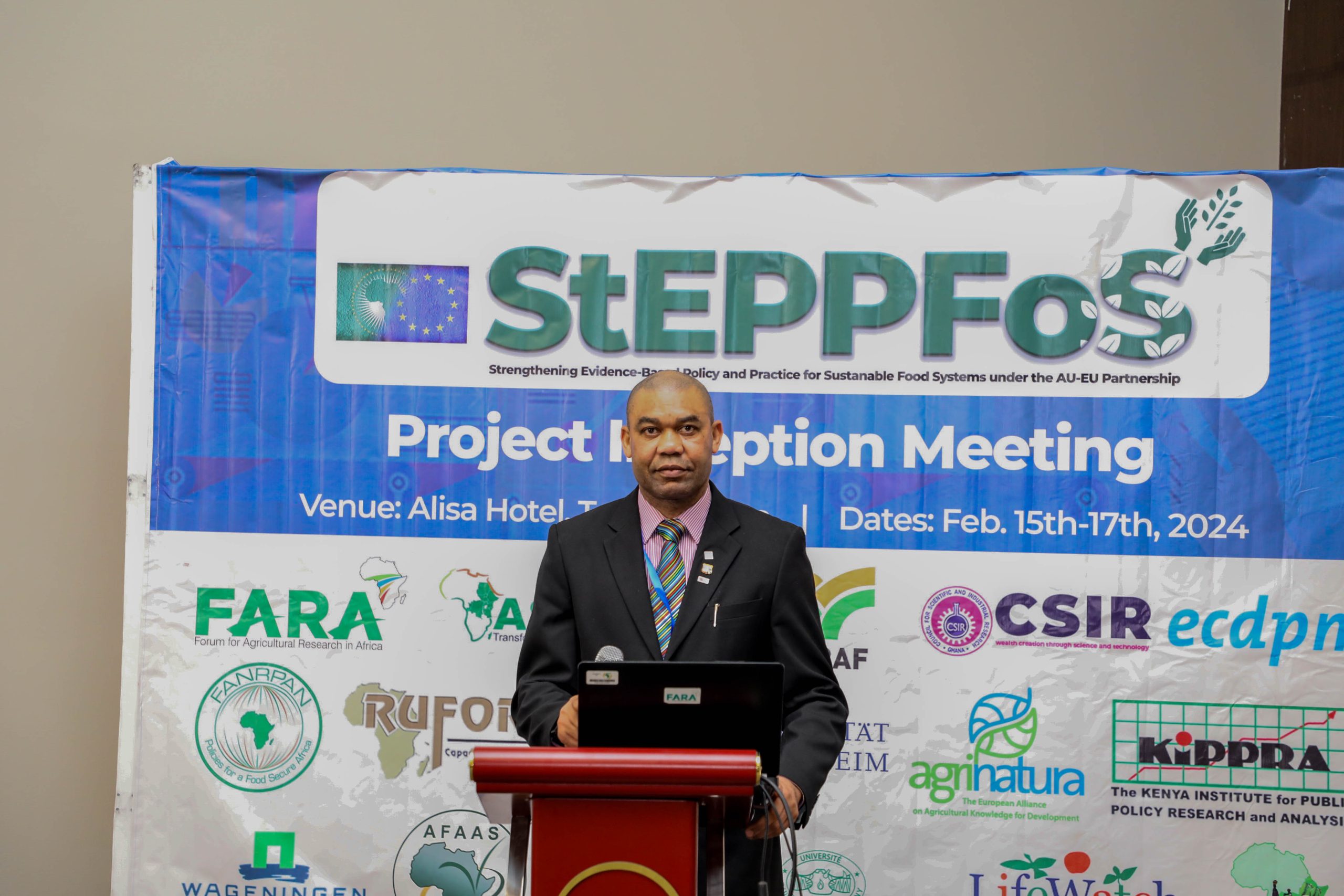
Dr. Kwaku Dei Antwi, StEPPFoS Coordinator, FARA
As outlined by the Project Coordinator, Kwaku Dei Antwi of FARA, StEPPFoS aims to contribute to the FNSSA 10-year roadmap and the global transition towards sustainable food systems through the implementation of activities that link PANAP to the FNSSA partnership. Specific objectives are:
to improve capacities of stakeholders
to enhance science-policy interface
to improve strategies that promote scientific support within policy development.
to expand and strengthen the PANAP Network.
The project will be implemented through its eight work packages (WPs)over a period of 48 months using Capacity building, stakeholder engagements, participatory monitoring, evaluation, and learning as the main methods to deliver on the project’s objectives whiles adhering to open science principles and effective data management practices. StEPPFoS will further leverage expertise from academic, research, and policy institutions in both Europe and Africa.
Paola De Caro, European Commission
Governments worldwide invest heavily in crafting policies to tackle public priorities such as sustainable food and nutrition. However, there’s often a notable disparity between policy goals and actual outcomes, highlighting a universal challenge in policy formulation and implementation Food and nutrition security and sustainable agriculture (FNSSA) represent crucial development priorities in Africa, receiving significant attention from both national governments and international agendas such as the AU/EU partnership. FNSSA was identified as a priority area in the AU-EU High Level Policy Dialogue on Science, Technology, and Innovation, leading to the establishment of the Pan-African Network for Economic Analysis of Policies (PANAP).
The final outcome of the StEPPFoS initiative will be an enhanced collaboration between the FNSSA Research and Innovation Partnership and the Pan-African Network for Economic Analysis of Policies PANAP within EU-AU cooperation. It will further provide support for African agricultural and food systems policy making process through enhanced cooperation in economic, social and environmental impact (including biodiversity) analysis of policy options for food systems, nutrition performance, agrifood trade, and development of rural areas.
Dr Stephen Onakuse, President of AGRINATURA
The President of AGRINATURA, Dr Stephen Onakuse during his closing remarks at the General Assembly of Implementing partners held as part of the inception meetings expressed his delight in the deliberations and decisions for implementation settled on by the general assembly and the need for synchronicity among implementing partners for the success of the project and ultimate realization of the project outcomes.
Dr. Aggrey Agumya, Executive Director, FARA
On his part, the Executive Director of FARA, Dr. Aggrey Agumya, expressed honor in the trust bestowed on FARA to coordinate the project and pledged his commitment to seeing a strengthened AU-EU partnership.
Project Implementing Partners
1. Forum For Agricultural Research In Africa, Ghana – FARA, Coordinator
2. The Registered Trustees Of The Association For Strengthening Agricultural Research In Eastern And Central Africa – ASARECA
3. Conf. Respons. Recher. Agronom.Afriq. De L’ouest & Du Centre – CORAF/WECARD
4. Council For Scientific And Industrial Research – CSIR-GH
5. European Centre for Development Policy Management – ECDPM
6. Food Agriculture And Natural Resources Policy Analysis Network – FANRPAN
7. Regional Universities Forum For Capacity Building In Agriculture – RUFORUM
8. Universitaet Hohenheim
9. European Alliance on Agricultural Knowledge for Development Agrinatura
10. Kenya Institute for Public Policy Research and Analysis KIPPRA, Kenya
11. Stichting Wageningen Research – WR
12. African Forum For Agricultural Advisory Services – AFAAS
13. Universita Ca’ Foscari Venezia – UNIVE
14. Universite Felix Houphouet Boigny, Benin
15. E-Science European Infrastructure For Biodiversity And Ecosystem Research – LifeWatch
16. Eastern Africa Farmers’ Federation Society – EAFF
17. The Association of Commonwealth Universities – UK
18. The Joint Research Centre of the European Commission – EC-JRC
The African Export-Import Bank (AFREXIMBANK) and the African Union Commission (AUC) have formalized a strategic partnership by signing a Memorandum of Understanding (MoU) to implement the Common African Agro-Parks (CAAPs) initiative. This landmark agreement, inked at the 37th AU Summit in Addis Ababa, solidifies the commitment of both entities to catalyze agricultural development and agro-industrialization across the African continent following the endorsement of CAAPs as one of the Flagship initiatives of the AU during the 2023 Summit.
Led by H.E. Commissioner Amb. Josefa Sacko, Commissioner for Agriculture, Rural Development, Blue Economy, and Sustainable Environment, and Prof. Oramah, President of AFREXIMBANK, the ceremony underscores the pivotal role of collaboration in achieving sustainable development for Africa. The CAAPs initiative, adopted by the 37th AU Assembly as a flagship program for the next ten years of the AU Agenda 2063, is a strategic response to enhance local agricultural production and trade under the AfCFTA.
This partnership signifies a shared vision to create regional agro-industrial hubs, aligning with the AU Agenda 2063 objectives. Cross-border mega agro-park projects, a focal point of the collaboration, aim to stimulate economic growth, enhance food security, and foster industrialization. AFREXIMBANK’s financial commitment of USD 20.8 million demonstrates a concrete step toward realizing the ambitious CAAPs goals, with an overarching objective to implement 15 CAAPs mega projects within the next decade.
You may visit https://faraafrica.org/caaps/ for details about the CAAPs initiative.
For media inquiries and further information, please contact the CAAPs Secretariat through:
Anselme Vodounhessi – [email protected]
Benjamin Abugri – [email protected]
A consortium of three German research and implementation-oriented projects has begun developing a blueprint for Sustainable Land Management (SLM) covering all its dimensions regarding ecological, economic, and social aspects, especially gender equity. In Northern Ghana, two workshops were held at the Tamale campus of the University for Development Studies (UDS) from November 15 to 23, 2023.
Participants during the INTERFACES, COINS and DECLARE projects meetings at the UDS Campus in Tamale, Ghana
Group Picture of stakeholders during the first meeting
The projects aim to address long-standing challenges within the sector on land use and ownership by strengthening the weak interaction between Science, Policy, and Practice. These initial workshops sought to establish a participatory learning platform for joint learning and exchange and develop a gender-responsive theory of change for sustainable land management. As an accompanying project, INTERFACES will focus on supporting the social dimensions of SLM, especially gender of the COINS and DecLaRe projects, which are being rolled out in the Northern and Savannah Regions as well as in other parts of Benin and Senegal.
First Two-Day Workshop With The COINS And DECLARE Projects at UDS Campus, Tamale
In her introductory remarks, the Project Lead of INTERFACES and Senior Scientist at the Center for Development Research (ZEF) University of Bonn, Dr. Tina Beuchelt, highlighted the need to enhance the fusion of research, policymakers and implementers. Acknowledging the historically low adoption rates, the INTERFACES team initiated a workshop to develop a Gender Responsive Theory of Change for Sustainable Land Management and establish a Participatory Learning Platform to strengthen adoption.
Dr. Tina Beuchelt, Project Lead of INTERFACES and Senior Scientist at the Center for Development Research (ZEF) University of Bonn.
This collaborative approach will strengthen the implementation of research results and contribute to developing effective land management strategies.
“That’s why we thought we must engage with you, the local stakeholders who are the key experts in this area. She added, “Start discussions, learn about your experience, exchange our experiences, and get your feedback”.
Envisioning sustainable land management, Dr. Peter Asare-Nuamah, a Senior Researcher of the INTERFACES project, described it as empowering farmers to optimise land use, enhancing crop yields, generating social benefits for women and men, increasing income, and conserving the environment without causing pollution or degradation.
Dr. Peter Asare-Nuamah, Senior Researcher, INTERFACES, ZEF, University of Bonn
To achieve this goal, INTERFACES aims to incorporate various stakeholders’ diverse perspectives and priorities in an inclusive approach, ensuring that everyone has a meaningful role to play in shaping a sustainable future for land management. This becomes a vehicle to achieve sustainable land management. Dr. David Anaafo, a Senior Researcher with WASCAL, describes this as being “timeless, taking into consideration the needs of our present and future generations”.
Dr. David Anaafo, Senior Researcher, WASCAL and INTERFACES
On the part of FARA, Mr. Benjamin Abugri, the Knowledge Management and Communications Specialist, highlighted the role and commitment of its organisation in ensuring that the projects’ results are mainstreamed and sustained within its knowledge services and tools for the more significant learning benefit for not just the project beneficiary countries but the entire African continent.
Mr. Benjamin Abugri, Knowledge Management, Learning and Communications Cluster Leader & INTERFACES Project Coordinator at FARA
Stakeholders highlighted conflict, urbanisation, weak legal frameworks, climate change and soil degradation, unregistered lands, changing land tenure systems and difficulties for women to access land, labour, and inputs, among others, as some of the critical areas affecting sustainable land management.
From the left, the ‘Women’ Chief of Zabzugu Traditional Area, Yelzoli Gaa-Naa, Hawawu A Salifu, in the middle, Secretary to the Paramount Chief of Gukpegu (Tamale) and Kpalung Zobogu Naa, Mohamed Rashad Abdulai and INTERFACES Project Lead Dr. Tina Beuchelt
Role of Traditional Authorities
The workshop explored options for actualising a fair distribution of land among men and women in the Northern region, as currently, according to participants at the workshop, women are highly disadvantaged in accessing land. Their main access is via their husbands, and they often only get small pieces of land to farm and the most marginal, least fertile plot. Increasing land scarcity, the pressure of investors, and the lack of documentation were identified as a few of the many issues, drivers and barriers to enable SLM. Present at the meeting was the Secretary to the Paramount Chief of Gukpegu (Tamale), who doubles as the Kpalung Zobogu Naa, Mohamed Rashad Abdulai.
Additionally, the ‘Women’ Chief of Zabzugu Traditional Area, who doubles as the Yelzoli Gaa-Naa, Hawawu A Salifu, was in attendance.
The Kpalung Zobogu Naa, Mohamed Rashad Abdulai, drawing reference from his position as the Secretary of one of the largest land secretariats in the Northern region, said “when you come to the data, there are multiple women having acres of land, so what it means is that you don’t need to carry your husband to the chief. Just meet with the elders who will lead you to the chief, and you’ll be granted access”.
On adopting the proposed approaches, he stated, “let’s start with the communication. When we are going to communicate, we must communicate in a cordial manner that will make people listen to us. Still, if we radicalise it, it won’t move a centimetre”. Yelzoli Gaa-Naa, Hawawu A. Salifu called for increased education to lease land instead of selling it, noting that in the near future “it will be difficult for natives to have land for farming”.
Promoting gender-responsive sustainable land management is essential as Dr. Constance Akurugu, a Senior Lecturer at the SD Dombo University of Business and Integrated Development Studies, believes that within the Northern region, “women are often seen as soon to leave members of their natal families, and when they finally arrive in the marital family they are often seen as, strangers and all closely tied to this or within the context of this women rarely have ownership to productive land.”
Therefore, with a call on traditional leaders and stakeholders to overcome the barriers, policymakers must “take initiatives that will lead to entering into a memorandum of understanding with landowners, heads of families and chiefs to ensure that once an agreement is entered into for women to have access to land, they can have access to the land to use for the period” she added.
Abdul Mateen Alhassan, a former Northern Regional Focal Person for the Peasant Farmers Association of Ghana, bemoaned farmers’ difficulty accessing funding and described the workshop as timely.
Some of the participants at the stakeholders INTERFACES, COINS and DECLARE meeting in Tamale
He explained that “even though land is not a problem in the Northern Region, financial institutions always demand a guarantee, but the fact that people are not registered with lands as their own and to say it is a borrowed one sometimes institutions find it difficult to understand and accept it as a collateral to grant farmers fund”.
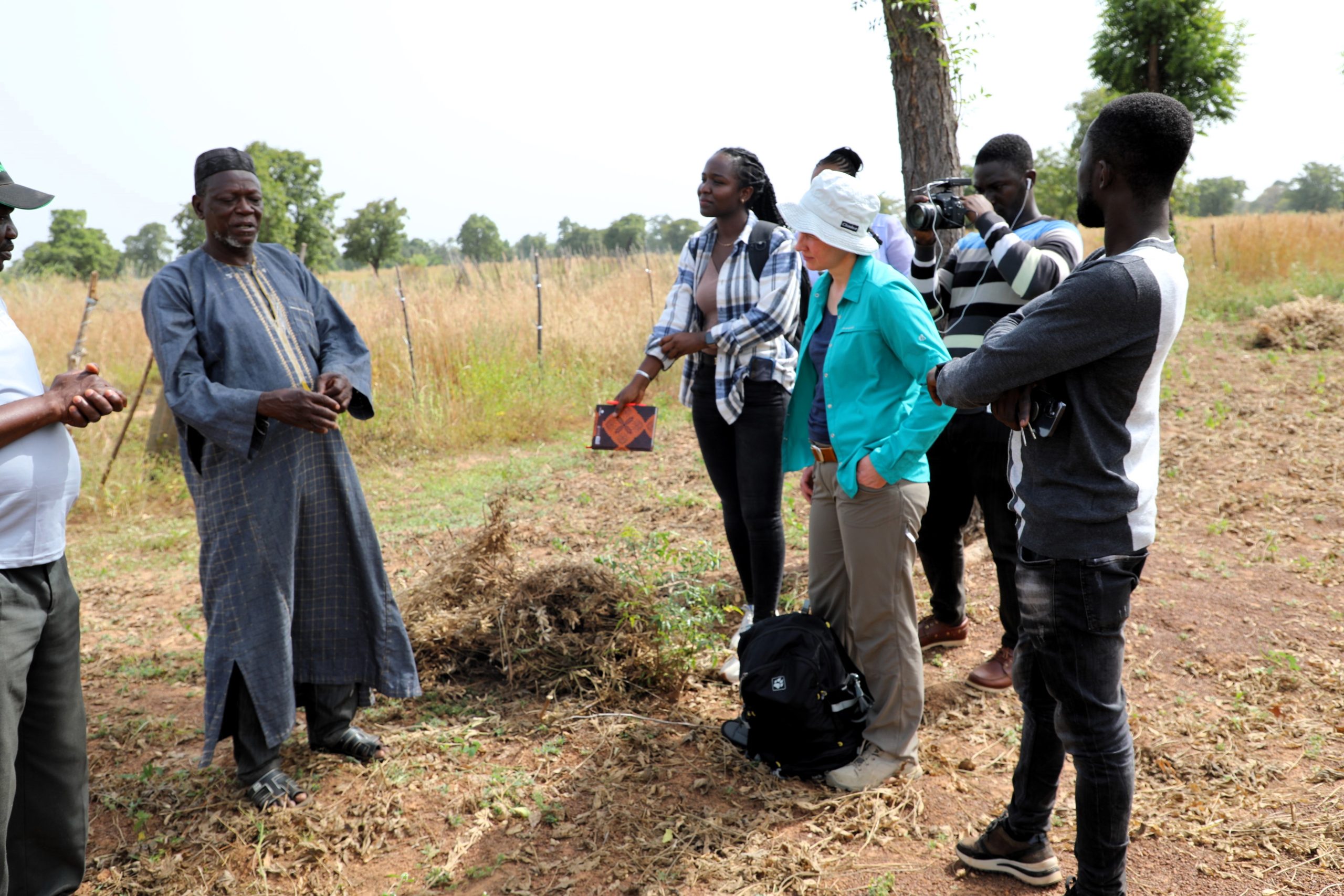
Alhaji Alhassan, a farmer in Tolon explaining the practice of Integrated Soil Fertility Management at his farm to researchers of the INTERFACES, COINS and DECLARE projects
Field Visits to Tolon (Northern Region) and Busunu (Savannah Region)
CSIR-SARI’s Integrated Soil Fertility Management Intervention in Tolon District, also working with COINS living lab intervention
The first field visit on November 17 to the northwestern part of the Northern Region showcased the success rate of the Integrated Soil Fertility Management Intervention on Alhaji Alhassan’s farm who Agrometeorologist at CSIR-Savannah Agricultural Research Institute, Dr. Alhassan Lansah Abdulai describes as an “early adopter who integrated soil fertility management; and crop rotation as an integral part of their farming”.
Beginning in 2011, Dr. Abdulai applauded his consistency, noting that “he is a serious soybean, maise, sorghum and groundnut farmer who has practised crop rotation to the latter”.
Alhassan recounted that with old farm practices, they “used to suffer a lot in order to get more yields to feed our families, but with the new technologies, we put in less effort to get more yields.”
Testifying about the impact of research and extension officers, “What we get from 1 acre is equivalent to what we used to get from about 10 acres under the old system. For instance, I thought I had cultivated one acre for 2023 with my sorghum, but it was a little over one acre when we used the GPS. Despite losing about 2 bags of sorghum to post-harvest losses, I’ve got 13 bags of the 100 kg bag, but under the old system, you could cultivate large acreage and get only 6 bags. It has reduced our drudgery and cost of farming.”
For knowledge transfer among farmers, Dr. Abdulai highlights a farmer exchange program “so during the season, we will bring the other farmers here and send the other people there so that they will offer farmer-to-farmer advice”.
Farmers and Researchers discussing the outcome of the application of the microdosing innovation at a farm at Busunu in the Savanna Region of Ghana
Exploring a DecLaRe’s Project intervention and Greenhouse Farm in Busunu in the Savanna Region of Ghana
A field visit to the neighbouring Savanna Region on November 19 made a first stop at a greenhouse farm called Sadevco Gh in Busunu. The Farm Manager, Frederick Tetteh Pechi-Anim, welcomed and shared its vegetable production techniques of “different variety of vegetables; beefsteak tomato, cherry tomato, bell pepper, hot pepper, lettuce and Mediterranean cucumbers.”
Sharing some challenges in selling its produce, Mr Pechi-Anim explained that potential customers misinterpreted their farm as a GMO producer and were hesitant to patronise it. Due to cultural and other informational gaps, GMOs are still not accepted in northern
Ghana and not promoted by the government of Ghana. However, public sensitisation at the individual level helped to integrate the market while recording a higher sale to expatriates who visit the region or farm.
Field Coordinator for DecLaRe Project in Busunu, Dr. Deogratias Kofi Agbotui, showed the team the DecLaRe weather station positioned in Sadevco Ltd for its research. The device comprises a rain gauge and a temperature and light intensity gauge. He explained that the device helps in prediction modelling, and the data is shared with SADEVCO Ltd.
Dr. Deogratias Kofi Agbotui, Field Coordinator, DECLARE Project (right) and Mr Pechi-Anim, Manager of the SADEVCO Farm at Busunu in the Savanna Region of Ghana
The team continued to Yussif Bofoji Tanko’s farm, testing the micro-dosing interventions promoted by the DecLaRe Project. Mr. Tanko cultivates maise, ground nuts, cashews, bambara beans and rarely cassava. Recounting the importance of the intervention, he explained that the crops yielded better than those not under the experiment. Since this is his first year and he just harvested, he has yet to provide actual figures of yield difference. He lamented the cattle invasion on their farms and irregular rainfall pattern on the maise production, stating that “this year the rains were too much, which destroyed crops, and we also didn’t apply fertiliser”.
Later, the team visited another farmer, Ms. Zainab, who resides in Busunu. As a female farmer, she got her land from a share of her husband’s land solely for agriculture. She confirmed earlier submissions at the workshop that women face many challenges when farming. Her husband allocated six acres of land, which she used: “three acres for corn and three acres for okra. “I had four bags of maise and a bag of okra, and I am happy about the outcome of my harvest. This year, I’m done and waiting for the next planting season, whether I will get land or not.”
Second Two-Day Workshop on COINS and DECLARE Innovations
The second phase of the workshop was held on 22nd and 23rd November at UDS Tamale Campus to assess and forecast the economic, social and environmental impact of innovations by COINS and DECLARE in the Northern and Savannah Regions of Ghana.
Employing the ‘Decision Analysis Approach’, Dorcas Sanginga Alame, a PhD candidate pursuing Horticultural Science at the University of Bonn, says participant feedback helps to “forecast the impact of specific innovations of the regional project which INTERFACES is targeting in Northern Ghana”.
Miss Alame explained that the COINS project focuses on developing “sustainable intensification [solutions] by increasing productivity without taking up new lands” and works with Integrated Soil Fertility Management as one of the suggested innovations. The DECLARE project harbours two innovations, thus ‘micro-dosing to “increase productivity”.
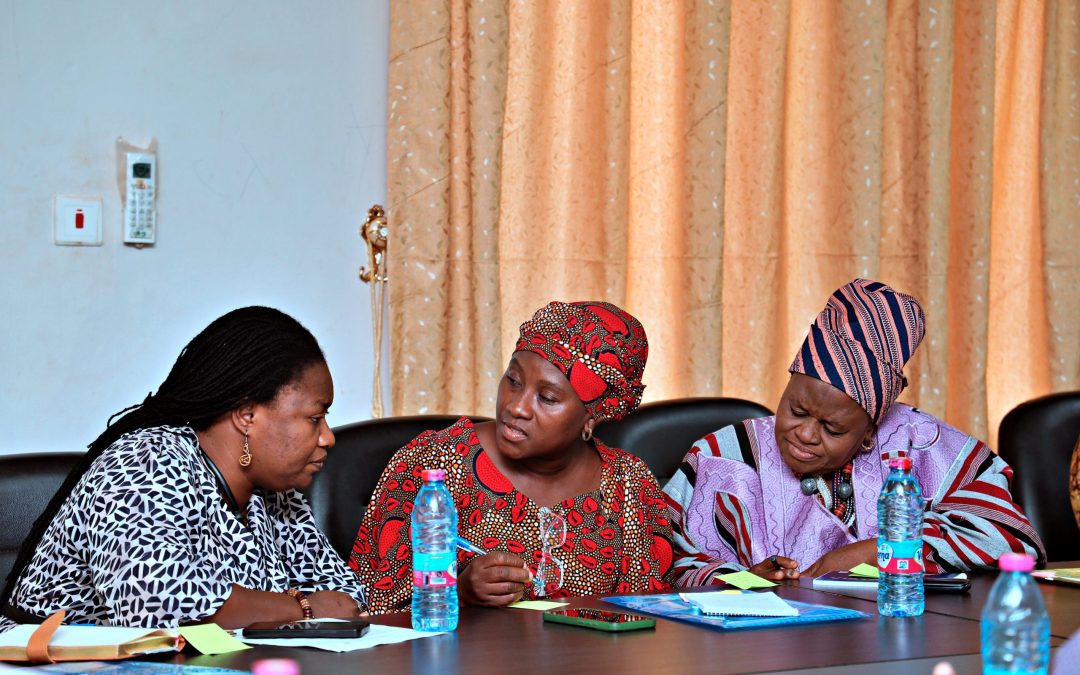
For effective participation, participants first exchanged their ideas with their table neighbours, where men and women were grouped separately, and then experiences and ideas were consolidated. The women’s and men’s perspectives complemented each other. The discussions reviewed the benefits, costs, risks/barriers, challenges, and enabling factors for the selected innovations.
Perceived benefits of the COINS Integrated Soil Fertility Management
Among the list of its benefits labelled were increased crop yield, food security, improved income, economic empowerment, low cost of production, high income, high and sustainable productivity, marketability of products, etc.
An officer at the Northern Regional Women in Agricultural Development Directorate, Salatu Abubakar, reiterating the impact of one farming season in the North, posited that when a woman can reduce the cost of production coupled with an increase in yield then “as a woman with a small parcel of land you can get more income and you can leverage on other levels of income generation activities”.
An officer at the Northern Regional Department of Gender, Ms Bushira, highlighted the role of women in the agricultural value chain; hence, an increase in yield will mean that women who don’t farm “will like to take those yields to do processing so, in that case, it is also creating jobs for them, and they are also being economically empowered together with those who will market those products.”
Additionally, it was discussed that increased yield doesn’t necessarily translate to higher income, citing the paradox of bumper harvest where “everyone harvests and the price comes down at the end of the day you might not get higher income”.
Dr Theodore Asimeng, Senior Researcher at the German Institute for Development and Sustainability (IDOS) and the INTERFACES Project facilitating a session on ISFM during the workshop
Hence, other factors, such as price regulation and improved road networks, amongst others, should be considered. In the workshop, intense, longer discussions and exchanges followed on associated costs, risks and enabling factors. Again, the problem of access to land and the challenges women face in agriculture in adopting new practices emerged. One key aspect related to cultural norms and practices that disadvantage and marginalise women in agriculture, in addition to gender-based violence as a means to control women and their farm activities.
The Microdosing Approach of the DECLARE Project
The general concept of microdosing is to reduce the application of fertilisers by exactly placing fertiliser close to the plants. While some microdosing variants propose applying wall fertilisation in that form, the DECLARE variant only applies a microdose at the beginning of the season to young plants to give them a good start. While recognising the importance of the micro-dosing intervention, the workshop participants called for the intervention to be contextualised within the current farming systems and practices of farmers in the project communities, which is essential to aid in acceptance and adoption.
Conclusion
Stakeholders underscored the importance of adopting a comprehensive approach to achieving food security, maintaining ecological integrity, ensuring equitable access to resources and productive lands, and implementing effective conflict resolution mechanisms. While pointing out many benefits of agricultural innovations, the many challenges attached to successfully implementing innovations and achieving higher yields, especially under climate change, became very clear.
Among the propositions for enabling mechanisms were, for example, demonstration plots/training platforms, farmer-to-farmer exchange, availability and timeliness of inputs, bridging finance solutions, sustainable prices and more conducive policies. The recommendations included formulating a comprehensive land-use plan, formalising land tenancy, implementing a land titling system that ensures access to land for women and other marginalised groups, and rigorously enforcing laws and policies. Further suggestions were to work with traditional authorities to change local norms and support activities like introducing the Gender Model Family (GMF) concept, a training programme developed to involve community members and families to live equitably and justly.
These measures, they believed, would create a conducive environment for sustainable land management and address some of the underlying challenges hindering progress in this crucial sector.
Group Picture of stakeholders during the second meeting
About the INTERFACES and the Four Regional Projects
One case of salt losing its sweetness in nature is in the salinization of the soil, a growing concern in Africa. This is becoming a reality in Africa where the proportion of soil with high salt content is gradually approaching a critical threshold that requires considerable effort. Africa is reported to possess 60% of the remaining arable land globally. Arable land implies a land lot with complementary properties suitable for crop cultivation and livestock rearing. A key property of any arable land is healthy soil, containing adequate levels of essential crop nutrients, water, air, and a thriving microbial population essential for crop production. The core determinant of soil functionality lies in its nutrient-water balance, which controls the availability of nutrients in the soil water for the use of the plant. There are instances where nutrients exist in the soil but are unavailable for plant use; in scientific terms, these elements may be immobilized in the soil colloids due to the presence of higher concentrations of other nutrients.
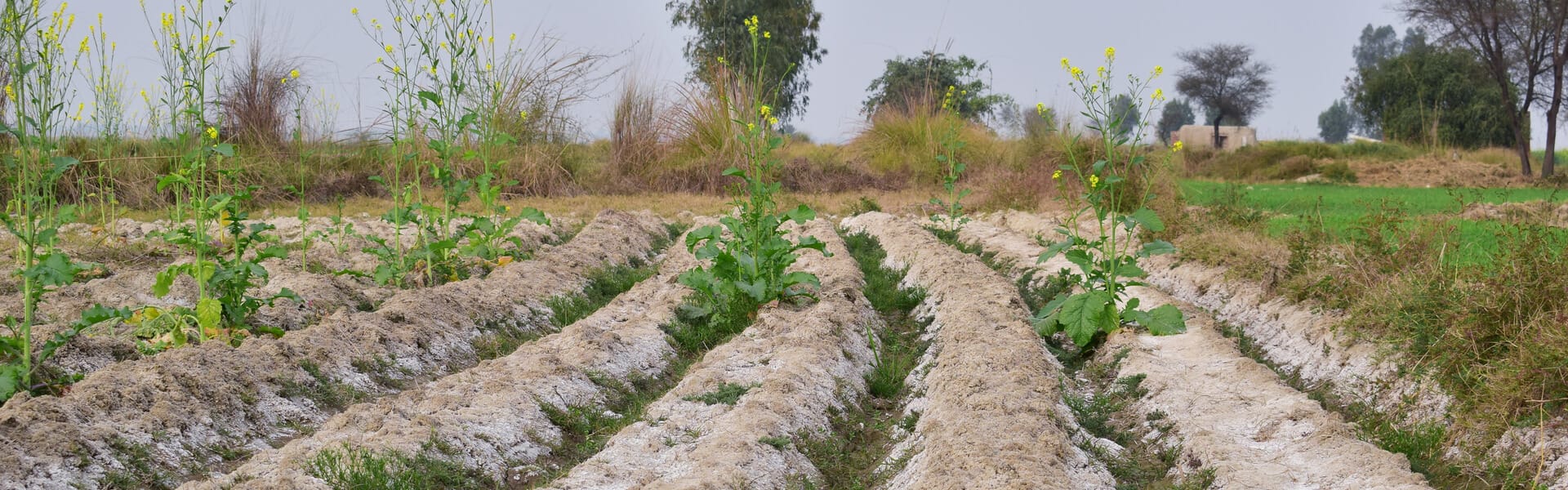
Salinized plot of soil
A primary catalyst for nutrient immobilization is “salinization”: it is defined as a condition where the salt concentration in the soil water surpasses a critical threshold, preventing crop productivity, environmental health, and economic welfare. According to a 2014 report from the United Nations University, more than 5,000 Acres of land are lost globally each day due to soil salinization. Similarly, FAO reported that 11% of the arable land in Africa is affected by varying degrees of salinization (FAO,2019). The consequences of salinization is reported to include loss of vegetation, structural instability, erosion, and contamination of groundwater.
The cause of salinization includes irrigation with water from sources with a high content of salts, especially sodium. Misuse of fertilizers, poor drainage, loss of vegetation cover, deforestation, improper tillage practices, and overexploitation of land. The bottom line for the control of salinization is having an appropriate knowledge of the soil ecosystem and the best practices for its sustainable use. Overexploitation of the tropical soil found in Africa is a key cause of degradation; while this soil has an intrinsic disadvantage of the predominance of low-activity clay minerals, its use should be managed to ensure continued support for crop growth and other ecological services. The application of organic materials to increase the colloidal properties of the soil is essential to ensure the functionality of the soil system, including the optimization of the fertilizer applied for crop growth.
The continental efforts for managing the African soil is packaged in the Soil Initiative for Africa (SIA), the SIA is the African Union initiative developed to ensure sustainable management of the soil to achieve sustainable agricultural intensification and optimization of the ecological services from the soil. The implementation of the SIA is facilitated through the Africa Fertilizer and Soil Health Action Plan (AFSH-AP), a ten-year plan to coordinate actions at different governmental levels.
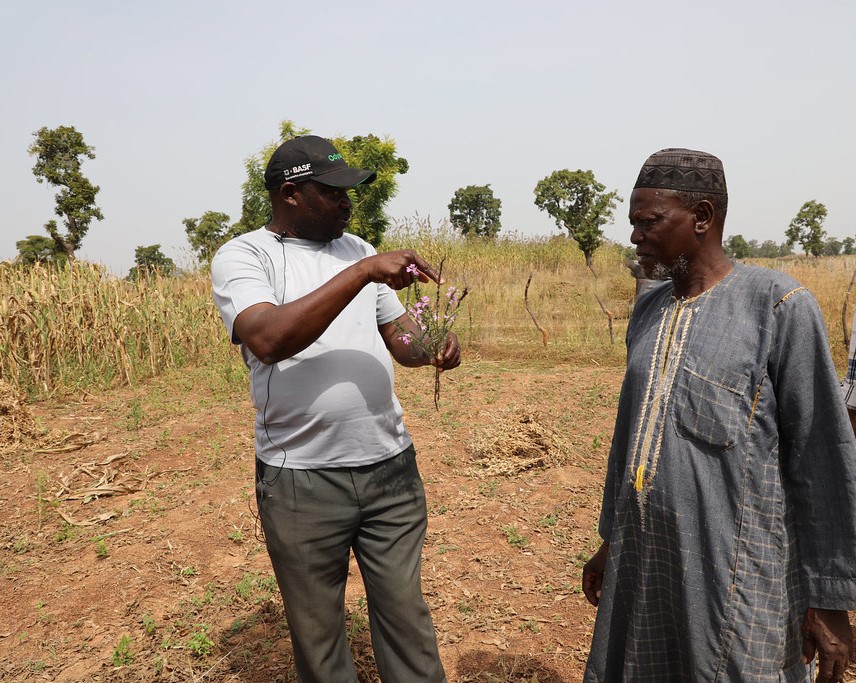
A farmer in Northern Ghana demonstrating how he has practiced Integrated Soil Fertility Management and consistently improved yield over the past 10 years
The SIA and the AFSH-AP will be launched at the upcoming Africa Fertilizer and Soil Health Summit, slated for next year 2024 in Nairobi, Kenya.
In commemoration of the 2023 World Soil Day, the Forum for Agricultural Research in Africa (FARA) and its partner organizations advocate for a cautious use of African soil to ensure sustainable production of food and fiber, productivity of the agrarian livelihood, ensuring food, and nutritional security, and continental prosperity.
Over the years, farming activities and projects in Ghana have targeted the alleviation of food insecurity and malnutrition especially in Northern Ghana by promoting crop-specific agroecological systems and sustainable development practices.
FARA, for the past two decades, hosted by the government of Ghana, has supported in youth capacity development programs and activities through YPARD, provided support in mainstreaming the culture of knowledge co-creation for sustainable agriculture, strengthened multi-stakeholder partnerships through innovation platforms and mainstreamed the Science Agenda for Agriculture (S3A) in Ghana’s government flagship programmes.
So much more can be achieved overtime when farmers and farm activities are strongly considered under centre stage of policy making priorities.
Join FARA pay tribute to the hardworking farmers of Ghana.










 The cause of salinization includes irrigation with water from sources with a high content of salts, especially sodium. Misuse of fertilizers, poor drainage, loss of vegetation cover, deforestation, improper tillage practices, and overexploitation of land. The bottom line for the control of salinization is having an appropriate knowledge of the soil ecosystem and the best practices for its sustainable use. Overexploitation of the tropical soil found in Africa is a key cause of degradation; while this soil has an intrinsic disadvantage of the predominance of low-activity clay minerals, its use should be managed to ensure continued support for crop growth and other ecological services. The application of organic materials to increase the colloidal properties of the soil is essential to ensure the functionality of the soil system, including the optimization of the fertilizer applied for crop growth.