The Head of Rural Development Division (ARBE) and Chair of the CAAP-TWG (AUC), Dr. Janet Edeme, has reiterated that establishing regional agro-industrial hubs will reduce Africa’s $50 billion yearly food imports.
This will also enhance agricultural productivity and stimulate economic growth among African countries, as this aligns with the “broader vision of the African Union to achieve sustainable development and prosperity for all its citizens,” she explained.
Speaking at the 2024 Planning Retreat of the CAAPs Technical Working Group in Harare, Dr Edeme acknowledged the hurdles in transforming Africa’s agricultural landscape and called on stakeholders to “remember that our success depends on our ability to work together, share knowledge, and leverage the strengths of each partner. The challenges we face are significant, but so are the opportunities.”
She further stated that the “outcomes of this retreat will shape the future of the CAAPs initiative. We aim to finalize comprehensive plans, secure commitments, and outline a clear roadmap for the implementation of our demonstration projects. These projects, as models of integrated agro-industrial development, will pave the way for large-scale investments and policy innovations across Africa.”
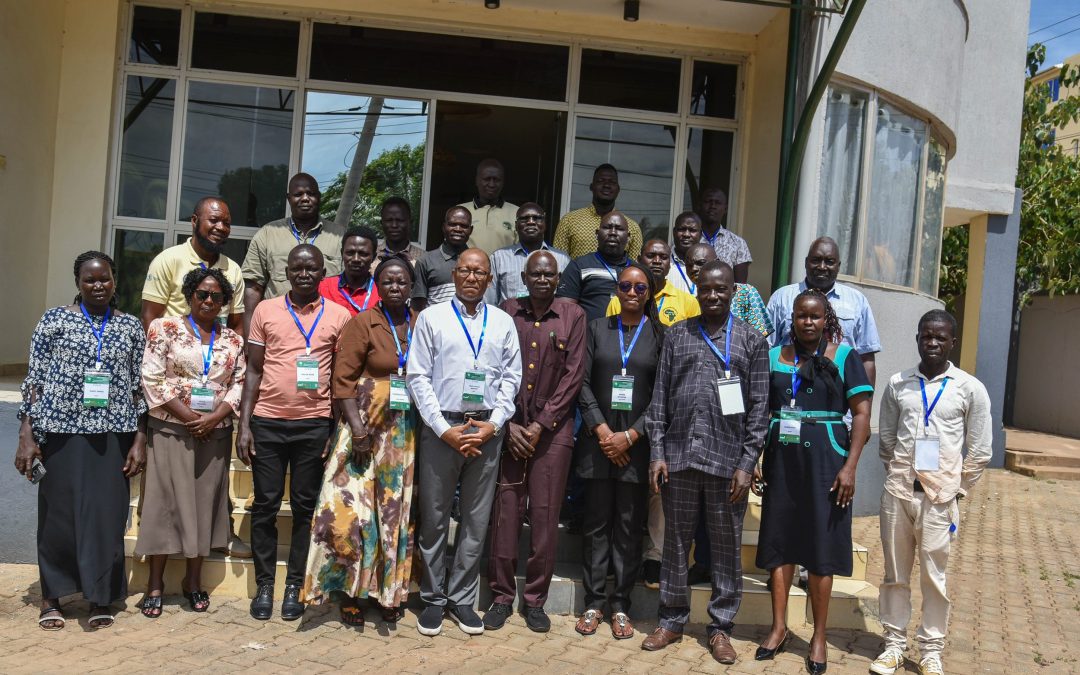
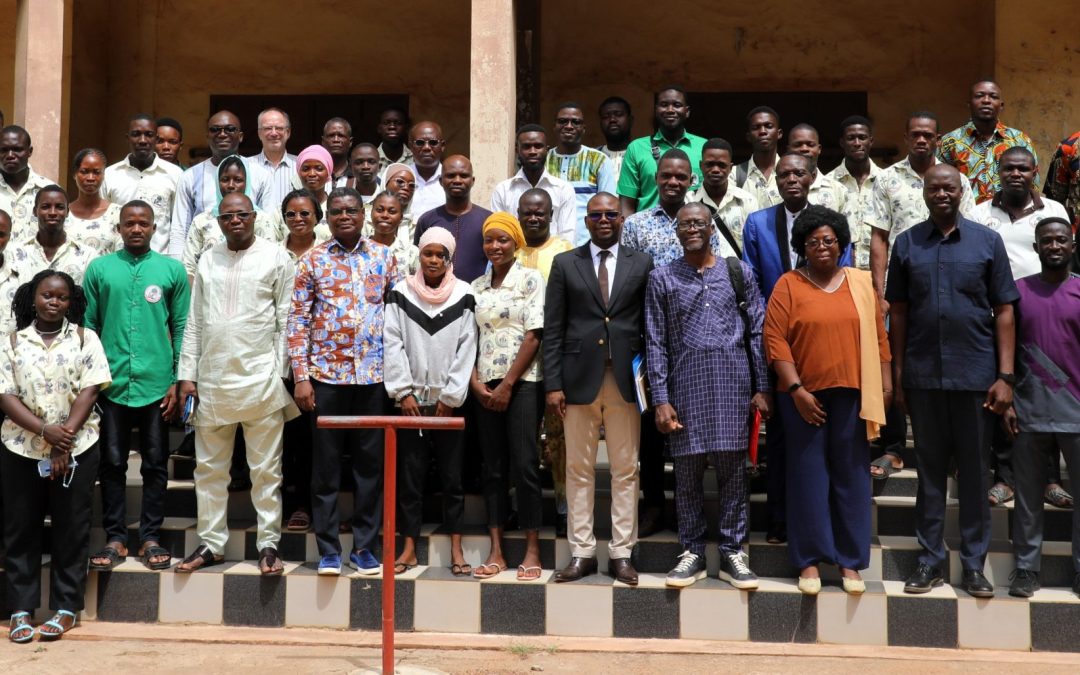
Group Photo of CAAPs TWG members
About the CAAPs
The Common African Agro-Parks Programme (CAAPs) was initiated in 2019 as one of the concrete initiatives of the Comprehensive African Agricultural Programme (CAADP) to be implemented within the framework of the African Union (AU) Agenda 2063 in order to achieve the CAADP Malabo commitments, particularly the commitment to “triple intra-African trade in agricultural commodities and services.”
CAAPs emerged from the major recommendations of the inaugural CAADP-Biennial Review (BR) Report presented to the 2018 AU Assembly of Heads of States, where recommendations were formulated for the AU Commission to initiate continental actions that shall aim at: i)- boosting regional trade for agricultural commodities by increasing locally processing of key agricultural products and their respective value chains; ii)- promoting and facilitating increased consumption of locally and regionally produced agricultural commodities; iii) -achieving self-sufficiency and lowest possible importation of key agriculture commodities in Africa; and iv)-stimulating local and regional private sector investments in agriculture. The implementation of the CAAPs will assist Africa in reclaiming the roughly USD50 billion per year African Food Import Market, which is currently outsourced to the rest of the world.
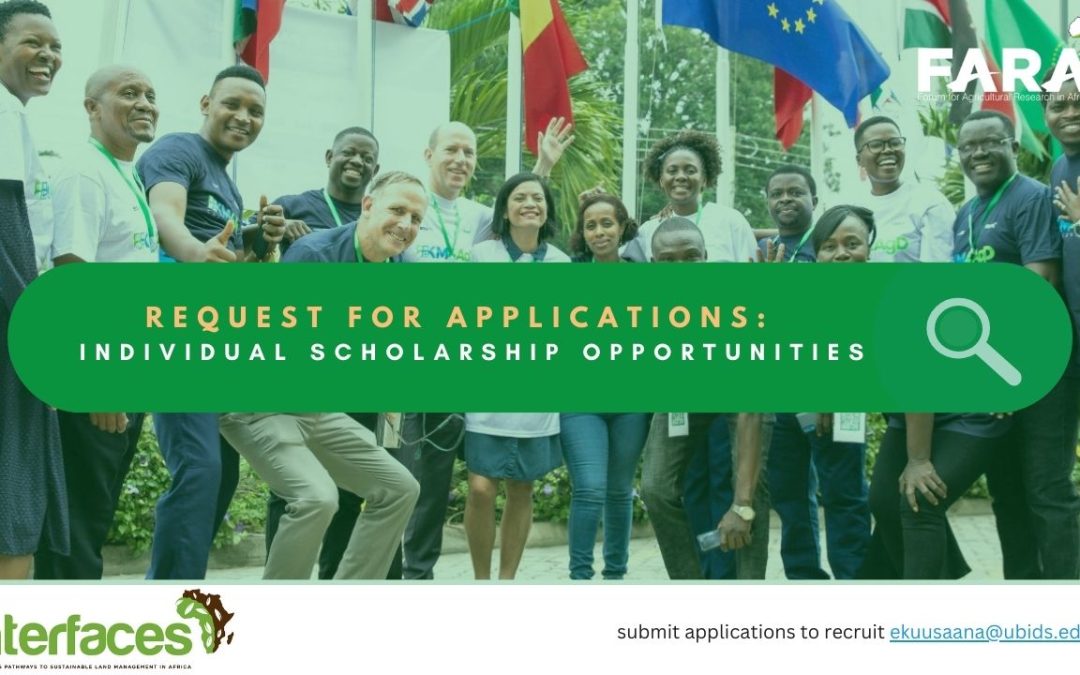
Notice is hereby given for applications for admission and DAAD Scholarships for the MPhil Development Management and PhD Planning for Sustainable Development Programmes for the 2024/2025 Academic Year under the West African Centre for Sustainable Rural Transformation (WAC-SRT) at the Simon Diedong Dombo University of Business and Integrated Development Studies (SDD-UBIDS) in Wa, Ghana.
A. PROGRAMMES
i. MPhil. Development Management (2 years, Full Time)
ii. PhD. Planning for Sustainable Development (4 years, Full Time)
B. ADMISSION/SCHOLARSHIP REQUIREMENTS
To be admitted into the MPhil Development Management Programme, applicants MUST have at least:
i. A first degree with a minimum of Second Class Lower Division in a relevant field from a recognized University or its equivalent in a relevant discipline;
ii. For applicants who wish to apply for DAAD scholarship, a First Degree with a minimum of Second Class Upper Division in a relevant field from a recognized University. Note that your Undergraduate Degree certificate should NOT be more than six (6) years old at the time of application.
iii. Submit official transcripts of academic records, certificates, and other relevant documents from successfully completed undergraduate programmes.
iv. Two years’ work experience in a relevant field is required for admission into the Programme.
v. The DAAD Scholarship application should include a motivation letter. In addition, applicants should provide an updated Curriculum Vitae and research proposal (not more than 10 pages) detailing their intended research work.
vi. DAAD applicants must pass a selection interview (a face-to-face interview for local applicants or online interview for foreign applicants, as applicable).
vii. The applicants selected for the DAAD scholarship to pursue the MPhil Development Management programme will be awarded a two (2) year contract.
To be admitted into the PhD Planning for Sustainable Development Programme, applicants MUST have at least:
i. A very good MPhil/MSc/MA Degree in a relevant field from a recognized institution of higher learning or its equivalent in a relevant discipline.
ii. Submit official transcripts of academic records, certificates, and other relevant documents from successfully completed graduate and undergraduate programmes.
iii. For applicants who wish to be considered for DAAD scholarship, a second degree with a minimum of Second Class Upper Division in a relevant field from a recognized institution of higher learning is required. Note that your second degree certificate should NOT be more than six (6) years old at the time of application.
iv. Two years’ research experience are relevant for admission into the programme.
v. Applicants applying for a DAAD scholarship should include a motivation letter. In addition, applicants should provide an updated Curriculum Vitae, and a research proposal (not more than 10 pages) detailing their intended research work.
vi. Pass a selection interview (a face-to-face interview for local applicants or an online interview for foreign applicants).
vii. The applicant selected for the DAAD scholarship for the PhD Planning for Sustainable Development programme will be awarded a three (3) year contract in line with the Project timelines.
C. MODE OF APPLICATION
All Ghanaian applicants for the 2024/2025 Academic Year admissions are required to use the UBIDS Online Admissions Portal. The procedure for the online application process is as follows:
Make a payment of GH¢180.00 (One Hundred and Eighty Ghana Cedis) for Postgraduate programmes at any Ghana Commercial Bank (GCB), Agricultural Development Bank (ADB), Stanbic Bank and NIB Bank branches throughout the country or through mobile money service by dialing *887*9# To All Networks.
The E-Voucher contains the PIN and Serial Number required in completing the online form.
Access the online form by visiting our online admissions portal at www.ubids.edu.gh soon after payment.
Alternatively:
Visit UBIDS online Admissions Portal at www.ubids.edu.gh with a MasterCard or Visa to make an online payment of GH¢180.00 (One Hundred and Eighty Ghana Cedis) for Postgraduate Programmes
Print the advice slip for future reference.
In completing the online form, students will be required to upload their most recent passport size photographs, which is not more than 6 months old and relevant certificates
A completed form is not considered until it is submitted.
Applicants are advised to check thoroughly all details entered before finally submitting their online applications. A form, once submitted, can only be viewed, but cannot be edited.
Applicants are strongly advised to visit any Ghana Post EMS Office in the Country for assistance towards the return of the application documents (see 8). Applicants are advised not to post the forms themselves. They should seek the advice and services of Ghana Post EMS.
Applicants must print out application summary; attach results slips, certificates and all other relevant documents. These documents should be submitted in triplicates (three copies each) to the Director (Academic and Student Affairs Section).
The application documents as specified in (7) above should be addressed to:The Director, Academic & Student Affairs Simon Diedong Dombo University of Business and Integrated Development Studies P.O Box WA 64 Wa, UW/R, Ghana
Foreign applicants should also post three sets of the application documents mentioned in (7) by express mail to the same address in (8). For the purposes of clarity, foreign applicants should post their application documents to:The Director, Academic & Student Affairs Simon Diedong Dombo University of Business and Integrated Development Studies P.O Box WA 64 Wa, UW/R, Ghana
All applicants for the DAAD Scholarships (foreign and Ghanaian) should send a scanned copy of their application form and all documents in (7) above to the Coordinator of Programmes, West African Centre for Sustainable Rural Transformation (WAC-SRT), through this email: [email protected] and copy the Assistant Registrar (Academics & Student Affairs) through this email: [email protected]. It is important that scanned copies of your application are emailed as a single pdf file to the designated officers to support the application process. Incomplete applications will not be considered during the selection process.
Deadline for Applications: 15th July 2024
Enquiries
For further enquiries contact the following numbers during the hours – 10am to 4pm from Monday to Friday:
By: Abdulrazak Ibrahim (PhD), TAAT-CDTO Coordinator, FARA
May 10, 2024: Juba, South Sudan:
In the vibrant city of Juba, at the Landmark Hotel, an auspicious gathering unfolded—a Three-Day Training of Trainers Workshop aimed at catalysing sorghum production through establishingInnovation Platforms (IPs), a multi-stakeholder approach to scaling agricultural technologies across South Sudan.
This pivotal event, from May 7 to 9, 2024, was not merely a workshop; it symbolised a collective step towards realising the region’s ambitious vision of agricultural transformation.
With funding and commitment by the African Development Bank’s Feed Africa initiative, through its Transition Support Facility (TSF) and the Africa Emergency Food Production Facility (AEPF), South Sudan’s agricultural landscape brimmed with promise and possibility.
The atmosphere crackled with enthusiasm as participants, predominantlyresearchers, seed specialists, private sector representatives, women and youth groups, and government officials—delved into the teachings of the multistakeholder Technologies for African Agricultural Transformation (TAAT) program. TAAT’s ecosystem, comprising various value chain actors and stakeholders, emerged as a guiding force, empowering local expertise and fostering sustainable agricultural solutions tailored to South Sudan’s unique challenges.
The workshop sought to also establish at least ten innovation platforms across South Sudan. Envisioned as collaborative hubs, these multi-stakeholder platforms would serve as nuclei for scaling technologies and innovations in sorghum production and beyond. They would facilitate knowledge co-creation and exchange, resource sharing, and coordinated efforts among diverse stakeholders, paving the way for improved decision making at all levels within the value chain resulting in a holistic agricultural development.
Through practical and interactive sessions, participants exchanged ideas, experiences, and aspirations. They also discussed the strategies of Feed Africa, the dynamic interventions of TAAT, and the pivotal role of TSF and AEPF spurred new perspectives, all aimed at ensuring that they are adapted within the local context.
The culmination of the workshop heralded a new phase in South Sudan’s agricultural landscape. Equipped as trainers, participants dispersed to train and empower more partners within the country—a ripple effect of knowledge and innovation catalyzed by the workshop. Armed with newfound insights and strategies, they were poised to drive change at the grassroots level, inspiring communities to embrace modern agricultural practices and maximize productivity.
TAAT Coordinator Dr. Abdulrazak Ibrahim with Gender, Youth and Agribusiness expert Karen Musikoyo Munoko.
In the aftermath, reflections soared—a vision unified by the principles of Feed Africa, powered by the tools of TAAT, and supported by the transformative capabilities of TSF and AEPF. The journey ahead held the promise of vibrant innovation platforms sprouting across the nation, each a testament to the collaborative spirit driving South Sudan’s agricultural transformation.
The story of the Three-Day Training of Trainers Workshop was just the beginning—a prologue to a narrative of resilience, progress, and collective prosperity in sorghum and beyond. It was a story of hope cultivated through unity, innovation, and unwavering dedication to feed Africa and nourish its people.
fThe challenges posed by declining soil fertility present substantial issues for many African countries, including Nigeria, especially in the light of the continent’s anticipated population growth. With an estimated 2.5 billion people expected to inhabit Africa by 2050, there will be a substantial increase in food consumption, placing further strain on the continent’s already burdened agricultural systems. In response to these pressing challenges, campaigns and initiatives geared towards enhancing soil fertility, advocating for sustainable agricultural practices and mitigating the impacts of environmental factors are gaining momentum.
At the launch and commemoration of the 14th Africa Day for Food and Nutrition Security (ADFNS) Commemoration and 19th Comprehensive Africa Agricultural Development Programme (CAADP) Partnership Platform held in Zambia last year, Mrs Estherine Lisinge-Fotabong, the Director of Agriculture, Food Security and Environmental Sustainability at the African Union Development Agency-NEPAD (AUDA-NEPAD), underscored the imperative to accelerate intra-regional food trade, enhance food security, and stimulate economic growth across the continent.
Mrs Lisinge-Fotabong stressed the importance of promoting the cultivation and consumption of locally-sourced foods as a means to address hunger and malnutrition in Africa. However, she acknowledged that nutrition and food security remain precarious due to various vulnerabilities in the continent, including climate change-induced shocks, ongoing conflicts, and fluctuations in global food prices, among other factors. Given that a significant portion of Africans rely on agriculture for their livelihoods, agriculture stands as the primary industry on the continent. However, the recent population surge and dwindling arable land availability have exerted significant pressure on soils, highlighting the critical need to maintain soil fertility to mitigate the risk of food insecurity.
Mrs. Estherine Lisinge-Fotabong, Director of Agriculture, Food Security and Environmental Sustainability, African Union Development Agency-NEPAD (AUDA-NEPAD)
Over time, Africa has witnessed a decline in soil fertility, with notable implications for regions like Nigeria. Communities grappling with degraded soils face heightened vulnerability to the impacts of climate change, including droughts and floods, exacerbating challenges in adaptation and resilience. Recognizing the urgency of the situation, the Food and Agriculture Organisation (FAO) of the United Nations, the Nigeria Institute of Soil Science (NISS), and the Soil Science Society of Nigeria have all underscored the imperative of addressing soil degradation within the country. These groups have emphasized the critical need to preserve soil fertility and health, given that soils serve as the foundation of food production and are increasingly stressed by climate change and human activities.
According to FAO data, approximately 33 per cent of Nigeria’s agricultural areas have already been impacted by soil deterioration, stemming from compaction, acidification, salinization, erosion, loss of organic carbon and biodiversity, and nutrient imbalances. Analysts warn that the declining fertility of arable fields, particularly in key production regions, poses an imminent threat to the agricultural sector if left unaddressed. In response, ongoing campaigns seek to encourage farmers to adopt best practices for long-term soil enrichment. The dwindling fertility of land, especially in the northern region, poses a severe threat to the country’s food security. To mitigate soil deterioration, organizations such as the Sasakawa Africa Association (SAA) are actively assisting farmers in the North, aiming to bolster soil health and agricultural productivity.
The remarkable story of Abdulmumini Adamu serves as a testament to the transformative power of Conservation Agriculture (CA) and Integrated Soil Fertility Management (ISFM) among Nigerian smallholder farmers. Through the adoption of limited tillage and other sustainable farming practices, Adamu not only significantly increased his crop yields but also managed to reduce his labour expenses. Under the guidance of the Sasakawa Africa Association’s (SAA) comprehensive training programme,
Adamu successfully implemented techniques such as low tillage, mulching, crop rotation, and composting. These practices not only resulted in an astounding 85 per cent reduction in labour costs but also led to a remarkable 50 per cent increase in crop yields. Such remarkable gains can be attributed to the improved soil health and enhanced moisture retention facilitated by the application of ISFM and CA methods.
The work of Dr. Shamie Zingore, Director of Research and Development at the Morocco-based African Plant Nutrition Institute (APNI), plays a pivotal role in addressing the challenges confronting smallholder farmers across Africa. With an estimated 33 million smallholder farmers facing obstacles such as low productivity and limited access to modern agricultural techniques, Dr. Zingore’s research assumes paramount importance in enhancing soil health, boosting crop yields, and ultimately, improving human nutrition. Through innovative research initiatives, Dr. Zingore and his team are instrumental in advancing agricultural practices that promote sustainability and prosperity among smallholder farmers across the continent.
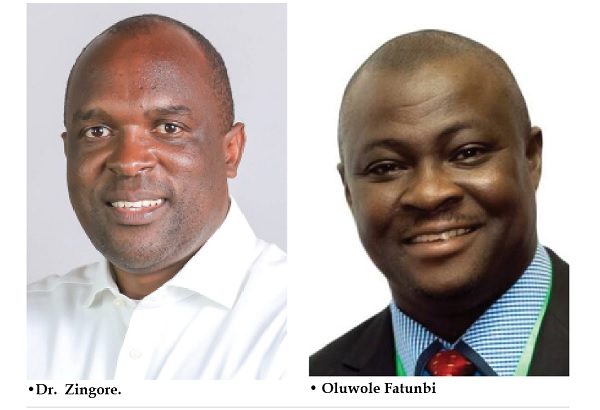
Dr. Shamie Zingore, Director of Research, APNI
According to him, low fertility in the natural environment and inadequate soil conservation efforts have left sub-Saharan Africa (SSA) with some of the world’s worst soils. He pointed out that the continent’s ability to feed itself is being seriously undermined by the annual loss of soil nutrients valued at over $4 billion. He said to properly solve the problems of food security in Africa, soil and nutrient management technologies need to strike a balance between boosting crop output and improving soil fertility. APNI, where he works is pursing 4R Nutrient Stewardship initiative. The 4R Nutrient Stewardship initiative is a framework for guiding nutrient management practices in agriculture. It emphasizes applying the right source of nutrients, at the right rate, at the right time, and in the right place. For him, addressing growing soil fertility challenges is indeed crucial for sustainable agriculture and food security, especially in Africa s where smallholder farmers rely heavily on the productivity of their land. He noted: “We are at a very important time for African agriculture as the continent faces a myriad of challenges linked to unsustainable agriculture including chronically low agricultural productivity and human malnutrition, which is estimated to be seriously impacting at least 20per cent of the African population.”
One of the significant challenges that Africa faces is ensuring food security of a growing population. Recognising the critical role fertilizer and soil health has in tackling the problem, the African Union (AU) is launching a 10-year Action Plan demonstrates a long-term commitment to addressing these challenges and investing in sustainable agricultural practices. Under the aegis of its Africa Fertilizer and Soil Health (#AFSH) Summit, AU is convening heads of states, ministers, and agricultural development partners in Africa this May 2024, in Nairobi, Kenya to launch a 10-year Action Plan for associated investments. Launching the Action Plan demonstrates Africa’s commitment to finding local solutions to local challenges.
He noted: “Building on the 10-Year Action Plan, AFSH will identify the key critical areas for investment into policy and market investments but also into the critical technologies for sustainable plant nutrition and soil health management on the continent. These targets will be necessarily underpinned by accelerated support for building research and extension capacity to ensure knowledge generation is both relevant and practical for Africa’s farmers and translated into scalable solutions for sustained improvement of agricultural productivity across Africa.”
In his role as the Acting Director of Research and Innovation at the Forum for Agricultural Research in Africa (FARA), Dr. Wole Fatunbi plays a pivotal role in driving research and innovation initiatives aimed at addressing the pressing issue of soil fertility decline. His advocacy for soil fertility protection and the promotion of best land use practices are indispensable for fostering sustainable agriculture, particularly in Africa where countless livelihoods hinge on farming. Dr. Fatunbi leads efforts to deepen public understanding of soil health, championing sustainable farming methods that preserve soil fertility and advocating for policy frameworks that prioritize soil conservation projects. His multifaceted responsibilities include conducting pioneering studies to unravel the complexities of soil dynamics, promoting knowledge exchange among stakeholders, and influencing policy decisions to integrate soil health considerations into agricultural strategies.
Prof. Wole Fatunbi, Ag. Director of Research of FARA at the Africa Fertilizer and Soil and Health Summit #AFSH24
Recognising the urgency posed by Africa’s burgeoning population and the mounting pressures on its agricultural systems, Dr. Fatunbi emphasises the imperative of collaborative action. He stresses the importance of forging partnerships between farmers, researchers, policymakers, and other stakeholders to implement effective strategies for sustaining soil health. Through his leadership and advocacy, Dr. Fatunbi is instrumental in shaping a more resilient and productive agricultural landscape across the African continent.
According to Fatunbi, soil salinization is becoming an increasingly serious issue in Africa. He noted. “This is becoming a reality in Africa where the proportion of soil with high salt content is gradually approaching a critical threshold that requires considerable effort. Africa is reported to possess 60 per cent of the remaining arable land globally. Arable land implies a land lot with complementary properties suitable for crop cultivation and livestock rearing. immobilised in the soil colloids due to the presence of higher concentrations of other nutrients.”
Without land, agriculture is not possible. The importance of soil resources for current and future generations therefore no longer needs to be demonstrated. This is why several projects and programs are dedicated to it with a view to optimal and sustainable land management. “The Declare project aims to set up a decision support tool to enable stakeholders to make appropriate decisions with a view to improving the resilience of their production systems,” said Prof. Rodrigue Diogo, Coordinator of Declare. During these two days of the workshop which brought together different actors from the agricultural world and livestock systems, the discussions were very interesting and resulted in more concrete visions to be able to continue to optimize actions in favoring sustainable land management. To do this, “The question of innovative solutions was debated. Among the solutions that I think we must be able to find is to link research to training. It is essential to link research to training to continue training the next generation,” insisted the Vice-Rector in charge of scientific research at the UP, Prof. Mohamed Nasser Baco in his opening speech. “Sustainable land management should contribute to food security, agriculture, forestry and environmental protection. », indicated the Dean of the Fa Prof. Valérien Amégnikin ZINSOU.
During these two days of discussions, several communications were presented. In particular on the INTERFACES and DeClaRe projects respectively by Doctors David Anaafo and Kisito Gandji from the Competence Center of the West African Center for Scientific Services on climate change and adapted land use (WASCAL) in Burkina Faso; on the Forum for Agricultural Research in Africa (FARA) by Benjamin Abugri from FARA, Ghana; and on the theory of change by Doctor Peter Asare-Nuamah of the University of Bonn in Germany. After the opening ceremony and the various communications, space was given to participants for discussions on the project’s theory of change.
Participants contributed through exchanges to co-develop with researchers from the INTERFACES and DeClaRe projects the theory of change that will enable the project’s results to be effectively achieved. “The theory of change is a tool that allows us to better understand the needs of target communities, to describe the change we want to bring as well as the activities to carry out. » informed Dr. Gandji. Through the various works and exchanges, the participants better described the change to be made in sustainable land management in northern Benin, with a proposal for the activities to be carried out to achieve this. DeClaRe aims to reduce conflicts between farmers and breeders, adapt SLM to climate change and promote ecological agriculture in the face of climate change with a view to improving food security. The same actors will be invited to the Parakou campus next year for a workshop to disseminate the first results of the project.
It is with profound sadness and a heavy heart that the Executive Director of FARA, Dr. Aggrey Agumya announces the passing of FARA’s founding Executive Director, Prof Monty Patrick Jones, a national of Sierra Leone. His death occurred on Sunday 28th April 2024. He was 73 years.
Prof Jones (or “MPJ” as his staff fondly called him) led the FARA Secretariat as Executive Secretary / Executive Director from its inception in June 2002 to June 2013 when he completed his second term. He also served as the Chairperson of the Global Forum on Agricultural Research (GFAR) from 2010 to 2013.
Prof. Monty Jones was the first African to be awarded the World Food Prize. He won the award in 2004 for his discovery of the genetic process to create the New Rice for Africa (NERICA). In 2007, Time Magazine named him one of the 100 most influential persons in the world. He masterfully leveraged the reputation and prestige that came with this recognition to advance agricultural research and innovation in Africa and globally, and to elevate the profile of FARA and the sub-regional agricultural research organisations. Prof. Monty Jones was a visionary. He was instrumental in laying the foundation of FARA and in shaping what the organisation has become. At FARA he served Africa with unwavering dedication and passion, and with relentless drive.
Upon leaving FARA in 2013 Prof. Monty Jones returned to his country, Sierra Leone, to serve as a Special Advisor to the President and Ambassador-at-large. In February 2016 he was appointed Minister of Agriculture, Forestry and Food Security, a position he held up to April 2018. He leaves behind a strong legacy in Africa’s agricultural research and innovation domain which FARA will honour in his memory.