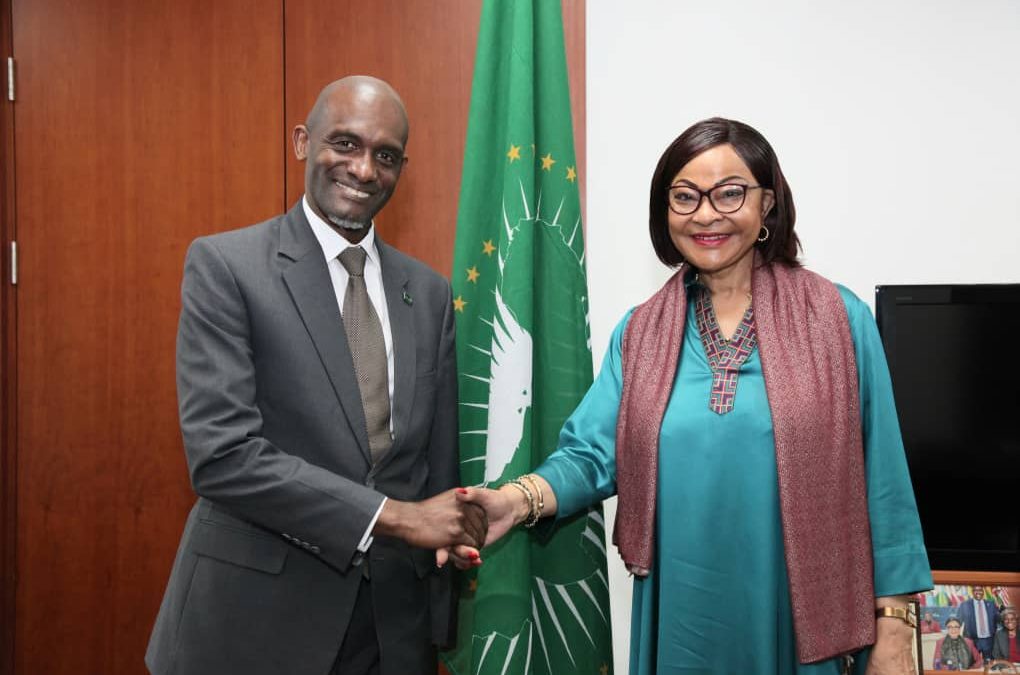
The African Union Commission, under the dynamic leadership of H.E. Ambassador Josefa Sacko, has appointed the Forum for Agricultural Research in Africa (FARA) as the official Secretariat for the Soil Initiative for Africa (SIA) and the Africa Fertilizer and Soil Health Action Plan (AFSH-AP). This landmark appointment, announced at the high-level 20th CAADP Partnership Platform (CAADP-PP) meeting in Harare, Zimbabwe, represents a significant advancement toward sustainable soil health and fertilizer solutions across Africa.
H.E Amb. Josefa Sacko, AUC-DARBE Commissioner
Ambassador Sacko’s visionary leadership and commitment to agricultural transformation through partnerships and strategic coordination are highlighted by this appointment. In her opening remarks, she called for a unified approach among African organizations, emphasizing that the success of the AFSH-AP and SIA depends on collaboration, not competition. She underscored the necessity of collective commitment to achieve the objectives of the 2024 Presidential Declaration on Africa Fertilizer and Soil Health, which sets forth an ambitious ten-year plan to address Africa’s soil and fertilizer challenges.
Ambassador Sacko’s endorsement of the SIA coordination framework—crafted by a dedicated technical working group—establishes a comprehensive structure for regional and national implementation. This framework assigns FARA as the Secretariat, supported by the African Union Development Agency (AUDA-NEPAD) as the lead coordinating entity and Regional Economic Communities (RECs) and Sub-Regional Organizations (SROs) as regional facilitators through designated hubs. This coalition, organized around five thematic areas, will provide focused support at the continental, regional, and national levels to ensure effective implementation of AFSH-AP objectives.
In a powerful keynote, Prof. Richard Mkandawire emphasized the importance of “Coordination, Cooperation, Capacity, and African Leadership” in advancing AFSH-AP. Zimbabwe’s Deputy Minister of Lands, Agriculture, Fisheries, Water, and Rural Development, Hon. Vangelis Haritatos, reaffirmed Zimbabwe’s commitment to agricultural productivity and soil health, announcing new government investments, including funds to revitalize the Africa Center for Fertilizer Development (ACFD) in Harare, a key step in bolstering Africa’s fertilizer production capacity.
Section of Panelists from the ‘How Not to Implement the AFSH-AP: Learning from Experience’ Panel discussion
A “fireside chat” session, titled “How Not to Implement the AFSH-AP: Learning from Experience,” shed light on critical insights for the successful execution of Africa’s soil health agenda. Panelists, including Deputy Minister Odd Arnesen, Mr. Noel Ujeneza, and Madam Bongiwe Njobe, stressed the urgency of action-oriented leadership, highlighting the need to reduce bureaucracy as other continents advance. They advocated for greater private sector involvement, an enhanced Africa Fertilizer Financing Mechanism (AFFM-II), and a blend of mineral and organic fertilizers to strengthen Africa’s agricultural resilience.
The appointment of FARA as the SIA Secretariat is a pivotal moment, inspiring stakeholders to unite under this visionary framework to achieve the ambitious goals of the Soil Initiative for Africa and AFSH-AP. Guided by Ambassador Sacko’s leadership, Africa is poised for a transformative journey toward sustainable agricultural development, unity, and a shared commitment to a food-secure future.
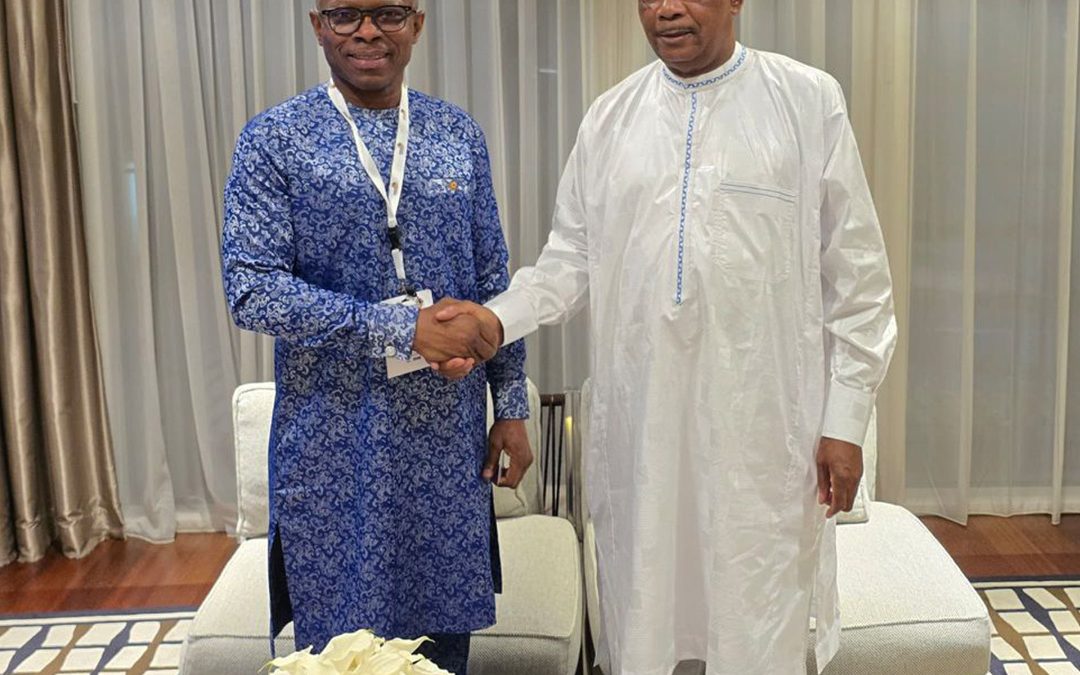
On the sidelines of the Biashara Afrika 2024 Forum, Mr. Anselme Vodounhessi, Coordinator of the Common African Agro-Parks #CAAPs Programme, held a high-level discussion with His Excellency Mahamadou Issoufou, Champion of the AfCFTA, on the development of #CAAPs zones in Africa within the AfCFTA framework.
During the meeting, His Excellency Issoufou underscored the significance of the #CAAPs programme in addressing Africa’s agricultural challenges, specifically pointing out that the continent spends over 70 billion euros annually on food imports. He reaffirmed his support for the #CAAPs agenda and committed to advancing it under the AfCFTA, recognizing it as crucial for Africa’s economic independence in the agro-industrial sector.
A key topic of discussion was the development of a #CAAPs Zone for Livestock in the Tri-Border Region of Burkina Faso, Niger, and Mali. His Excellency stressed the urgency of this initiative, given its potential to strengthen local economies, improve food security, and mitigate regional tensions.
His Excellency emphasized the need for ongoing collaboration to ensure the success of the #CAAPs initiative in unlocking Africa’s agricultural potential through the AfCFTA framework.
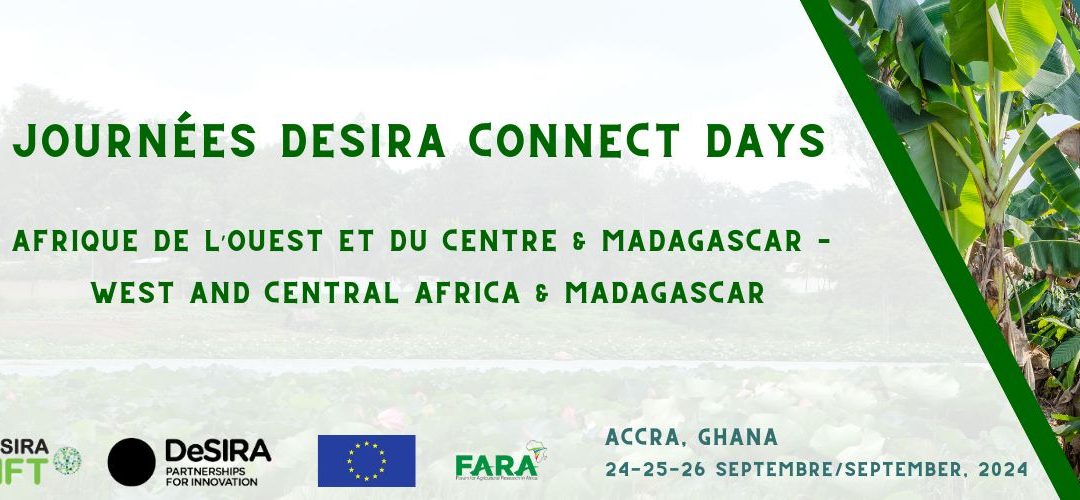
We are pleased to invite you to the DeSIRA CONNECT Days Western Africa, Central Africa & Madagascar, which will occur from September 24 to 26, 2024, at the ISSER Conference Hall, University of Ghana, Accra.
This event is organised by the European Commission through the DeSIRALIFT initiative and the Forum for Agricultural Research in Africa (FARA).
About the Event:
The DeSIRA CONNECT Days bring together African and European organisations involved in research and innovation for sustainable agriculture and various stakeholders in the region and Africa, including NGOs, farmer organisations and policymakers.
This three-day event is designed to share lessons and outcomes from DeSIRA (Development-Smart Innovation through Research in Agriculture) projects and explore pathways for scaling innovations in agricultural and food systems.
Participants will have the opportunity to engage in a series of dynamic activities to present their projects; jointly reflect on key topics including participatory innovation with civil society and the private sector and mechanisms for responsible innovation; discuss the role of research in agricultural innovation, education, knowledge and job creations as well as in policy making.
The event is the second in Africa after the one organised last July during the Science and Partnerships for Agriculture Conference – SPAC – in Kigali, Rwanda.
It will provide participants with insights on innovation mechanisms and scenarios for a climate resilient agriculture – healthy for the planet and the people – to build a long-lasting impact on food security, poverty alleviation, and socio-economic and gender-balanced inclusion while protecting biodiversity and ecosystems.
The DeSIRA Connect Days will feed the broader agenda of EU-Africa and other international initiatives, policies and strategies in support of sustainable agriculture and food systems
For more information, updates, and the full event program, please visit the DeSIRA website or contact us at [email protected]
Virtual Registration
You can join us online by pre-registering for the event via the Zoom Link below
Media representatives are invited to join us for the opening and closing ceremonies on Tuesday 24th at noon and Thursday 26th at 1 pm. For specific requests, please contact [email protected] copying [email protected] and [email protected].
The DeSIRA Initiative aims to promote innovation in agricultural and food systems to support sustainable transitions and improve resilience to climate change in Africa, Asia, and Latin America. Through participatory research and multi-stakeholder engagement, DeSIRA projects drive innovation to enhance food security, nutrition, and livelihoods.
The Forum for Agricultural Research in Africa (FARA) coordinates agricultural research for development (AR4D) across Africa. Established in 1997, FARA unites fragmented agricultural research systems to strengthen them under a shared agenda. Based in Accra, Ghana, it supports continent-wide initiatives like the Comprehensive Africa Agriculture Development Programme (CAADP) and represents Africa in global forums.
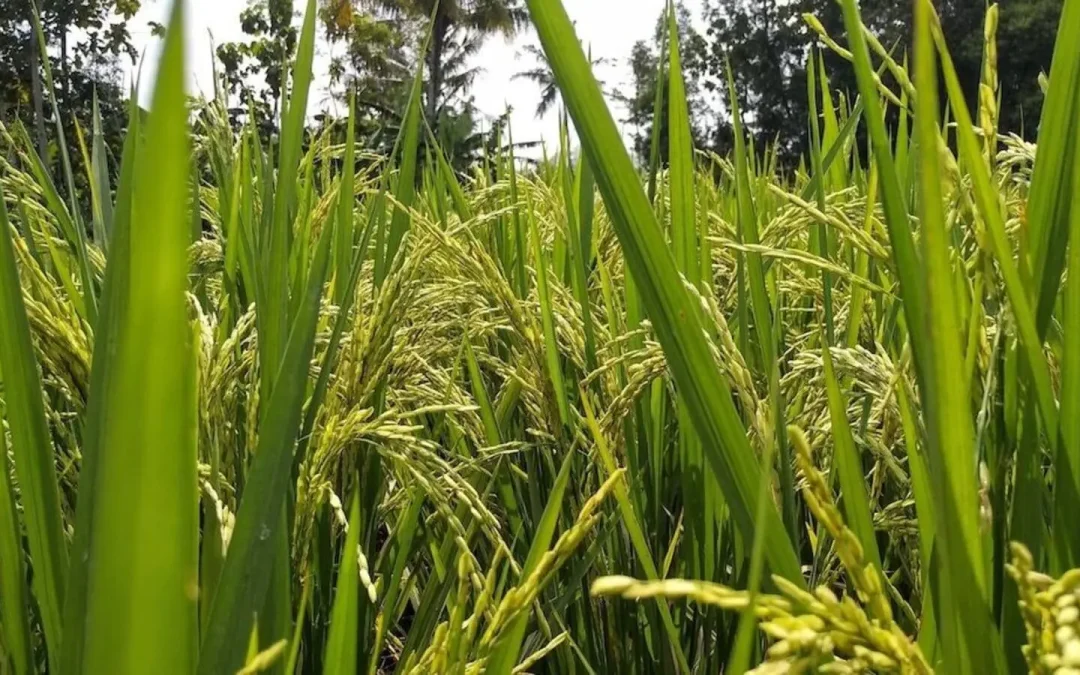
GABON – The Gabonese National Program for Selection and Varietal Improvement-Seed Production (PNSAV-PS) has successfully developed five new rice varieties tailored to Gabon’s unique soil conditions promising to enhance food security and reduce the economic burden of rice imports.
This milestone was achieved through a collaborative effort with the Japanese International Cooperation Agency (JICA), AfricaRice, and Kafaci, a South Korean intergovernmental organization.
Launched in 2018, the PNSAV-PS initiative has focused on selecting rice varieties capable of thriving in Gabon’s diverse agricultural landscapes. The research and development phase took place in Kougouleu, a village located approximately fifty kilometers from Libreville.
Speaking during the launch, Dr. Yonelle Déa Moukoumbi, the project leader, revealed that the five non-fragrant but high-quality varieties are ready for approval and registration in Gabon’s first national catalog of rice varieties.
“These varieties were developed using a genetic background from South Korea, where initial crosses were made. We received the material and followed research protocols to identify seeds that adapt well to Gabonese soils,” she noted.
The seven-year effort aims to revitalize rice production in Gabon and reduce the country’s heavy reliance on imported rice.
According to the Gabonese Shippers’ Council, Gabon imported more than 95,286 tonnes of rice worth over 41 billion FCFA (approximately US$70 million) in 2023.
In addition to the non-fragrant varieties, the project has also introduced five fragrant varieties, focusing on premium types such as Super Basmati and Basmati.
“Next, we will proceed with the actual production by distributing these seeds to various producers,” Dr. Moukoumbi added.
Despite some skepticism due to the failure of a similar initiative in the past, Dr. Moukoumbi remains optimistic. She assures that the project will succeed with the necessary financial support.
This comes at a time when The Food and Agriculture Organization of the United Nations (FAO) reports that African rice consumption is projected to reach 34.9 million tonnes of milled rice by 2025.
However, current African rice production cannot satisfy the consumer demand in quantity and quality, with the gap filled by imports, predominantly of Asian origin, to approximately USD 5.5 billion annually.
According to FAO, the rice sector represents a pathway out of poverty in Africa, as rice availability and prices have become major determinants of the welfare of the poorest sections of African consumers.
This means that the continent needs to strengthen the local rice value chains to achieve better production, nutrition, an environment, and a better life in the target countries. This is where public–private partnerships (PPP) come in play.
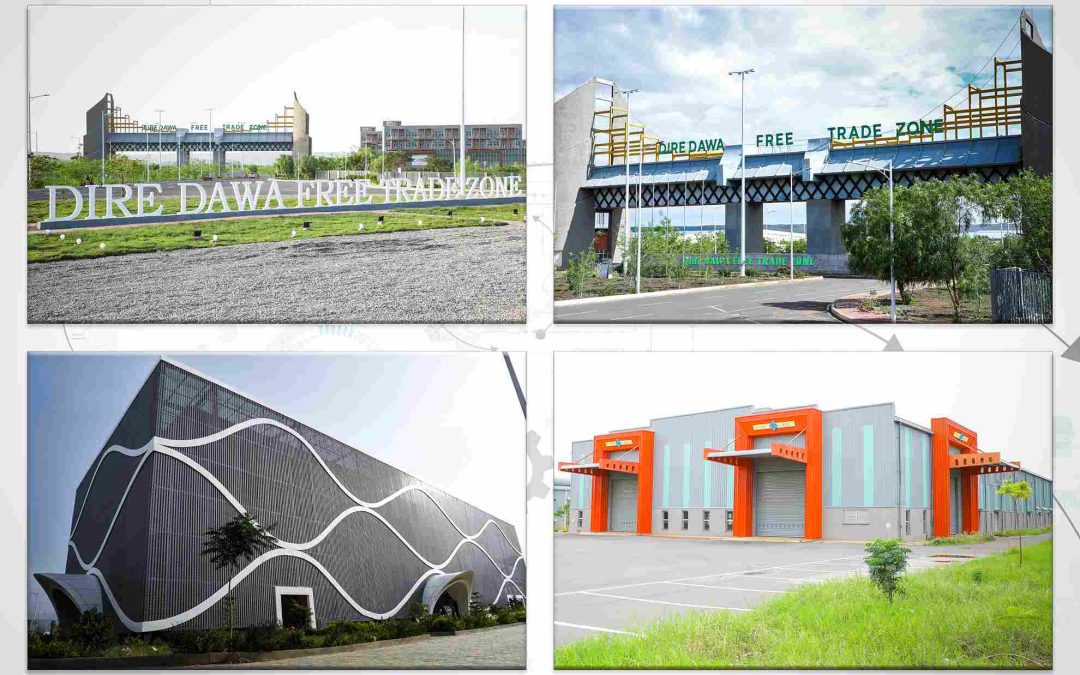
The management teams of the country’s industrial parks have been given short notice to transition into Special Economic Zones following the federal government’s policy change.
Officials at the Ethiopian Investment Commission (EIC) revealed details of the transition plans during a recent round of discussions with foreign investors operating in the flagship Hawassa Industrial Park (HIP).
Investors told The Reporter the Commission has given all industrial parks that fulfill the requirements to be designated as SEZs 20 days to finalize the transition.
EIC officials declined to comment on the issue but their counterparts at the Industrial Parks Development Corporation (IPDC) confirmed the decision and the short window for transition.
They told The Reporter they have differences with EIC officials.
“As per the new legislation, almost all existing industrial parks can fulfill the criteria to become Special Economic Zones. However, so far, IPDC has designated only Dire Dawa Industrial Park to become an SEZ. SEZs have additional features like logistics and other full-fledged economic activities integrated in one area. If other industrial parks fulfill all these, we will gradually designate other industrial parks to become zones,” said an official at IPDC, who spoke anonymously. “But the approach EIC is taking is a bit different from ours.”
Although IPDC is mandated to develop and administer industrial parks, there is also an industrial parks division department under EIC led by the Deputy Commissioner. Zeleke Temesgen (PhD), EIC deputy commissioner for industrial parks division and Dagato Kumbe, EIC deputy commissioner for investment operations division, traveled to Hawassa town and held meetings with HIP investors on august 20, 2024.
A new project office has been established to oversee the transition of industrial parks to SEZs.
The Special Economic Zone Proclamation recently ratified by Parliament lays out new criteria for an industrial park to be considered an SEZ.
It defines an SEZ as a geographical area designated so by the Ethiopian Investment Board and subject to customs control, and attended by business enabling policies, trade facilitation services, infrastructure and utilities, and amenities including a one-stop shop, duty and tax free privileges, and other special incentives.
An SEZ may comprise one or more industry parks, free trade and logistics zones, science and technology parks, service parks, agriculture and livestock zones, and similar investments.
An existing company that intends to be upgraded into an SEZ can apply to EIC, according to the proclamation. The legislation explicitly states an industrial park will not be required to submit a designation application or undergo designation procedures to attain a special economic zone status.
However, an industrial park must have ample land available (50 hectares minimum) and meet other critical infrastructure requirements to gain SEZ designation.
Applicants are also expected to commit a minimum equivalent exchange of USD 75 million as capital.
The capital may be financed through proven cash contribution, machinery, building, working capital, or debt financing, according to the proclamation.
Exporters operating within an SEZ are also eligible to retain 100 percent of the forex they generate, according to a recent directive from the National Bank of Ethiopia (NBE). Other exporters can only retain half of their forex earnings.
“The investors inside HIP were delighted. This is a big deal for investors,” said a HIP administrator.
However, both the administrators of industrial parks and investors observe the revised retention rate will benefit them only if Ethiopia is reinstated to the African Growth and Opportunity Act (AGOA).
Washington delisted Ethiopia from the preferential trade deal during the two-year northern conflict. The move proved detrimental to the tenants of industrial parks, particularly textiles manufacturers who benefited most from duty free exports to the US.
EIC officials hinted at renewed hopes for AGOA reinstatement during their discussions with HIP investors and administrators.
“Since Ethiopia is agreeing to the peaceful resolution of conflicts and also agreeing to open up its economy to foreigners, there is hope America will reinstate Ethiopia’s AGOA privileges. This was the reason why America delisted AGOA. America wants liberalization even more than the peace talks,” said the HIP administrator.
The Science and Partnerships for Agriculture Conference (SPAC) is a platform that brings together Africa’s food and agriculture research and innovation stakeholders for lesson sharing, networking, and the identification of solutions and practical actions needed to enhance research’s development impact.
The second edition of SPAC (SPAC2024) was held in Kigali, Rwanda, from July 29 to 31, 2024. It was organised by the Forum for Agricultural Research in Africa (FARA) and the Rwanda Agriculture and Animal Resources Development Board (RAB). Over 390 stakeholders (41% women) attended the conference.
FARA and RAB wish to register their deep appreciation to all the contributors and participants in SPAC2024.
The conference concluded with a call to action, which, among others, called for:
Proactive practical actions to fast-track implementation of the African fertiliser and soil health action plan (2024-2034), transitioning to more sustainable and agroecological approaches and mainstreaming climate-smart agriculture. These actions are to be undertaken in line with the relevant continental policy frameworks.
Renewed commitment to scaling agricultural technologies and innovations to millions of farmers and small agribusinesses drawing on the proven possibilities offered by innovation platforms and innovation-driven programmes such as the AfDB-supported Technologies for African Agricultural Transformation (TAAT) and the EU-supported DeSIRA programme.
Fast-tracking the harmonisation of policies and regulations to enhance intra-continental trade and competitiveness of agriculture products and services.
Coordinated policies for promoting the generation and sharing of indigenous and inclusive knowledge, plus a mechanism for tracking progress in agricultural innovation across the continent.
Strengthened mechanisms for coordination and accountability in Africa’s agricultural research and innovation domain.