Malawi’s Richard Mkandawire and Nigeria’s Umezuruike Linus Opara have been awarded with the inaugural Research and Innovation Competence in Agriculture Awards.
The two were awarded for their notable contributions to the research development and capacity building of Africa’s agriculture and food systems.
The awards were given by the Forum for Agriculture Research in Africa (FARA) and the African Export Import Bank (Afreximbank) during the Bank’s annual meetings in the Bahamas.
Mkandawire, the Africa Director at the Alliance for African Partnership, was awarded with the ‘Impactful and Evidence based Policies Award’ for his foundational role in conceptualising the Comprehensive African Comprehensive Africa Agriculture Development Programme (CAADP) and catalysing its domestication in African countries.
Mkandawire is also the Chair for Malawi National Planning Commission, and the Former Head of CAADP at the New Partnership for Africa’s Development (NEPAD) where he was the principal architect in the design and adoption of CAADP.
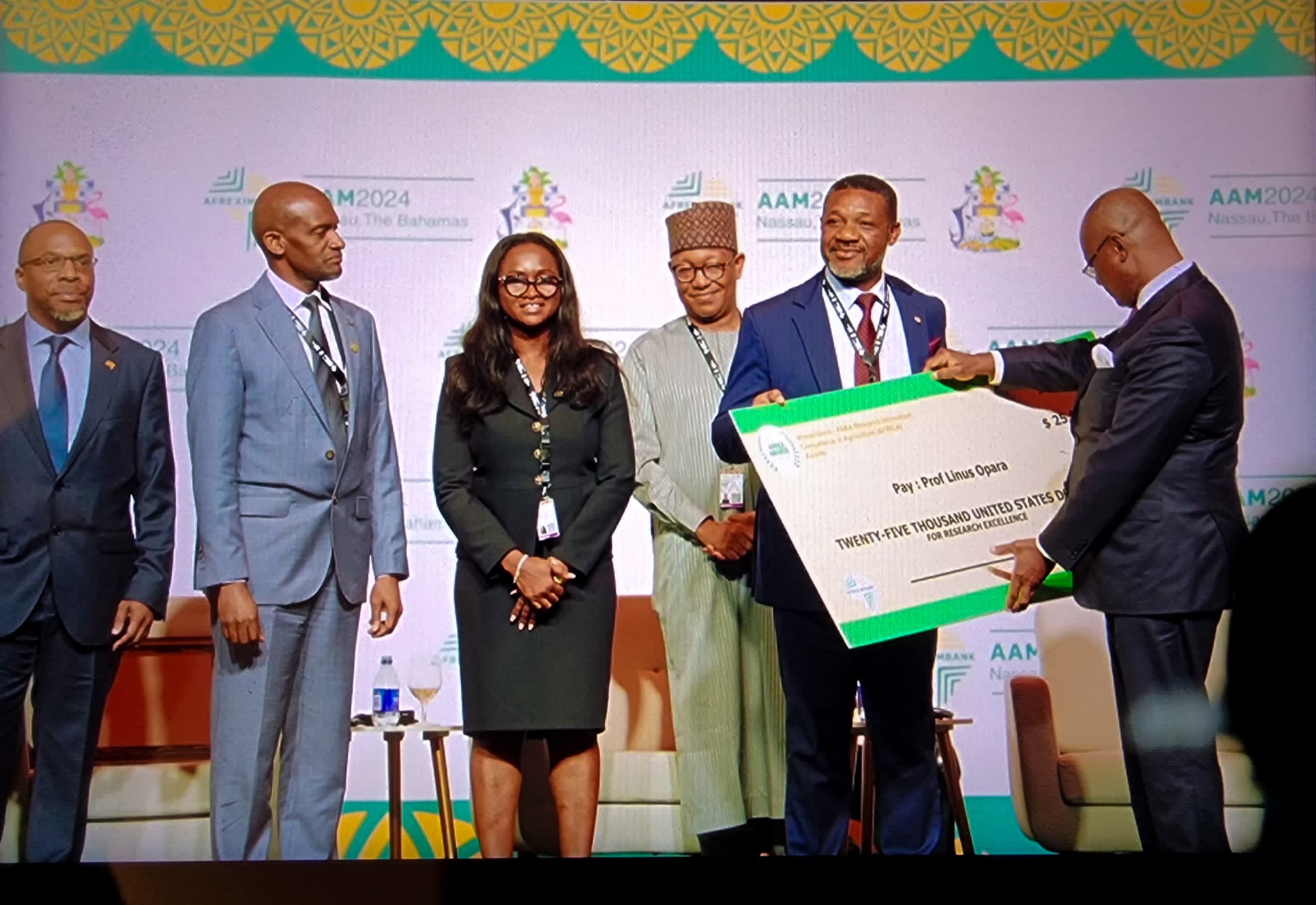
Linus Opara Umezuruike, Distinguished Professor in Post-harvest Technology, Faculty of Agri-Sciences at Stellenbosch University, was awarded the ‘Africa Research Excellence Award’ in recognition of his contribution to developing and validating a novel integrated value chain approach to post harvest research, innovation and capacity building in Africa.
Prof. Linus Opara receiving his Award and $25,000 Prize
Umezuruike is also the Director of UNESCO Biotechnology Centre in Nigeria.
Umezuruike received $25,000 prize, while Mkandawire received $10,000 prize.
African Export-Import Bank (Afreximbank) and the Forum for Agricultural Research in Africa (FARA) are pleased to announce winners of the inaugural Afreximbank-FARA Research, Innovation and Competence in Agriculture (AFRICA) Awards.
These prestigious awards honour individuals, groups, or established organisations that have made outstanding contributions towards improving food and nutritional security, income generation, resilience and natural resource management in Africa through research, innovation, agriprenuership and policy advocacy in the food and agriculture domain.
The AFRICA Awards encompass three categories: (i) the Africa Research Excellence Award, (ii) the Innovation-based Entrepreneurship Award, and (iii) the Impactful and Evidence-based Policies Award.
The AFRICA Awards selection process is overseen by an Independent Awards Selection Committee composed of globally recognised experts.
Following a highly competitive selection process, FARA and Afreximbank are pleased to announce the two laureates of the 2024 AFRICA Awards. They are:
Umezuruike Linus Opara
Distinguished Professor and holder of the South African Research Chair in Postharvest Technology, Faculty of AgriSciences, Stellenbosch University, South Africa. Professor Opara, a national of Nigeria, is the recipient of the Africa Research Excellence Award in recognition of his contribution to developing and validating a novel integrated value-chain approach to post-harvest research and innovation, one crop at a time. His work is acclaimed for reducing post-harvest losses, enhancing value addition, and connecting production to local, regional, and international African markets. Additionally, Professor Opara is recognised for his contributions to building Africa’s capacity for research and innovation in post-harvest science and technology through cutting-edge research, new knowledge creation, and mentoring young, outstanding researchers. Professor Opara holds a Bachelor of Engineering and Master of Engineering degree from the University of Nigeria, Nsukka, and a PhD from Massey University, New Zealand. Professor Opara has published extensively, is a highly cited researcher, and has received several other prestigious awards.
Professor Richard Mkandawire
Africa Director, Alliance for African Partnership; Chair, Malawi National Planning Commission and formerly the Head of the Comprehensive Africa Agriculture Development Programme (CAADP) at NEPAD
Professor Mkandawire, a Malawian national, is the recipient of the Impactful and Evidence-based Policies Award for his foundational role in conceptualising CAADP and catalysing its domestication in African countries. CAADP is credited with elevating the attention and increasing the investments African countries are devoting to agriculture.
Professor Mkandawire has consistently and vigorously advocated for policy processes that are inclusive and supported by evidence. He has catalysed very productive partnerships among policy analysts, policymakers, the private sector, knowledge institutions and other actors in the food and agriculture system. These partnerships have been instrumental in improving the policy environment needed to drive Africa’s agricultural transformation. Professor Mkandawire holds a PhD in development studies and an MSc in agricultural extension from the University of East Anglia, United Kingdom. He also holds an MA in Rural Sociology from the University of Missouri, USA. He has published extensively on agriculture development policy and related areas and has been honoured with several other notable awards.
About Afreximbank:
African Export-Import Bank (Afreximbank) is a Pan-African multilateral financial institution mandated to finance and promote intra-and extra-African trade. For 30 years, the Bank has been deploying innovative structures to deliver financing solutions that support the transformation of the structure of Africa’s trade, accelerating industrialization and intra-regional trade, thereby boosting economic expansion in Africa. A stalwart supporter of the African Continental Free Trade Agreement (AfCFTA), Afreximbank has launched a Pan-African Payment and Settlement System (PAPSS) that was adopted by the African Union (AU) as the payment and settlement platform to underpin the implementation of the AfCFTA. Working with the AfCFTA Secretariat and the AU, the Bank is setting up a US$10 billion Adjustment Fund to support countries in effectively participating in the AfCFTA. At the end of September 2023, Afreximbank’s total assets and guarantees stood at over US$33.4 billion, and its shareholder funds amounted to US$5.8 billion. Afreximbank has investment grade ratings assigned by GCR (international scale) (A), Moody’s (Baa1), Japan Credit Rating Agency (JCR) (A-) and Fitch (BBB). Afreximbank has evolved into a group entity comprising the Bank, its impact fund subsidiary called the Fund for Export Development Africa (FEDA), and its insurance management subsidiary, AfrexInsure, (together, “the Group”). The Bank is headquartered in Cairo, Egypt.
About FARA: FARA is the continental apex body for agricultural research and innovation (R&I). Mandated by the African Union Commission (AUC), FARA facilitates pan-African actions to effectively deploy R&I to increase the continent’s agricultural productivity and competitiveness to feed its fast-growing population. FARA works with Sub-Regional Organisations (SROs), which are the West and Central African Council for Agricultural Research and Development (CORAF/WECARD), Association for Strengthening Agricultural Research in Eastern and Central Africa (ASARECA), Centre for Coordination of Agricultural Research and Development for Southern Africa (CCARDESA) and North African Sub-Regional Organization (NASRO) as well as the African Forum for Agricultural Advisory Services (AFAAS). FARA aims to facilitate strategic (continent-wide) collective agricultural research and innovation actions to increase agricultural productivity and competitiveness. The collaborative efforts are focused on strengthening the capacity for agricultural innovation on a country-specific basis. FARA is an international organisation with full diplomatic status in Ghana.
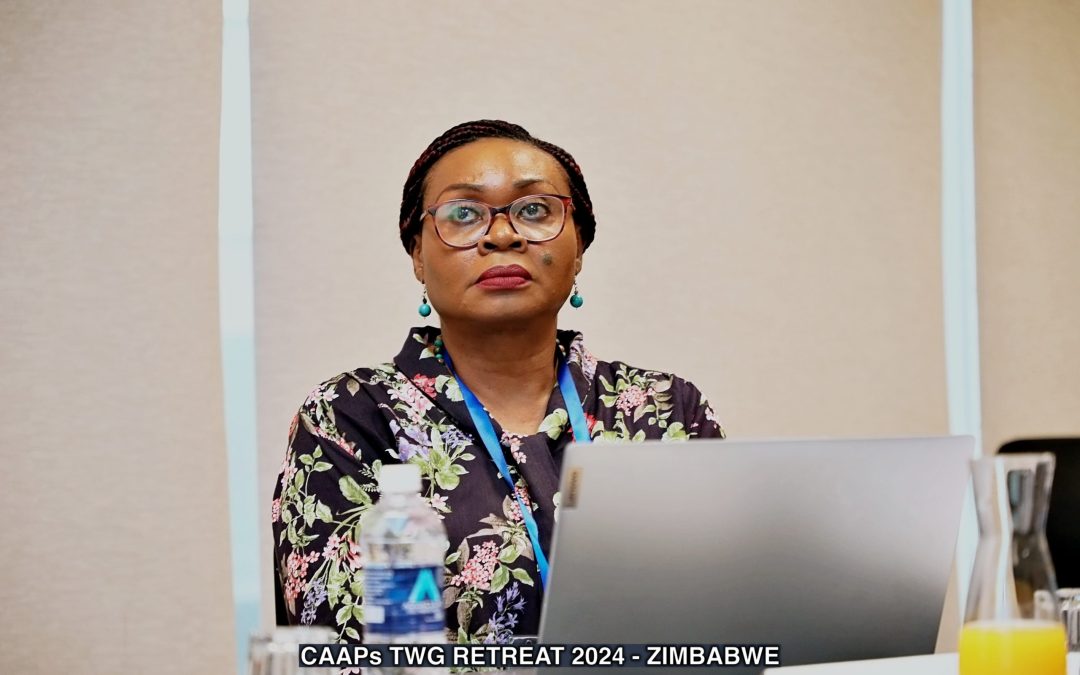
The Chair of the CAAPs Technical Working Group, Dr. Janet Edeme, says Ambassador Josefa Sacko aims to leave “something tangible for her successor” as her tenure ends in February 2025.
In an interview, Dr. Edeme highlighted Amb. Sacko’s commitment to advancing the CAAPs, particularly the Zimbabwe-Zambia CAIP and Ghana-Côte d’Ivoire Cocoa CAAP, is crucial to the agricultural transformation agenda of the AU Agenda 2063.
Speaking at a three-day retreat in Harare, Zimbabwe, Dr. Edeme, who also serves as the Acting Head of the Agricultural Food Security Division, reiterated the importance of completing pre-feasibility studies for both the Zambia-Zimbabwe CAAP and the Ghana-Côte d’Ivoire Cocoa CAAP before Amb. Sacko’s tenure concludes in 2024.
“One of the quick wins we can achieve from the CAAPs program is that Zambia and Zimbabwe have proactively provided resources through COMESA, the Aboriginal Economic Community, for a pre-feasibility study. If we can secure additional resources to finalize and complete the feasibility studies for the Zambia-Zimbabwe Common African Agro-Park, it will be a concrete achievement by February next year,” she stated.
Dr. Edeme added, “we also have the Ghana-Côte d’Ivoire Cocoa CAAP. If we can get these two deliverables on the table, especially the pre-feasibility studies, it will be a significant accomplishment for Commissioner Sacko and something concrete she can leave for her successor.”
Ms. Esther Mwimba, COMESA
Ms. Esther Mwimba, representing the Director of Industry and Agriculture at COMESA, provided updates on the Zambia-Zimbabwe CAAP, where both member states have agreed to initiate a Common Agro-Industrial Park (CAIP).
She clarified that the CAIP “is just one of the projects identified by the two member states, among other initiatives they have planned.”
The overall goal of the CAIP “is to contribute to the industrialization strategy of both governments (Zambia and Zimbabwe) to drive the structural transformation of the economy, transitioning from traditional exporters of fresh produce to industrial hubs of agricultural produce through agro-processing and value addition.”
Ms. Tawiah Agyarko-Kwarteng from CIGCI expressed optimism regarding the Côte d’Ivoire-Ghana Cocoa CAAP. She mentioned that a technical paper has been submitted, leading to the appointment of “two representatives from each relevant body (COCOBOD and CCC)” to collaborate with the secretariat.
“As we move forward, this endorsement and approval allow us to work closely with the CAAPs Secretariat to map out the next steps and determine what needs to be done with the focal persons from each country,” she added.
About the CAAPs
The Common African Agro-Parks Programme (CAAPs) was initiated in 2019 as one of the concrete initiatives of the Comprehensive African Agricultural Programme (CAADP) to be implemented within the framework of the African Union (AU) Agenda 2063 in order to achieve the CAADP Malabo commitments, particularly the commitment to “triple intra-African trade in agricultural commodities and services.”
CAAPs emerged from the major recommendations of the inaugural CAADP-Biennial Review (BR) Report presented to the 2018 AU Assembly of Heads of States, where recommendations were formulated for the AU Commission to initiate continental actions that shall aim at: i)- boosting regional trade for agricultural commodities by increasing locally processing of key agricultural products and their respective value chains; ii)- promoting and facilitating increased consumption of locally and regionally produced agricultural commodities; iii) -achieving self-sufficiency and lowest possible importation of key agriculture commodities in Africa; and iv)-stimulating local and regional private sector investments in agriculture. The implementation of the CAAPs will assist Africa in reclaiming the roughly USD50 billion per year African Food Import Market, which is currently outsourced to the rest of the world.
The Head of Rural Development Division (ARBE) and Chair of the CAAP-TWG (AUC), Dr. Janet Edeme, has reiterated that establishing regional agro-industrial hubs will reduce Africa’s $50 billion yearly food imports.
This will also enhance agricultural productivity and stimulate economic growth among African countries, as this aligns with the “broader vision of the African Union to achieve sustainable development and prosperity for all its citizens,” she explained.
Speaking at the 2024 Planning Retreat of the CAAPs Technical Working Group in Harare, Dr Edeme acknowledged the hurdles in transforming Africa’s agricultural landscape and called on stakeholders to “remember that our success depends on our ability to work together, share knowledge, and leverage the strengths of each partner. The challenges we face are significant, but so are the opportunities.”
She further stated that the “outcomes of this retreat will shape the future of the CAAPs initiative. We aim to finalize comprehensive plans, secure commitments, and outline a clear roadmap for the implementation of our demonstration projects. These projects, as models of integrated agro-industrial development, will pave the way for large-scale investments and policy innovations across Africa.”
Group Photo of CAAPs TWG members
About the CAAPs
The Common African Agro-Parks Programme (CAAPs) was initiated in 2019 as one of the concrete initiatives of the Comprehensive African Agricultural Programme (CAADP) to be implemented within the framework of the African Union (AU) Agenda 2063 in order to achieve the CAADP Malabo commitments, particularly the commitment to “triple intra-African trade in agricultural commodities and services.”
CAAPs emerged from the major recommendations of the inaugural CAADP-Biennial Review (BR) Report presented to the 2018 AU Assembly of Heads of States, where recommendations were formulated for the AU Commission to initiate continental actions that shall aim at: i)- boosting regional trade for agricultural commodities by increasing locally processing of key agricultural products and their respective value chains; ii)- promoting and facilitating increased consumption of locally and regionally produced agricultural commodities; iii) -achieving self-sufficiency and lowest possible importation of key agriculture commodities in Africa; and iv)-stimulating local and regional private sector investments in agriculture. The implementation of the CAAPs will assist Africa in reclaiming the roughly USD50 billion per year African Food Import Market, which is currently outsourced to the rest of the world.
Notice is hereby given for applications for admission and DAAD Scholarships for the MPhil Development Management and PhD Planning for Sustainable Development Programmes for the 2024/2025 Academic Year under the West African Centre for Sustainable Rural Transformation (WAC-SRT) at the Simon Diedong Dombo University of Business and Integrated Development Studies (SDD-UBIDS) in Wa, Ghana.
A. PROGRAMMES
i. MPhil. Development Management (2 years, Full Time)
ii. PhD. Planning for Sustainable Development (4 years, Full Time)
B. ADMISSION/SCHOLARSHIP REQUIREMENTS
To be admitted into the MPhil Development Management Programme, applicants MUST have at least:
i. A first degree with a minimum of Second Class Lower Division in a relevant field from a recognized University or its equivalent in a relevant discipline;
ii. For applicants who wish to apply for DAAD scholarship, a First Degree with a minimum of Second Class Upper Division in a relevant field from a recognized University. Note that your Undergraduate Degree certificate should NOT be more than six (6) years old at the time of application.
iii. Submit official transcripts of academic records, certificates, and other relevant documents from successfully completed undergraduate programmes.
iv. Two years’ work experience in a relevant field is required for admission into the Programme.
v. The DAAD Scholarship application should include a motivation letter. In addition, applicants should provide an updated Curriculum Vitae and research proposal (not more than 10 pages) detailing their intended research work.
vi. DAAD applicants must pass a selection interview (a face-to-face interview for local applicants or online interview for foreign applicants, as applicable).
vii. The applicants selected for the DAAD scholarship to pursue the MPhil Development Management programme will be awarded a two (2) year contract.
To be admitted into the PhD Planning for Sustainable Development Programme, applicants MUST have at least:
i. A very good MPhil/MSc/MA Degree in a relevant field from a recognized institution of higher learning or its equivalent in a relevant discipline.
ii. Submit official transcripts of academic records, certificates, and other relevant documents from successfully completed graduate and undergraduate programmes.
iii. For applicants who wish to be considered for DAAD scholarship, a second degree with a minimum of Second Class Upper Division in a relevant field from a recognized institution of higher learning is required. Note that your second degree certificate should NOT be more than six (6) years old at the time of application.
iv. Two years’ research experience are relevant for admission into the programme.
v. Applicants applying for a DAAD scholarship should include a motivation letter. In addition, applicants should provide an updated Curriculum Vitae, and a research proposal (not more than 10 pages) detailing their intended research work.
vi. Pass a selection interview (a face-to-face interview for local applicants or an online interview for foreign applicants).
vii. The applicant selected for the DAAD scholarship for the PhD Planning for Sustainable Development programme will be awarded a three (3) year contract in line with the Project timelines.
C. MODE OF APPLICATION
All Ghanaian applicants for the 2024/2025 Academic Year admissions are required to use the UBIDS Online Admissions Portal. The procedure for the online application process is as follows:
Make a payment of GH¢180.00 (One Hundred and Eighty Ghana Cedis) for Postgraduate programmes at any Ghana Commercial Bank (GCB), Agricultural Development Bank (ADB), Stanbic Bank and NIB Bank branches throughout the country or through mobile money service by dialing *887*9# To All Networks.
The E-Voucher contains the PIN and Serial Number required in completing the online form.
Access the online form by visiting our online admissions portal at www.ubids.edu.gh soon after payment.
Alternatively:
Visit UBIDS online Admissions Portal at www.ubids.edu.gh with a MasterCard or Visa to make an online payment of GH¢180.00 (One Hundred and Eighty Ghana Cedis) for Postgraduate Programmes
Print the advice slip for future reference.
In completing the online form, students will be required to upload their most recent passport size photographs, which is not more than 6 months old and relevant certificates
A completed form is not considered until it is submitted.
Applicants are advised to check thoroughly all details entered before finally submitting their online applications. A form, once submitted, can only be viewed, but cannot be edited.
Applicants are strongly advised to visit any Ghana Post EMS Office in the Country for assistance towards the return of the application documents (see 8). Applicants are advised not to post the forms themselves. They should seek the advice and services of Ghana Post EMS.
Applicants must print out application summary; attach results slips, certificates and all other relevant documents. These documents should be submitted in triplicates (three copies each) to the Director (Academic and Student Affairs Section).
The application documents as specified in (7) above should be addressed to:The Director, Academic & Student Affairs Simon Diedong Dombo University of Business and Integrated Development Studies P.O Box WA 64 Wa, UW/R, Ghana
Foreign applicants should also post three sets of the application documents mentioned in (7) by express mail to the same address in (8). For the purposes of clarity, foreign applicants should post their application documents to:The Director, Academic & Student Affairs Simon Diedong Dombo University of Business and Integrated Development Studies P.O Box WA 64 Wa, UW/R, Ghana
All applicants for the DAAD Scholarships (foreign and Ghanaian) should send a scanned copy of their application form and all documents in (7) above to the Coordinator of Programmes, West African Centre for Sustainable Rural Transformation (WAC-SRT), through this email: [email protected] and copy the Assistant Registrar (Academics & Student Affairs) through this email: [email protected]. It is important that scanned copies of your application are emailed as a single pdf file to the designated officers to support the application process. Incomplete applications will not be considered during the selection process.
Deadline for Applications: 15th July 2024
Enquiries
For further enquiries contact the following numbers during the hours – 10am to 4pm from Monday to Friday: