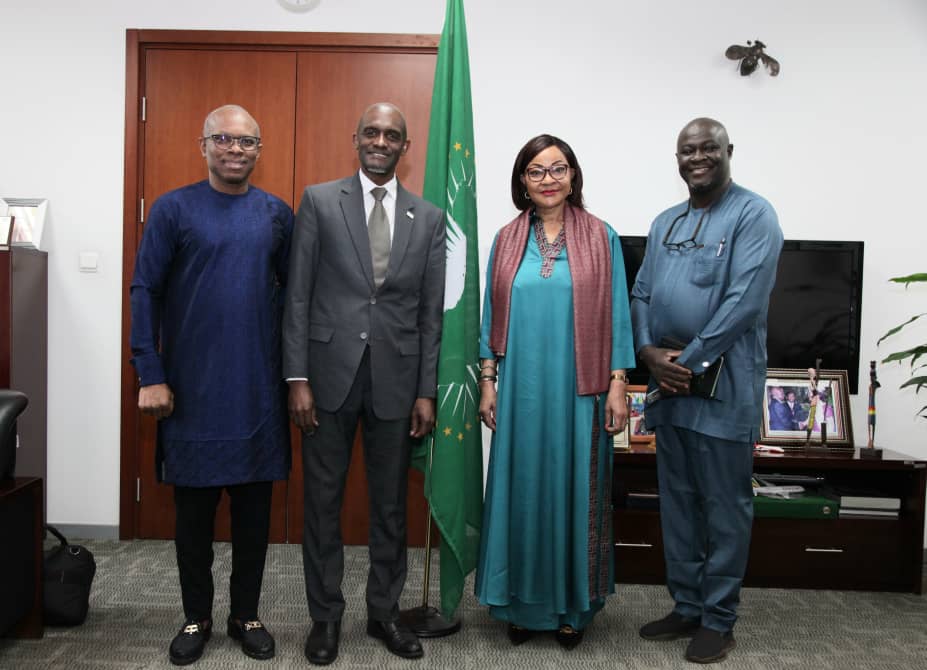
Today, Dr. Henry Musa Kpaka, the Minister of Agriculture for Sierra Leone, hosted a high-level delegation from the African Union (AU) and the People’s Republic of China. This significant meeting marks a pivotal step in advancing agricultural development in West Africa, focusing on the integration of Perennial Rice (PR) into large-scale rice production under the Common African Agro-Parks (CAAPs) initiative.
The delegation, comprising esteemed representatives from the African Union Commission (AUC), the CAAPs-Secretariat (FARA), and Chinese agronomists, convened to explore collaborative opportunities to boost rice production in the region. This initiative aligns with the AU’s Agenda 2063, emphasizing sustainable agricultural practices and enhanced food security. Key attendees included Mr. Anselme Vodounhessi, CAAPs Coordinator at FARA, along with ZHANG Zihua, First Secretary of the Mission of China to the African Union.
The primary goal of this mission is to foster dialogue and collaboration between Sierra Leone, the AU, and China. Key discussions revolved around introducing and cultivating Perennial Rice (PR) in Sierra Leone and beyond, exploring China’s involvement in establishing a rice CAAPs for West Africa, assessing the potential benefits of PR adoption for enhancing agricultural productivity and food security, and developing a strategic partnership roadmap for implementing the rice CAAPs and mainstreaming PR initiatives in Sierra Leone. Dr. Kpaka emphasized the significance of this collaboration, stating, “The integration of Perennial Rice into our agricultural framework holds immense promise for enhancing food security and economic prosperity in Sierra Leone and West Africa. We are committed to leveraging innovative technologies and strategic partnerships to position our nation at the forefront of sustainable agricultural development.”
Dr. Musa Kpaka also expressed Sierra Leone’s commitment to engage with neighboring countries such as Guinea, Liberia, and others to establish Rice-CAAPs, aiming for a sustainable rice value chain across West Africa as part of the next ten-year implementation of the AU Agenda 2063. This regional collaboration is expected to strengthen agricultural practices and enhance food security in the region.
The agenda for the meeting included courtesy visits to government officials and relevant stakeholders, working sessions on understanding CAAPs, the introduction of a rice-CAAP in Sierra Leone, and the benefits of PR, as well as roundtable discussions to explore collaboration opportunities. On the second day, the delegation visited potential PR demonstration plots and consulted with local agricultural experts, researchers, and farmers. The discussions culminated in the development of a joint action plan for initiating the rice-CAAPs and mainstreaming PR initiatives.
The delegation’s visit underscores the commitment of the AU, China, and Sierra Leone to enhance agricultural productivity through innovative solutions like Perennial Rice. This initiative is poised to significantly contribute to the overarching goals of the AU’s Agenda 2063, promoting sustainable agricultural development and food security across the continent.
For more information, please contact:
CAAPs-Secretariat (FARA)
African Union Commission
Ministry of Agriculture, Sierra Leone
About CAAPs: The Common African Agro-Parks (CAAPs) initiative is a flagship program of the AU’s Agenda 2063, aimed at integrating modern agricultural practices, technology, and partnerships across Africa to foster sustainable agricultural development and food security.
About Perennial Rice (PR): Developed by Chinese agronomists, Perennial Rice offers significant advantages, including reduced replanting requirements, improved soil health, and heightened climate resilience, making it a strategic investment for enhancing agricultural productivity in Africa.
Date: July 8, 2024 Venue: African Union Commission (AUC), Addis Ababa, Ethiopia
Addis Ababa, Ethiopia – July 8, 2024: In a pivotal moment for Africa’s agriculture research and innovation, H.E. Amb. Josefa Sacko, the Commissioner for Agriculture, Rural Development, Blue Economy, and Sustainable Environment (ARBE) at the African Union Commission (AUC), hosted Dr. Aggrey Agumya, the Executive Director of the Forum for Agricultural Research in Africa (FARA), for a high-level meeting on July 8th, 2024. This crucial engagement took place at the AUC headquarters in Addis Ababa, Ethiopia, where the future of Africa’s agricultural research and development was at the forefront of discussions.
Commissioner Sacko warmly welcomed Dr. Agumya to the AUC, expressing her commitment to reinforcing the strategic partnership between the AUC and FARA. The meeting was a platform to highlight the progress and achievements of FARA-hosted programmes of the African Union and align on key areas for future collaboration.
From left to right, CAAPs and FARA M&E Coordinator Anselme Vodounhessi, FARA Executive Director Dr. Aggrey Agumya, AUC DARBE Commissioner H.E Amb. Josefa Sacko and FARA Ag. Director for Research and Innovation, Dr. Wole Fatunbi.
Significant updates included (i) the Soil Initiative for Africa (SIA), the Africa fertilizer and Soil health Action Plan (AFSH-AP) and the Nairobi Declaration of May 2024, with detailed discussions on preparations for implementation, funding, and roadmap development; (ii) the Common Africa Agro Parks (CAAPs) Programme, where discussions focused on recent progress, ongoing consultations, and engagements with funders. The strategic importance of CAAPs for agricultural transformation in Africa was underscored as a critical initiative.
(iii) the African Seed and Biotechnology Partnership Platform (ASBPP), where discussions focussed on the Partnership for Integrated Seed Systems in Africa (PISSA) and the platform efforts to mobilise investments in PISSA; (iv) the involvement of FARA in the process of crafting the Post-Malabo agenda and in its implementation including the CAADP research and innovation strategy; (v) the Africa climate smart agriculture initiative which is currently in early stages of conceptualisation.
The high-level dialogue included H.E. Commissioner Sacko and senior advisors from AUC, key personnel from FARA, including Dr. Aggrey Agumya, and Dr. Wole Fatunbi and Mr. Anselme Vodounhessi from FARA. Both parties reaffirmed their dedication to driving strategic initiatives that will lead to sustainable agricultural transformation across Africa. HE Commissioner Sacko, emphasized her determination to strengthen Africa organizations to lead the realization of the vision for Africa agricultural development, i.e., CAADP.
Commissioner Sacko emphasized, “This meeting marks a significant step forward in our collaborative efforts with FARA. Together, we are committed to addressing the critical challenges and leveraging opportunities to transform agriculture in Africa.”
This engagement underscores the AUC and FARA’s unwavering commitment to enhancing African agricultural research and development. It signifies a strengthened partnership to foster sustainable agricultural practices and promote economic growth across the continent.
For media inquiries, please contact:
Forum for Agricultural Research in Africa (FARA)
About FARA:
The Forum for Agricultural Research in Africa (FARA) is the apex organization for agricultural research and innovation in Africa. It is a technical organisation of the African Union Commission and the African Union Development Agency (AUDA-NEPAD) on matters concerning agriculture research and innovation. It provides a continental platform for advancing the deployment of science, technology and innovation towards achievement of the national, regional and continental food systems and agriculture transformation targets. FARA’s mission is to contribute to the sustainable improvement of food security, incomes, resilience and environmental management in Africa through the improvement of agricultural systems’ productivity, competitiveness, markets and agricultural ecosystems.
About AUC-DARBE:
The Department of Agriculture, Rural Development, Blue Economy, and Sustainable Environment (ARBE) at the African Union Commission (AUC) is responsible for driving the African Union’s agricultural and rural development agenda. The department focuses on enhancing food security, promoting sustainable agricultural practices, and fostering economic growth through agriculture and rural development.
The Africa Export-Import Bank (Afreximbank), and the Forum for Agricultural Research in Africa (FARA) mark a significant milestone as the Common African Agro-Parks (CAAPs) Project Agreement is officially endorsed at the Tunisia Africa Business Meetings.
This groundbreaking collaboration between the International Islamic Trade Finance Corporation (ITFC), Afreximbank and FARA, supports the visionary CAAPs Programme.
“Together, we’re set to transform agricultural productivity across Africa by creating innovative agro-industrial parks that promote cutting-edge technology transfer and drive economic development.”
Signatories were Prof. Benedict Oramah, President and Chairman of the Board of Afreximbank and Chair of the AATB Executive Committee Eng. Hani Salem Sonbol, CEO of International Islamic Trade Finance Corporation (ITFC) and the Arab Africa Trade Bridge (AATB) Secretary General.
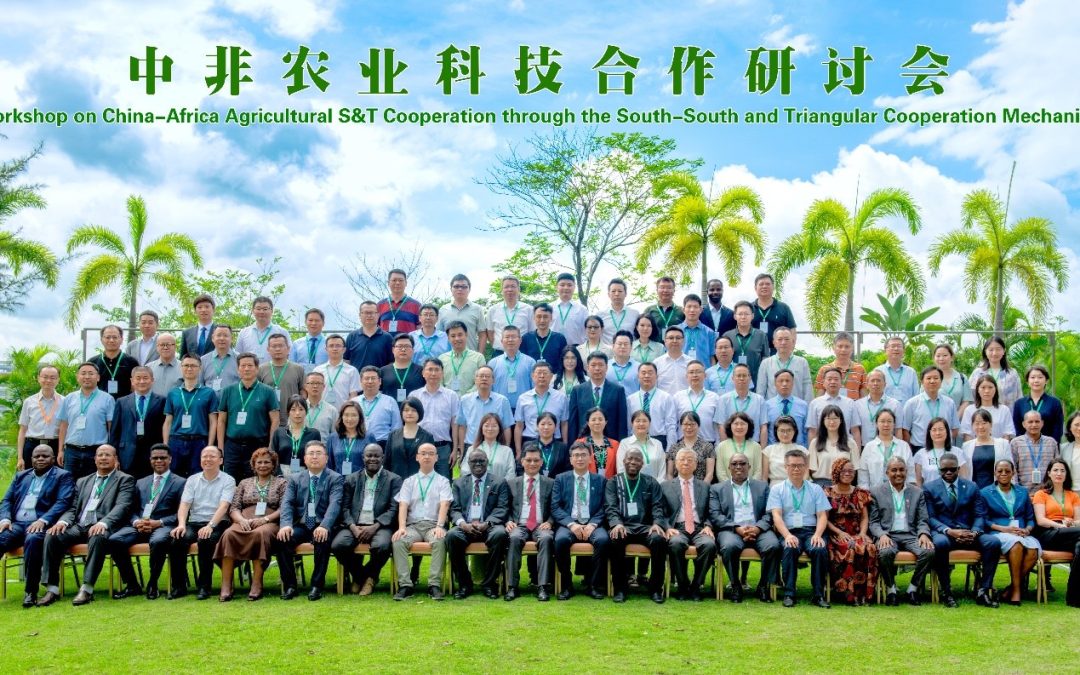
A conference of about 100 high-level scientists and leaders of thought in Africa and China was held between the 12th and 13th of June 2024 at the Hilton Hotel Conference Room in Sanya Yazhou Bay Science and Technology City, China. The two-day conference organized by the Chinese Academy of Agricultural Sciences and the FAO South-South and Triangular Cooperation Division deliberated on the status of African agricultural research and innovation and how to optimize the partnership between China as a large country and the African continent with its 55 independent countries.
Africa and China have the largest populations in the world, recent estimates place the two continents as having about 1.4 billion inhabitants each, erstwhile both continents have the debilitating problem of extreme poverty and food insecurity. But China seems to have overcome its challenge with over 40 years of effort to become an industrial economy with a mere 0.7% poverty rate representing an unprecedented fall from 88% in 1981. Today China is a major player in the production and export of agricultural commodities and a key source of industrial machinery and lots of domestic products sold across the globe. While China keeps growing, Africa is yet to gain strong traction in implementing its growth pathways or rather yet to bring poverty and food insecurity down to a reasonably low level. Available statistics indicated that the poverty level in Africa was 56% in 1990, it came down to 43% in 2012 and in 2019 33.8%, indicating a consistent reduction and suggesting the need to increase technical and political efforts on the key drivers of poverty reduction.
China certainly got it right and has a lot of lessons to share with Africa on how it navigates its economic and industrial growth. Its investment into science, technology generation, infrastructural development, right policies, great leadership, and cultivation of loyalty and civility with its citizens contributed to its success. The deep-seated Asian-like politeness and the act of showing regard for others is at the base of China’s willingness to share its scientific breakthroughs with Africa. This is evident in its different cooperation with African countries in the last decade; the most obvious is its finance of different structural projects across African countries; the development of trade treaties with countries and the growing exchanges of technologies in agriculture.
The central question is “How do we optimize the cooperation to deliver the development outcomes we need in Africa?
Discussion in the conference pointed out the need for Africa to craft its pathway to development. Africa is unique in many ways and cannot outrightly be compared with any other continent in the world; it cannot copy the pathways of other continents with success. However, it could learn key lessons from the successes of others and adapt it to its socio-economic, political, cultural and natural resource base. The introduced Chinese technologies need to be adapted to the local context in Africa, recent observations with introduced agricultural processing and industrial machineries from China on their serviceable years or how long they lasts showed the need to run strong adaptation of the machineries to general behaviors of users in Africa. An old slogan of the Peugeot automobile Nigeria limited is instructive, it said “Built for Nigerian Roads”. Machines that will serve Africa conditions must be built for Africa, it must be rugged, use multiple power sources, with less electronics and more electrical and mechanical components, more user serviceable parts etc.
The Chinese science and technology cooperation in Africa agriculture needs to be coordinated and the focus needs to be defined. A bilateral relationship of a specific laboratory in China with another laboratory in Africa could not be called the China-Africa cooperation. A truly continental effort needs to give cognizance to the existing agricultural research coordination architecture in Africa and uses it as its entry point. This will ensure effective coordination of the efforts, monitoring of progress, lesson learning, and scaling of lessons and proven technologies for broad-based continental impact.
The upcoming China-Africa Agricultural Science and Technology Innovation Alliance (CAASTIA), which was initiated by the Chinese Academy of Agricultural Sciences and the African Academy of Sciences, has huge potential to promote effective partnerships and exchanges between African agricultural stakeholders and that of China. It was advised that FARA would play a constructive role in coordinating and implementing CAASTIA activities, to ensure its effective formation and operation.
Conducting Baseline Studies including a Situation Analysis and Scenario Mapping /
Foresight Analysis towards to the development of the IRC Strategy and Operational Plan
Name of Project:
CEA-FIRST
Grant Agreement n°:
Project duration:
101136771
48 months
Procurement Ref:
FARA/CEA-FIRST/CS/IC/2024/01
Issue Date:
Thursday, May 23, 2024
Extended submission Deadline:
Monday, June 24, 2024
1. After half a century of relations between Africa and Europe, the Lisbon 2007 AU-EU Summit consolidated this relationship in a Joint Africa-EU Strategy (JAES) to represent the overarching long-term framework of cooperation between the European Union (EU) and the African Union (AU), associated with an institutional architecture and specific funding for the implementation of its key actions. Since then, cooperation has become increasingly important, ranging from governance to regional integration, from energy to climate change and from migration to science and technology in a rapidly changing political and global contexts. A number of strategic directions have been adopted on both the African and European levels including; adoption of the Agenda 2063, Comprehensive Africa Agricultural Development Programme (CAADP) Malabo Agenda, the Africa continental Free trade Area (AfCTA) the EU Global Strategy, EU’s foreign and security policy, the European Green Deal, the Farm-to- Fork strategy etc.
The High-Level Political Dialogue (HLPD) that was put in place to operate between Summits has strengthened the implementation of the JAES and provided the basis for three priority areas in the implementation of the STI component of the JAES, namely, the FNSSA, CCSE, and the Innovation Agenda. The associated Roadmaps of these priority areas have been developed with the changing global contexts.
Under the FNSSA priority area over 500 AU-EU projects have been implemented and define the aspirations of the partnership towards the establishment of a sustainable platform for research and innovation. In September 2022, the International Research Consortium was launched (IRC) in the context of transitions in the agri-food systems, climate change, population trends and related drivers of economic development. The IRC is therefore expected to contribute to an equitable and sustainable research and innovation partnership between Africa and Europe.
The Consortium Europe Africa on Research and Innovation for Food Systems Transformation (CEA-FIRST) consists of 21 partners from Africa and Europe. The CEA-FIRST project will operationalise the AU-EU IRC in line with the FNSSA Roadmap and under the aegis of the AU-EU High-Level Policy Dialogue (HLPD) as the long-term platform on food and nutrition security and sustainable agriculture (FNSSA). The final output of the CEA-FIRST project will be a fully functional IRC, including governance bodies. CEA-FIRST will also support its liaison with the High-Level Policy Dialogue (HLPD).
The development of the IRC Strategy and Operational Plan will be led by FARA and WUR with support from CIRAD, Agrinatura, ARC, ACU and ASARECA. The Foresight for Food (F4F) network was foreseen under the Grant Agreement to undertake Activity 1.2.2 to support the final crafting of the IRC Strategy and Operational Plan.
2. This request for expression of interest aims at engaging a consultant tocarry out the following functions:
a. Preparatory Phase:
The preparatory phase involves understanding IRC goals through desk research, horizon reviews, trend analysis, and interviews, culminating in a Slide Deck summarizing major trends.
b. Stakeholder Consultation:
Live/online interviews will gauge stakeholder agreement with the IRC Strategy and Operational Plan, resulting in an inception report.
c. Identification of Focus Issues:
Workshops and scenario analysis will explore IRC goals, producing a report and Slide Deck on key issues.
d. Scenario Storylines:
Workshops will refine scenario storylines, resulting in a Slide Deck with key scenario logics.
e. Analysis of Implications:
Scenario analysis will strengthen the IRC strategy, producing a report with strategic recommendations.
f. Crafting the Strategy and Operational Plan:
A detailed document and summary report will be developed.
g. Review and Validation:
The plan will be reviewed and validated, with final approval by the IRC Council and GA.
3. The Executive Director of FARA invites interested consultants to express interest in carrying out this assignment.
4. Consultants interested in this call must provide a description of the approach and tools that will be used to do the assignment, the budget (in person-month) for the expert team, the contact details of the consultant (name, email, phone number), a description of the team of experts that will conduct the study including clear roles, experience, and competency, and ensure the bid proposal does not exceed 4,000 words.
5. The anticipated period of performance for this consultancy is 80 man-days spread over three months (July 2024 to September 2024).
6. The individual consultant shall be selected based on procedures defined in the Procurement Guidelines of FARA.
7. Interested consultants may obtain further information from the CEA-FIRST Coordinator, Dr.Irene Annor-Frempong [[email protected]],and copy [[email protected]] and [[email protected]],during the following hours: 9h00 to 16h00 GMT.
Please download the Terms of Reference below, for further information on this opportunity.
8. Expressions of Interest should be submitted electronically to [[email protected]] and addressed to Dr. Aggrey Agumya, Executive Director of FARA, No 7 Flower Avenue, New Achimota, Mile 7, Accra, Ghana, no later than Monday, June 24, 2024, at 16h00 GMT. Tel: +233 302 772823/744888.
9. FARA Affirmative Action Statement on Recruitment: there is no discrimination based on gender race, religion, ethnic orientation, disability, or health status.