Abidjan II: African Development Bank, African Union Commission, CGIAR, Forum for Agricultural Research in Africa Join Forces to Strengthen Africa’s Food Systems

Abidjan II: African Development Bank, African Union Commission, CGIAR, Forum for Agricultural Research in Africa Join Forces to Strengthen Africa’s Food Systems

Agreement boosts efforts to equip farmers with much-needed technologies

Sharm el-Sheikh, November 14, 2022 – Four organizations have come together to strengthen Africa’s food systems. The African Development Bank, the African Union Commission (AUC), the Forum for Agricultural Research in Africa (FARA), and CGIAR have signed an agreement, aligning their efforts to boost food and nutrition security on the continent.

Following consultations* earlier this year, the “Abidjan II” communiqué posits that Africa must urgently transform its food, land, and water systems to ensure food and nutrition security despite multiple threats, including from climate change, conflict, and pandemic. The four signatories will work together to build Africa’s resilience to future shocks by bolstering agricultural research and innovation systems at the national, sub-regional, and continental levels and by equipping farmers with the science and technologies they need to thrive. They will also align institutional structures, funding, strategy, and capacity.

Welcoming the agreement, African Development Bank President, Dr. Akinwumi Adesina, said, “I am fully confident that we should be able to reach zero hunger in Africa. To do so, we must accelerate action, take technologies to the scale of millions of farmers, and drive the agenda towards zero hunger that’s the key. The role of CGIAR becomes even more important in that drive because of the technologies, the need to support research and development, and the need for more climate resilient agricultural systems.”

H.E Ambassador Josefa Sacko, Commissioner for Agriculture Rural Development Blue Economy and Sustainable Environment at the African Union Commission, welcomed the initiative, stating that “This agreement will heighten agriculture research and knowledge, help us to identify gaps, analyze them, and find solutions to build resilient food systems on the continent, while responding to the needs and commitments, made by our heads of states and governments in the Malabo declaration, to transform agriculture and improve the livelihoods of our people”.

According to FARA’s Executive Director, Dr. Yemi Akinbamijo, Africa urgently needs a pathway that meets major threats to food, land and water systems with science, technology and innovation. 

“This agreement brings us all on the same page and presents us the best opportunity to equip farmers with appropriate technologies and policy instruments to meet these challenges, known and unknown, head on,” Akinbamijo said.

FARA will use its forums — including the Africa Agribusiness Science Week (AASW) — the Science and Partnerships for Agriculture Conferences, and the Knowledge Management for Agricultural Development Challenge, to support the new partnership.

CGIAR Executive Managing Director, Dr. Claudia Sadoff said alignment with the organization’s partners in Africa allowed CGIAR to “move ahead with reforms aimed at equipping farmers in Africa and beyond with the science and innovations they need, and at boosting investment that supports resilient food, land, and water systems.” 
The agreement recognizes African governments and partners’ historical and continuing support for Africa-based CGIAR Research Centers. It also affirms support for ongoing reforms they are undertaking to better align with the needs of African farmers and food systems.

The partner organizations are developing an action plan to be released this year. It will see these commitments transformed into action that will benefit farmers across the continent.

* Participating organizations included the Alliance for a Green Revolution in Africa (AGRA), the African Union Development Agency-New Partnership for Africa’s Development (AUDANEPAD), and sub-regional research organizations, CORAF, ASARECA, CCARDESA, NAASRO, the Africa Forum for Agricultural Advisory Services (AFAAS), FAO and AKADEMIYA2063.

 ______________________________________________

About the African Development Bank

The African Development Bank Group is Africa’s premier development finance institution. It comprises three distinct entities: the African Development Bank, the African Development Fund and the Nigeria Trust Fund. On the ground in 41 African countries with an external office in Japan, the bank contributes to the economic development and the social progress of its 54 regional member states.

Media contact: Alphonso Van Marsh, Principal Digital Content and Events Officer, African Development Bank, email: [email protected]


About the African Union Commission (AUC)

The African Union (AU) is a continental body consisting of the 55 member states form the African Continent. The AU is guided by its vision of “An Integrated, Prosperous and Peaceful Africa”, driven by its own citizens and representing a dynamic force in the global arena. To achieve this vision, the Agenda 2063 was developed as a strategic framework for Africa’s long term socio-economic and integrative transformation to ensure the realization of its objectives and the attainment of the Pan African Vision of an integrated, prosperous and peaceful Africa. It identifies key Flagship Programmes which boosts Africa’s economic growth and development and lead to the rapid transformation of the continent and the Comprehensive African Agricultural Development Programme (CAADP), is one such continental initiative that aims to help African countries eliminate hunger and reduce poverty by raising economic growth through agriculture-led development. This partnership will advance one of CAADP’s key priority areas on Improving agriculture research, technology dissemination and adoption.

Media contact: Peace Mutuwa, email: [email protected]


About CGIAR

CGIAR is a global research partnership for a food-secure future. CGIAR science is dedicated to transforming food, land and water systems in a climate crisis. Its research is carried out by 13 CGIAR Centers/Alliances in close collaboration with hundreds of partners, including national and regional research institutes, civil society organizations, academia, development organizations and the private sector. www.cgiar.org. We would like to thank all Funders who support this research through their contributions to the CGIAR Trust Fund.

Media contact: Laura Schalk, email: [email protected]


About the Forum for Agricultural Research in Africa (FARA) 

FARA is the continental apex organization for agricultural research and innovation in Africa. With its Secretariat based in Accra, Ghana, FARA serves as a platform for stakeholders in the continent’s agriculture research and innovation space to mobilize collective actions including the articulation of common positions.  FARA is mandated by the African Union Commission and the AUDA-NEPAD to coordinate the formulation and operationalization of continental research and innovation policies, initiatives and programs designed to achieve the continent’s food and agriculture development targets.  FARA performs these functions in collaboration with sub-regional agricultural research and innovation organizations namely: ASARECA CCARDESA CORAF and NAASRO, as well as AFAAS.

Media contact: Benjamin Abugri, email: [email protected]

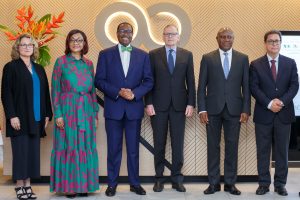
Header photo by CGIAR Communications Team @ COP27.

MY KM4AgD CHALLENGE EXPERIENCE: The gift of knowledge co-creation to Africa

Communicate to inform or communicate to build capacities?

The first important thing I learned is the difference between communication and knowledge management. I used to do both communication and Knowledge management in my daily activities and consultancies without deeply ceasing that critical difference. Today this KM4AgD Challenge just thought me something I didn’t know I ignored. Hence I can say communication is about information sharing but knowledge management, is about sharing information that capacitates or add to the receiver’s experience to better perform in his/her job.

A section of #Km4AgD Challenge Participants, 2022

Explicit Knowledge Vs tacit knowledge

“Tell me and I forget, Teach me and I may remember, Involve me and I learn” (Benjamin Franklin)

Explicit knowledge is about tangible knowledge or knowledge products that take different formats. For instance, you can acquire that knowledge from videos, audio, or documents. However tacit knowledge is intangible and meant to be captured during a process of implementation by a professional. I had the opportunity to follow classes on knowledge capitalization given by a professional and there, the trainer shared the method through a PowerPoint presentation and gave us templates for further orientations it was a nice learning experience (thanks to #AFAAS). Then, I had the opportunity to work with professional knowledge managers on some projects and I learned many more practical skills, how to behave with the audience, tips for conducting productive interviews, how to handle stakeholders’ feelings and expectations, how to organize outputs in a document and more (thanks to #Procasur and #CAMFAAS). In a nutshell, I can say with explicit knowledge you surely learn, but tacit knowledge makes you professional and should be captured for the sustainability of the organization.

KM for Impact

The KM4AgDChallenge is a learning-by-doing process. As a trainee, it is an amazing teamwork experience that highlights the power of co-creation. Implementing Knowledge cafes, conducting KM assessments, drafting KM strategies, sharing ideas to contribute to Africa’s development, writing policy briefs, and establishing Communities of Practice are some of the core capacities strengthened. Knowledge exists, but according to each organization’s goals, it’s about where to find it, how to capture it, how to repackage it, how to share it, and measure the impact.

Now as a knowledge agent, it is time to start spreading knowledge culture and practically contribute to the development of a knowledge society.


It was indeed a pleasure to meet and learn from Andreas BrandnerBenjamin AbugriAndrianjafy RASOANINDRAINYBridget Kakuwa-KasongamuliloBen Moses Ilakut and Michael Victor, all amazing world-class knowledge management practitioners.

The KM4AgD Challenge is a CAADPX4 Program with funding from the European Union, managed by the International Fund for Agricultural Development


#FARAinfo ,  #KM4AgDChallenge#YPARD

Forum for Agricultural Research in Africa – FARA Knowledge for Development Partnership – K4DP YPARD African Forum for Agricultural Advisory Services (AFAAS) International Fund for Agricultural Development (IFAD) ASARECA CGIAR


Author: Bebel Nguepi, MSc., Certified Knowledge Manager

Contact. [email protected]


UNIDO, African Union discuss food security and value chains

ADDIS ABABA, 11 October 2022 – Gerd Müller, Director General of UNIDO, and his delegation, held a fruitful meeting with Josefa Sacko, African Union Commissioner for Agriculture, Rural Development, Blue Economy and Sustainable Environment. At the heart of the discussion was agreement on the need to strengthen intra-African value chains, especially in agricultural goods.


Commissioner Sacko explained that the African Union is pushing to establish regional zones where countries can use their comparative advantage to boost regional trade, for example, rice from West Africa and cereals from East Africa. She also gave details about the Common African Agro-Parks Programme to establish cross-border parks to strengthen regional trade.

A first demonstration project straddling the border of Zambia and Zimbabwe is to start soon.

Director General Müller highlighted UNIDO’s work on integrated agro-industrial parks and agro-poles in Ethiopia and Senegal respectively, and suggested collaboration on this topic with the African Union. He said, in Africa, industrialization means agribusiness, and he invited Sacko to attend the forthcoming Summit on Industrialization and Economic Diversification in Niger in late November. He added that the private sector, especially food producers, should also participate.

Director General Gerd Müller met Josefa Sacko, Commissioner Agriculture of the African Union to deepen cooperation on expanding agro-industrial parks and building fair global supply chains. Addis Ababa, 11 October 2022.

Source: unido.org

ARIFA takes on Lisbon, Portugal

17th October 2022:

At the instance of the University of Lisbon authorities, the Executive Director of the Forum for Agricultural Research in Africa (FARA) Dr. Yemi Akinbamijo was received in audience by the representative of the Rector of the University of Lisbon – Prof Cecilia Rodrigues (Deputy Vice-Chancellor, Research and Innovation). In a short but impressive meeting at the Rector’s Office of the University of Lisbon, the Executive Director of FARA was received in audience along with the Deputy Vice-Chancellor Rodrigues by Prof Ana Isabel Faria Ribeiro (Director, Tropical College), Dr. Isabel França (Director, External and International Relations Department) and Professor Jorge Malheiros (Deputy Director CTROP)

The mission was aimed at engagement with the principal officers of the university of Lisbon and to intimate them with the conceptual framework of the ARIFA (Agricultural Research and Innovation Fellowship in Africa) and to also provide them with a deeper understanding of the ARIFA philosophy and its theory of change – a pedagogic retooling of the African competencies and capacities for deploying science in the African University systems.It is noteworthy that ARIFA initiative is very well established in Brazil where about 90 members of Nigerian universities are currently undergoing different courses in agrifood system research at the MSc level.

In addition, there is the 4-tier plan that was discussed in Lisbon today – MSc, PhD, Post Doctoral fellowship, and Regional mobility for benchwork and research engagement with faculty members in Nigerian universities and the University of Lisbon. the meetings concluded on the agreed-upon next steps which include the elaboration of a memorandum of understanding and a matrix of opportunities and institutional competencies and capacities to engage with the Nigerian academia in a way that responds to the expression of interest that will be elucidated from the Nigerian academia.

It will be recalled that the TETfund has now raised available opportunities in the fellowship program from 120 to 620 fellows. The University of Lisbon in return has expressed its readiness to open its doors to Africa within the context of the ARIFA initiative during the next 3-4 months.

Other subjects of mutual interest were also discussed including joint resource mobilization, joint summit (Africa-Europe) and other areas of interest for joint initiatives within the context of the Erasmus program of the European Union.

CAADP-XP4 Consortium Reconnect Research to Extension (R2E)

17 Oct 2022

The 3rd Comprehensive African Agriculture Development Programme (CAADP) Biennial Report (BR) stressed that “access to quality advisory services in agricultural production is important in all relevant segments of the food system”. There is a line that most Researchers won’t usually cross between the lab and the dusty field, yet that line makes all the difference in making a real impact at the last mile. That line is the sharing of research outputs with extension. The weak link between the extension and research is why the Comprehensive African Agriculture Development Programme Ex-Pillar 4 (CAADP-XP4) Knowledge Management & Communication (KMC) Technical Working Group met in Nairobi, Kenya, from 5th to 7th October 2022.

The CAADP-XP4 Consortium comprises the African Forum for Agricultural Advisory Services (AFAAS), Association for Strengthening Agricultural Research in East and Central Africa (ASARECA), West and Central African Council for Agricultural Research and Development (CORAF) and Forum for Agricultural Research in Africa (FARA). AFAAS hosted the meeting with support from the European Union through the International Fund for Agricultural Development (IFAD).

The main objectives of the meeting were to learn from the existing experience of research to extension (R2E) activitiesdiscuss and agree on realistic indicators, targets, a roadmap, and digital tools used in the R2E agenda, and the interoperability of digital solutions used by the CAADPXP4 organizations.

The AFAAS Executive Director, Dr Silim Nahdy, gave his opening remarks, urging participants to break the chain of isolating research from extension. He emphasized the urgent need for research and extension to work together for the benefit of the farmers. Dr. Nahdy applauded the team for coming up with an important meeting as it is an excellent basis to think of solutions and develop a policy paper that could be shared with the main actors, in this case, the research and the extension. He also hoped the meeting would resolve the unique challenges around the topic.

The AFAAS Board Committee Member, Mrs. Mary Kamau, officially opened the meeting by sharing her experience working with research in the 1990s. She mentioned a regular engagement between the Researchers and the Extension Officers as the norm then. She also proposed the engagement of farmers at the innovation development stage because farmers are also innovators and researchers. She reminisced how her mother used to select seed from the middle part of a maize cob and reserve it for the next planting season, and she attested how effective the strategy worked. Therefore, she urged the participants to consider getting best practices from farmers instead of thinking that farmers are not knowledgeable.   

During the meeting, the Knowledge Management Officers, Mr. Andri Raso from AFAAS, Mr. Ben Ilakut from ASARECA, Mrs. Bridget Kakuwa-Kasongamulilo from CCARDESA, and Mr Benjamin Abugri from FARA, shared their organization research to extension agenda and ways that they hope this agenda could be pushed forward. Mr. Peter Mwangi Gitika, the Country Focal Person for the Forum for Agricultural Advisory services Kenya (KeFAAS) and Mrs. Silvia Mburungu, the Communication, Information & Knowledge Management Officer, also presented the status of the R2E agenda at the KeFAAS.

Mr. Max Olupot, the AFAAS Director of Research and Programmes, reminded the participants that Knowledge management is critical for the CAADP-XP4 programme as it is part of the science-led research nexus and helps guide how to move the R2E agenda forward. “From experience, spots of success are there, and we need to probe why they worked, how they worked and turned the lives of smallholder farmers from grass to grace and from gloom to glory”, he emphasized.

Dr. Samson Eshetu, the Capacity Strengthening Specialist, provided the rationale and impetus for the R2E as being that research is done but not having an impact mainly because it was not demand-driven. Therefore, the R2E agenda will address the existing gaps and move away from the status quo to more impactful actions, such as packaging technologies in farmer-accessible formats instead of publications. He also emphasized that the CAADP-XP4 Model is an excellent model to bridge the gap.

Dr. Boniface Akaku, the Director of Information, Communication and Technology at Kenya Agriculture and Livestock Research Organisation (KARLO), shared best practices for addressing the gaps identified in R2E. He said KARLO uses digital apps to reach the farmers innovatively. It does this by incorporating evidence-driven data showing farmers how to produce more with less rainfall and less fertilizer and providing personal, contextually relevant, and location-based information. He highlighted innovative ways of information packaging and a proper database to keep all their farmer’s details as well as how they always get feedback from the farmers instead of having a one-way system. He also shared how effectively interoperability can be done for the consortium’s full benefit, among other things.

In her closing remarks, Ms. Peace Mutukwa, the African Union Commission (AUC) Knowledge Management and Communication Officer in the Department of Agriculture and Food Security, said that the meeting would improve how the AUC will work with other organizations. She was also grateful to the CAADP-XP4 consortium for the established working relations in knowledge management. She advised that this should also scale to other thematic areas. Ms. Mutukwa reiterated that the meeting was a good starting point as it would improve linkages and help harmonize how we do things. This is an excellent opportunity for AUC, and we look forward to taking the Research to Extension agenda forward for Africa.

In closing the meeting, Mr. Max Oloput, speaking on behalf of the Executive Director, thanked all for attending the workshop. He said the meeting unveiled what was there and is now being overlooked and that the discussion was timely. There is need to get research and extension working together mainly to benefit the farmers and everyone in the food chain. He intimated that when the farmer produces, it leads to better production, environment and life and makes everyone happy and healthy. Mr. Oloput emphasized that technologies should be available, accessible, usable and affordable for the farmer’s benefit and, ultimately, the entire continent.

In her official closing remarks, Mrs. Maria Kamau, the AFAAS Board Member, said that disseminating Technologies, Innovations and Management Practices (TIMPs) relies on donor support. However, Africa must think of sustainable processes that will allow it to stand on its own to have food and nutritional security. She stressed the great opportunities available to improve the lives of farmers, as evidenced by the many research organizations that have come on board. She urged the CAADP-XP4 Consortium to support research that will benefit all the stakeholders at the country level, regional and continental levels and to work towards developing an inventory of all the TIMPs that show the status of dissemination.

Mrs. Kamau appealed to AUC to encourage the Member states to develop a basket fund that can meet the needs of nationals. She also stressed the need to build the capacity of the extension workers so that they can disseminate the TIMPs to the farmers. “Let us do an inventory that will show where the TIMPs are, which ones have been disseminated and those in the pipeline”, she concluded.

The KMC also strategized to weave knowledge management into the R2E Agenda as it is a critical component which, if left out, the gap will continue to exist. They also sought to respond to whether Agricultural Research is driven by grassroots demand. The following questions were raised; are agricultural technologies and innovations adapted (affordable, replicable, flexible enough) for the supposed targets? Are research results well disseminated, increasing the knowledge and know-how of farmers and triggering changes in their livelihoods?

The participants developed a R2E Manzooni Declaration, which outlined what the CAADP-XP4 will do to bridge the gap between Research and Extension.

The CAADP-XP4 Consortium, representatives from KeFAAS,  KARLO, AUC and the  AFAAS Board Chair attended this meeting.

By the end of the workshop, it became clear that increasing investment in Agricultural Research is not enough to End Hunger and Malnutrition in Africa. But that it should be accompanied by the two professional bodies, Researchers and Extension officers, urgently working together to bring research results to the farmers and make a real impact. The KMC technical working group resolved that they would pursue Agricultural Research for impactful outcomes, including putting the farmers first!

Source: ccardesa.org