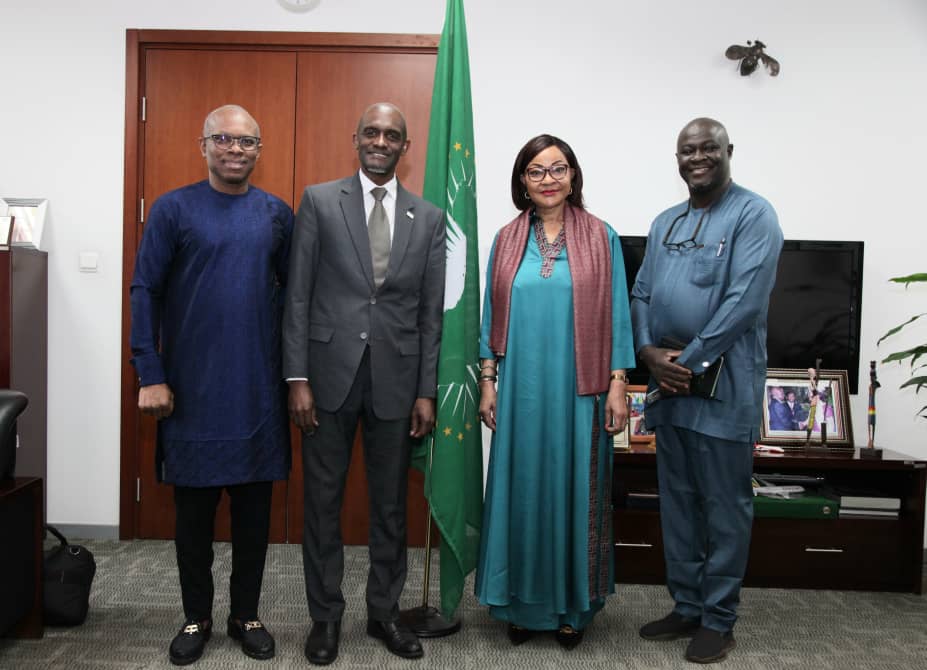
Today, Dr. Henry Musa Kpaka, the Minister of Agriculture for Sierra Leone, hosted a high-level delegation from the African Union (AU) and the People’s Republic of China. This significant meeting marks a pivotal step in advancing agricultural development in West Africa, focusing on the integration of Perennial Rice (PR) into large-scale rice production under the Common African Agro-Parks (CAAPs) initiative.
The delegation, comprising esteemed representatives from the African Union Commission (AUC), the CAAPs-Secretariat (FARA), and Chinese agronomists, convened to explore collaborative opportunities to boost rice production in the region. This initiative aligns with the AU’s Agenda 2063, emphasizing sustainable agricultural practices and enhanced food security. Key attendees included Mr. Anselme Vodounhessi, CAAPs Coordinator at FARA, along with ZHANG Zihua, First Secretary of the Mission of China to the African Union.
The primary goal of this mission is to foster dialogue and collaboration between Sierra Leone, the AU, and China. Key discussions revolved around introducing and cultivating Perennial Rice (PR) in Sierra Leone and beyond, exploring China’s involvement in establishing a rice CAAPs for West Africa, assessing the potential benefits of PR adoption for enhancing agricultural productivity and food security, and developing a strategic partnership roadmap for implementing the rice CAAPs and mainstreaming PR initiatives in Sierra Leone. Dr. Kpaka emphasized the significance of this collaboration, stating, “The integration of Perennial Rice into our agricultural framework holds immense promise for enhancing food security and economic prosperity in Sierra Leone and West Africa. We are committed to leveraging innovative technologies and strategic partnerships to position our nation at the forefront of sustainable agricultural development.”
Dr. Musa Kpaka also expressed Sierra Leone’s commitment to engage with neighboring countries such as Guinea, Liberia, and others to establish Rice-CAAPs, aiming for a sustainable rice value chain across West Africa as part of the next ten-year implementation of the AU Agenda 2063. This regional collaboration is expected to strengthen agricultural practices and enhance food security in the region.
The agenda for the meeting included courtesy visits to government officials and relevant stakeholders, working sessions on understanding CAAPs, the introduction of a rice-CAAP in Sierra Leone, and the benefits of PR, as well as roundtable discussions to explore collaboration opportunities. On the second day, the delegation visited potential PR demonstration plots and consulted with local agricultural experts, researchers, and farmers. The discussions culminated in the development of a joint action plan for initiating the rice-CAAPs and mainstreaming PR initiatives.
The delegation’s visit underscores the commitment of the AU, China, and Sierra Leone to enhance agricultural productivity through innovative solutions like Perennial Rice. This initiative is poised to significantly contribute to the overarching goals of the AU’s Agenda 2063, promoting sustainable agricultural development and food security across the continent.
For more information, please contact:
CAAPs-Secretariat (FARA)
African Union Commission
Ministry of Agriculture, Sierra Leone
About CAAPs: The Common African Agro-Parks (CAAPs) initiative is a flagship program of the AU’s Agenda 2063, aimed at integrating modern agricultural practices, technology, and partnerships across Africa to foster sustainable agricultural development and food security.
About Perennial Rice (PR): Developed by Chinese agronomists, Perennial Rice offers significant advantages, including reduced replanting requirements, improved soil health, and heightened climate resilience, making it a strategic investment for enhancing agricultural productivity in Africa.
Date: July 8, 2024 Venue: African Union Commission (AUC), Addis Ababa, Ethiopia
Addis Ababa, Ethiopia – July 8, 2024: In a pivotal moment for Africa’s agriculture research and innovation, H.E. Amb. Josefa Sacko, the Commissioner for Agriculture, Rural Development, Blue Economy, and Sustainable Environment (ARBE) at the African Union Commission (AUC), hosted Dr. Aggrey Agumya, the Executive Director of the Forum for Agricultural Research in Africa (FARA), for a high-level meeting on July 8th, 2024. This crucial engagement took place at the AUC headquarters in Addis Ababa, Ethiopia, where the future of Africa’s agricultural research and development was at the forefront of discussions.
Commissioner Sacko warmly welcomed Dr. Agumya to the AUC, expressing her commitment to reinforcing the strategic partnership between the AUC and FARA. The meeting was a platform to highlight the progress and achievements of FARA-hosted programmes of the African Union and align on key areas for future collaboration.
From left to right, CAAPs and FARA M&E Coordinator Anselme Vodounhessi, FARA Executive Director Dr. Aggrey Agumya, AUC DARBE Commissioner H.E Amb. Josefa Sacko and FARA Ag. Director for Research and Innovation, Dr. Wole Fatunbi.
Significant updates included (i) the Soil Initiative for Africa (SIA), the Africa fertilizer and Soil health Action Plan (AFSH-AP) and the Nairobi Declaration of May 2024, with detailed discussions on preparations for implementation, funding, and roadmap development; (ii) the Common Africa Agro Parks (CAAPs) Programme, where discussions focused on recent progress, ongoing consultations, and engagements with funders. The strategic importance of CAAPs for agricultural transformation in Africa was underscored as a critical initiative.
(iii) the African Seed and Biotechnology Partnership Platform (ASBPP), where discussions focussed on the Partnership for Integrated Seed Systems in Africa (PISSA) and the platform efforts to mobilise investments in PISSA; (iv) the involvement of FARA in the process of crafting the Post-Malabo agenda and in its implementation including the CAADP research and innovation strategy; (v) the Africa climate smart agriculture initiative which is currently in early stages of conceptualisation.
The high-level dialogue included H.E. Commissioner Sacko and senior advisors from AUC, key personnel from FARA, including Dr. Aggrey Agumya, and Dr. Wole Fatunbi and Mr. Anselme Vodounhessi from FARA. Both parties reaffirmed their dedication to driving strategic initiatives that will lead to sustainable agricultural transformation across Africa. HE Commissioner Sacko, emphasized her determination to strengthen Africa organizations to lead the realization of the vision for Africa agricultural development, i.e., CAADP.
Commissioner Sacko emphasized, “This meeting marks a significant step forward in our collaborative efforts with FARA. Together, we are committed to addressing the critical challenges and leveraging opportunities to transform agriculture in Africa.”
This engagement underscores the AUC and FARA’s unwavering commitment to enhancing African agricultural research and development. It signifies a strengthened partnership to foster sustainable agricultural practices and promote economic growth across the continent.
For media inquiries, please contact:
Forum for Agricultural Research in Africa (FARA)
About FARA:
The Forum for Agricultural Research in Africa (FARA) is the apex organization for agricultural research and innovation in Africa. It is a technical organisation of the African Union Commission and the African Union Development Agency (AUDA-NEPAD) on matters concerning agriculture research and innovation. It provides a continental platform for advancing the deployment of science, technology and innovation towards achievement of the national, regional and continental food systems and agriculture transformation targets. FARA’s mission is to contribute to the sustainable improvement of food security, incomes, resilience and environmental management in Africa through the improvement of agricultural systems’ productivity, competitiveness, markets and agricultural ecosystems.
About AUC-DARBE:
The Department of Agriculture, Rural Development, Blue Economy, and Sustainable Environment (ARBE) at the African Union Commission (AUC) is responsible for driving the African Union’s agricultural and rural development agenda. The department focuses on enhancing food security, promoting sustainable agricultural practices, and fostering economic growth through agriculture and rural development.
The Africa Export-Import Bank (Afreximbank), and the Forum for Agricultural Research in Africa (FARA) mark a significant milestone as the Common African Agro-Parks (CAAPs) Project Agreement is officially endorsed at the Tunisia Africa Business Meetings.
This groundbreaking collaboration between the International Islamic Trade Finance Corporation (ITFC), Afreximbank and FARA, supports the visionary CAAPs Programme.
“Together, we’re set to transform agricultural productivity across Africa by creating innovative agro-industrial parks that promote cutting-edge technology transfer and drive economic development.”
Signatories were Prof. Benedict Oramah, President and Chairman of the Board of Afreximbank and Chair of the AATB Executive Committee Eng. Hani Salem Sonbol, CEO of International Islamic Trade Finance Corporation (ITFC) and the Arab Africa Trade Bridge (AATB) Secretary General.
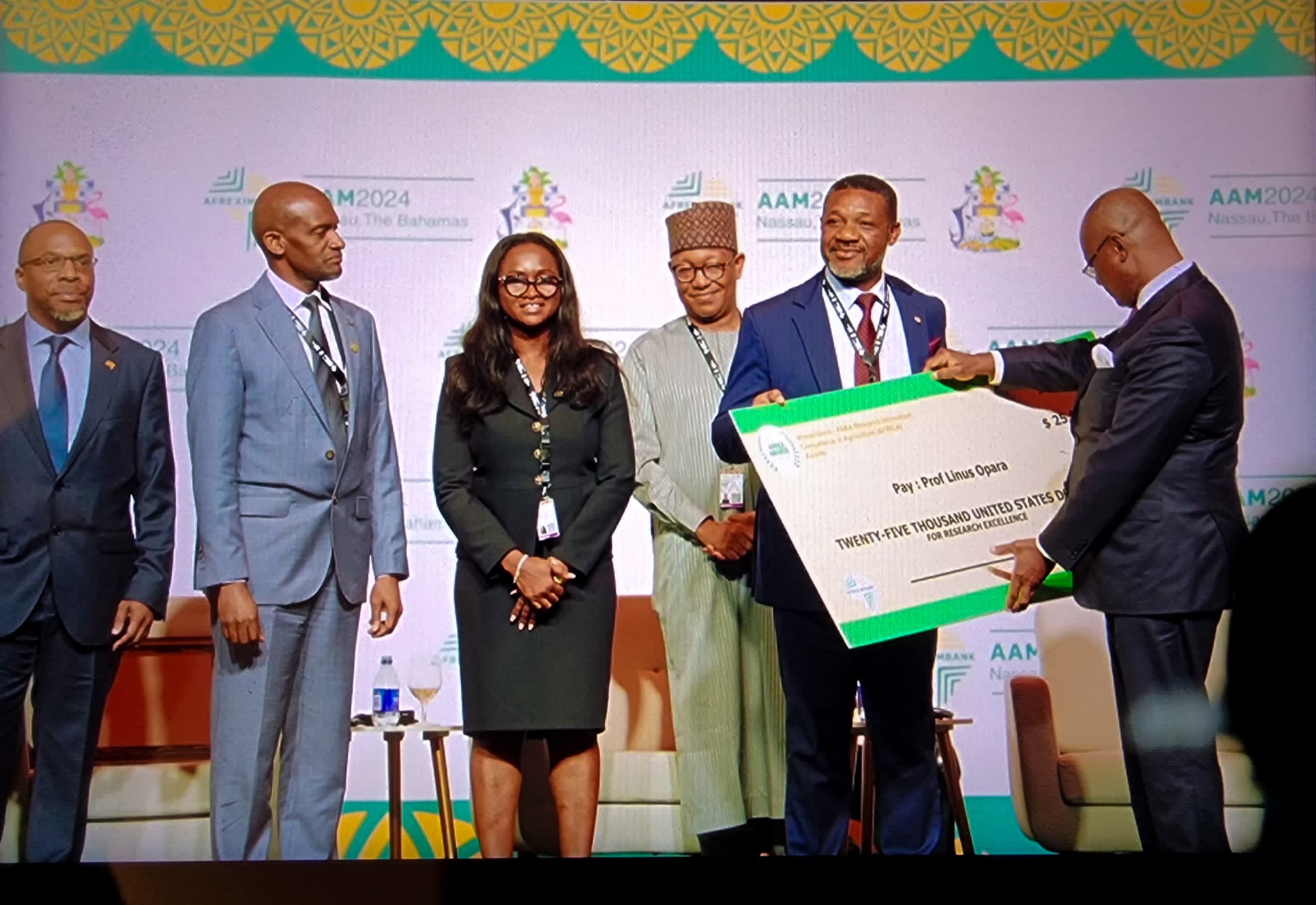
Malawi’s Richard Mkandawire and Nigeria’s Umezuruike Linus Opara have been awarded with the inaugural Research and Innovation Competence in Agriculture Awards.
The two were awarded for their notable contributions to the research development and capacity building of Africa’s agriculture and food systems.
The awards were given by the Forum for Agriculture Research in Africa (FARA) and the African Export Import Bank (Afreximbank) during the Bank’s annual meetings in the Bahamas.
Mkandawire, the Africa Director at the Alliance for African Partnership, was awarded with the ‘Impactful and Evidence based Policies Award’ for his foundational role in conceptualising the Comprehensive African Comprehensive Africa Agriculture Development Programme (CAADP) and catalysing its domestication in African countries.
Mkandawire is also the Chair for Malawi National Planning Commission, and the Former Head of CAADP at the New Partnership for Africa’s Development (NEPAD) where he was the principal architect in the design and adoption of CAADP.
Linus Opara Umezuruike, Distinguished Professor in Post-harvest Technology, Faculty of Agri-Sciences at Stellenbosch University, was awarded the ‘Africa Research Excellence Award’ in recognition of his contribution to developing and validating a novel integrated value chain approach to post harvest research, innovation and capacity building in Africa.
Prof. Linus Opara receiving his Award and $25,000 Prize
Umezuruike is also the Director of UNESCO Biotechnology Centre in Nigeria.
Umezuruike received $25,000 prize, while Mkandawire received $10,000 prize.
African Export-Import Bank (Afreximbank) and the Forum for Agricultural Research in Africa (FARA) are pleased to announce winners of the inaugural Afreximbank-FARA Research, Innovation and Competence in Agriculture (AFRICA) Awards.
These prestigious awards honour individuals, groups, or established organisations that have made outstanding contributions towards improving food and nutritional security, income generation, resilience and natural resource management in Africa through research, innovation, agriprenuership and policy advocacy in the food and agriculture domain.
The AFRICA Awards encompass three categories: (i) the Africa Research Excellence Award, (ii) the Innovation-based Entrepreneurship Award, and (iii) the Impactful and Evidence-based Policies Award.
The AFRICA Awards selection process is overseen by an Independent Awards Selection Committee composed of globally recognised experts.
Following a highly competitive selection process, FARA and Afreximbank are pleased to announce the two laureates of the 2024 AFRICA Awards. They are:
Umezuruike Linus Opara
Distinguished Professor and holder of the South African Research Chair in Postharvest Technology, Faculty of AgriSciences, Stellenbosch University, South Africa. Professor Opara, a national of Nigeria, is the recipient of the Africa Research Excellence Award in recognition of his contribution to developing and validating a novel integrated value-chain approach to post-harvest research and innovation, one crop at a time. His work is acclaimed for reducing post-harvest losses, enhancing value addition, and connecting production to local, regional, and international African markets. Additionally, Professor Opara is recognised for his contributions to building Africa’s capacity for research and innovation in post-harvest science and technology through cutting-edge research, new knowledge creation, and mentoring young, outstanding researchers. Professor Opara holds a Bachelor of Engineering and Master of Engineering degree from the University of Nigeria, Nsukka, and a PhD from Massey University, New Zealand. Professor Opara has published extensively, is a highly cited researcher, and has received several other prestigious awards.
Professor Richard Mkandawire
Africa Director, Alliance for African Partnership; Chair, Malawi National Planning Commission and formerly the Head of the Comprehensive Africa Agriculture Development Programme (CAADP) at NEPAD
Professor Mkandawire, a Malawian national, is the recipient of the Impactful and Evidence-based Policies Award for his foundational role in conceptualising CAADP and catalysing its domestication in African countries. CAADP is credited with elevating the attention and increasing the investments African countries are devoting to agriculture.
Professor Mkandawire has consistently and vigorously advocated for policy processes that are inclusive and supported by evidence. He has catalysed very productive partnerships among policy analysts, policymakers, the private sector, knowledge institutions and other actors in the food and agriculture system. These partnerships have been instrumental in improving the policy environment needed to drive Africa’s agricultural transformation. Professor Mkandawire holds a PhD in development studies and an MSc in agricultural extension from the University of East Anglia, United Kingdom. He also holds an MA in Rural Sociology from the University of Missouri, USA. He has published extensively on agriculture development policy and related areas and has been honoured with several other notable awards.
About Afreximbank:
African Export-Import Bank (Afreximbank) is a Pan-African multilateral financial institution mandated to finance and promote intra-and extra-African trade. For 30 years, the Bank has been deploying innovative structures to deliver financing solutions that support the transformation of the structure of Africa’s trade, accelerating industrialization and intra-regional trade, thereby boosting economic expansion in Africa. A stalwart supporter of the African Continental Free Trade Agreement (AfCFTA), Afreximbank has launched a Pan-African Payment and Settlement System (PAPSS) that was adopted by the African Union (AU) as the payment and settlement platform to underpin the implementation of the AfCFTA. Working with the AfCFTA Secretariat and the AU, the Bank is setting up a US$10 billion Adjustment Fund to support countries in effectively participating in the AfCFTA. At the end of September 2023, Afreximbank’s total assets and guarantees stood at over US$33.4 billion, and its shareholder funds amounted to US$5.8 billion. Afreximbank has investment grade ratings assigned by GCR (international scale) (A), Moody’s (Baa1), Japan Credit Rating Agency (JCR) (A-) and Fitch (BBB). Afreximbank has evolved into a group entity comprising the Bank, its impact fund subsidiary called the Fund for Export Development Africa (FEDA), and its insurance management subsidiary, AfrexInsure, (together, “the Group”). The Bank is headquartered in Cairo, Egypt.
About FARA: FARA is the continental apex body for agricultural research and innovation (R&I). Mandated by the African Union Commission (AUC), FARA facilitates pan-African actions to effectively deploy R&I to increase the continent’s agricultural productivity and competitiveness to feed its fast-growing population. FARA works with Sub-Regional Organisations (SROs), which are the West and Central African Council for Agricultural Research and Development (CORAF/WECARD), Association for Strengthening Agricultural Research in Eastern and Central Africa (ASARECA), Centre for Coordination of Agricultural Research and Development for Southern Africa (CCARDESA) and North African Sub-Regional Organization (NASRO) as well as the African Forum for Agricultural Advisory Services (AFAAS). FARA aims to facilitate strategic (continent-wide) collective agricultural research and innovation actions to increase agricultural productivity and competitiveness. The collaborative efforts are focused on strengthening the capacity for agricultural innovation on a country-specific basis. FARA is an international organisation with full diplomatic status in Ghana.
fThe challenges posed by declining soil fertility present substantial issues for many African countries, including Nigeria, especially in the light of the continent’s anticipated population growth. With an estimated 2.5 billion people expected to inhabit Africa by 2050, there will be a substantial increase in food consumption, placing further strain on the continent’s already burdened agricultural systems. In response to these pressing challenges, campaigns and initiatives geared towards enhancing soil fertility, advocating for sustainable agricultural practices and mitigating the impacts of environmental factors are gaining momentum.
At the launch and commemoration of the 14th Africa Day for Food and Nutrition Security (ADFNS) Commemoration and 19th Comprehensive Africa Agricultural Development Programme (CAADP) Partnership Platform held in Zambia last year, Mrs Estherine Lisinge-Fotabong, the Director of Agriculture, Food Security and Environmental Sustainability at the African Union Development Agency-NEPAD (AUDA-NEPAD), underscored the imperative to accelerate intra-regional food trade, enhance food security, and stimulate economic growth across the continent.
Mrs Lisinge-Fotabong stressed the importance of promoting the cultivation and consumption of locally-sourced foods as a means to address hunger and malnutrition in Africa. However, she acknowledged that nutrition and food security remain precarious due to various vulnerabilities in the continent, including climate change-induced shocks, ongoing conflicts, and fluctuations in global food prices, among other factors. Given that a significant portion of Africans rely on agriculture for their livelihoods, agriculture stands as the primary industry on the continent. However, the recent population surge and dwindling arable land availability have exerted significant pressure on soils, highlighting the critical need to maintain soil fertility to mitigate the risk of food insecurity.
Mrs. Estherine Lisinge-Fotabong, Director of Agriculture, Food Security and Environmental Sustainability, African Union Development Agency-NEPAD (AUDA-NEPAD)
Over time, Africa has witnessed a decline in soil fertility, with notable implications for regions like Nigeria. Communities grappling with degraded soils face heightened vulnerability to the impacts of climate change, including droughts and floods, exacerbating challenges in adaptation and resilience. Recognizing the urgency of the situation, the Food and Agriculture Organisation (FAO) of the United Nations, the Nigeria Institute of Soil Science (NISS), and the Soil Science Society of Nigeria have all underscored the imperative of addressing soil degradation within the country. These groups have emphasized the critical need to preserve soil fertility and health, given that soils serve as the foundation of food production and are increasingly stressed by climate change and human activities.
According to FAO data, approximately 33 per cent of Nigeria’s agricultural areas have already been impacted by soil deterioration, stemming from compaction, acidification, salinization, erosion, loss of organic carbon and biodiversity, and nutrient imbalances. Analysts warn that the declining fertility of arable fields, particularly in key production regions, poses an imminent threat to the agricultural sector if left unaddressed. In response, ongoing campaigns seek to encourage farmers to adopt best practices for long-term soil enrichment. The dwindling fertility of land, especially in the northern region, poses a severe threat to the country’s food security. To mitigate soil deterioration, organizations such as the Sasakawa Africa Association (SAA) are actively assisting farmers in the North, aiming to bolster soil health and agricultural productivity.
The remarkable story of Abdulmumini Adamu serves as a testament to the transformative power of Conservation Agriculture (CA) and Integrated Soil Fertility Management (ISFM) among Nigerian smallholder farmers. Through the adoption of limited tillage and other sustainable farming practices, Adamu not only significantly increased his crop yields but also managed to reduce his labour expenses. Under the guidance of the Sasakawa Africa Association’s (SAA) comprehensive training programme,
Adamu successfully implemented techniques such as low tillage, mulching, crop rotation, and composting. These practices not only resulted in an astounding 85 per cent reduction in labour costs but also led to a remarkable 50 per cent increase in crop yields. Such remarkable gains can be attributed to the improved soil health and enhanced moisture retention facilitated by the application of ISFM and CA methods.
The work of Dr. Shamie Zingore, Director of Research and Development at the Morocco-based African Plant Nutrition Institute (APNI), plays a pivotal role in addressing the challenges confronting smallholder farmers across Africa. With an estimated 33 million smallholder farmers facing obstacles such as low productivity and limited access to modern agricultural techniques, Dr. Zingore’s research assumes paramount importance in enhancing soil health, boosting crop yields, and ultimately, improving human nutrition. Through innovative research initiatives, Dr. Zingore and his team are instrumental in advancing agricultural practices that promote sustainability and prosperity among smallholder farmers across the continent.
Dr. Shamie Zingore, Director of Research, APNI
According to him, low fertility in the natural environment and inadequate soil conservation efforts have left sub-Saharan Africa (SSA) with some of the world’s worst soils. He pointed out that the continent’s ability to feed itself is being seriously undermined by the annual loss of soil nutrients valued at over $4 billion. He said to properly solve the problems of food security in Africa, soil and nutrient management technologies need to strike a balance between boosting crop output and improving soil fertility. APNI, where he works is pursing 4R Nutrient Stewardship initiative. The 4R Nutrient Stewardship initiative is a framework for guiding nutrient management practices in agriculture. It emphasizes applying the right source of nutrients, at the right rate, at the right time, and in the right place. For him, addressing growing soil fertility challenges is indeed crucial for sustainable agriculture and food security, especially in Africa s where smallholder farmers rely heavily on the productivity of their land. He noted: “We are at a very important time for African agriculture as the continent faces a myriad of challenges linked to unsustainable agriculture including chronically low agricultural productivity and human malnutrition, which is estimated to be seriously impacting at least 20per cent of the African population.”
One of the significant challenges that Africa faces is ensuring food security of a growing population. Recognising the critical role fertilizer and soil health has in tackling the problem, the African Union (AU) is launching a 10-year Action Plan demonstrates a long-term commitment to addressing these challenges and investing in sustainable agricultural practices. Under the aegis of its Africa Fertilizer and Soil Health (#AFSH) Summit, AU is convening heads of states, ministers, and agricultural development partners in Africa this May 2024, in Nairobi, Kenya to launch a 10-year Action Plan for associated investments. Launching the Action Plan demonstrates Africa’s commitment to finding local solutions to local challenges.
He noted: “Building on the 10-Year Action Plan, AFSH will identify the key critical areas for investment into policy and market investments but also into the critical technologies for sustainable plant nutrition and soil health management on the continent. These targets will be necessarily underpinned by accelerated support for building research and extension capacity to ensure knowledge generation is both relevant and practical for Africa’s farmers and translated into scalable solutions for sustained improvement of agricultural productivity across Africa.”
In his role as the Acting Director of Research and Innovation at the Forum for Agricultural Research in Africa (FARA), Dr. Wole Fatunbi plays a pivotal role in driving research and innovation initiatives aimed at addressing the pressing issue of soil fertility decline. His advocacy for soil fertility protection and the promotion of best land use practices are indispensable for fostering sustainable agriculture, particularly in Africa where countless livelihoods hinge on farming. Dr. Fatunbi leads efforts to deepen public understanding of soil health, championing sustainable farming methods that preserve soil fertility and advocating for policy frameworks that prioritize soil conservation projects. His multifaceted responsibilities include conducting pioneering studies to unravel the complexities of soil dynamics, promoting knowledge exchange among stakeholders, and influencing policy decisions to integrate soil health considerations into agricultural strategies.
Prof. Wole Fatunbi, Ag. Director of Research of FARA at the Africa Fertilizer and Soil and Health Summit #AFSH24
Recognising the urgency posed by Africa’s burgeoning population and the mounting pressures on its agricultural systems, Dr. Fatunbi emphasises the imperative of collaborative action. He stresses the importance of forging partnerships between farmers, researchers, policymakers, and other stakeholders to implement effective strategies for sustaining soil health. Through his leadership and advocacy, Dr. Fatunbi is instrumental in shaping a more resilient and productive agricultural landscape across the African continent.
According to Fatunbi, soil salinization is becoming an increasingly serious issue in Africa. He noted. “This is becoming a reality in Africa where the proportion of soil with high salt content is gradually approaching a critical threshold that requires considerable effort. Africa is reported to possess 60 per cent of the remaining arable land globally. Arable land implies a land lot with complementary properties suitable for crop cultivation and livestock rearing. immobilised in the soil colloids due to the presence of higher concentrations of other nutrients.”