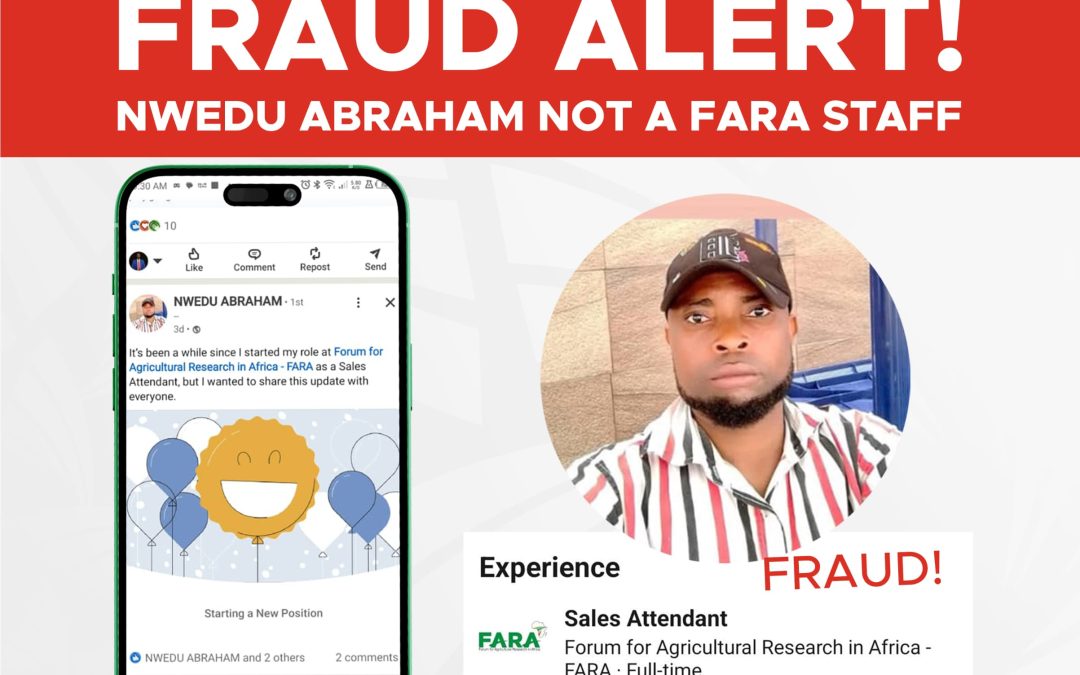
We have identified an individual by the name Nwedu Abraham who is fraudulently presenting himself as a staff member of the Forum for Agricultural Research in Africa (FARA) across LinkedIn and other social media platforms. He falsely claims to hold the position of Sales Attendant at FARA.
We wish to firmly state that Nwedu Abraham is NOT a staff member of FARA, nor has he ever been employed by or affiliated with our organisation in any capacity.
He is suspected to be fronting as a FARA representative/staff, potentially to perpetrate fraud or mislead unsuspecting individuals and institutions. We strongly urge the public to be on high alert, and to avoid engaging or connecting with him.
Anyone who interacts with this individual, believing he represents FARA does so entirely at their own risk. He is NOT a FARA Staff.
To verify identities or report suspicious activity, please contact us directly:
Telephone: +233 0302 744888
Email: [email protected]
At FARA, we remain committed to promoting agricultural research and development across Africa through the genuine efforts of our dedicated team and partners. Thank you for helping us uphold the credibility of our mission.
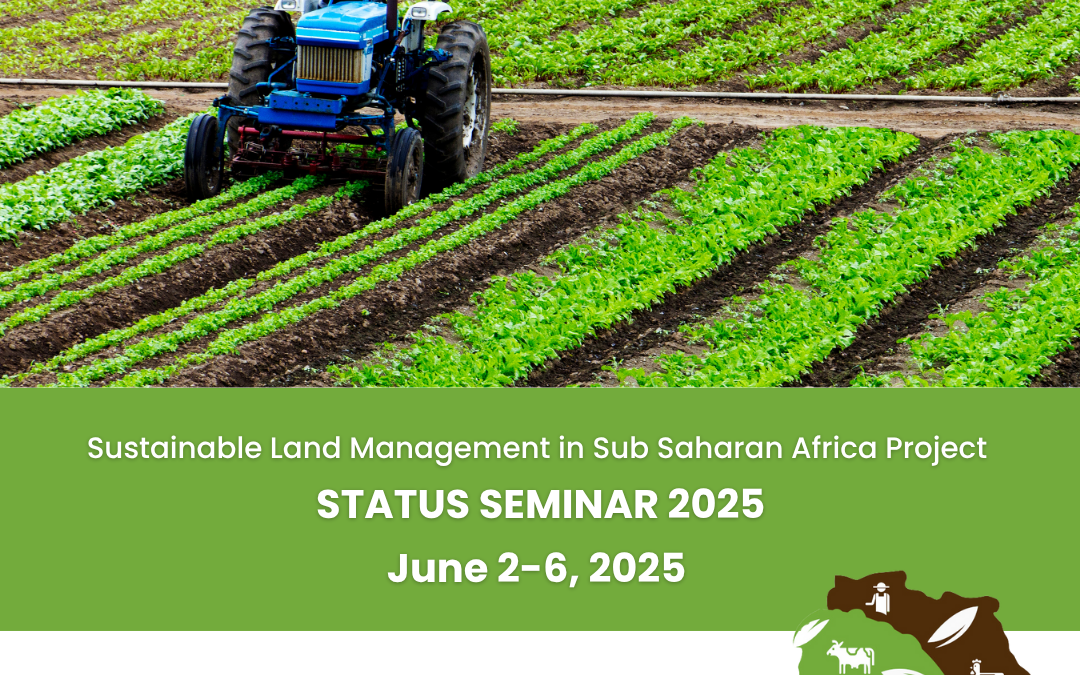
To foster transdisciplinary exchange on sustainable land management, climate resilience, and agricultural innovation in Sub-Saharan Africa, over 120 leading researchers, policymakers, and practitioners will gather in Accra for the “Status Seminar 2025.” Hosted by the German Institute of Development and Sustainability (IDOS), the Forum for Agricultural Research in Africa (FARA), and the Center for Development Research (ZEF) at the University of Bonn. This high-level event blends cutting-edge science with community-based innovation.
The seminar will spotlight four major regional research projects, including COINS, DecLaRe, Minodu, and InfoRange, as well as the cross-cutting support initiative INTERFACES, which links institutions across Germany and several African countries. These projects collaborate to address pressing challenges in agriculture and natural resource management through inclusive, evidence-based, and scalable solutions.
INTERFACES strengthens the projects’ effectiveness and visibility by supporting knowledge management, networking, science communication, social learning, capacity development, and policy engagement. The seminar will offer a platform to showcase research outcomes and foster dialogue among diverse stakeholders—from scientists to traditional authorities, from youth representatives to development partners.
Key themes of the 2025 edition include gender equity and intersectionality in sustainable land use, digital transformation in agriculture, and governance in fragile and contested regions. Participants will explore how collaborative knowledge development and innovation can bridge the gap between research and real-world impact, building stronger connections between Africa and Europe.
Highlights of the week-long program include a keynote address by Prof. Elvis Asare-Bediako, Vice Chancellor of the University of Energy and Natural Resources (Ghana); a high-level panel on policy challenges in sustainable development; hands-on training workshops; and the launch of a new e-learning certificate.
A curated exhibition of posters and multimedia displays will showcase community perspectives and cross-national collaborations. Additionally, a field excursion will take participants to Dawhenya, where they will visit the Agri-Impact Greenhouses and facilities of the Ghana Irrigation Authority. These sites exemplify integrated approaches to youth employment, food production, and sustainable irrigation practices. The Ghana Irrigation Authority, in partnership with local and international stakeholders, supports farmers in producing and packaging crops like rice for domestic and export markets.
The opening ceremony on 3rd June will feature high-level dignitaries and institutional leaders, including representatives from:
The Office of the Vice President of Ghana
Dr. Ibrahim Murtala Muhammed (MP), Minister for Environment, Science, Technology and Innovation (MESTI)
Eric Opoku (MP), Minister for Food and Agriculture (TBC)
Paul Bosu, Director-General of the Council for Scientific and Industrial Research (CSIR)
Aggrey Agumya, Executive Director of FARA
Stefan Müller, Head of Division, Future Provision – Fundamental and Sustainable Development Research, German Federal Ministry for Research, Technology and Space.
HE Daniel Krull, Ambassador of the Federal Republic of Germany
The conference will also host representatives from traditional institutions, youth and women’s groups, the German Embassy in Ghana, , and the media.
Project summaries
INTERFACES – Supporting Pathways to Sustainable Land Management in Africa
INTERFACES operates across Sub-Saharan Africa, with a strong focus on West Africa, enhancing the integration and outreach of regional initiatives in sustainable land management. The project facilitates inclusive dialogue on future visions and systemic change among scientists, policymakers, and community actors. By promoting co-learning, policy-relevant communication, and inclusive knowledge-sharing, INTERFACES helps bridge the gap between research and action. It also mainstreams sustainable land management concepts into academic programs in Africa and Germany, ensuring lasting impact. A commitment to gender responsiveness and social inclusion ensures that solutions equitably address the needs of diverse populations.
COINS – Co-developing Innovations for Sustainable Land Management in West African Smallholder Farming Systems
COINS works to sustainably intensify agriculture in Northern Ghana and the Senegal River Valley without expanding cultivated land. The project co-develops efficient land management strategies by considering both biophysical and socio-economic contexts. Through landscape-based modelling and data science, it identifies and pilots viable agricultural innovations. Farmers, policymakers, and scientists collaborate in innovation labs to test and refine solutions, focusing on inclusive risk management and incentive systems. The initiative ultimately supports policy frameworks that enhance food security and environmental sustainability.
DecLaRe – Decision Support for Strengthening Land Resilience in the Face of Global Challenges
DecLaRe is strengthening land and livelihood resilience in the sub-humid savannahs of Northern Benin and Ghana. The project develops a decision support system that combines scientific modelling with local and indigenous knowledge. This system helps guide policies and practices that support sustainable crop and livestock production, improve food systems, and enhance climate resilience. By aligning innovation with local realities and ensuring accessibility, DecLaRe fosters collaboration between researchers, policymakers, and the private sector.
Key Contact:
Prof. Dr. Andreas Buerkert, University of Kassel – [email protected]
Website: DecLaRe
InfoRange – Increasing Efficiency in Rangeland-Based Livestock Systems through Co-designed Digital Technologies
InfoRange leverages digital innovation to enhance rangeland management and livestock health in Kenya and Namibia. Working closely with pastoralist communities, veterinarians, and local authorities, the project co-designs mobile tools for pasture and veterinary management. These tools combine local knowledge with remote sensing and real-time data, offering accessible and context-specific decision support. InfoRange prioritizes co-creation with end-users, gender inclusion, and the use of participatory methods to ensure solutions are responsive to community needs and scalable beyond the project’s lifespan.
Minodu – Fostering Local Sustainable Development through Research and Technology
Minodu bridges the gap between research and practical land management in Togo by translating sustainability knowledge into accessible, user-friendly formats. It promotes inclusive dialogue with communities—especially women, youth, and digitally marginalized groups—to co-develop locally relevant solutions on climate change, water management, and land restoration. Through participatory approaches, Minodu empowers communities with knowledge, tools, and networks that drive context-specific actions and long-term sustainability.
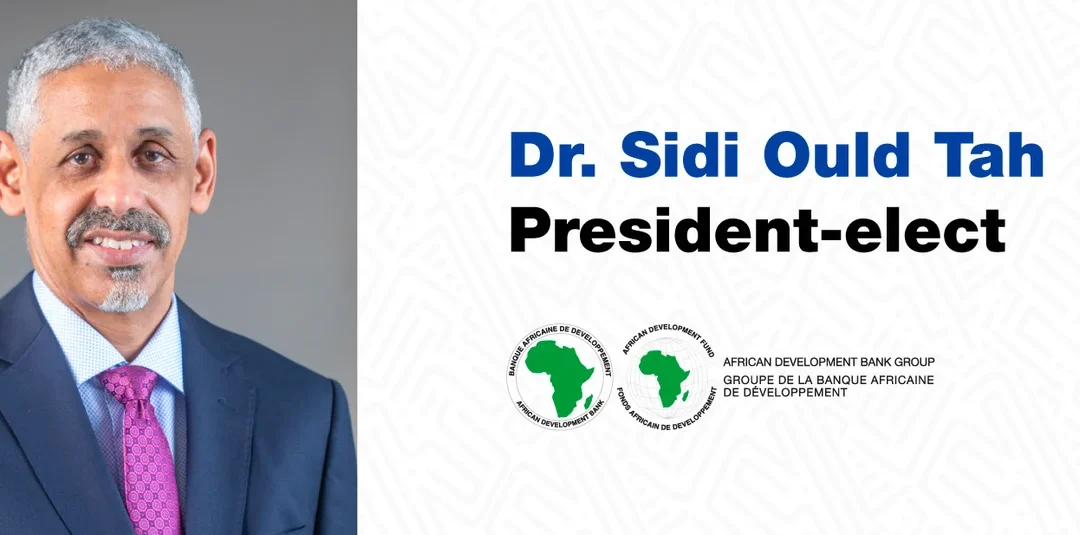
Sidi Ould Tah of Mauritania was today elected President of the African Development Bank Group at the Bank’s Annual Meetings held in Abidjan, Côte d’Ivoire.
Tah was elected by the Bank’s Board of Governors, comprising Finance and Economy Ministers or Central Bank Governors of the Bank Group’s 81 regional and non-regional member countries. The board is the highest decision-making authority for the Bank Group.
The results were announced by Nialé Kaba, Minister of Planning and Development for Côte d’Ivoire, and Chairman of the Board of Governors of the Bank Group.
Tah brings over 35 years of experience in African and international finance. He served as president of the Arab Bank for Economic Development in Africa (BADEA) for 10 years from 2015, where he led a full transformation that quadrupled the Bank’s balance sheet, secured a AAA rating, and positioned it among the top-rated development banks focused on Africa.
A former Minister of Economic Affairs and Finance of Mauritania, Tah has held senior roles in multilateral institutions and has led crisis response, financial reform, and innovative resource mobilization for Africa.
The Board of Governors Steering Committee received and approved a total of five candidates by the closing date of 31 January 2025. The list of candidates was officially announced on 21 February 2025.
The other candidates in the election were:
Amadou Hott (Senegal)
Samuel Maimbo (Zambia)
Mahamat Abbas Tolli (Chad)
Bajabulile Swazi Tshabalala (South Africa)
Tah will assume office on 1 September 2025, for a five-year term, following the end of the second mandate of current President, Dr. Akinwumi Adesina.
The African Development Bank’s past heads since its inception in 1964 are:
Mamoun Beheiry (Sudan), 1964-1970
Abdelwahab Labidi (Tunisia), 1970-1976
Kwame Donkor Fordwor (Ghana), 1976-1980
Willa Mung’Omba (Zambia), 1980-1985
Babacar N’diaye (Senegal), 1985-1995
Omar Kabbaj (Morocco), 1995-2005
Donald Kaberuka (Rwanda), 2005-2015
Dr. Akinwumi Adesina (Nigeria), 2015-2025.
The election of a new president comes at a crucial time in the Bank Group’s six decades of existence. Africa has remained resilient despite climate shocks, economic disruption, and a shifting geopolitical landscape, but needs to move faster or risk falling behind on delivering on the African Union’s Agenda 2063 and the Sustainable Development Goals, summed up in the Bank Group’s High 5’s.
The 2025 Annual Meetings of the African Development Bank Group are taking place from May 26 to 30 in Abidjan, Côte d’Ivoire under the theme “Making Africa’s Capital Work Better for Africa’s Development.”
The African Development Bank Group comprises three entities: the African Development Bank, the African Development Fund and the Nigeria Trust Fund. Its shareholder countries include 54 African countries or regional member countries, and 27 non-African countries or non-regional member countries.
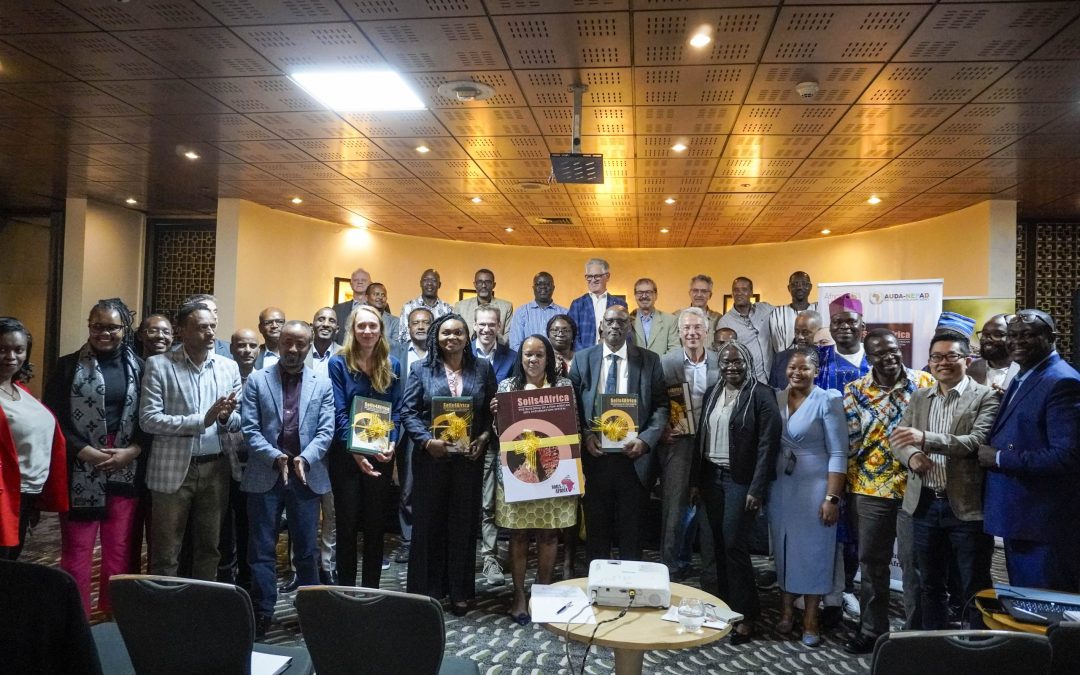
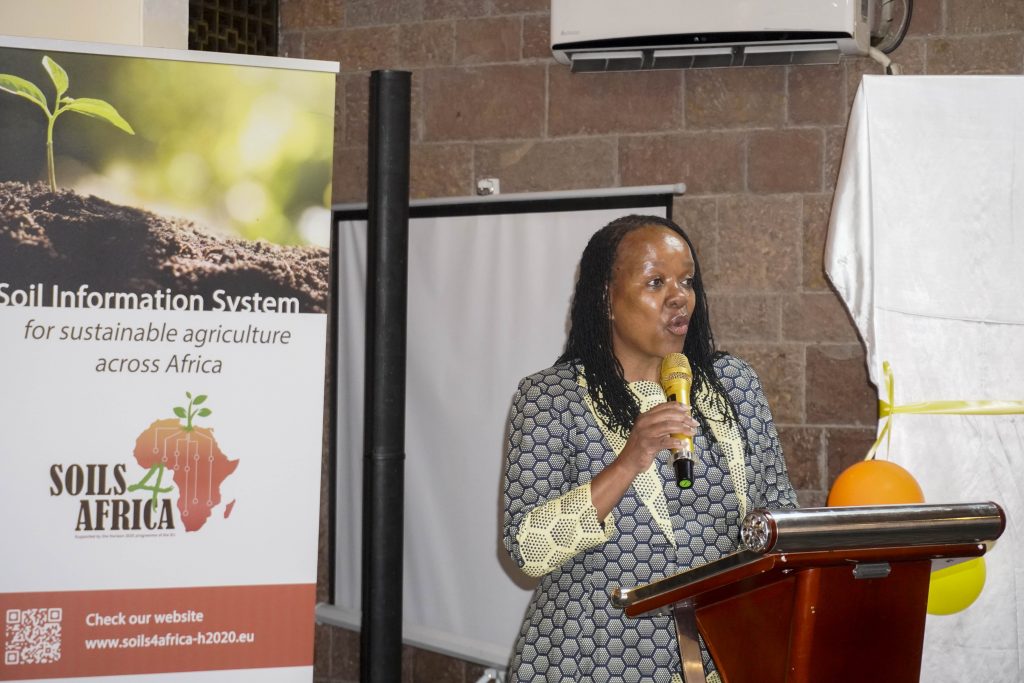
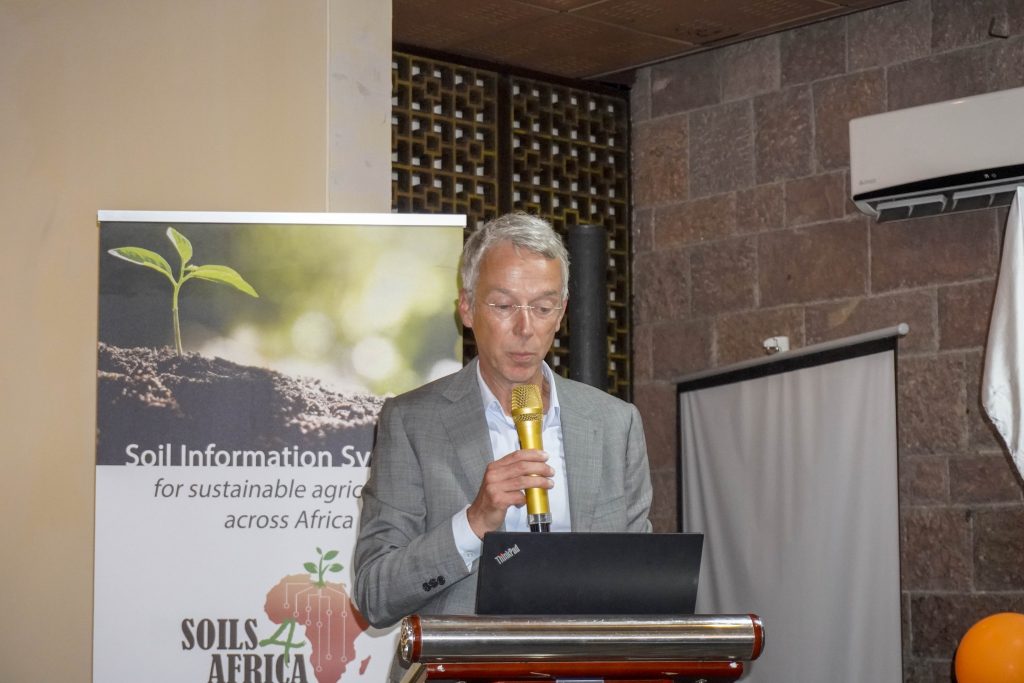
On 19th May 2025, at the Hilton Hotel, Addis Ababa, Ethiopia, stakeholders, led by the Department of Agriculture, Rural Development and Blue Economy (DARBE) of the African Union Commission, launched the African Soil Information System (AfSIS).
The launch marks a significant milestone in managing the continent’s most valuable production asset: African soils. For years, various efforts have been made to build soil information systems across the continent. However, these efforts often resulted in fragmented data collected using inconsistent formats, sampling techniques, and analysis methods. The data were simply not interoperable, limiting their utility and contribution to agricultural development and ecological services.
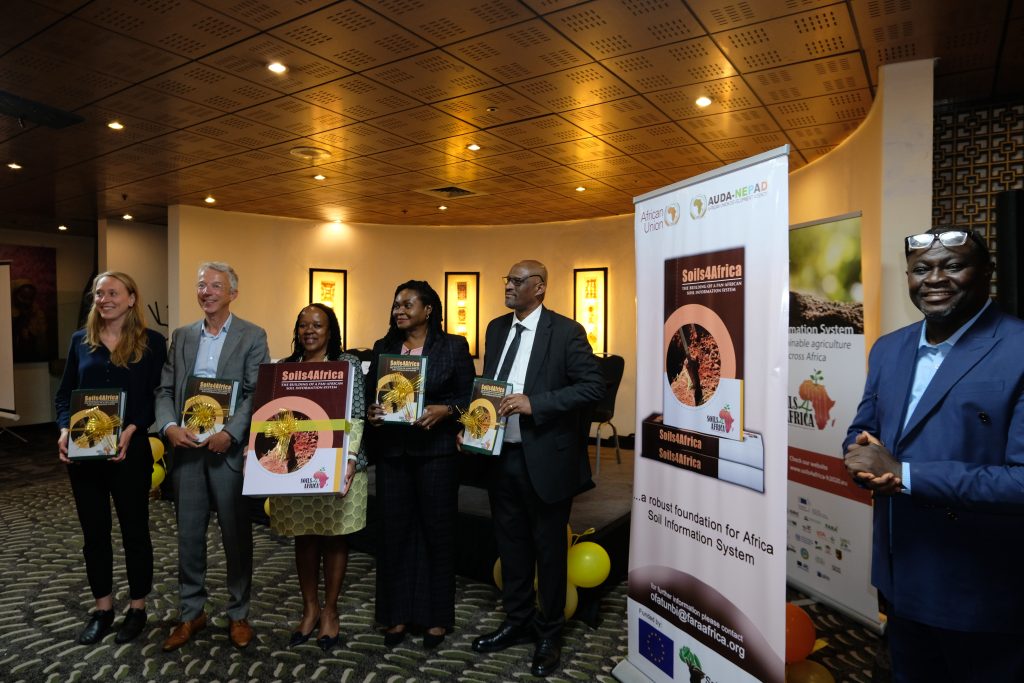
The Soils4Africa Project, implemented by 17 organizations drawn from Africa and Europe and supported by the European Union under the Horizon 2020 funding instrument, has laid the groundwork to fulfill the African vision of having its own soil information system. The project partners have developed a robust soil sampling methodology, protocol, and analysis method over the last five years. They have collected soil samples from 33 African countries, analyzed the data, and developed the African Soil Information System. This system serves as the launchpad for a more robust platform entrenched in the Soil Initiative for Africa (SIA) and the Africa Fertilizer and Soil Health Action Plan, tailored to meet all the identified needs for a soil information system in Africa.
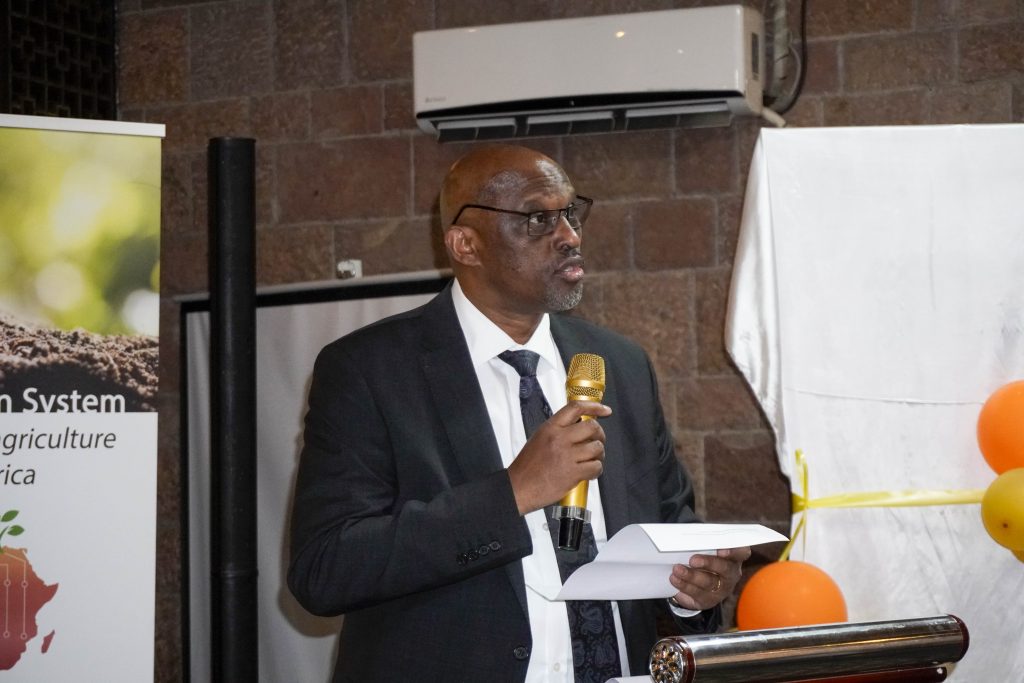
Dr. Janet Edeme, Head of Rural Development Division & Acting Head of Agriculture, African Union Commission
In a keynote address delivered on behalf of His Excellency Moses Viliakati, the Commissioner for DARBE, by Dr. Janet Edeme, Head of the Rural Development Division and Acting Head of Agriculture at the African Union Commission, he reiterated the urgent need for a fully functional soil information system to inform policy decisions on land use, investment in fertilizer manufacturing, blending, and use, as well as effective soil management. He emphasized the need for Africa to build on existing strong foundations—as exemplified by the Soils4Africa project—rather than reinventing the wheel.
Professor Ayasu Elias, State Minister for Agriculture, Ethiopia
Professor Ayasu Elias, the State Minister for Agriculture in Ethiopia, emphasized the importance of a reliable soil information system in agricultural development. He highlighted Ethiopia’s progress in utilizing its national soil information to drive notable successes in the country’s agricultural sector.
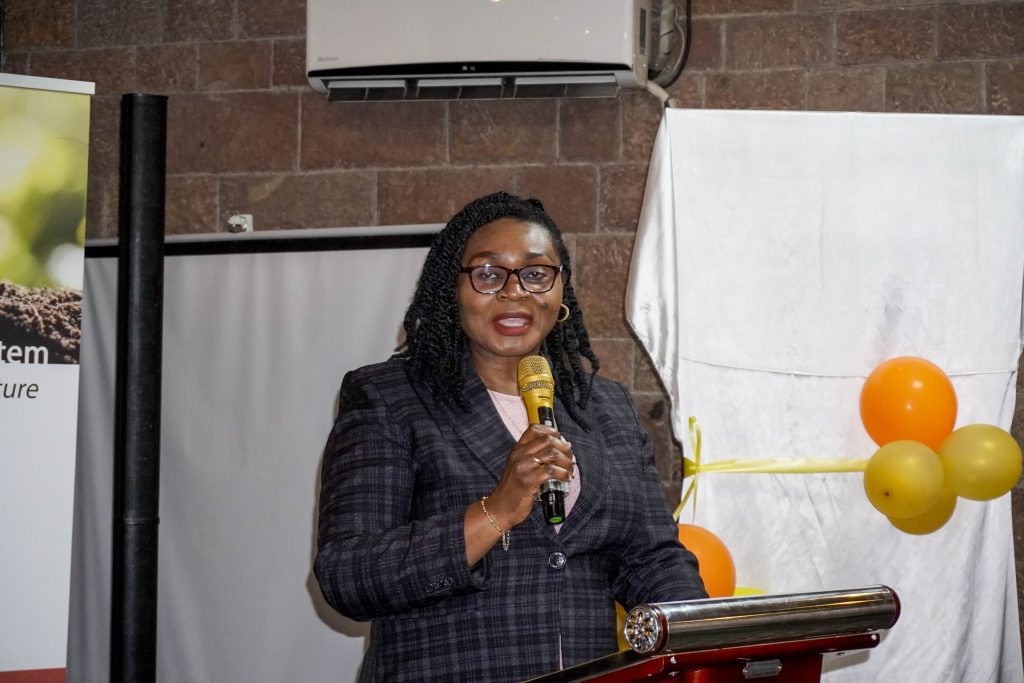
Ms. Bongiwe Njobe, Chair of the Forum for Agricultural Research in Africa (FARA) Board of Directors
Madam Bongiwe Njobe, Chair of the Forum for Agricultural Research in Africa (FARA) Board of Directors, also underscored the role of soil information systems in developing localized fertilizer blends and guiding efficient fertilizer use across Africa. She called on African stakeholders to “jealously guard” the system and ensure its full utilization.
Rik van den Bosch, Director General of ISRIC – World Soil Information
Rik van den Bosch, Director General of ISRIC – World Soil Information, highlighted ISRIC’s global leadership in soil data and its role in supporting continents, including Africa, in building robust soil information systems. He noted that African soil data belongs to Africa; it should be hosted by an African organization and developed in line with Africa’s interests.
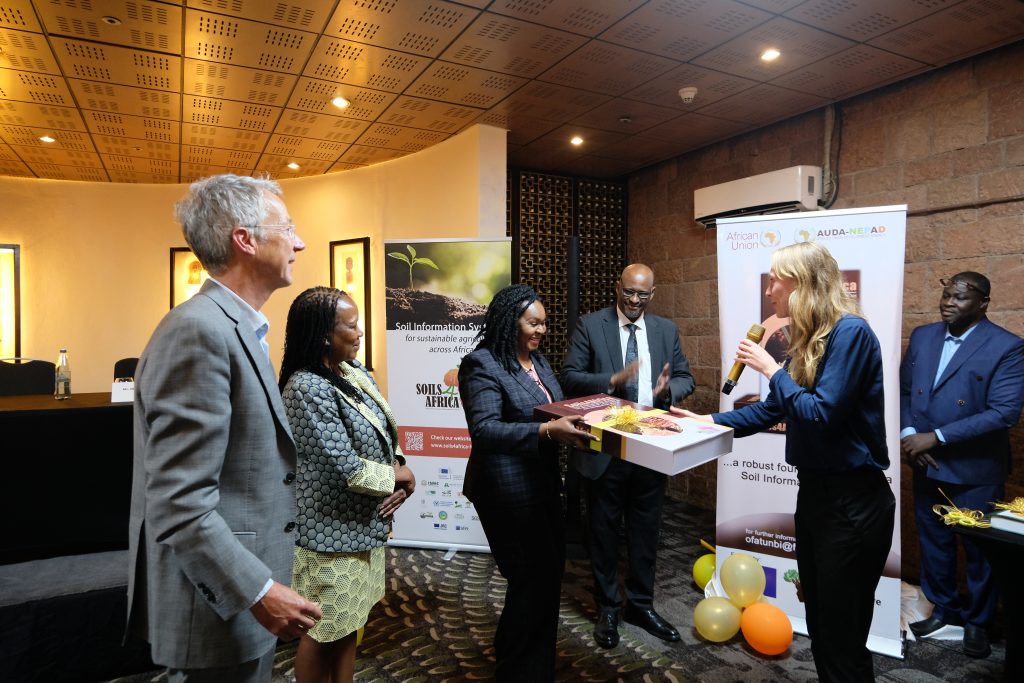
Dr. Elise van Eynde of the Joint Research Centre (JRC), handing over the emblem of the Soil Information System to the African Union,
In a well-animated handover ceremony, the European Union representative at the occasion, Dr. Elise van Eynde of the Joint Research Centre (JRC), handed over the emblem of the Soil Information System to the African Union, reaffirming the EU’s commitment to the AU-EU partnership for agricultural research and development. While receiving the emblem on behalf of the African Union, Madam Bongiwe Njobe expressed FARA’s commitment to host the continental Soil Information System and rally stakeholders to develop it into a fully functional instrument that serves African needs and interests.
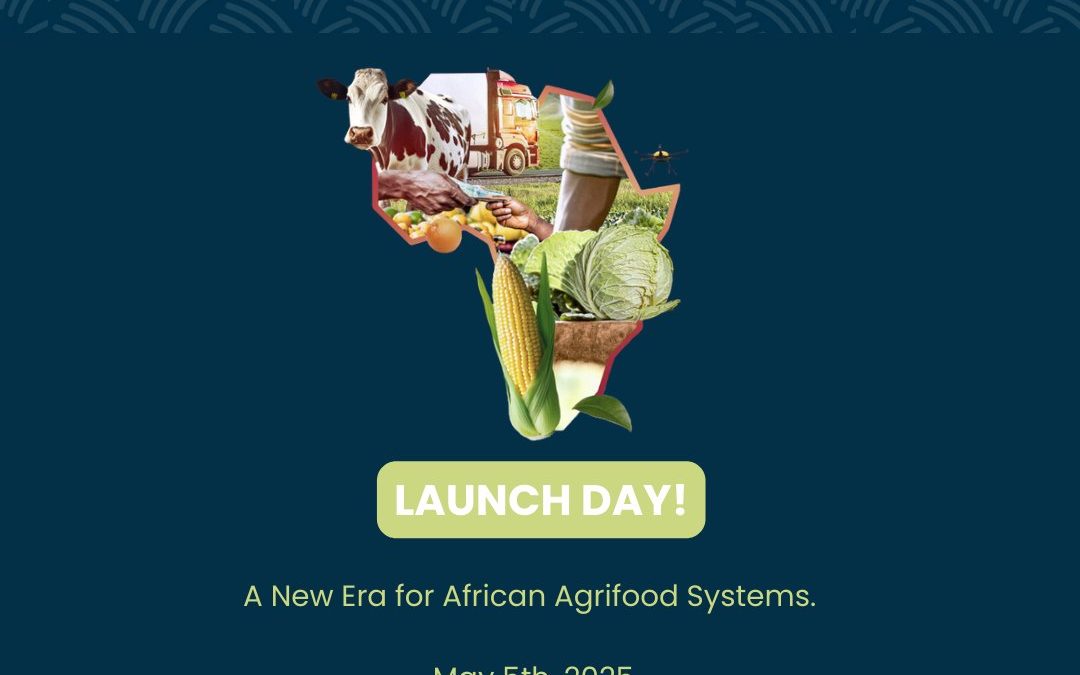
May 5, 2025 – Johannesburg, South Africa – In a landmark event held at the Radisson Hotel, Johannesburg, the African Union Commission (AUC) and the African Union Development Agency (AUDA-NEPAD) officially launched the Comprehensive Africa Agriculture Development Programme (CAADP) Strategy and Action Plan (2026–2035) and adopted the Kampala Declaration, marking a major milestone in the continent’s pursuit of agricultural transformation.
The high-level launch brought together ministers of agriculture, development partners, regional economic communities, civil society, farmer organisations, women and youth networks, and private sector representatives.
Key highlights:
New strategic blueprint: The CAADP 2026–2035 strategy focuses on six strategic objectives, including food security, climate resilience, inclusive growth, and agro-industrialisation.
Unified commitment: Officials from AU Member States and development partners called for bold reforms, improved intra-African trade, and increased investments in smallholder farmers.
Voices from the field: Farmer leaders, including Ms. Elizabeth Nsimadala (EAFF), emphasized the importance of meaningful farmer inclusion, transparency, and local ownership in policy implementation.
Science and innovation front and centre: The AARIEI Knowledge Institutions, led by FARA, pledged continued support for evidence-based planning, technology adoption, and scaling of innovations.
The launch signals the start of a transformative decade for African agriculture, driven by collective leadership, shared accountability, and a firm commitment to inclusive development.
The full CAADP Strategy and the Kampala Declaration will soon be available in English, French, Portuguese, Arabic, and Swahili.
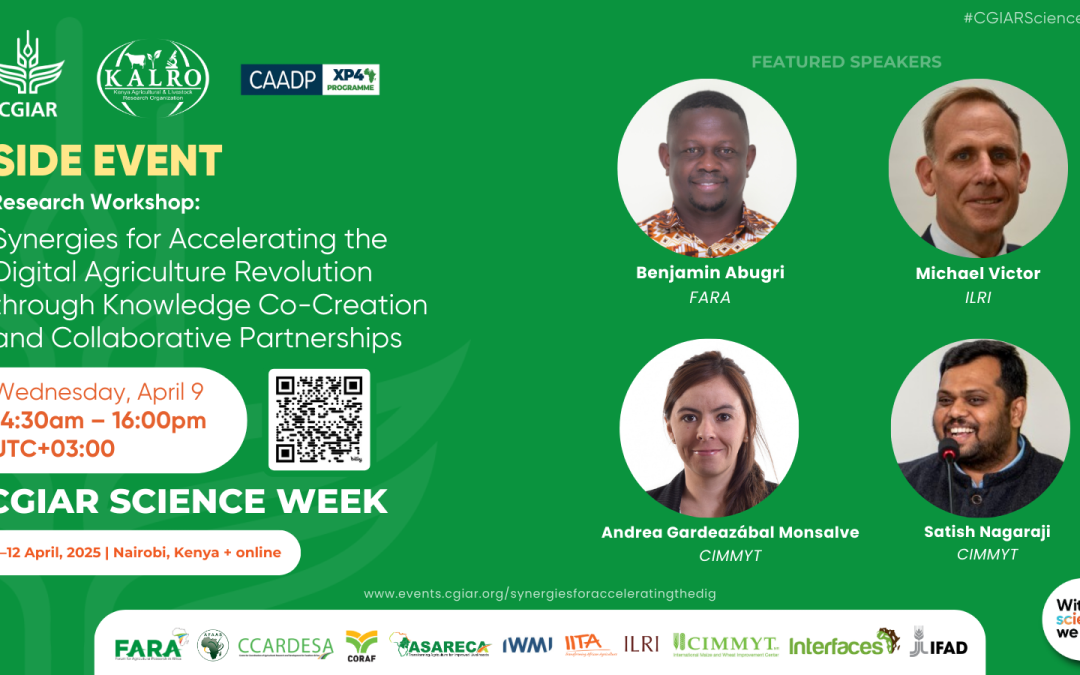
Nairobi, Kenya — April 9, 2025 | 14:30 – 16:00 EAT | CR6, CGIAR Science Week Venue
The Forum for Agricultural Research in Africa (FARA) and the African Agricultural Research, Innovation and Education Institutions (AARIEI), including ASARECA, CCARDESA, CORAF and AFAAS, with technical support from CGIAR-ILRI are pleased to announce the official launch of the Africa Agriculture Space (AARIEI Space) Repository during the upcoming CGIAR Science Week side event titled:
“Synergies for Accelerating the Digital Agriculture Revolution through Knowledge Co-Creation and Collaborative Partnerships”
📍 Innovation Showcase | CR6 Room | Nairobi, Kenya
🔗 Event Details: https://events.cgiar.org/synergiesforacceleratingthedig
The AARIEI Space Repository (https://aaspace.org/home) is a cutting-edge digital knowledge repository powered by DSpace, developed to strengthen Africa’s agricultural knowledge ecosystem. As a collaborative initiative among key AARIEI partners, it provides a scalable and interoperable infrastructure for managing and sharing knowledge resources across African research and education institutions.
Backed by the experience of the International Livestock Research Institute (ILRI) in managing the CGIAR-wide CGSpace platform, this initiative is a cornerstone of the broader strategy to bridge knowledge gaps, promote best practices, and ensure last-mile knowledge delivery across the continent.
What to Expect at the Launch
Live Demonstration of the AARIEI Space platform and its features
Insights into the KM4AgD Framework and its integration with AARIEI efforts
Strategic reflections from leaders and experts from FARA, ILRI, CIMMYT, and other CAADP-XP4 partners
Interactive discussions on digital knowledge sharing and partnerships for inclusive agricultural development
This side event will feature thought-provoking contributions from speakers, including:
Aggrey Agumya, Executive Director, FARA
Benjamin Abugri, Knowledge Management Lead, FARA
Michael Victor, Head of Communications & Knowledge, ILRI
Andrea Gardeazábal Monsalve, MEL Manager, CIMMYT
Satish Nagaraji, ICT for Development Specialist, CIMMYT
Join us as we unveil this bold step toward enhancing institutional knowledge mandates, accelerating digital agriculture, and creating a truly connected African agricultural innovation system.