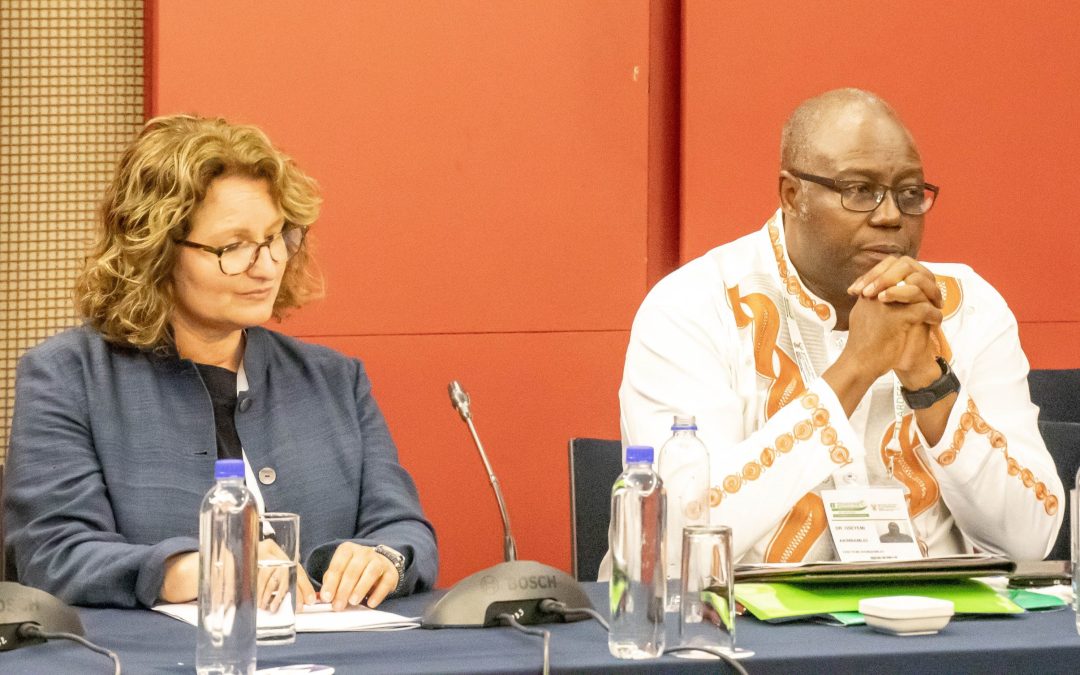
The WTO chief has called on African countries to create trading opportunities and increase investment in agriculture to address food security in Africa, as the head of the African Federation of Women Entrepreneurs (AFWE) stressed the need for improved infrastructure and the removal of tariffs to facilitate intra-African commerce.
In a speech read on her behalf at the 8th Africa Agribusiness and Science Week (AASW8) in Durban, the Director-General of the World Trade Organization (WTO), Ngozi Okonjo-Iweala, has noted that one-fifth of Africa’s population continues to face hunger despite being “a continent with the world’s largest reserved arable land” and called on African governments to take steps “to reinforce the provision of public goods”. This can be done by “improving the availability of extension and advisory services, investing in research, promoting access to technology, science and innovation, and improving infrastructure in rural areas,” she noted. Highlighting the need for trade integration through the African Continental Free Trade Area AfCFTA, she said that “trade can connect producers and consumers across the [African] continent and beyond. It can also help improve agricultural productivity and create jobs in rural areas.”
Echoing the WTO chief’s appeal to the continent, the Secretary-General of the AFWE, Lucia Quachey, called on African countries to boost intra-African trade by removing cumbersome border inspections, harassment, bribes, and poor infrastructure. “Only a few hundred kilometers separate Lagos, Nigeria, from Accra in Ghana but for the thousands of traders who ply this route, the journey through these routes can take a full day,” Quachey complained in the most recent issue of Pathway Africa. She also pushed for the construction of infrastructure to facilitate commerce and for the removal of several tariffs and non-tariff obstacles.
On the positive side, Quachey noted that Kenya and Ghana have boosted their commercial ties under the AfCFTA, while the Ugandan government sees the potential offered by the AfCTA as a long-term solution to unreliable non-trade barriers (NTBs) with Kenya.
Much has been made about the potential of Africa’s ambitious free trade agreement to boost economic growth, with a recent International Monetary Fund (IMF) study suggesting it could increase the flow of goods within the continent by more than 50%.
Given that agriculture alone generates more than a third of Africa’s GDP, food systems will be key to the success of the African Continental Free Trade Area (AfCFTA), providing immediate benefits from a dominant sector across all signatories.
The AfCFTA was agreed in May 2019 and took effect in January 2021. Since then, progress towards full ratification has stalled amid ongoing negotiations over customs, tariffs and competition rules. But with the agri-food sector representing both common ground and a primary industry across the continent, agriculture should be prioritised as a test case for AfCFTA adoption to spur not only economic growth and trade but also food security and better livelihoods premised on greater climate resilience.
As the African Union sets out to accelerate AfCFTA’s implementation this year, it is critical that Africa also embraces a new era of agricultural innovation that is pragmatic, collaborative, and consistent to deliver on the promise of the agreement to create one African market. Innovation that drives policy and productivity could help set a precedent for other sectors while simultaneously tackling the more immediate challenges, including hunger, malnutrition and poverty.
Vital to leveraging agricultural research and innovation to drive forward intra-African agri-food trade is closer collaboration between the public and private sectors. The Eighth Africa Agribusiness and Science Week, taking place June 5-8 in Durban, South Africa, provides a timely opportunity to unite agri-food research and industry.
Action plan for agricultural innovation
And leading this charge are our two organisations – the continent’s apex agricultural research and coordination organisation, the Forum for Agricultural Research in Africa (FARA), and CGIAR, the world’s largest publicly funded agri-foods-focused partnership.
Together with the African Development Bank (AfDB) and the African Union Commission (AUC), FARA and CGIAR have committed to a shared action plan for agricultural innovation over the coming years. This plan is based on common principles defined in the Abidjan II agreement that puts the interests of African food security, development and economic growth at its heart.
Firstly, unlocking innovation to increase agri-food production and trade sustainably will rely on demand-driven research and development that responds to African smallholder farmers’ specific needs and challenges.
An estimated 65% of the world’s remaining uncultivated arable land is in sub-Saharan Africa, yet the region produces only 10% of global agricultural output. New technologies, services and good agricultural practices (GAP) must therefore address the unique factors that determine African productivity, including the disproportionate impacts of climate change and the increasingly young population.
African agriculture needs innovation that accounts for the fact that 65% of land is considered degraded, up to half of its harvest is lost to pests and other environmental challenges, and by 2030, almost 120m people will have to contend with drought, floods, and extreme heat. To shore up the impending productivity shortfalls, agricultural innovation in the years ahead will be led by African priorities and expertise, developed according to global best practices, to reinforce the foundations of a competitive and dynamic sector. Secondly, both existing and emerging innovations must reach enough farmers to be adopted at scale to make a meaningful difference to the continent’s food systems.Transforming and sustaining African food, land and water systems is a complex challenge that requires different stakeholders working together, using spaces for them to share their knowledge, expertise and experiences.
This is why our organisations are working together with others to help streamline funding, infrastructure and the last-mile delivery of breakthroughs to transform African agriculture. Equipping farmers with the latest science and innovation will fulfil not only AfCFTA but the broader goals of Agenda 2063, including the core values enshrined in its Comprehensive African Agricultural Development Programme (CAADP).
This collaboration is already under way, with the second phase of the AfDB’s flagship Technologies for African Agricultural Transformation (TAAT) initiative recently receiving an additional $27m in funding. TAAT, led and implemented by CGIAR with partners, aims to double productivity across African agriculture by making proven technologies available to more than 40m producers by 2025.
Collobaration is key
Finally, closer alignment between like-minded organisations makes us greater than the sum of our parts and offers governments and donors consolidated returns on investment.
CGIAR’s global network of a dozen world-class research centres and myriad partners can complement, equip, and strengthen African institutions, offering learnings from elsewhere in the Global South to maximise the likelihood and pace of success. In turn, African institutions continue to drive the operationalisation of the CAADP Malabo commitments, ensuring African challenges and opportunities are met with African solutions that are effective and sustainable.
With a renewed agenda for innovation and a united front across the key players at global and continental levels, agricultural development can underpin the fulfilment of AfCFTA. In doing so, together, we can deliver improved livelihoods, incomes and economic growth as well as food security, nutrition, and greater equality – an ambition we can all get behind.
Dr Yemi Akinbamijo
Dr Yemi Akinbamijo is executive director of the Forum for Agricultural Research in Africa (FARA).
Dr Claudia Sadoff
Dr Claudia Sadoff is executive managing director, CGIAR.
[Durban, South Africa, June 8, 2023]: AATF and the Centre for Coordination of Agricultural Research and Development for Southern Africa (CCARDESA) have today announced a partnership agreement that seeks to upscale agricultural technologies to address farming challenges affecting key staple crops in Africa including rice, cassava, and maize.
The two organizations will utilize their knowledge and resources to implement agricultural and food security initiatives in CCARDESA countries.
The CCARDESA Executive Director, Prof. Cliff Dlamini, stated that, the two organizations will leverage each other’s competitive advantage for the improvement of Africa’s agricultural vision and agenda.
“By bringing together the best minds in agriculture and food security, the collaboration will help create an enabling environment for adoption of agricultural technologies in Africa, including development of policies and programs on food security,’ said Prof. Dlamini
According to Dr. Canisius Kanangire, the Executive Director of AATF, the partnership agreement with CCARDESA will help realize impactful engagements that will assist farmers in Africa improve their food security and livelihoods through creation, dissemination and adoption of value adding technology that will contribute to improved crop yields, knowledge sharing and empowerment especially of youth and women.
He added that smallholder farmers in Africa continue to face various constraints that hinder their ability to increase their yields, improve their incomes, and contribute to food security.
According to Dr. Kanangire, the situation can change by investing in new farming technology for Africa—from better seeds to digital tools to machinery—which hold promise for transforming African agriculture into an engine of economic growth that will have benefits far beyond the farm sector.
He noted that AATF is committed to building partnerships with continental including governments, national and international research institutions, farmer organizations, the private sector and all players along the agriculture value chain, to deliver agricultural value to our farmers.
The partnership will focus on increasing food production, improving access to markets, and promoting economic growth in rural areas. In addition, the agreement will enhance knowledge sharing to improve understanding and uptake of innovative technologies by fostering and advocating for harmonization of policies, especially seed policies in the region.
About AATF (www.aatf-africa.org)
Founded in 2003 to address Africa’s food security prospects through agricultural technology, AATF believes that the agricultural sector is a key foundational pillar as Africa consolidates its economic growth and carves out its new position as a major global economic powerhouse and the next growth market in the world. It was formed in response to the need for an effective mechanism that would facilitate and support negotiation for technology access and delivery and formation of appropriate partnerships to manage the development & deployment of innovative technologies for use by smallholder farmers in SSA:
About CCARDESA
The Centre for Coordination of Agricultural Research and Development for Southern Africa (CCARDESA) was founded by SADC member states to harmonize the implementation of agricultural research and development (R&D) in the SADC region. CCARDESA intends to address agricultural research and design issues in the SADC region through the following interventions:
Coordinating implementation of regional agricultural R&D programmes
Facilitating collaboration among stakeholders of the national agricultural research systems (NARS)
Promoting public – private partnerships in regional agricultural R&D
Improving agricultural technology generation, dissemination and adoption in the region through collective efforts, training and capacity building
For more information contact:
George Achia, Communications Officer, East and Southern Africa, AATF; [email protected] ; +254 785 334163
Africa has the necessary partnerships and technologies to eradicate hunger, said African Development Bank President Dr. Akinwumi A. Adesina.
What is needed is action including robust financing, Adesina said Monday during the opening session of the 8th Africa Agribusiness and Science Week (AASW) in Durban, South Africa.
“We must pull together the best of science, technology, and innovations to drive a more productive, efficient, and more competitive agricultural system,” Adesina told an audience of stakeholders in agriculture and agribusiness research and innovation in Africa.
The Forum for Agricultural Research in Africa (FARA) organized the event with the government of South Africa, The African Union Commission (AUC), the African Development Bank and the Consultative Group for International Agricultural Research (CGIAR). Other partners include the UN’s IFAD and UNIDO as well as the European Commission.
AUC Commissioner for Rural Economy and Agriculture Ambassador Josefa Leonel Correia Sacko said the event could not have come at a better time, as the world is in the midst of a hunger pandemic caused by cascading factors, including Covid-19 and climate change.
Africa needs to leverage its potential, including science, and be proactive rather than reactive to shocks, she said. She urged the continent to take advantage of its youthful population and immense natural capital. “Let us unlock the potential we have… We should feed Africans and we should feed the world,” Sacko said.
FARA Chairperson Alioune Fall spoke about the interlocking relationship between climate change and agricultural production. “Climate change and its effect on the continent require new ways of doing things in almost all facets of our society,” Fall said, “Africa’s young farmers would not adopt nature-based approaches unless “they are well packaged, affordable and technology-serviced.”
Adesina said African food systems have the potential to unleash $1 trillion in value over the next seven years. “For that to be achieved, we must strengthen and support the CGIAR with a lot more resources, ensure that it works in and delivers for Africa based on our priorities, and support regional research and development institutions, such as FARA and the sub-regional agricultural research organizations,” he said.
African Development Bank initiatives to boost African food security include the Feed Africa Summit, held in January in the Senegalese capital Dakar. It brought together 34 heads of state and government . “Working with development partners from around the world and the African Union Commission, the private sector companies, and global and national agricultural research centers, we developed Food and Agricultural Delivery Compacts for 41 countries,” Adesina said. He added that summit partners have built on its success, mobilizing $72 billion so far, to support the national compacts.
Adesina presented the 2023 FARA Leadership Prizes for Advancing Agricultural Science, Technology, and Innovation in Africa to Ngozi Okonjo-Iweala, Director General of the World Trade Organization; Ambassador Sacko; FARA’s Executive Director Dr. Yemi Akinbamijo; Senegal’s former Minister of Agriculture and Rural Infrastructure Papa Abdoulaye Seck, and Afreximbank President Prof. Benedict Oramah.
Adesina won the award in 2016.
The 8th Africa Agribusiness and Science Week, the main continental platform for stakeholders of agriculture and agribusiness research and innovation in Africa, brings together 1,500 stakeholders every three years to take stock of progress on research and innovation, share information, create business alliances, and map out priorities for joint action. The seventh AASW was held in Kigali, Rwanda in June 2016.
[Durban, 6 June 2023] – CGIAR and the Forum for Agricultural Research in Africa (FARA) have unveiled an ambitious Action Plan that will accelerate and increase the generation and adoption of climate-smart agricultural technologies and innovations by millions of smallholder farmers.
By stimulating purposeful engagement and strengthening partnerships between African research and innovation stakeholders, the plan aims to create inclusive agricultural development through the promotion of regenerative and sustainable agricultural practices, job opportunities, and improved welfare for farmers across Africa.
The three-year plan also endorsed by the African Union Commission (AUC) and the African Development Bank (AfDB) reflects the shared commitments and principles outlined in the Abidjan II Communique of September 2022.
Emphasizing the need for unified and integrated responses to address the evolving and intricate challenges faced by the agri-food system in Africa, the plan establishes a collaborative framework between CGIAR and FARA-led African Agricultural Research and Innovation Institutions (AARIIs) to foster sustainable and sustained support for agricultural development and food systems transformation.
“This Action Plan represents a significant step towards addressing the evolving challenges facing Africa’s agri-food system and ensuring that CGIAR aligns with African partner institutions,” said Claudia Sadoff, Executive Managing Director, CGIAR
“The Abidjan II Communique ensured clarity and shared commitments. This Action Plan allows us to accelerate the delivery of solutions for wealth creation, food and nutrition security, economic opportunity, poverty alleviation, shared prosperity, resilience, and sustainability in line with the Comprehensive Africa Agriculture Development Programme (CAADP) and the 2014 Malabo Declaration,” said Yemi Akinbamijo, Executive Director, FARA.
An additional objective is to strengthen links with policy systems and establish an enabling institutional and political environment. The plan aims to engage African national governments in supporting agricultural development and food systems transformation, with a focus on evidence-based scientific decisions.
For media inquiries and interview requests, please contact:
Media Contacts
Benjamin Abugri, Knowledge Management Learning & Communications Cluster Lead Specialist, FARA, +233 20173308, [email protected]
About CGIAR
CGIAR is a global research partnership for a food-secure future. CGIAR science is dedicated to transforming food, land, and water systems in a climate crisis. Its research is carried out by 13 CGIAR Centers/Alliances in close collaboration with hundreds of partners, including national and regional research institutes, civil society organizations, academia, development organizations and the private sector. www.cgiar.org
We would like to thank all Funders who support this research through their contributions to the CGIAR Trust Fund
About FARA The Forum for Agricultural Research in Africa (FARA) is the apex continental organization responsible for coordinating and advocating for agricultural research and innovation in Africa. FARA’s mission is to facilitate innovative partnerships and solutions that enhance the application of science to create decent and sustainable livelihoods in Agriculture. FARA undertakes its mandate in partnership with numerous organizations including the sub regional agricultural research organizations, i.e., ASARECA, CCARDESA, CORAF and NAASRO; the African Forum for Agricultural Advisory Services (AFAAS), the CGIAR, the African Union Commission, the African Union Development Agency (AUDA)-NEPAD, among many others. FARA’s work is funders by Development Partners. For more information, visit www.faraafrica.org.