AFRICA is spending about US$50 billion every year importing food from other parts of the world. This situation poses an opportunity for African countries to reposition themselves in a bid to make the continent food secure.
This led the African Union Commission to conceptualise the Common African Agro-Parks (CAAPs) aimed at attracting private investments to establish transboundary mega agro industrial hub on the continent.
The Common African Agro-Parks is a mega initiative of the African Union to create regional agro-industrial hubs aimed at responding to the continent’s demand for interventions at boosting local processing and regional trade for agricultural commodities and their value chains.
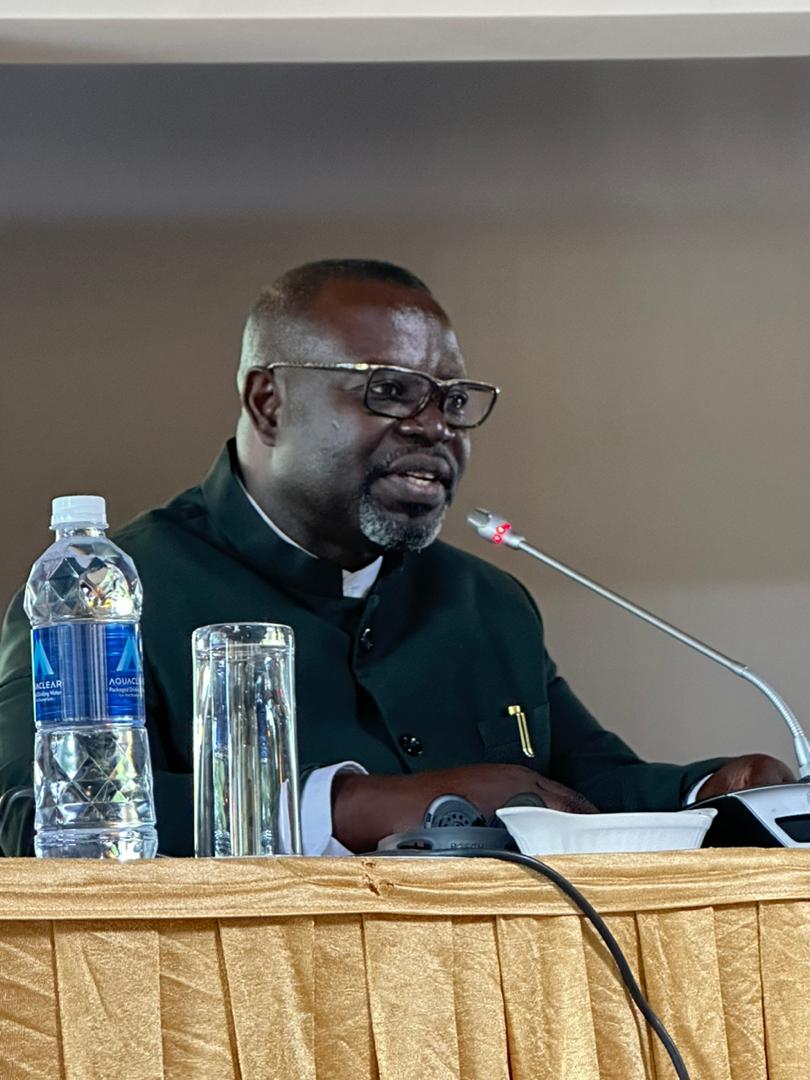
To come up with innovative solutions to drive the CAAPs, Common Market for Eastern and Southern Africa (COMESA) hosted member states who convened in Lusaka recently to share ideas and experiences to better address the intra and regional trade meant to enhance agricultural commodities and value chains.
The CAAPs will help the agro-allied sector of the Africa economy to deliver on the AU Agenda 2063 aspirations within the framework of the Africa Continental Free Trade Agreement (AfCFTA).
Initiated in 2019, CAAPs is one of the initiatives of Comprehensive African Agricultural Programme (CAADP) to be implemented within the framework of the African Union (AU) agenda 2063 to achieve the CAADP Malabo commitments, particularly the commitment to “triple intra-African trade in agricultural commodities and services.”
The programme seeks to promote and facilitate local and regional as well as food production. In this way, achieving self-sufficiency of key agriculture commodities in Africa remains a critical milestone.
CAAPs Programme Coordinator, FARA Anselme Vodounhessi explains that CAAPs aspires to stimulate local and regional private sector investment in agriculture.
Mr. Vodounhessi says Africa has abundant resources but need to actualise economic opportunities by aggressively engaging in value chains in the agriculture sector which are viable and profitable.
He reaffirms Africa has lots of arable and abundant land which needs to be exploited in order to create and build a desired Africa.
Generally, Africa has good strategies but the major bottleneck is the implementation. According to Chief, Regional Division for Africa, UNIDO Victor Djemba explains that coordination of key actors in the implementation process of value chains in the agriculture sector remains problematic.
Mr. Djemba acknowledges that the private sector does a lot work but in isolation, hence the need for them to work in a concerted manner with sector players. This, he argues requires the proposed industrial parks to work effectively, needs inclusivity of private sector participation from project inception within the existing structures.
“It’s not the work of one entity but all entities need to be involved for a successful development of key players in the establishment and development of industrial parks,” he said.
Mr. Djemba said key players need to be involved in the whole process of implementation.
“Involving investors from inception requires embracing the laws and rules of both countries to provide an enabling environment for industrial parks to thrive,” he said.
Rural Development, Agro-Industries Agro-Industrial Parks Unit, UNIDO Project Officer Andrew Goodwin explains that everything which is set-up in agro-processing zones is business focused and has to be a long-term approach. Therefore, there must be commitment to develop agro-processing zones in industrial parks. It is obvious this approach needs an enabling environment to succeed.
Mr. Goodwin further says industrial parks are able to flourish through leases and services offered to the public.
For instance, industrial parks in Ethiopia and Senegal have been successful because they make their revenue from generation developers as they have invested in building sheds, installed power, water and other necessities within the parks.
These processing companies provide services such as commercial services, resource centres, among others which enable them to broaden resource base and maximise on their profits. Its also imperative to take cognizant of the prevailing climate change conditions. This should inform sector players to build climate resilience.
Mr Goodwin said these integrated agro-food parks refers to central processing hubs which strive to reach out to rural areas from world transformation centres. For example, breeding, storing, collection centres at farmer level and cooperatives would also have these centres for processing.
He further said it was impressive that farmers in Ethiopia and Senegal are developed with cooperative unions, which closely work with the Ministry of Agriculture and also have bidding bilateral agreements.
With the success model of Ethiopia and Senegal, it is clear agriculture is the answer to creating prosperity and will always be the most economically viable sector to focus on for generations to come.
CAAPs aspirations is for member states to mobilise domestic resources to invest these into agro-parks and ensure a food secure continent. It is imperative to take into account the success of this programme needs a lot of resource mobilisation. The member states can co-create and unlock opportunities for the transboundary setting to enable Africa flourish. – National Agricultural Information Services.
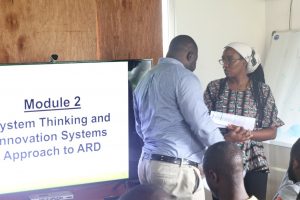
The Forum for Agricultural Research in Africa (FARA) as lead institution of the Capacity Development and Technology Outreach (CDTO) compact and the Cassava Compact led by the International Institute of Tropical Agriculture (IITA), within the context of the Technologies for African Agricultural Transformation (TAAT) Programme, funded by the African Development Bank (AfDB), are currently building the capacity of key stakeholders in the Cassava Value chain in the DR Congo in a three-day Training of Trainers on Innovation Platforms and outreach strategies for scaling proven agricultural technologies. As the Cassava Compact trains participants on key technologies, including the Semi-Autotrophic Hydroponics (SAH) technology of cassava, the CDTO mainstreams Innovation Platform (IP) and outreach strategies for technology delivery and business development.
Participants are drawn from the National Agricultural Study and Research Institute (INERA), the Ministry of Agriculture (MiNAGRI). The in-country facilitators of existing innovation platforms will be equipped with the knowledge and skills needed to facilitate the growth of the cassava industry in the Democratic Republic of Congo. These include technologies and opportunities for scaling to the last mile using tools and approaches developed by FARA over the past decade. According to the FAO, the DR Congo is the second largest producer of Cassava in Africa, only next to Nigeria. Therefore, there is a need to strengthen this comparative advantage to enable the country to sustain the gains made over the years.
At the end of the workshop, the TAAT initiative would have strengthen capacities of a network of digitally connected farmers with Innovation Platform thinking and enabling farmers adopt best practices and improve their productivity and profitability; fostered collaboration, knowledge exchange, and innovation within the relevant cassava sector, especially the SAH technology; reviewed Innovation Platforms, their market readiness and development of an inclusive business model; and mainstreamed the Agri-Business Learning Alliance (ABLA) instruments within agriculture innovation system.
Facilitators from FARA include Dr. Abdulrazak Ibrahim, Institutional Capacity and Futures Cluster Leader and TAAT-CDTO Coordinator, Mr. Benjamin Abugri, Knowledge Management, Learning and Communications Cluster Leader and Ms. Karen Munoko, Agribusiness and Gender Expert. Dr. Adebayo Abass, the TAAT Cassava Compact Leader, Dr. Najimu Adetoro, and Ms. Angelique Kajibwami, both experts in the SAH technology, facilitated the training from the IITA side.
(Gbarnga City Bong County)–Liberian fish farmers are undergoing training in better management practices in aquaculture and aqua-business. The two- day Agribusiness Workshop is gear towards strengthening Aquaculture Innovation platforms and market-Led Growth.
The training which is taking place at the Central Agriculture Research Institute in Bong County is being facilitated by WorldFish and the Forum for Aquaculture Research in Africa, (FARA).
Making remarks at the start of the two days technical training Thursday October 5, 2023, the Deputy Director General for Technical Services at the Liberian Fisheries Authority (NaFAA) says the government of Liberia will at all times develop the technical skills of fish farmers to enable them become productive and bring about marketable transformation within the aquaculture sector.
Photo Caption: Karen Munoko Agribusiness Specialist from FARA lecturing aquaculture stakeholders at the Central Agriculture Research Institute CARI in Bong
The NaFAA Deputy Director General for Technical Services informed the participants that, there are robust legal regime to adequately address the needs of establishing and operating Aquaculture & Inland Fisheries in Liberia.
Hon. Boeh mentioned that technical innovation in fish farmingas well as Inland fishery sector has the potential to link farmers to the various markets to supply fish and earn profits.
He also encouraged the stakeholders to fully utilize the knowledge and skills that would be acquired within the next two days for the benefit of individual participants and fish farmers in general.
At the same time, the Director of Aquaculture and Inland Fisheries, Mr. Zizi A.S. Kpadeh has cautioned the participants to focus on fish feed as it is the single most expensive operational cost. Mr. Kpadeh declared, “if you want to make money, you should buy quality feed and have a well-trained and dedicated feeder.”
Photo Caption: Director of Aquaculture and Inland Fisheries, Mr. Zizi A.S. Kpadeh and Karen Munoko Agribusiness Specialist of FARA
Moreover, the workshop is being financed by the African Development Bank through WorldFish and the Forum for Agricultural Research in Africa, (FARA) under the program Transformation of Africa Agricultural Technology, (TAAT) and it is also facilitated by WorldFish and FARA.
Facilitators from WorldFish at the two days workshop include Prof. Bernadette Fregene (TAAT Fish Compact Leader), Babatunde Mercy (Account Assistant) and Akuwa Elizabeth (M$E).
At the same time, the Forum for Aquaculture Research in Africa (FARA) is represented at the two days Aquaculture workshop by Karen Munoko Agribusiness Specialist and Johnson Ukpong Finance Manager as facilitators.
Meanwhile, the participants at the Aquaculture stakeholders’ workshop are from Montserrado, Margibi, Bong, Bomi, Lofaand Nimba counties respectively. They are also from several institutions and organizations including the Central Agricultural Research Institute (CARI), The Bong County Aquaculture and Inland Fisheries Federation , the University of Liberia,Department of Aquaculture and Fisheries Science, Bong County Aquaculture Cooperative Society, Lofa County Aquaculture Cooperative Society , Nimba County Aquaculture Cooperative Society, Cottington University College of Agriculture and Sustainable Development, Faimaba Fisheries Development Cooperatives, BRAC Liberia and other private farmers.
FARA participated in a capacity-building workshop on domesticating the African Union (AU) strategic framework for holistic aflatoxin control from 02-03 October 2023 in Lusaka, Zambia.
Convened by the African Union Commission (AUC), the meeting was part of the activities of the Partnership for Aflatoxin Control in Africa (PACA), a program of the AUC, which was launched in October 2012 as endorsed by the African Union Executive Council through Decision No. EX.CL/768 (XXII), to coordinate and support aflatoxin mitigation and management across Africa’s health, agriculture, and trade sectors.
The objective of the meeting was to raise awareness of the PACA aflatoxin country-led model and the tools within the Strategic framework for implementation at the regional and country levels. It also served as a platform for taking stock of successes and challenges in implementing the country-led model.
Member States, including Malawi, Nigeria, Senegal, and Tanzania, shared lessons and good practices as experiences in scaling the model across the continent were shared.
The two-day meeting saw interventions from research, academia, parliamentarians, and the private sector, with participants recognizing the problem of aflatoxin contamination as a major challenge for agricultural productivity, trade and public health in Africa.
Significant highlights of the meeting include the presentation of conceptual framework and econometric models for economic impact assessment of aflatoxins by Dr Chibundu Ezekiel and Data collection, analysis and sampling for aflatoxin surveillance in Africa by Prof. Limbikani Matumba of LUANAR. Participants were exposed to the spate of aflatoxin contamination in Africa and its debilitating impact on the agri-food system based on findings from Country-led Situation Analysis and Action Planning (C-SAAP). An outline of a Pan-African analysis and harmonization protocol leveraging FAO’s mycotoxin sampling tool was also discussed for adoption and utilization.
Speaking during a panel discussion in the meeting, Hon. John Frimpong Osei, Chair, Agriculture Committee, Select Committee on Food, Agriculture and Cocoa Affairs in Ghana, shared experience on the role of parliamentarians and their engagement with government in the control of Aflatoxin.
Building on a presentation on lessons from the country by Mrs. Faustina Atupra, Ag. Director, Food Safety and Consumer Education Directorate, Food and Drugs Authority, Ghana, Hon. John Frimpong Osei, encouraged the AUC and PACA to deepen their engagement with sector ministries to facilitate the adoption of a holistic approach to controlling Aflatoxin.
Through research, science and technology, and collaborative efforts, significant progress has been made in mitigating the risks of aflatoxin contamination. However, much more needs to be done. Practical action plans should include a combination of technical solutions, policy interventions, and awareness-raising efforts to ensure sustained success in aflatoxin control.
The Forum for Agricultural Research in Africa (FARA), the apex continental technical institution responsible for coordinating and advocating for agricultural research and development initiatives, shared its experiences during a side event at the Africa Union Pavilion during the ongoing Africa Climate Summit in Nairobi, Kenya. The event focused on the urgent need to accelerate action in promoting soil health as a crucial strategy for addressing climate change adaptation and mitigation.
During his intervention, the acting Director for Research and Innovation and Innovations Systems Specialist at FARA, Prof Oluwole Fatunbi, emphasized the need for relevant stakeholders to take swift action to combat land degradation in Africa. He highlighted that Africa possesses a remarkable asset, which is 60% of the world’s available arable land for food production. This opportunity underscores the significance of safeguarding and optimizing it. He commended the Africa Union for its leadership in the development and implementation of relevant initiatives for the continent, including the Soil Initiative for Africa (SIA), which is a long-term framework aimed at managing African soil health, as well as the Africa Fertilizer and Soil Health Action Plan (AFSH-AP), designed as a 10-year implementation plan for the SIA.
He further highlighted the four core pillars of the SIA, which include optimizing integrated soil health and water management planning and implementation; strengthening human, institutional, and social capital for research, development, education, extension, and support of sustainable soil management; optimizing data and information for effective planning and monitoring; and ensuring enabling policy, legal, and regulatory frameworks.
Prof Oluwole noted that these pillars align perfectly with the four outcomes outlined in the Africa Fertilizer and Soil Health Action Plan (AFSH-AP). He suggested the domestication of actions along the existing and well-established CAADP pathways, effective leadership and coordination of efforts to prevent duplication, ensure accountability and reporting on progress, and smart implementation considerations and financing as essential principles for implementing the action.
He intimated that the implementation would involve scaling technologies, enhancing farmers’ capacities, promoting systems innovation, communication, and awareness creation, providing incentives for private sector finance for field-level activities, increasing the focus on soil health from African and development partners and developing targeted financing mechanisms.
During her intervention, the Head of the Rural Economy Division in the Department of Rural Economy and Agriculture of the African Union Commission, Dr Edeme Janet, extended an open invitation to all stakeholders to participate in the upcoming Africa Fertilizer and Soil Health Summit scheduled for November 5th – 6th in Nairobi, Kenya. Other notable speakers at the event included Dr. Manyewu Mutamba, the Head of Agriculture at the AUDA-NEPAD, Mr. Stephen Muchiri, CEO of the East Africa Farmers Federation, Per Fredrik Pharo, Director, Department for Climate and Environment, Norwegian Agency for Development Cooperation (NORAD) and others.

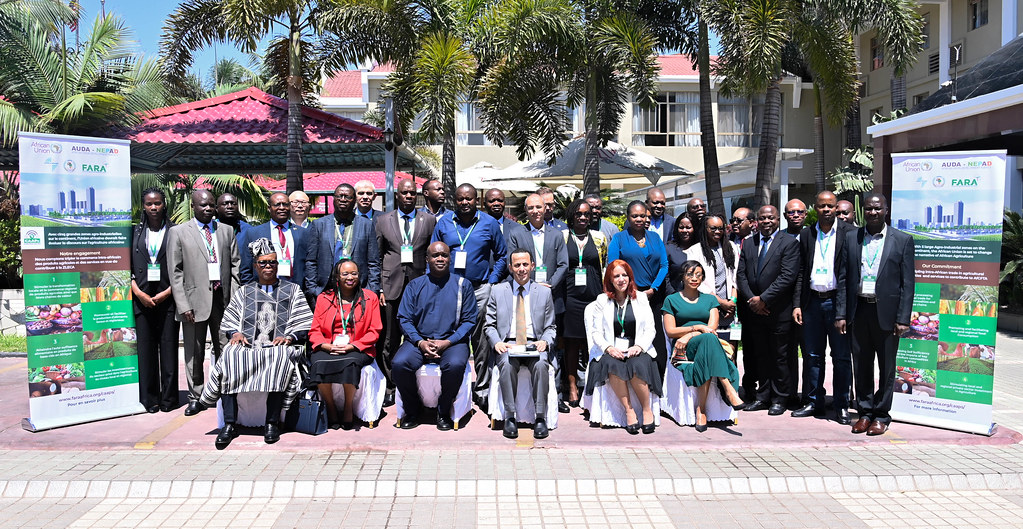


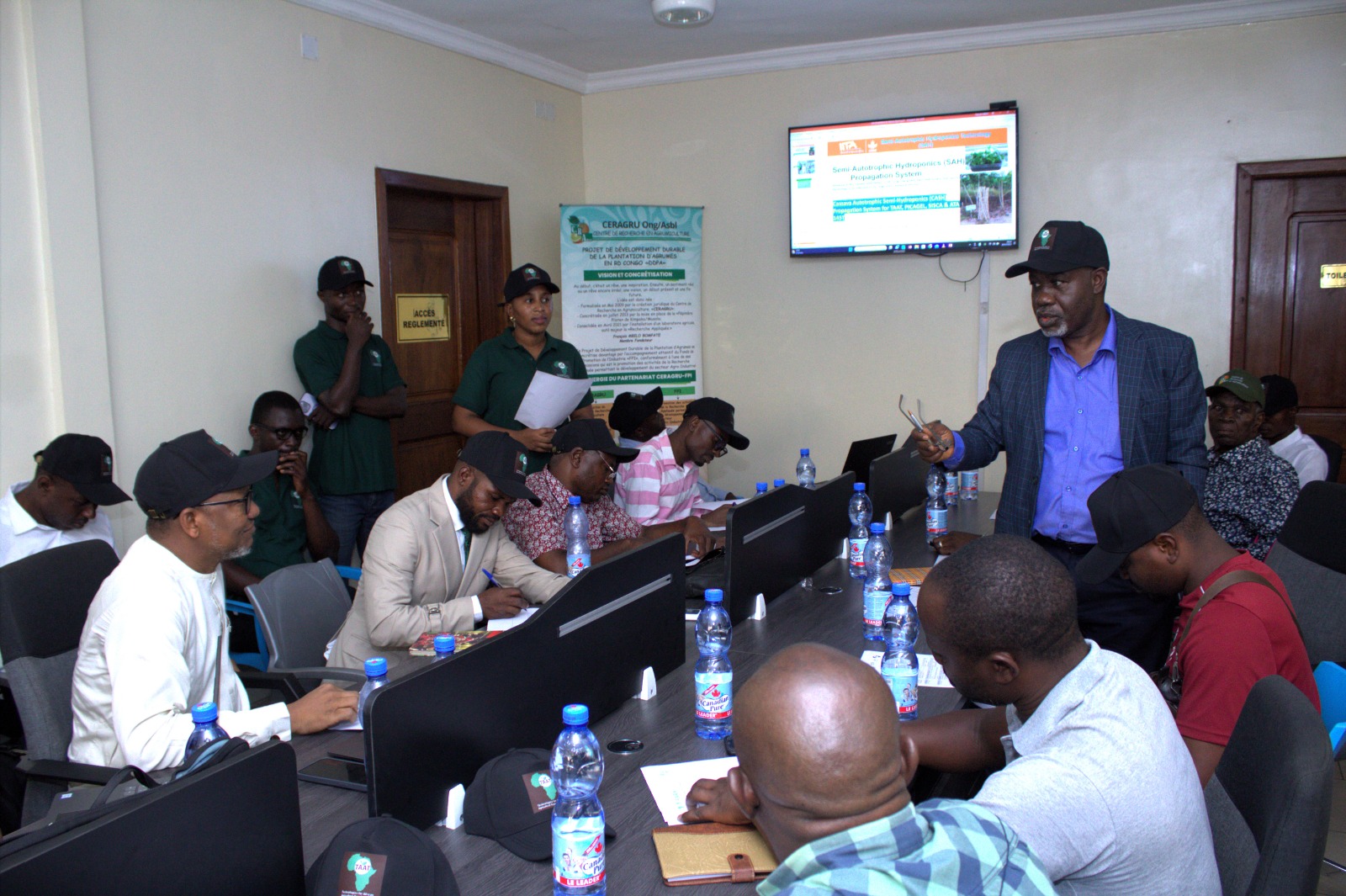
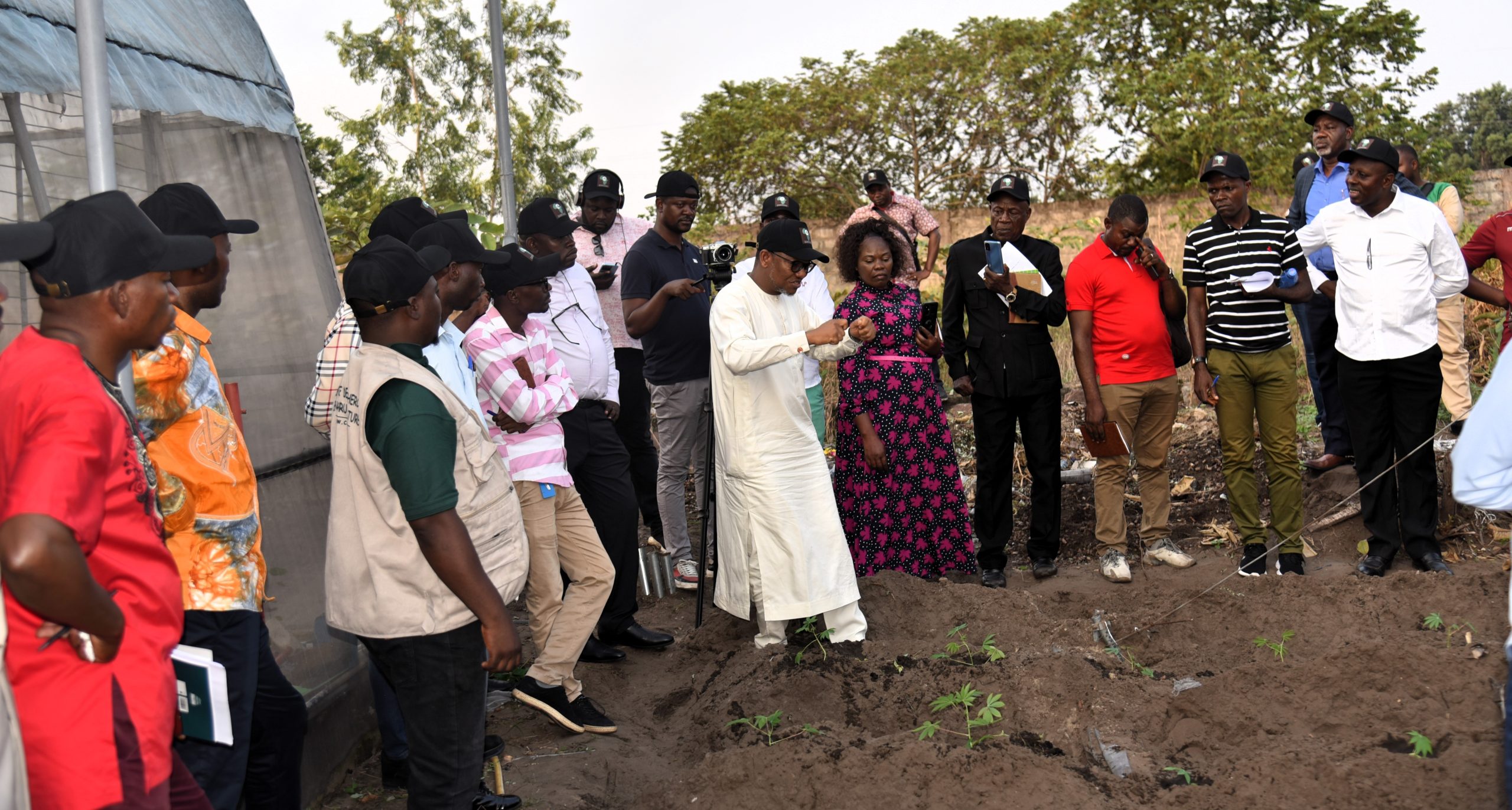
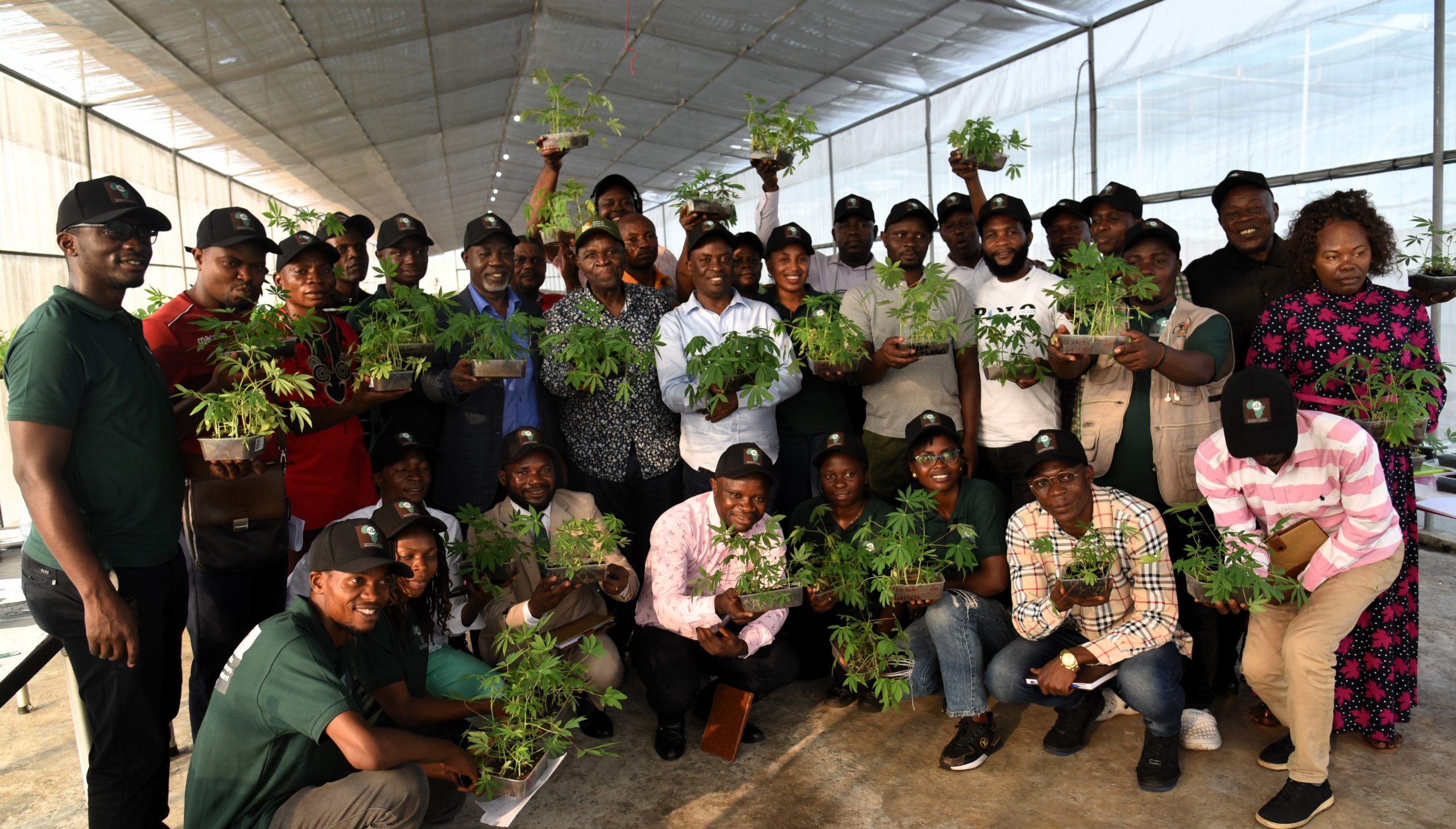

 Photo Caption: Karen Munoko Agribusiness Specialist from FARA lecturing aquaculture stakeholders at the Central Agriculture Research Institute CARI in Bong