By Dr. Abdularazak Ibrahim & Mrs. Bridget Kakuwa-Kasongamulilo
In Lusaka, forty-seven (47) stakeholders, including policymakers, scientists, farmer groups, youth, and women groups, gathered for a three-day workshop on Regional Foresight for Food Systems Training Workshop. Representatives across the region exchanged ideas, hopes, and dreams for a sustainable and resilient food future in the Southern African Development Community (SADC) region.
Following a series of presentations on the fundamentals of foresight and the food systems framework, the workshop discussed innovative solutions to transform the existing food systems. Armed with tools such as causal loops, trend analysis, and scenario mapping, the participants engaged in deep discussions to uncover the region’s untapped potential.
Drawing insights from the Food and Agricultural Organization’s (FAO) series. The Future of Food and Agriculture—Drivers and Triggers for Transformation and its associated dashboard, stakeholders reviewed domains relevant to the SADC region.
In the heart of these foresight discussions emerged a revelation: millet and sorghum, ancient grains often overlooked, held the key to a resilient and thriving food system. Through rigorous analysis and collaborative brainstorming, the participants envisioned a future where these hardy grains took center stage, outshining maize in their ability to withstand climate challenges, conserve water, and offer enhanced nutritional benefits.
Ms Lilly Singano, owner of Lilly Meals, a Sorghum and Millet Processing and Packaging company, was excited with the workshop direction. She said, “Both sorghum and millet are not just substitutes for maize but are superior in many ways, offering higher nutritional values, with millet being rich in fiber and essential minerals like magnesium, phosphorus, and manganese.”
In supporting the discussion, Dr. Noah Mwanza from the Climate Change Association of Zambia (CCA)said, “Sorghum and millet are remarkable for their drought tolerance, making them ideal crops for ensuring food security in arid and semi-arid regions where maize cannot thrive.”
The foresight-driven dialogue unveiled a tapestry of possibilities as participants identified key drivers, enablers, frictions, and turners that would pave the way for millet and sorghum’s transformative journey. Mr Dalisto Mbewe, the CAADP Representative from Zambia, added that “Given their adaptability to poor soils and low water requirements, sorghum and millet represent sustainable alternatives to maize cultivation, reducing the need for irrigation and input-intensive farming practices.”
Causal loops painted intricate connections between climate resilience, biodiversity conservation, and the flourishing of these resilient grains. Trend analysis highlighted the rising global demand for healthier, sustainable food options, positioning millet and sorghum as the answer to the changing culinary landscape. “The versatility of sorghum and millet, from traditional dishes to gluten-free options, highlights their potential in modern diets and as a solution to the challenges of climate change and food security.”, emphasized Dr. Matita, a lecturer at the Lilongwe University of Natural Resources in Malawi.
Through scenario mapping, the participants envisioned a future where millet and sorghum became the flag bearers of Southern Africa’s food revolution, contributing to food security, economic empowerment, and cultural preservation. This collective foresight illuminated a path where these ancient grains could break free from the shackles of neglect and shine as the heroes of a sustainable food future. Mr. Nelson Mavuso, Director of Extension in Eswatini, stressed that “Incorporating sorghum and millet into diets can diversify our food sources and help combat micronutrient deficiencies, as these grains are packed with vital nutrients often lacking in maize.”
As the workshop concluded, the participants left with a newfound passion for millet and sorghum, armed with a shared vision and a roadmap for implementation. Sorghum and millet are remarkable for their drought tolerance, making them ideal crops for ensuring food security in arid and semi-arid regions where maize cannot thrive. “Harvesting Tomorrow: Foresight Fields of Millet and Sorghum in Southern Africa” became not just a title but a rallying cry, echoing across the fields and communities, inspiring a movement towards a brighter and more sustainable future for all.
The authors are Foresight Focal point persons for CCARDESA and FARA, respectively.
15th – 17th February 2024: Alisa Hotel, Tema, Accra, Ghana
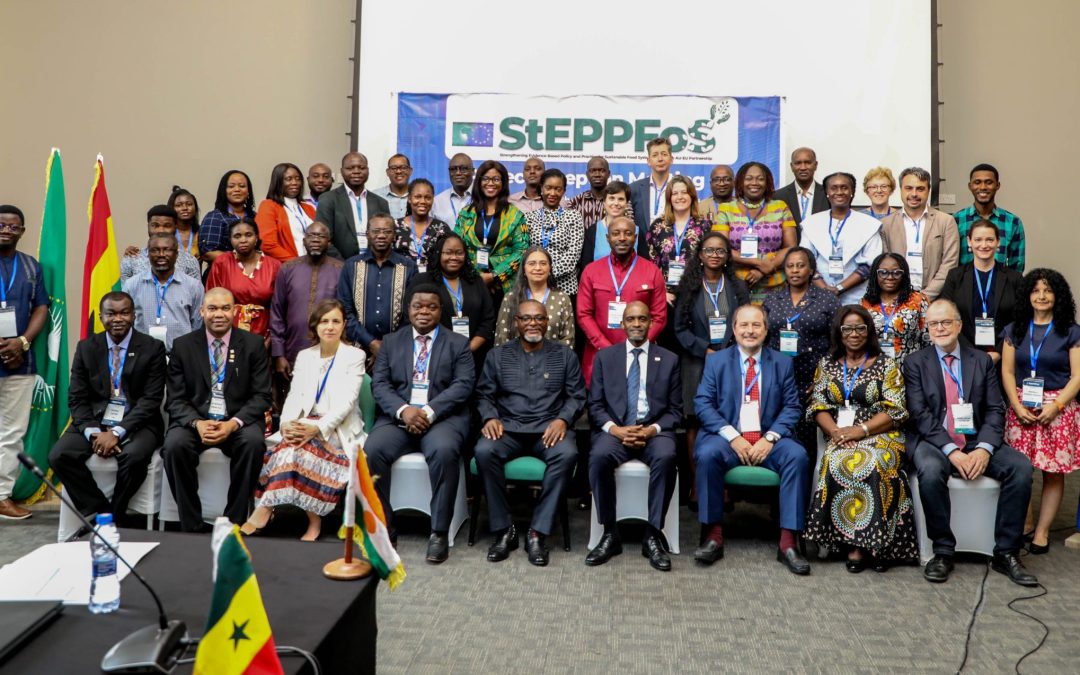
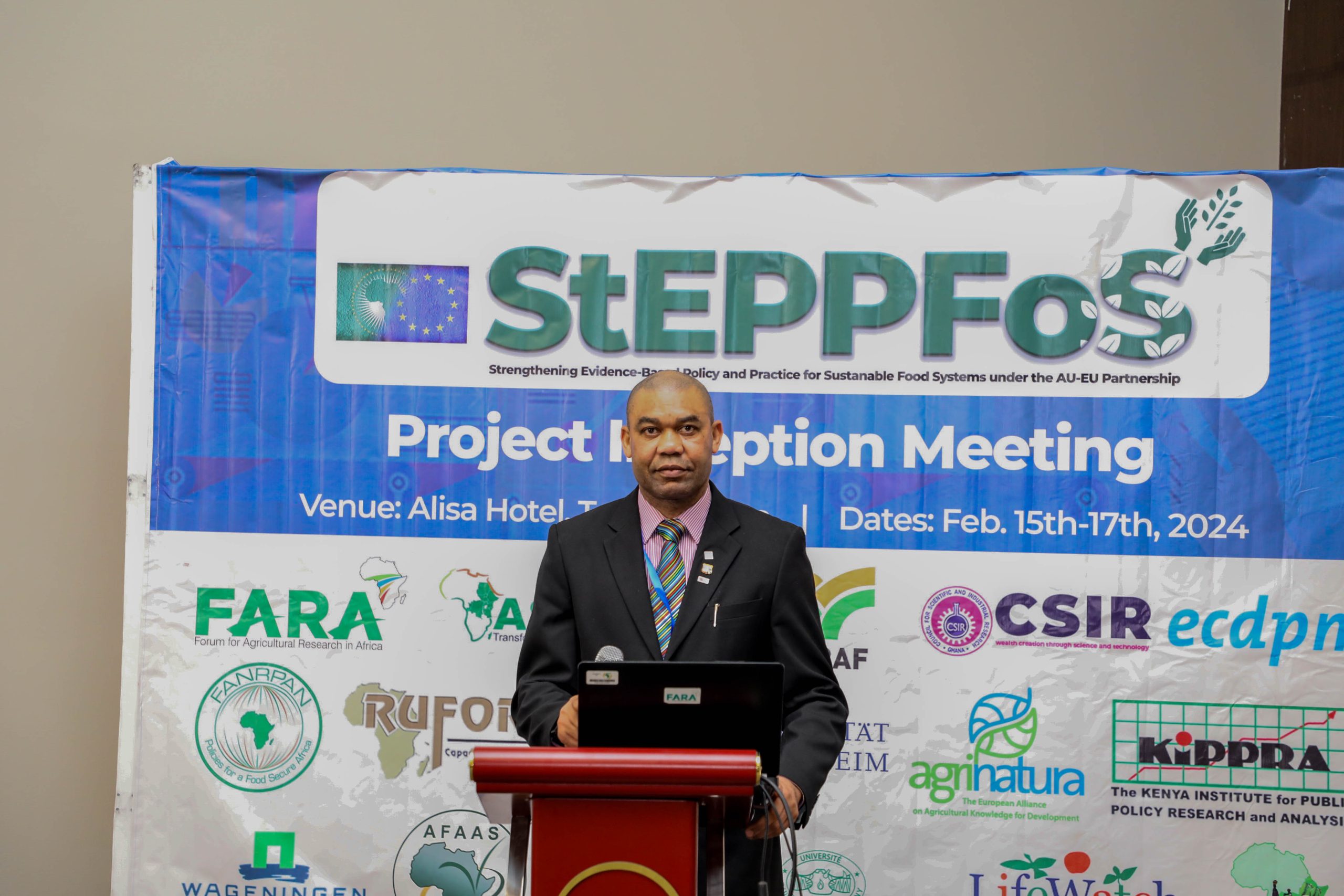
The African Union and the European Union together with a number of implementing partners on the African continent and across Europe launched the Strengthening Evidence-Based Policy Practice for Sustainable Food Systems under the EU-AU Partnership #StEPPFoS Project at the Alisa Hotel in Tema, Accra-Ghana.
StEPPFoS Implementing Partners General Assembly, Alisa Hotel Tema, Accra-Ghana
The #StEPPFoS Project is designed to promote policy coherence and alignment across the Pan-African Network for Economic Policy Analysis of Policies PANAP and Food and Nutrition and Sustainable Agriculture #FNSSA to contribute towards minimizing the fragmentation of policy initiatives in the agri-food sector at national and regional levels across the African Continent.
The Strengthening Evidence-Based Policy Practice for Sustainable Food Systems under the EU-AU Partnership is a 4-year project running from January 2024 till December 2027.
Dr Stephen Onakuse, Dr Kwaku Dei Antwi, Dr Kwamena Quaison, Paola De Caro, Dr. Aggrey Agumya and Raffaele Quarto
Funding for the implementation of the project is granted by the European Union as part of the Green Deal’s “From Farm to Fork” strategy (Horizon Europe budget envelope), which forms a crucial part of the EU’s “Global Gateway” strategic vision, aiming at establishing sustainable and reliable connections serving citizens and the planet.
Raffaele Quarto, European Union
A total of 18 participating organizations come together to make up the StEPPFoS implementation partnership, populated by a wide range of experts and stakeholders (including researchers, NGOs, donors, extension workers, etc.) involved in the field of Policy research analysis, capacity building and food and nutritional security and sustainable agriculture.
Ibrahim Gariba, African Union Commission
At the event were the European Union Delegation Representative to Ghana, Raffaele Quarto, Ibrahim Gariba, a Senior Communication Specialist representing the African Union Commission, Paola De Caro of the European Commission, the REA_EC Project Officer Adelma Di Biasio Biaso and Kwamena Quaison, a Chief Director representing the Ministry of Environment, Science, Technology and Innovation (MESTI) Ghana.
Kwamena Quaison, Ministry of Environment, Science, Technology & Innovation of Ghana
The project is coordinated by the Forum for Agricultural Research in Africa (FARA), a continental apex technical institution of the African Union Commission , and the European Alliance on Agricultural Knowledge for Development (AGRINATURA), an Association of European Universities and Research Centres.
Dr. Kwaku Dei Antwi, StEPPFoS Coordinator, FARA
As outlined by the Project Coordinator, Kwaku Dei Antwi of FARA, StEPPFoS aims to contribute to the FNSSA 10-year roadmap and the global transition towards sustainable food systems through the implementation of activities that link PANAP to the FNSSA partnership. Specific objectives are:
to improve capacities of stakeholders
to enhance science-policy interface
to improve strategies that promote scientific support within policy development.
to expand and strengthen the PANAP Network.
The project will be implemented through its eight work packages (WPs)over a period of 48 months using Capacity building, stakeholder engagements, participatory monitoring, evaluation, and learning as the main methods to deliver on the project’s objectives whiles adhering to open science principles and effective data management practices. StEPPFoS will further leverage expertise from academic, research, and policy institutions in both Europe and Africa.
Paola De Caro, European Commission
Governments worldwide invest heavily in crafting policies to tackle public priorities such as sustainable food and nutrition. However, there’s often a notable disparity between policy goals and actual outcomes, highlighting a universal challenge in policy formulation and implementation Food and nutrition security and sustainable agriculture (FNSSA) represent crucial development priorities in Africa, receiving significant attention from both national governments and international agendas such as the AU/EU partnership. FNSSA was identified as a priority area in the AU-EU High Level Policy Dialogue on Science, Technology, and Innovation, leading to the establishment of the Pan-African Network for Economic Analysis of Policies (PANAP).
The final outcome of the StEPPFoS initiative will be an enhanced collaboration between the FNSSA Research and Innovation Partnership and the Pan-African Network for Economic Analysis of Policies PANAP within EU-AU cooperation. It will further provide support for African agricultural and food systems policy making process through enhanced cooperation in economic, social and environmental impact (including biodiversity) analysis of policy options for food systems, nutrition performance, agrifood trade, and development of rural areas.
Dr Stephen Onakuse, President of AGRINATURA
The President of AGRINATURA, Dr Stephen Onakuse during his closing remarks at the General Assembly of Implementing partners held as part of the inception meetings expressed his delight in the deliberations and decisions for implementation settled on by the general assembly and the need for synchronicity among implementing partners for the success of the project and ultimate realization of the project outcomes.
Dr. Aggrey Agumya, Executive Director, FARA
On his part, the Executive Director of FARA, Dr. Aggrey Agumya, expressed honor in the trust bestowed on FARA to coordinate the project and pledged his commitment to seeing a strengthened AU-EU partnership.
Project Implementing Partners
1. Forum For Agricultural Research In Africa, Ghana – FARA, Coordinator
2. The Registered Trustees Of The Association For Strengthening Agricultural Research In Eastern And Central Africa – ASARECA
3. Conf. Respons. Recher. Agronom.Afriq. De L’ouest & Du Centre – CORAF/WECARD
4. Council For Scientific And Industrial Research – CSIR-GH
5. European Centre for Development Policy Management – ECDPM
6. Food Agriculture And Natural Resources Policy Analysis Network – FANRPAN
7. Regional Universities Forum For Capacity Building In Agriculture – RUFORUM
8. Universitaet Hohenheim
9. European Alliance on Agricultural Knowledge for Development Agrinatura
10. Kenya Institute for Public Policy Research and Analysis KIPPRA, Kenya
11. Stichting Wageningen Research – WR
12. African Forum For Agricultural Advisory Services – AFAAS
13. Universita Ca’ Foscari Venezia – UNIVE
14. Universite Felix Houphouet Boigny, Benin
15. E-Science European Infrastructure For Biodiversity And Ecosystem Research – LifeWatch
16. Eastern Africa Farmers’ Federation Society – EAFF
17. The Association of Commonwealth Universities – UK
18. The Joint Research Centre of the European Commission – EC-JRC
The African Export-Import Bank (AFREXIMBANK) and the African Union Commission (AUC) have formalized a strategic partnership by signing a Memorandum of Understanding (MoU) to implement the Common African Agro-Parks (CAAPs) initiative. This landmark agreement, inked at the 37th AU Summit in Addis Ababa, solidifies the commitment of both entities to catalyze agricultural development and agro-industrialization across the African continent following the endorsement of CAAPs as one of the Flagship initiatives of the AU during the 2023 Summit.
Led by H.E. Commissioner Amb. Josefa Sacko, Commissioner for Agriculture, Rural Development, Blue Economy, and Sustainable Environment, and Prof. Oramah, President of AFREXIMBANK, the ceremony underscores the pivotal role of collaboration in achieving sustainable development for Africa. The CAAPs initiative, adopted by the 37th AU Assembly as a flagship program for the next ten years of the AU Agenda 2063, is a strategic response to enhance local agricultural production and trade under the AfCFTA.
This partnership signifies a shared vision to create regional agro-industrial hubs, aligning with the AU Agenda 2063 objectives. Cross-border mega agro-park projects, a focal point of the collaboration, aim to stimulate economic growth, enhance food security, and foster industrialization. AFREXIMBANK’s financial commitment of USD 20.8 million demonstrates a concrete step toward realizing the ambitious CAAPs goals, with an overarching objective to implement 15 CAAPs mega projects within the next decade.
You may visit https://faraafrica.org/caaps/ for details about the CAAPs initiative.
For media inquiries and further information, please contact the CAAPs Secretariat through:
Anselme Vodounhessi – [email protected]
Benjamin Abugri – [email protected]
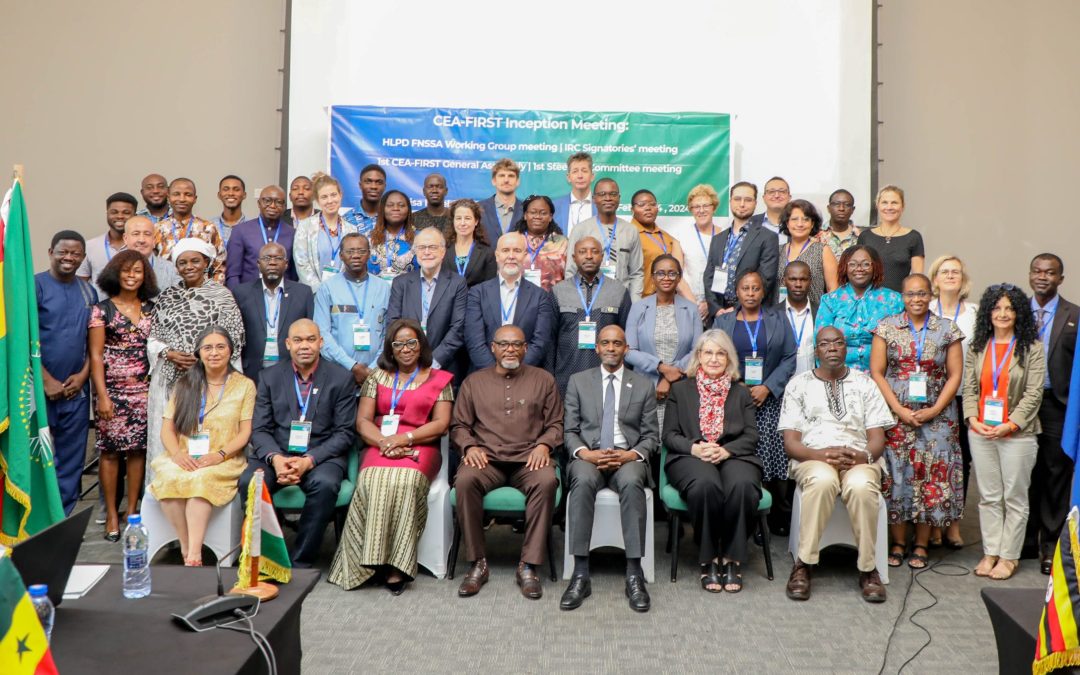
The African Union and the European Union alongside a number of implementing partners have launched the Consortium Europe-Africa on Research and Innovation for Food Systems Transformation #CEA_FIRST Project aimed at operationalizing the first priority of the AU-EU High level policy Dialogue (HLPD) focused on AU-EU International Research Consortium on Food and Nutrition Security for Sub-Saharan Africa #FNSSA .
CEA-FIRST is funded by the European Union as part of the Green Deal’s “From Farm to Fork” strategy (Horizon Europe budget envelope). It forms a crucial part of the EU’s “Global Gateway” strategic vision, which aims to establish sustainable and reliable connections serving citizens and the planet. This vision addresses pressing global challenges, from combating climate change to enhancing the competitiveness and security of global supply chains, particularly in Africa.
The project brings together 22 partners from Europe and Africa covering a wide range of expertise and stakeholders (research, NGOs, donors, extension workers, etc.) involved in the field of food and nutritional security and sustainable agriculture. It consists partly on lessons from the former #PAEPARD initiative, to the LEAP4FNSSA and now extended with new public and private network partners.
As outlined by the Coordinator of the Project, Dr Irene Annor-Frempong, the project have six main objectives including the following:
Providing public access to an extensive platform of knowledge in food and nutrition security and sustainable agriculture.
Developing a robust methodology for analyzing Research and Innovation (R&I) activities and priorities.
Supporting the update of the AU-EU R&I partnership roadmap.
Establishing operational and thematic research working groups.
CEA-FIRST will facilitate connections between the IRC and the AU-EU high-level political dialogue.
It will create a learning environment, including communication channels, to support multi stakeholder networks and to strengthen R&I coordination.
CEA-FIRST will operationalise the International Research Consortium (IRC) as a long-term platform on food and nutrition security and sustainable agriculture (FNSSA) in line with the FNSSA Roadmap of the AU-EU High-Level Policy Dialogue (HLPD). The project will be coordinated by the Forum for Agricultural Research in Africa (FARA) from the Africa side and the European Alliance on Agricultural knowledge for Development (AGRINATURA), an Association of European Universities and Research Centres.
The IRC is a member-based, multi-actor platform and will work towards increasing synergies and coherence while reducing fragmentation and duplication of research efforts. Its aim is to promote higher returns on investments and impact on business development in Africa and Europe, by linking actors, research and innovation projects, initiatives, and funding programmes.
The final output will be a fully functional IRC. In the context of an essential transition in agri-food systems, compounded by the challenges of climate change and demographic shifts, the IRC is positioning itself as a vital tool for fostering an equitable and sustainable research and innovation partnership between Africa and Europe. This partnership focuses on bolstering agriculture as a key driver of economic development.
The IRC will also serve related AU-EU policy priorities, such as the Climate Change and Sustainable Energy and the Innovation Agenda of the HLPD, as well as the European Green Deal priorities (and farm to fork strategy) and the AU priorities including the Comprehensive Africa Agricultural Development Programme (CAADP) and the African Continental Free Trade Area (AfCFTA).
In his opening remarks to kick-off the International Research Consortium and the #CEA_FIRST Project, the Executive Director of FARA, Dr. Aggrey Agumya recognized: “How it represents a larger and far-reaching formation that promises to revolutionize the partnership and working arrangements between African and European institutions.”
Project implementing partners from both Africa and Europe
Forum For Agricultural Research in Africa (FARA), Ghana (Coordinator)
European Alliance on Agricultural Knowledge For Development (Agrinatura), France (Co-lead)
Centre For International Cooperation In Agronomic Research For DEVELOPMENT (CIRAD), France
Wageningen University and Research (WUR), the Netherlands
Agricultural Research Council Institute for Soil Climate and Water (ARC), South Africa
To catalyse economic development and enhance trade in Africa, requires actualising appropriate strategies and policies. This notion led to the conception of the Common Agro Industrial Park (CAIP) as part of the continental Common Africa Agro Parks (CAAPs) ratified by the African Union. The CAAP aspires to promote regional integration and trade among countries in Africa.
Zambia and Zimbabwe embarked on establishing the first-ever Common Agro Industrial Park (CAIP) in 2021 in Africa. The initiative focuses on maize and dairy value chains, as both countries offer their distinct comparative advantages, which are expected to enhance intra-trade and regional trade. Historically, the two countries have been producers of maize and dairy producing hubs. Despite being major producers, their trade patterns for these value chains have predominantly been raw materials with low product value addition and diversification, thereby resulting in value chain stagnation and curbing efforts to be food secure locally and on the global market.
To successfully implement CAIPs and achieve the desired results, Zambia and Zimbabwe undertook studies aimed at strengthening the maize and dairy chains in two phases. The first phase was held in Harare in 2022 and the second phase was held in Lusaka recently. The objective of the meeting was for government and stakeholders to provide an expert review and provide feedback on two reports to adequately inform and strengthen the value chain development between the two countries agreed value chains.
Speaking in Lusaka, Agriculture Minister Reuben Mtolo reiterated that the two studies undertaken under Phase 2 of the project is to strengthen member states’ capacities to develop regional agricultural value chains will enhance diversification and intra-African trade being piloted under the joint industrialisation cooperation between Zambia and Zimbabwe.
“Phase 1 of the project focused on regional value chain selection and assessment which culminated in a report that was validated in Harare in August 2022,” Mr Mtolo said.
H.E Reuben Mtolo Minister for Agriculture Zimbabwe
Mr Mtolo explained that the CAIP was set-up under the joint industrialisation cooperation programme between the two countries. The Common Market for Eastern and Southern Africa (COMESA) is pioneering the initiative in partnership with Economic Nations Economic Commission for Africa (UNECA) and UNIDO anchored on article 99 of the COMESA treaty. This encourages member states to cooperate in industrial development to achieve broad objective of self-sustained and balanced growth and transformation.
He reaffirmed that this programme would make use of “complementaries of national resources, value addition skills, technology and marketing capabilities to produce [world class] goods and services that will be competitive on the regional and global arena.”
Mr Mtolo stated that drastic strides have been made towards the establishment of the CAIP, which the Ministry of Commerce, Trade and Industry has been coordinating.
“Maize and dairy value chains were initially the selected commodities to anchor the development of the CAIP, and the Ministry of Lands, Agriculture, Water, Fisheries and Rural Development is leading the initiatives to further develop these value chains to become more competitive and diversified as well as provide a smooth launchpad for CAIP,”Mr Mtolo said.
Consultant Andrew Mulenga stressed the importance of strengthening the policy implementation framework by providing adequate human and financial resources.
Dr Mulenga also emphasized the need for policy consistence to attract investors and also incentivise key players. “Investors are attracted when policies in place are consistent; we need to follow-up on consistency and also ensure regular review to avoid duplication and conflict. When policies keep changing, it doesn’t inspire investors,” Dr Mulenga said.
Dr Andrew Mulenga, Zambian Consultant
He pointed out the need to enhance stakeholder consultation and policy transparency. This entails making decisions with a consultative approach and maximise on attracting key players.
Dr Mulenga also called for the streamlining of agriculture budgets to support the drivers of productivity and value addition.
A Consultant from Zimbabwe Kingstone Mujeyi also emphasised the need for the two value chains to be produced for the regional market, and beyond the two countries’ capacity.
“The CAIPs are coming in as pilot projects among countries in Africa. The Zimbabwe and Zambia agreement has to succeed; and also develop further into regional agriculture value chains,” Dr Mujeyi said.
Dr Kingstone Mujeyi – Zimbabwean Consultant
Ministry of Commerce, Trade and Industry Director Musokotwane Sichizuwe explained the need to enhance competitiveness of the maize and dairy industries in both countries through upgrading all infrastructure, access to finance and promote public-private partnerships.
“We also need to sensitise the private sector on the CAIPs ad its relevance coupled with the inherent tangible,” Mr Sichizuwe.
H.E. Situmbeko Musokotwane, Zambia Minister of Commerce, Trade and Industry
Mr Sichizuwe underscored the importance of the CAIP as it is a pilot project recognised by the African Union (AU) aimed at promoting economic integration and also enhance opportunities for trade.
Mr Sichizuwe also paid gratitude to UNECA, COMESA and consultants for the extensive work conducted so far which is meant to implement the CAIP effectively.
It is gratifying to see the extensive work conducted in ensuring the success of this value chain development. It is also key to involve all key stakeholders in this validation process in order to implement a comprehensive CAIP strategy.
The success of CAIP initiative hinges on the realisation of the high performing high value chain. The identified value chains need to provide diverse and innovative products which can compete effectively on the regional and global export market. –