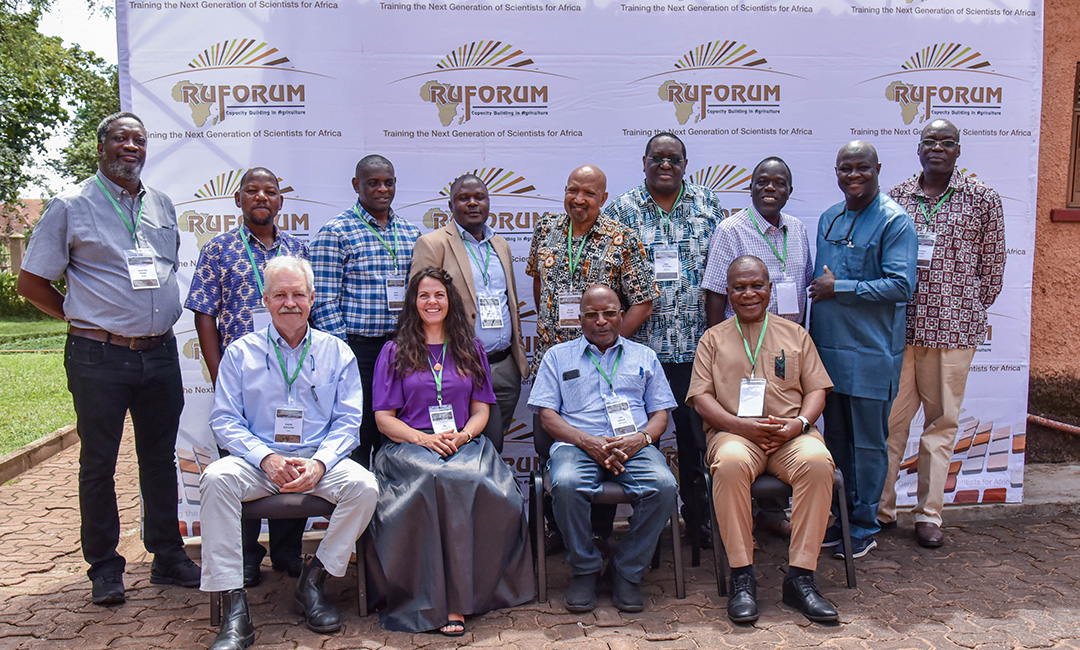
Two continental higher education and research institutions, working to promote agricultural development and education in Africa, have launched a research project that will receive an injection of millions of euros to support Regional Centres of Excellence, or RCoEs, in green transition across the Sub-Saharan Africa region.
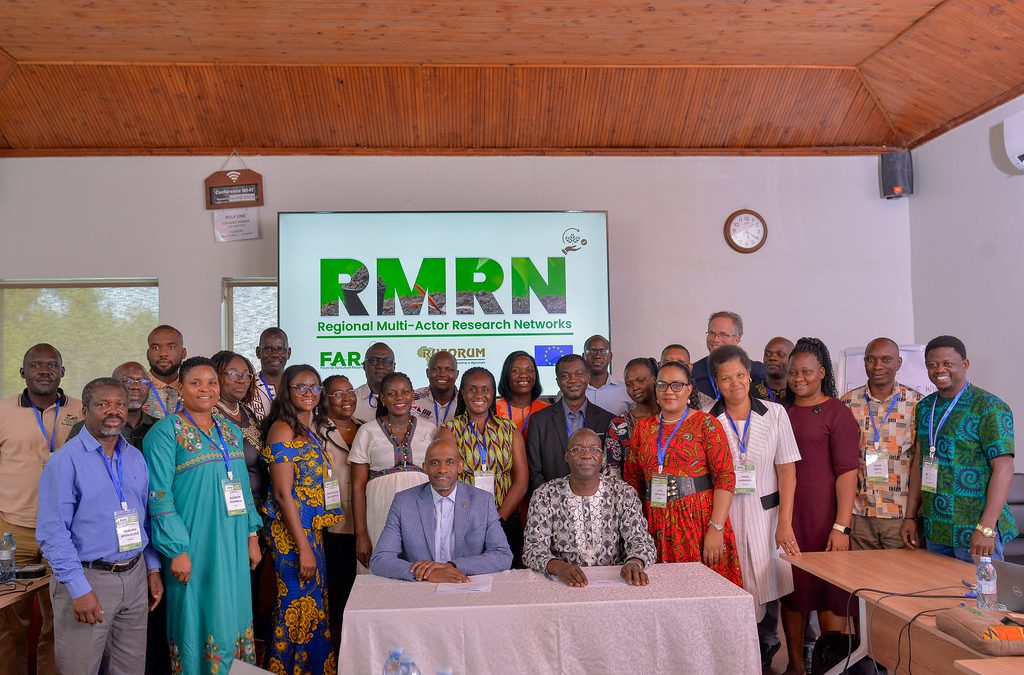
The Forum for Agricultural Research in Africa (FARA)and the Regional Universities Forum for Capacity Building in Agriculture (RUFORUM), alongside partners, have launched the Regional Multi-actor Research Network (RMRN). Its overall aim is to increase the science, technology and innovation capacities of the regional centres in the field of agro-ecology.
Other partners include the Association for Strengthening Agricultural Research in Eastern and Central Africa (ASARECA), the West and Central African Council for Agricultural Research and Development (CORAF), and the Centre for Coordination of Agricultural Research and Development for Southern Africa (CCARDESA).
Three broad objectives
It will have three main broad objectives, including strengthening scientific and technological capacities of the Regional Centres of Excellence, to produce, collect, access, process, share data and carry out research activities using a “gender-sensitive approach”.
In addition, it hopes to increase the network’s contribution in agro-ecology through “transformative quality research and scientific knowledge-generation”, and dissemination.
This is besides enhanced gender-sensitive support to agro-ecology practitioners, scientists and policymakers, said the coordinator, Dr Kwaku Antwi, during its launch on 19 March.
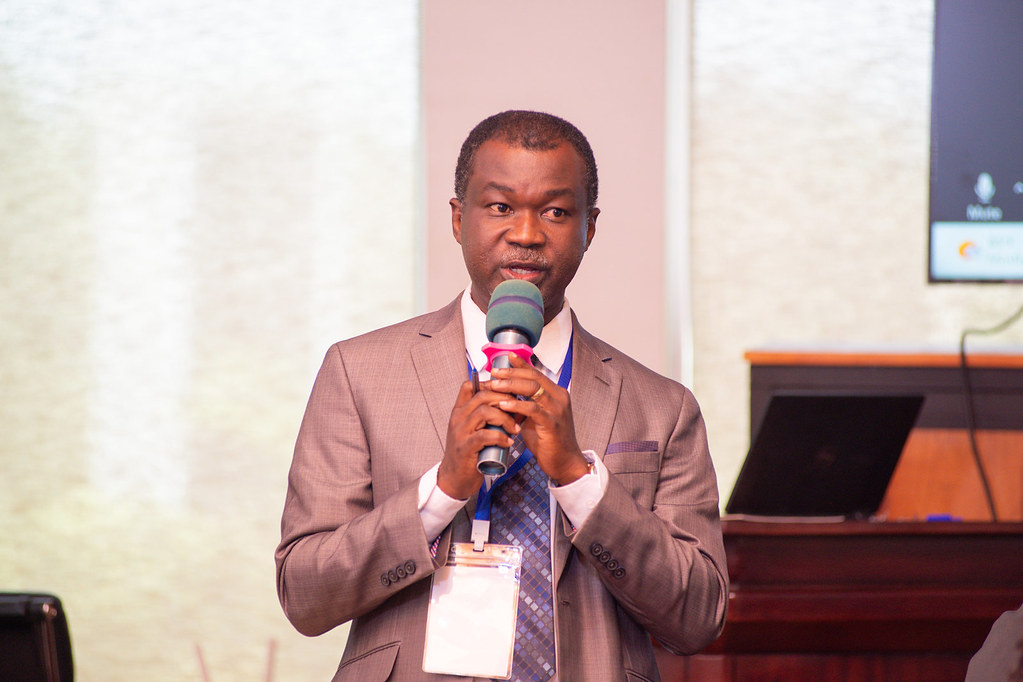
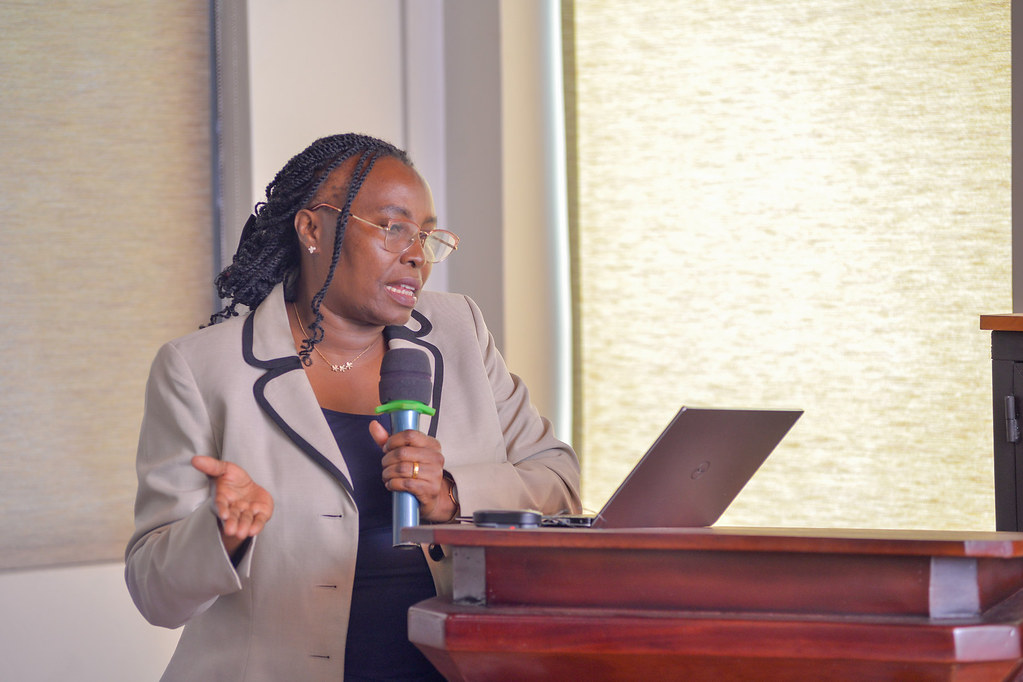
Dr. Kwaku Antwi, RMRN Project Coordinator, FARA, at the RMRN project launch meetings, March 2024, Kampala
It will also lead to the establishment of a platform for knowledge exchange and information-sharing, he noted.
Practice-based programme
The European Union funded the 36-month project, which will also see an RMRN formed that includes universities, and will engage in capacity-building through the short-term training of staff, MSc and PhD students, besides student exchange and internships.
However, the universities have not yet been identified as they will be selected through a competitive process, with those successful becoming part of the consortium and host the Centres of Excellence, said Dr Florence Nakayiwa, the deputy executive secretary of RUFORUM.
Dr Florence Nakayiwa, Deputy Executive Secretary, RUFORUM, at the RMRN project launch meetings, March 2024, Kampala
“This is a practice-based programme that is aimed at building capacity through short-term training for staff and students, including PhDs and masters. It will involve student exchanges and internships. It accommodates both African and European institutions with specific support from the Joint Research Centre of the European Commission,” she told University World News.
Strengthening consortia
The initiative will also attract funding from the European Union. It is a two-track funding system. On the first track, the participating organisations (CORAF, ASSARECA and CCARDESA) that will host the RMRN, will each receive €4.75 million (US$5.14 million). Then, on the second track, both FARA and RUFORUM will each access a total of €2 million.
While some centres will be hosted by the universities, others will be hosted by research institutions after the selection process, she added.
“The number of universities to be picked to participate in the project cannot be stated at this moment because it is a competitive process. Neither can we tell now how many universities will be part of the Centres of Excellence which will bring together different partners,” she explained.
At the end of the project, the technical capacities and skill of researchers and scientists involved would have been built, enabling them to carry out scientific studies in agro-ecology. Participating institutions would also have had their science infrastructure enhanced.
Overall, this initiative will help strengthen existing collaborations and synergies among the African agricultural research, education and innovations institutions.
The EU is funding the initiative as part of its Regional Multi-Annual Indicative Programme for Africa, whose aim is to support strengthening consortia of Africa-based institutions to lead interventions on the continent.
While it has many interpretations, agro-ecology basically implies the study of the relation of agricultural crops and environment for sustainable farming that works with nature.
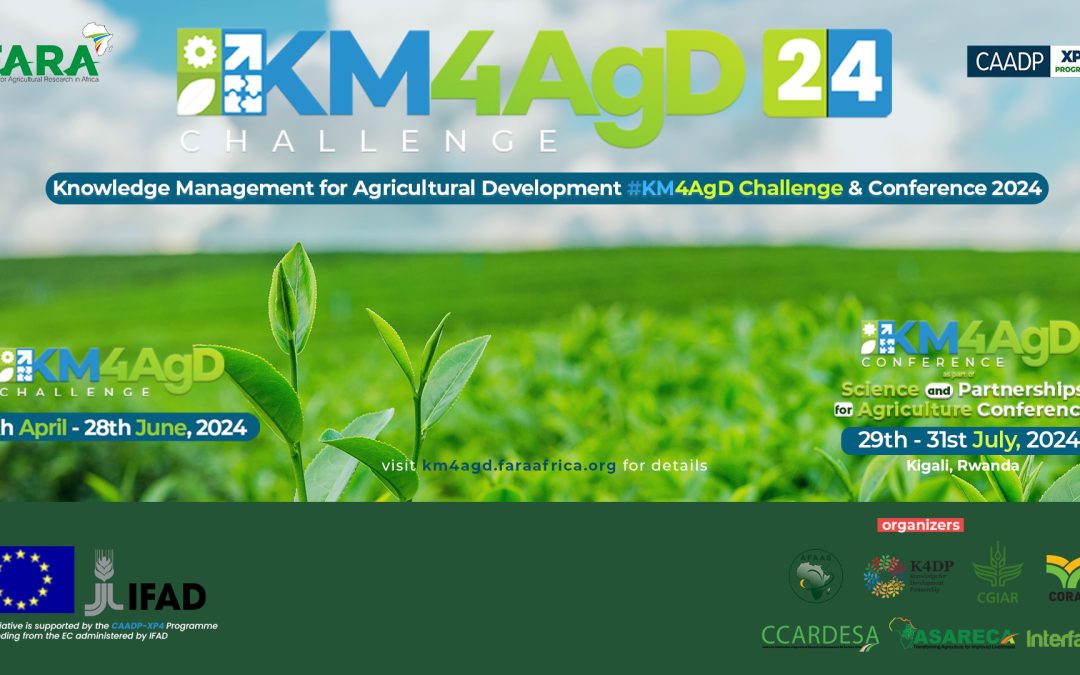
The Knowledge Management for Agricultural Development Challenge 2024 #KM4AgD24, officially kicked off on Friday 5th April 2024 via a zoom webinar hosted by the Forum for Agricultural Research in Africa and facilitated Knowledge Management and Communication Cluster leader Mr. Benjamin Abugri and Executive Director for the Knowledge for Development Partnership, Prof Andreas Brandner.
The Challenge’s objective is to improve the capture and dissemination of Knowledge materials, and to strengthen collaboration and alliances of African agricultural knowledge to support achievement of CAADP commitments and SDG targets. Seeking to bolster KM capacity building and generate content in response to the questions for the 2024 Challenge.
Prof. Andreas Brandner (K4DP) and Dr. Sarah Cummings (WUR) delivered opening statements to launch the Kickoff meeting and Challenge. A few past KM4AgD Candidates who are now KM4AgD Fellows also delivered introductory statements and bid this year’s candidates “all the best” during the challenge.
In attendance via zoom were the #KM4AgD24 candidates, their mentors, organizing institutions, stakeholders, collaborating partners including individuals across the global Knowledge Management community/network.
17 candidates in total were selected to take part in the 2024 Challenge, mentored by 21 Mentors/Facilitators. 5 candidates from INTERFACES and CORAF respectively, 4 candidates from CCARDESA, and one candidate each from AFAAS, CGIAR and WFP.
The KM4AgD24 challenge comprises of a certification course that will run from 8th April till 8th May 2024, 3 peer-learning sessions in May/June 2024 for KM Strategies and KM4D Award nominations, 4 sessions on the KM4AgD sector challenges knowledge brief development in May/June 2024 and will climax in Kigali, Rwanda for the 4th KM4AgD Conference 2024 and the KM4D Award Ceremony 29-31 July 2024, as part of the Science and Partnerships for Agriculture Conference 2024 #SPAC2024.
The Knowledge Management for Development Award programme is an initiative of the Knowledge for Development Partnership, established to encourage, guide and recognize organizations and companies to apply an integrated and systematic approach to knowledge management to better achieve the targets of the organization and to contribute to the sustainable development of citizens and societies.
To become a “Certified Knowledge Manager”, the selected candidates will demonstrate their ability to apply the lessons from the Certification course in their specific contexts, ie: developing a KM Strategy/Concept for their respective organisations, guided by their Mentors or facilitators in this process with procedures, templates and individual feedback and support. Other assignments can be agreed on, as per decisions taken in the course of the Challenge.
To be awarded “Certified Knowledge Manager for Sustainable Development”, candidates will need to apply the knowledge society learnings from the certification course in the context of agricultural development. Teams will be formed to identify KM challenges in the Agricultural sector and to co-create solutions. In previous KM4AgD Challenges, knowledge policy briefs were developed, but also other knowledge products can be created which advance knowledge in the African agricultural sector.
For more information and updates on progress throughout the #KM4AgD24 Challenge, kindly visit km4agd.faraafrica.org
The commitments of the 2014 Malabo Declaration on Accelerated Agriculture Growth and Transformation for Shared Prosperity and Improved Livelihoods will expire in 2025, which is next year. The Malabo Commitments, as they are usually referred to, were the product of a 2014 African Union Heads of State meeting in which member states committed to fostering agriculture-led development to reduce poverty and end hunger in Africa by 2025.
This targeted approach saw various African countries also commit to allocating 10% of their public expenditures to financing agriculture, boosting intra-African trade in agricultural commodities and services, and ensuring a biennial review process to track and monitor the progress being made.
While a significant number of signatories to the Commitments are not on track to achieve some of the set targets, they have made significant progress in the right direction.
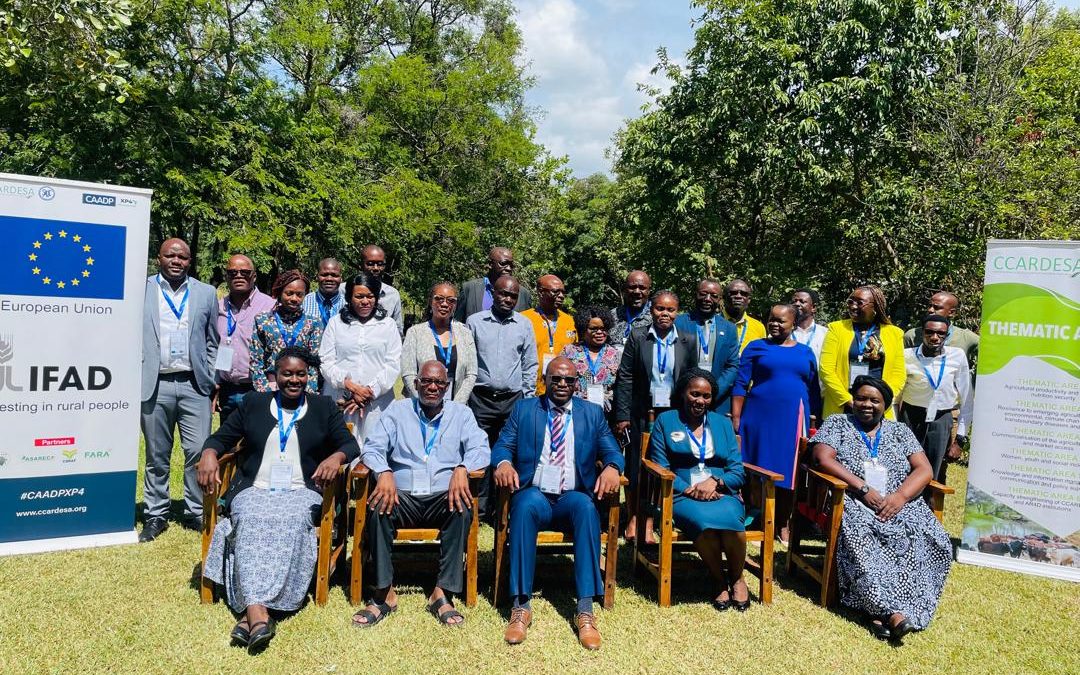
During a recently held training workshop on Knowledge Management and Monitoring /Reporting of Malabo Commitments in Chisamba, Zambia, brief analyses of Biennial Review Reports (BRRs) from various countries indicated that the political will to transform the agriculture sector remained aggressive, as evidenced by the existence of working policies and strategies designed to promote agriculture-led development.
The training workshop that the Centre facilitated for Coordination of Agricultural Research and Development for Southern Africa (CCARDESA) and the E.U.-funded CAADP-XP4 brought together consultants, knowledge management experts, the media, the youth, and some government officials from Zambia’s ministries of Agriculture and Fisheries and Livestock to analyse the status of the Malabo Commitments in the SADC Region.
Issues surrounding harnessing data and information and connecting the information with people who need it were of particular importance.
Presentations from the event based on some countries’ BRRs indicated that most countries had established appropriate policies and strategies aimed at reducing poverty and ending hunger, which was indicative of progress in the desired direction. However, some concerns were raised about the accuracy of the data used to measure this progress.
There was an assertion that a significant amount of progress being under-reported was brought to fora as the consensus recognized the unavailability of data and/or inaccessibility to data during the compilation of the BRRs.
Dr. Martin Muchero – an international consultant with expertise in rural development and agriculture – was one of the participants at the training workshop that was held and agreed with this assertion to a valid extent.
He highlighted the need to network and share information through consistent reporting, a characteristic evident in countries like Rwanda and Egypt that were reportedly on track to meet the Malabo Commitments.
“Other countries that have done well are those countries that have put together good, sound agriculture information management systems,” Dr Muchero said
He added that reporting on investment in agriculture, for instance, needed to be broader than simply reporting on increases in farm production.
“Even constructing a road in the rural area that facilitates the farmer’s access to the market is an investment in agriculture…So let’s not think about the 10% investment [commitment to agriculture financing] as just what goes into the Ministry of Agriculture; let’s think about the small contributions that are being made at the local community level. That all counts, too,” Dr Muchero said.
Mr. Benjamin Abugri – the Knowledge Management and Outreach Officer for the Forum for Agriculture Research in Africa(FARA), echoed the need for key stakeholders to network in reporting their countries’ progress towards the Malabo Commitments.
“Knowledge management is not only about collecting and sharing information but also about connecting people to the information,” Mr. Abugri highlighted.
As the adage goes, if it’s not written down, then it didn’t happen.
The author is a National Agriculture Information Services (NAIS) Principal Agricultural Information Officer.
It is now street knowledge that the availability of technology is not the central bane to improvement of Africa agriculture and management of the prime production asset, our soil. While technologies is modestly available, bringing the technologies from pilots to scale is still a key problem to overcome.
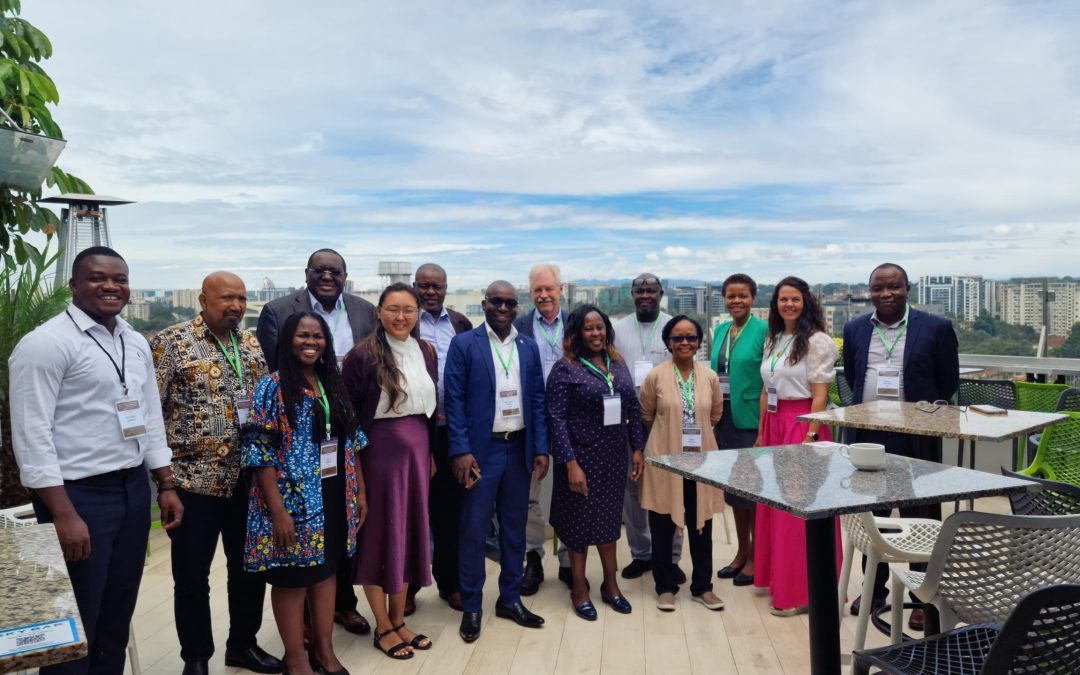
Notable experts in the theory and practice of scaling across Africa gathered in a workshop between 9th -11th of April 2024 at the Ibis Hotel in Nairobi. The workshop, scaling the pillar of the Soil Initiative for Africa (SIA) framework and the Africa fertilizer and Soil health Action Plan to write the scaling chapter of the companion document to the SIA. The companion document will aid the domestication of the framework and the development of the right action at the country and sub regional levels.
The central question is; What exactly should we bring to scale to ensure an effective management of the Africa soil? What easily comes to mind is to scale “technologies” and or Innovation. This is done using the processes of scaling out, possibly with all kinds of extension models and provision of enabling factors that pull the use of technologies. Even at this, the acceptance of technologies by the users takes time, sometimes five to ten years before the skepticism and phobia of the technology users is overcome. Apparently, the scaling up notion and its associated policy and institutional change will help to move things forward.
As it relates to the ensuring the management of Africa soil; critical analysis of project experience in the last decade showed that most Soil health interventions are not scalable because they are context specific. As such, efforts should not solely concentrate on specific technologies, rather on farmers learning, know-how and the capacity to innovate. The notion of “Capacity to Innovate” suggests the inculcation of the knowledge package and experiences that will foster a mind-set change for the farmers to continually improving their capabilities and resources to address challenges from a position of knowledge.
Most soil management interventions especially those that target soil health and organic matter increase does give immediate returns to investment, rather it yield after some years of continuous investment and the continuous benefits also needs to be managed carefully. Thus, the scaling model is scaling deep and the item to scale is farmers appreciation of the nature of the soil and pathway to benefit. Indeed the “Capacity to Innovate” is the right target of our scaling intervention.
In a bid to ensure that the Soil Initiative for Africa (SIA) is operationalized to deliver its planned social and economic benefits, a group of experts on the subject of Human Capital gathered for three days (4-6th April 2024) at the RUFORUM conference Hall at the Makerere University, Kampala Uganda.
The gathering discussed the role Human Capital in ensuring the management of the Africa soil for increased but sustainable agricultural productivity, coherent ecosystem services while retaining the integrity of the Africa soil as its prime production asset.
Prof. Patrick Okori, Executive Secretary, RUFORUM; addressing the gathering of experts and stakeholders
This expert gathering was unprecedented in the history of Human Capital development for the management of the Africa soil. Human capital is a composite nomenclature, it refers to the skills, knowledge, and experience possessed by individuals or populations; the institution that governs their use, and the cost and the value it adds to the organization or country. The human capital needed for soil management will encompass issues like; (a). Availability of knowledge and skill to generate appropriate technologies and innovation for sustainable use of soils. (b). Availability of teaching and training institutes for continuous development of skillful human resources for innovation. (c). Capacity and infrastructure for knowledge transfer and use. (d). The existence of a system for technology and knowledge demand and supply between users and generators of new knowledge. and (e). Linkages between system components and the management of the soil ecosystem.
It became clear that Human Capital development for soil only be effective when it gives attention to channeling training efforts to farmers and other soil users for effective management of soil, rather than training soil scientist only. It was clear that enrolment for specialization in soil science is very low in most tertiary institutions; possibly due to the inability of the system to absorb them, apparently, majority of those trained in the last three decades are diffused into other disciplines or ancillary area to soil science. The puzzle is how many soil scientists are truly needed per thousand farmers or a million individuals in the population? The right answer to this question will inform the right action and the investment needed to achieve the aspirations of Soil initiative for Africa and the Africa fertilizer and Soil Health Action Plan (AFSH-AP).
In a bid to have appropriate human capital development for managing Africa soils,there is the need totrain fewer scientists with globally competitive skills and access to infrastructure to generate new solutions on the continent. The training of soil users within the civil society, especially the smallholder farmers, is essential for progress in managing Africa soil. There is the need to develop or optimize the existing knowledge demand mechanism on soil management at different levels. Investment in awareness creation/communication on the need to effectively manage Africa soil is vital to successful mobilization of civil society to halt the pace of land degradation. Lastly, Africa will need to develop the right institution that will incentivize ethical use of the soil and disincentivize the abuse of soil resources.