Veterinary field epidemiologists in the livestock sector are the first line of defense against animal diseases that can also affect humans. The Food and Agriculture Organization of the United Nations (FAO), in collaboration with the United States Agency for International Development (USAID) is supporting efforts towards the Frontline In-service Applied Veterinary Epidemiology Training (ISAVET) program in Zambia.
The training programme has had its first cohort of 27 in-service trainees from the Ministry of Fisheries and Livestock drawn from Lusaka, Southern and Western provinces.
The ISAVET programme is aimed at developing transferable, critical thinking skills amongst Veterinarians to strengthen preparedness and early response to animal disease outbreaks.
Fisheries and Livestock Permanent Secretary Engineer Himba Cheelo who officiated at the graduation ceremony in Lusaka recently, said Frontline Applied Veterinary Epidemiology is a pivotal pillar in animal and public health.
Engineer Cheelo said the FAO has so far successfully launched the Frontline In-Service Applied Veterinary Epidemiology Training (ISAVET) program in 22 countries with Zambia being the 23rd country in Africa.
“The Frontline In-Service Applied Veterinary Epidemiology Training ISAVET will help in bolstering and enabling officers in the frontline are able to detect and provide effective early responses to animal diseases,” Engineer Cheelo said.
She said it is worth noting that major pandemic throughout history both past and present have originated in animals.
Ms Cheelo said disease such as COVID-19, AVIAN Influenza, Black Death, SARS, Ebola, swine Flu and even major zoonotic diseases have been traced back to the animal kingdom.
“Most recently the Anthrax outbreak in Southern province serves as a poignant reminder of the critical role our cadre of Veterinarians and veterinary para-professionals play in safeguarding public health,” she said.
She said that beyond ISAVET’S pivotal role in animal health, the strong soco-economic connection they possess within rural communities position them ideally for prompt detection, reporting and response to future zoonotic pandemics.
Deficiencies to prevent, detect and respond to outbreaks timely in the animal health sector have often contributed to continuous animal health threats across the country. Therefore, having enough and well-trained veterinary epidemiology officers means protected human health, reduced animal losses, assured consumer protection and promotion of safe trade in the country. She said this in a speech read on her behalf by the Human Resources and Administration Director Ignatius Daka.
The Food and Agriculture organisation of the United Nations Country Representative
Suze Percy Filippini said the ISAVET program is a milestone in the journey to enhance the capacity of veterinary services in disease surveillance and uphold the principles of One Health.
Ms Filippini said the initiative that has generously been funded by the United States Government through the United States Agency for International Development (USAID) is in line with the Food and Agriculture Organisation’s action plan that seeks to support the one health agenda and improve the management of emerging animal and human related health risks.
“By actively assisting selected countries in sub-Sahara Africa including Zambia, we aim to strengthen disease surveillance and risk management at the human animal ecosystem interface,” Ms Filippini said.
She noted that through locally joint strategies and innovative tools, FAO endeavours to combat diseases and microbial resistance that pose significant threats to public health, poverty alleviation and human livelihoods.
“The skills acquired by ISAVET trainees will significantly bolster Zambia’s Veterinary Services by mitigating the burden of zoonotic diseases and Transboundary Animal Diseases,” Ms Filippini said.
She said these efforts will also contribute to enhancing livelihoods, fostering economic growth, ensuring food security, and advancing the Agenda 2030 for Sustainable Development for better production, better nutrition, a better environment and a better life, leaving no one behind.
While, United States Agency for International Development (USAID) Mission Deputy Director Robin SHARMA said the skills and knowledge gained through the ISAVET program will serve as a solid foundation for future works because the skills will strengthen
Zambia’s public health systems to protect the health and safety of all animals and people in Zambia.
Mr Sharma said 75% of new and emerging infectious diseases are zoonotic or spread from animal to people.
“This makes your training more essential than ever and the skills you have acquired critical because you are literary the first line of defence against zoonotic infectious disease threats,” Mr Sharma.
He said the Anthrax break-out in 2023 may not be the last zoonotic disease threat the country may have encountered considering the prolonged droughts the country is facing that might force both humans and animals to search further beyond for water and food sources.
And speaking earlier, Frontline In-Service Applied Veterinary Epidemiology (ISAVET) National Program Coordinator Humphrey Banda said the training is, hands-on and aimed at building a cadre of skilled frontline veterinarians who can conduct effective surveillance and outbreak response under a One Health approach.
Dr Banda said the ISAVET program was generated because of deficiencies being experienced in field epidemiology and animal health surveillance systems.
“The ISAVET program was brought about through the SET evaluation conducted by the Food and Agriculture Organization of the United Nation and the Performance of Veterinary Services evaluation conducted by the Office of International Epizooties (OIE),” Dr Banda said.
He said the ISAVET program is focused on enhancing epidemiological skills in the frontline staff in the Ministry of Fisheries and Livestock so that they can address emerging infectious diseases and transboundary animal diseases in the country.
Field epidemiology is an important area that supports timely and rapid response to transboundary, zoonotic, and other health conditions of public health importance that limit productivity.
Therefore, In-Service Applied Veterinary Epidemiology Training (ISAVET) programme is one such capacity building initiative that has strengthened the animal health services capacity since the pilot phase in 2018 within the African region.
Blessings Kantu Kalimbika, an In-Service Applied Veterinary Epidemiology Trainee from Senanga district in Western province said the training was a reminder to all the ISAVETEES (graduates) that they entered to learn and depart to serve the country.
“Today as we leave this place, we are more than equal to the task because when it comes to the knowledge in the prevention of animal health threats, we have it, rapid response to animal health security threats, we have it, improved and early detection of animal health security threats, we have it,” Ms Kalimbika said.
Ms Kalimbika said the six months they have been in training, ISAVETEEs have been able to gain skills and undertake research that seeks to address the needs of the local farmers in areas like Kavalamanja, Mkandanzovu and Sinjembela.
Timely dissemination of animal disease information to relevant stakeholders facilitates prompt action when necessary, making it vital in managing both emerging and reemerging diseases. It is therefore upon the ISAVETEEs to put into practice what they have gained in the last six months and save lives in the country. –NAIS
DRUGS in veterinary medicine are there to control different animal diseases and if properly used, they contribute to improving the production of food of animal origin.
Food safety regulations are based on a risk analysis which is a structured and systematic process in which hazards that potentially affect public health are examined paving ways to mitigate the risks.
The presence of veterinary drugs in foods of animal origin such as meat beyond the maximum residue limit allowed could affect food trade and human health.
Parameters such as an acceptable daily intake level, the maximum residues limits, and the withdrawal periods are determined for drugs used in livestock simply because levels of residues in edible tissues can be affected by diverse factors related to the treated animal, the type of drug administration, and even the type of cooking.
This is why drug residues monitoring programme are crucial in the livestock industry to ensure that prohibited or authorized substances do not exceed the maximum residue limit.
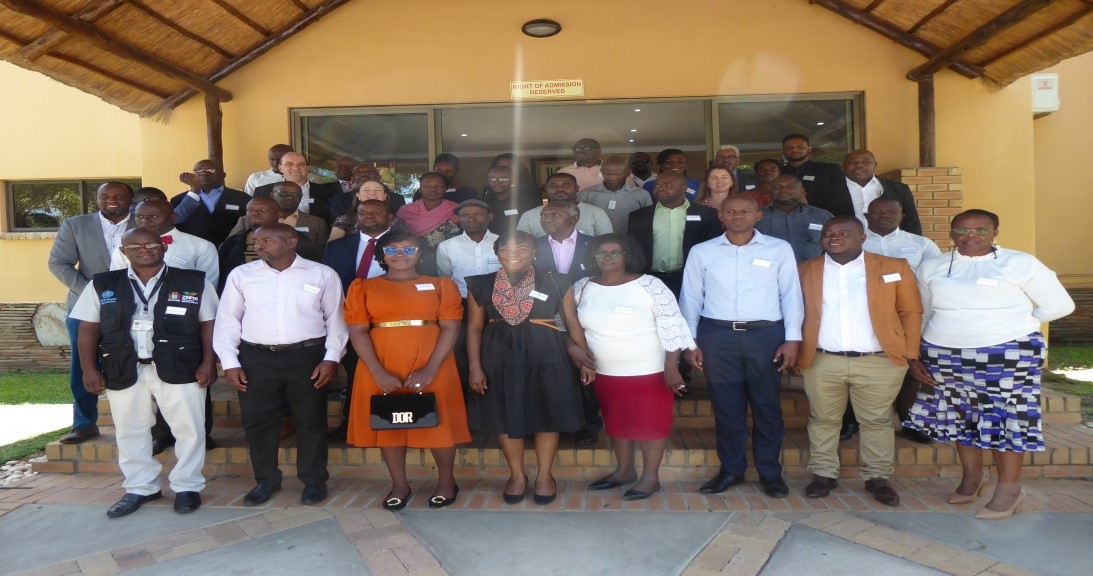
Participants in the Development of a National Residues Monitoring Program for Zambia
The Animal Health Systems Strengthening Project is one of the projects under the Department for Environment, Food and Rural Affairs (DEFRA) from the United Kingdom helping the Ministry of Fisheries and Livestock in developing a National Residues Monitoring Program on veterinary medicine in animal husbandry in Zambia.
Department for Environment, Food and Rural Affairs (DEFRA) International Project Coordinator, Elizabeth Marier, a Doctor of Veterinary Medicine said the Animal Health Systems Strengthening Project is delivering the objectives relating to veterinary Medicine resistance.
Speaking at Chita Lodge in Kafue District, Dr Marier said the objectives of the workshop are to create awareness on the responsible use of vet medicines and developing a surveillance program for residues.
She said that understanding what the issue is or was when using animal medicines is important in making people take appropriate actions to ensure that medicines are used responsibly in respect of the withdrawal period.
“To achieve this, our project has ensured that a diversity of participants from the private sector, laboratories, ministries and vet associations were invited to attend the workshop to create awareness at that level,” Dr Marier said.
She explained that the second part of the project’s objectives is to create an effective plan that will allow the Zambian government through the Ministry of Fisheries and Livestock to know how many samples to take for each of the livestock sectors and identify which substances are a priority for testing.
Speaking at the same function, Acting Director of Veterinary Services in the Ministry of Fisheries and Livestock, Charles Masekasaid the use of veterinary medicine in animal husbandry plays a crucial role in maintaining animal health and productivity.
Dr Maseka said the development of the monitoring program will help ensure the surveillance of veterinary medicine residues in food products of animal origin which has almost been nonexistent in Zambia.
He said the drought the country is experiencing will increase the risk of animal disease occurrence that may result in improper use of veterinary drugs for therapeutic purposes by livestock owners which in turn will affect human health.
“Excessive residues of these medicines in food products can pose significant risks to human health,” Dr Maseka said.
Dr Maseka acknowledged that the valuable input from different stakeholders will lead to the development of sampling plan that will ensure an effective surveillance program is put in place to monitor and control the presence of veterinary medicine residues in food products, thereby safeguarding public health.
“I am irate to note that there are representatives from government agencies, regulatory bodies, veterinary professionals, food producers and consumer advocacy groups,” Dr Maseka said.
He said the deeper conversations around veterinary medicines amongst the stakeholders have become imperative for the country adding that this couldn’t have come at a better time than this.
Veterinary drugs are chemical agents used to prevent or treat animal diseases. Rationally administered to food-producing animals, following good veterinary practices, they favor the production of abundant food, such as meat, milk, eggs, and honey.
In contrast, several adverse effects, such as drug residues in food exceeding safe levels for humans, may appear when good veterinary practices are not met.
Consequently, one of the emphases by the DEFRA workshop was that foodstuffs obtained from animals treated with veterinary drugs must not contain levels of residues that pose a risk to the consumer’s health.
Central Veterinary Research Institute (CVRI) Chief Veterinary Research Officer in the Ministry of Fisheries and Livestock Mwansa Songe said the DEFRA awareness workshop has been very useful, interactive and productive because the workshop discussed issues around veterinary drug residues in animal food.
Dr Songe said the country thus far has not got a national surveillance plan to test for drugs in food animals such as meat.
“It is important that we have met here today at Chita Lodge to develop a national surveillance plan that will encompass all food animals for the safety of the people,” Dr Songe said.
Dr Songe said it is difficult to manage what is not know, but with the surveillance plan in place, veterinarians in the country will be able to see what issues are there, what residues are common in food animals and ascertain how to deal with them effectively.
“Without the awareness workshop and support from DEFRA, we would not have had all these rich conversations that have taken place here with the stakeholders drawn from various facets of society to develop a national surveillance plan,” Dr Songe explained.
She said the surveillance plan will among other things ensure that livestock farmers have a prescription from a trained veterinarian who is registered with the Veterinary Council of Zambia for proper guidance regarding the treatment of their animals.
Veterinary drugs and drugs for humans are the same, but the way in which they are regulated differs, especially for drugs used in food production animals.
Since humans can be exposed chronically to veterinary residues through the diet, veterinary drug residues in food are evaluated for effects following chronic exposures, so an acceptable daily intake must be established.
Animal Health Systems Strengthening Project, Zambia Animal Health National Lead Bruce Mukanda said a world without antibiotic and a world where all the microbes have acquired resistance from microbial would be problematic.
“How many of us have family members who understand what antimicrobial resistance is, very few understand these, that’s why sensitisation is key for this program to achieve desired results,” Dr Mukanda said.
He said considering awareness, sensitisation, advocacy or whatever form of awareness strategy should be top priority of the National Residues Monitoring Programme because for as long as people who release money does not understand this, it will never be done in the shot, medium or long-term.
“There is one principal I have learnt throughout my working years that government allocates resource based on the pressure that comes from the population, so if they have to allocate resources to this program, veterinarians must ensure government receives enough pressure,” Dr Mukanda said.
Dr Mukanda emphasised the need for the population to be aware that food animal residues is their problem too because a world without antibiotics and a world with maximum microbial resistance will be catastrophic.
He said all veterinarians should be advocates of antimicrobial resistance because it affects not only those who are interested in the subject, but also everybody in the world.
Dr Mukanda implored the need for veterinarians to explain to everybody in the country so that they understand why this issue is important otherwise more time will be spent without any results.
“A clear and clever innovative strategy on advocacy will ensure that people, policy makers, the industry and consumers understand it, and then we will have a program that will have acceptance and sufficient resources for us to achieve the results that we want,” Dr Mukanda said.
It is therefore important to estimate the intake of various veterinary drug residues from food for risk evaluation, hence the need for the establishment of a surveillance plant for the country to ensure food animals meant for the market are tested to identify potential risks for human health. –NAIS
THE Netherlands Development Organisation (SNV), has called for strengthened collaborations among stakeholders in the agriculture value chain in order to mitigate the negative effects of climate change on national food security efforts.
And the organisation has disclosed that it has reached over 25,000 smallholder farmers with climate smart agriculture technologies in five provinces of Zambia through its 7.29 million euros worth ‘Increasing Climate Resilience in Energy and Agriculture Systems and Entrepreneurship’ (INCREASE) project.
SNV’s Monitoring and Evaluation consultant Kondwani Mumba says collaborations provide opportunities for stakeholders to input and contribute to the development and improvement of measures that ultimately increase the resilience of smallholders to climate change.
Mr Mumba said issues of climate change touched on many facets of people’s day-to-day lives, and that no one individual entity could solve them all.
“For us it’s very important to recognize that, as an individual entity, it’s difficult for us to be able to achieve the required impact to help people cope with climate change. So, it’s important to bring on board all the stakeholders so that we are speaking one language; doing the same activities, and creating maximum impact for our smallholder farmers,” he said.
Mr Mumba was speaking in Chipata, during a stakeholders’ consultative meeting meant to share the milestones recorded in the INCREASE project, as well as map plans for future engagements.
The meeting drew participation from stakeholders from the Ministries of Agriculture, Fisheries and Livestock, Green Economy and Environment, Small and Medium Enterprises, and the Department of Forestry.
And Mr Mumba said SNV had worked with 11,500 farmers and reached a total of 25,365 farmers indirectly with climate smart agriculture technologies since inception of the INCREASE project four years ago.
He said SNV had been implementing the INCREASE project from 2020 to May 2024, in order to build farmers’ resilience to climate change.
“This is very urgent given the impacts of climate that we are already experiencing here in Zambia especially with the recent dry spell that has caused a lot of crop damage and devastation to smallholder farmers, putting their livelihoods and their food security at risk,” Mr Mumba said.
Meanwhile, the Provincial Fisheries and Livestock Development Officer Grace Lungu who also attended the meeting said, climate change issues cut across sectors thus the need for effective collaborations in upscaling climate smart agriculture interventions.
“I am very happy to have been part of this stakeholders’ meeting because it has given us an opportunity to sit and discuss on how to tackle issues to do with climate resilience in agriculture. As you know, the livestock sub-sector is also part of agriculture and we too play a role in ensuring that our farmers are able to withstand the effects of climate change through some of the practices that we as a department are implementing,” Ms Lungu said.
Zambia has for the first time commenced the export of lemon fruits to east African countries today.
This follows the granting of market access through the Kenyan Plant Health Inspectorate Service (KEPHIS) and the subsequent issuance of phytosanitary requirements for citrus fruits from Zambia to Kenya.
Sunsweet Produce Limited of Mkushi District in Central province shipped 25 metric tonnes of lemon fruits to Kenya as the first export to that country.
Director in the Department of Plant Quarantine and Phytosanitary Service (PQPS) in the Ministry of Agriculture Kenneth Msiska said a pre-export inspection and issuance of a Phytosanitary certificate was conducted by his department to ensure compliance to the Kenyan regulations.
Dr. Msiska said more citrus fruits are expected to be exported to Kenya and other East African countries as the harvest season progresses.
He said smallholder citrus producers who are particularly growing Valencia, Naval oranges, Eureka and Lisbon lemon varieties will have an opportunity to access the export markets through Sunsweet’s aggregation and processing arrangements in Mkushi.
Dr Msiska has also advised fruit producers in the country to work closely with the Plant Quarantine and Phytosanitary Service (PQPS) in the Ministry of Agriculture to ensure they meet the export requirements.
And Sunsweet Produce Limited Chief Executive Officer Chris Morris said good agricultural policies that government has put in place, are creating an enabling environment for Zambian farmers to grow for export markets.
He said exporting citrus fruits to other countries is the best route to take, if the agriculture sector in Zambia is to attract foreign exchange and create employment for the locals.
Morris has urged small citrus producers in the country to work hand in hand with his company to ensure that the supply of citrus fruits is sustainably export to the market.
Last year, Zambia exported citrus fruits especially oranges to Rwanda, Uganda and the United Arab Emirates for the first time in the country’s history.
The Author is a Producer at the National Agricultural Information Services (NAIS)
Ministry of Agriculture in Chisamba district in Central province says extension service workers in the district are prepared to play their role as change agents to help farmers transition to modern methods of agriculture that will enable them to handle the challenges of climate change.
Chisamba District Agricultural Coordinator Belvin Muntanga observed that some small scale farmers were still using outdated methods of farming even in the face of changing weather patterns brought on by climate change hence the need for immediate change.
Mr. Muntanga made this observation at a field day organised by Cortiva Agriscience in Nalufwi Camp of Chisamba District recently.
He said the Ministry of Agriculture extension service workers in the district were well positioned as change agents to assist farmers transition from outdated methods of farming to modern technologies in order to increase crop yields.
“We also want to appreciate the work of the private sector for the role you are playing in increasing knowledge among our small scale farmers here in Chisamba and for always developing seed varieties suited to the changing climate. We value your work as cooperating partners to ensure our farmers can cope with climate change,” Mr Muntanga said.
He further urged farmers to seek professional advice from extension officers in the ministry if they were to increase productivity per hectare on their farms.
And Chisamba District Extension Methodologist Lena Mukokili told farmers at the same event to improve management of their crop in order to get higher yields per hectare.
She said it was more desirable to reduce the size of planted hectarage for better management than to plant bigger fields which were poorly managed due to their size.
“If a small field is what you can manage very well then plant a small field. What is the point of cultivating a big field which you can’t manage well only because you want your neighbor to see that you a big farmer? So plant a field you can manage very well. It is better to have a small field that gives 10 tonnes per hectare than a big field which gives you two tonnes per hectare,” Ms Mukokili said.
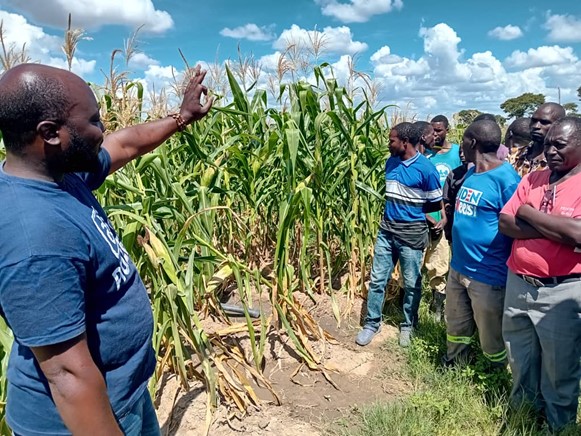
Cortiva Agriscience’s Wilbroad Moonga speaks to farmers during the recent field day he inNalufwi Camp
Meanwhile, Corteva Agriscience Field Officer Wilbroad Moonga urged farmers, during the demonstration, to stay abreast of latest scientific advancements that were capable of increasing their yields.
He said the type of farming methods small scale farmers were using made a difference between a good yield or a bad one hence the need to adopt better farming practices to increase productivity on their farms.
“For good yields it also depends on the type farming you are using. Some are still using conventional farming as opposed to conservation farming,” he said.
A small scale farmers Cornwell Hachipola appealed to the Ministry of Agriculture to continue building capacity among the farmers.
Mr. Hachipola said farmers in his area were willing to embrace new technologies of farming but that there was need for capacity building.
“We don’t know a lot about record keeping on our farms. Most farmers are moving to vegetable production under irrigation but they need a lot of help from the ministry,” he said.
The field day was only the first to be held in Chisamba District due to the widespread none performance of crops in the 2023/2024 farming season.
Authored by the Agricultural Information Officer for the National Agricultural Information Services