Applying agricultural interventions and rural development strategies: Sustainable and bio-diverse agro-ecosystems for smallholder resilience.
April 4-9, 2022, Nairobi, Kenya
BACKGROUND
The Right Livelihood College (RLC) is a global education and research initiative of universities and the Right Livelihood Award, also known as the ‘Alternative Nobel Prize’ (www.rlc-blog.org). Together with ‘Alternative Nobel Prize’ awarded individuals and organizations, the RLC promotes transdisciplinary education and research on sustainable development and social justice world-wide.
The workshop is organized as part of the project “RLC Platform for Young East African Scientists – Improving the Productivity and Resilience of Smallholder Farming” which is jointly conducted by the RLC Campus Bonn, Center for Development Research (ZEF), University of Bonn, Ger-many, the ‘Alternative Nobel Prize’ awarded organization Biovision Africa Trust, Nairobi, Kenya, the RLC Campus Lund, Centre for Sustainability Studies (LUCSUS), Lund University, Sweden, among other partners. The project is kindly supported by the Volkswagen Foundation.
THE WORKSHOP
Smallholder farming constitutes the backbone of livelihoods and economies in East Africa. About 75% of all people in East Africa depend on smallholder farming. Beyond its economic relevance, smallholder farming provides socio-cultural foundations of rural-life, identities and living spaces, and contributes to social resilience and stability. However, the presence and future of smallholder farming is challenged by constaints to which research and practice have to provide answers.
The five-day RLC physical workshop in Nairobi aims to create an innovative transdicisplinary research-practice platform on the future of East African smallholder agriculture, based on knowledge, expertise and networks of ‘Alternative Nobel Prize’ – awarded individuals and organ-isations and the global RLC network. Together, they will work on – and for – the future of East African smallholder agriculture.
To do so, the workshop will link traditional conference activities with moderated peer‐to‐peer dis-cussions in addition to on‐the‐job training‐excursions led by experienced practitioners. The par-ticipants will get opportunities to present their current PhD research projects.
The workshop objectives are:
– To establish an expert network on smallholder agriculture in East Africa. supported by
– To generate expertise and exchange knowledge to improve the productivity and resilience of smallholder farming in East Africa.
– To educate and train future key decision makers and ‘agents of change’ towards sustain-able development and social justice.
Who can apply?
PhD students from East Africa that are currently completing their PhD at an East African university. Their PhD research work should be related to smallholder farming in East Africa, for example to questions of productivity and resilience, agricultural interventions and rural develop-ment strategies, market changes, governance, land tenure or soil fertility. Preferably in the middle/ end of their studies. Fluent English is mandatory. Women applications are particularly welcome.
How to apply?
Your application in English must be done via the following link:
The deadline is March 6, 2022. Invited participants will be informed until March 11, 2022.
The scholarships will cover all costs for international and national travel, hotel accommodation, catering, and working materials. The workshop will be embedded in a variety of social and cultural side-events.
For questions regarding the workshop, please contact Arthur Guischet: [email protected]
Consultancy to develop a user-friendly compendium of forgotten food commodities in Africa
Name of Project:
FARA/FAO-RAF
Activity Ref No:
GF.RAFTD.RA4030226HP00.5575
Procurement Ref:
FARA/CS/IC/2022/01
Date:
Monday, January 31, 2022 : Submission deadline February 14, 2022
Food and nutritional security are significant developmental challenges in recent times. Africa is recorded to have the highest number of malnourished populations globally; Africa was estimated to have a 19.1 percent prevalence of undernourishment (PoU, 2019). There is the need for an accelerated approach and coordination at the continental level to provide solutions to these problems and advance necessary action to achieve the zero-hunger target.
A recent report indicated that Africa is home to diversified indigenous food commodities, that are well adapted to the environment and thrive well with little or no external inputs. These indigenous foods offer dietary diversity and are potent sources of micro and macronutrients. However, they have received little or no research and development attention towards their genetic improvement, value addition, and marketing. This earned them the label, “Neglected or forgotten food commodities”.
The Forum for Agricultural Research in Africa (FARA) has identified forgotten food as a potential source of solutions to ending hunger, malnutrition, and other dietary challenges in Africa. FARA and its partners proposed to carry out scoping studies, stakeholders’ engagement, and other activities to identify and characterize forgotten food commodities with the potential to be mainstreamed into the food system. To carry out this assignment, FARA requires the services of a consultant to support its staff in carrying out specific activities.
The overall objective of the assignment is to re-integrate the African indigenous, forgotten, and underutilized food commodities into the emerging food systems for sustainable food and nutritional security.
This request for expression of interest aims at engaging a consultant to carry out the following functions:
Carry out a systematic review and consultations to define the scope of traditional or forgotten foods. This will include the moderation of a D-group discussion to define what forgotten food is and what it is not, and/or a more apt term to describe the kinds of foods referred to as forgotten.
Draw a list of important forgotten foods and prioritize at least 100 common traditional food crops based on geographic coverage, nutritional density, other environmental and cultural values, and cross-cultural acceptability.
Undertake a desk review on the nutritional information for the identified forgotten food commodities and compile their nutritional values.
Coordinate the analysis to validate the nutritional value of the identified 100 food commodities.
Develop a compendium of the nutritional content, availability, accessibility, and utilization of common indigenous foods in the four sub-regions of sub-Saharan Africa. The analysis will include their environmental and economic benefits; it will be developed into a user-friendly format that documents at least 100 commodities. The compendium will be made with high-resolution images and succinct information on each commodity.
Facilitate stakeholder’s dialogue to validate the compendium of Forgotten Foods in Africa.
The detailed terms of reference are in the link below:
The Executive Director of FARA invites interested consultants to express interest in carrying out this assignment.
Consultants interested in this call must provide an Expression of Interest no longer than 10 pages, outlining proposed methodologies, references related to the execution of similar contracts, experience in similar areas, or evidence of knowledge and a proposed timeline. Brochures, CVs, and other supplementary materials submitted shall not be accounted for as part of the 10-page limit.
The anticipated period of performance for this consultancy is 42 man-days spread over three months. The work is expected to be carried out from the 22ndof February to 14th May 2022.
The individual consultant shall be selected based on procedures defined in the Procurement Guidelines of FARA.
Interested consultants may obtain further information from the Senior Technical Cluster Leader/Innovation Systems Specialist,Fatunbi Oluwole [[email protected]], and copy the Procurement Expert, Mr. Callistus Achaab [[email protected]], during the following hours: 9h00 to 15h00 GMT.
Please download the Terms of Reference below for further information on this opportunity.
Expressions of Interest should be submitted electronically to [[email protected]] and addressed to Dr. Yemi Akinbamijo, Executive Director of FARA, No 9 Flower Avenue, New Achimota, Mile 7, Accra, Ghana, no later than Monday, 14th February 2022, at 14h00 GMT. Tel: +233 302 772823/744888
FARA Affirmative Action Statement on Recruitment: there is no discrimination based on gender race, religion, ethnic orientation, disability, or health status.
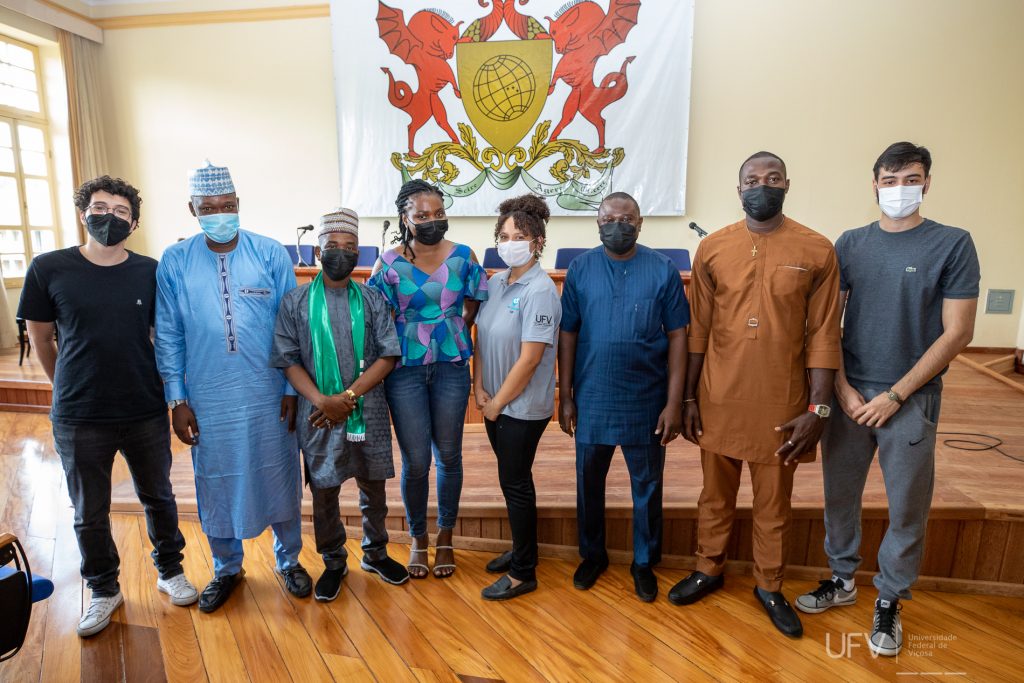
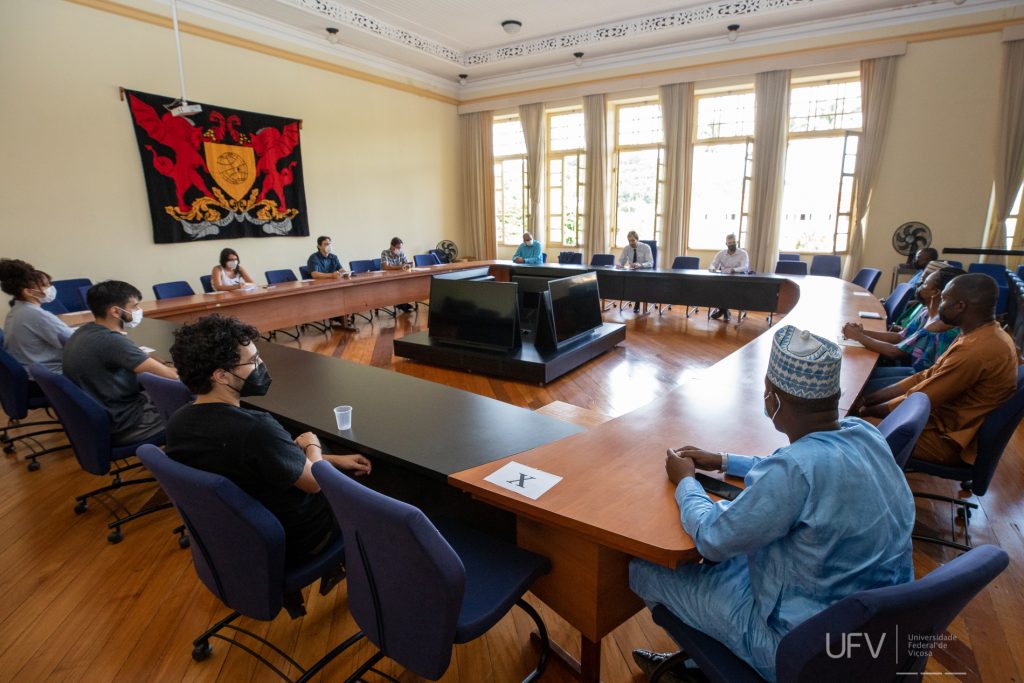
It was a great pleasure to welcome the first group of Nigerians to UFV on Monday (31st) (TETfund). One of 71 Nigerian students doing Master’s courses remotely under Agricultural Research and Innovation Fellowship for Africa (ARIFA). Dr. Demetrius David da Silva greeted the students and recalled the University’s history, emphasizing its commitment to offering international students “the best in our graduate programs.”
As the pioneer of ARIFA in Brazil, UFV has recently approached other Brazilian higher education institutions to join the program, allowing Nigerians to study at UFG, UFLA, UNESP, and UNIFEI presently.
Nneka Vivian Iduu, a Master’s student in the subject of Agricultural Microbiology, is one of the Program’s original participants. She has previously finished three academic semesters of graduate courses at UFV via distance learning, and she arrived at the Viçosa campus last week to meet with the institution’s researchers and to make use of all of the facilities available.
The student, speaking on behalf of the Nigerians in the program, stated that her time at the university had greatly aided her studying. She praised the opportunity to work at UFV and finally meet everyone participating in the Program’s activities as well as the University’s research facilities in person. Nneka acknowledged her adviser, Professor Hilário Cuqueto Mantovani, as well as the Director of International Relations, Vladimir Di Iorio, and the UFV Ambassadors students.
In addition, the Master’s student wishes that more graduate students in her nation have the opportunity to participate in this important program. Arthur Wakim Enrici, a biochemistry student and UFV Ambassador, said the goal is to best support postgraduate students during their stays at the university, aiding with their doubts, facilitating integration and sharing of cultural and academic experiences. His team of ambassadors is “absolutely willing” to “present the best of the University and Brazil”, he reminded them due to the covid-19 pandemic.
Vladimir Di Iorio, Director of International Relations and member of the partnership’s Governance Committee, says the UFV program has been a success despite the hurdles provided by the covid-19 pandemic.
Other groups of Nigerian Masters students are scheduled to join the University in the near future.
Raul Narciso Guedes, Dean of Research and Graduate Studies (PPG), and Murilo Zerbini, PPG special adviser and ARIFA Brazil Governance Committee delegate, also attended the reception.
They emphasized the value of collaboration with FARA and TETfund in internationalizing UFV postgraduate programs and developing research in Africa and Brazil.
Engagement of a firm to facilitate the recruitment of the next Executive Director of FARA
Organisation:
Forum for Agricultural Research in Africa (FARA)
Procurement Ref:
FARA/CS/QCBS/2022/01
Date:
Thursday, January 27, 2022
The Forum for Agricultural Research in Africa (FARA) invites interested and eligible firms to indicate their interest in the following assignment: Facilitate the recruitment of the next Executive Director of FARA.
The Forum for Agricultural Research in Africa (FARA) is an apex organization forming and bringing together coalitions of major stakeholders in agricultural research for development (AR4D) in Africa. It is the technical arm of the African Union with the mandate of developing and coordinating Agricultural Research for Development in FARA serves as the entry point for agricultural research initiatives in Africa designed to have a continental reach or a sub-continental reach spanning more than one sub-region. Headquartered in Accra, Ghana, FARA has been in existence since the late 1990s. Over this period, FARA has provided a continental forum for stakeholders in AR4D to shape the vision and agenda for this sub-sector, and to mobilize themselves to respond to key continent-wide development frameworks, notably the Comprehensive Africa Agriculture Development Programme (CAADP).
FARA Management Board has authorised the recruitment process of a new Executive Director. This will involve engaging an Independent Recruitment Firm to assist the Board’s Recruitment Advisory Committee (RAC) throughout the process.
The services and activities to be provided under the assignment are as follows; Under the supervision of the RAC, the Independent Recruitment Firm will:
Develop a workplan for the recruitment process covering planning, recruitment, and candidate assessment,
Develop a vacancy announcement based on an available draft and ensure that the selection criteria are properly
Develop and launch the vacancy advertisement in the appropriate
Receive applications, act as the contact point for those seeking information and/or proposing candidates and communicate with applicants where and when
Conduct an executive search for candidates, using networks, rosters, referrals, and other appropriate means, whilst striving for regional and gender balance in the selection
Screen the applications and establish a long list of candidates (approximately 12)
In consultation and in compliance with a process agreed upon with the RAC, including remaking reference to background checks, establish a short list of candidates (approximately 6).
Assist the RAC in establishing the final list of three candidates, interviewing them, and preparing a detailed final report that will be presented to the Board for decision-making.
Provide advice on successful onboarding of the new Executive
Prepare a final report and closure of the recruitment
FARA invites Recruitment Firms to indicate their interest in providing the above service. The selection criteria for the Recruitment Firm should include (i) at least 10 years’ demonstrated experience in conducting executive recruitments for International Agencies, Development Organizations, and International NGOs in Africa, (ii) The firm should demonstrate evidence of completion of at least three (3) assignments of recruitment of Chief Executives in the last seven (7) years with evidence of excellent performance of selected candidates. Interested Firms shall provide information on their qualifications and experience demonstrating their ability to provide the services (supporting documentation, reference for similar services, experience in comparable assignments, availability, and CVs of qualified staff, etc). Interested Firms should provide a detailed financial proposal with budget lines and resources for activities to be performed.
The eligibility criteria, the establishment of a shortlist and the selection procedure shall conform with the Procurement Guidelines of FARA for the Recruitment of Consultants. Please, note that interest expressed by a Recruitment Firm does not imply any obligation on the part of FARA to include it in the
The estimated duration of services shall be for a period of 18-man days spread over the period March 2022 to December 2022.
Interested firms may obtain further information from the HR and Administration Manager, Ms Ama Pokuah Asenso [[email protected]], and copy the Procurement Expert, Callistus Achaab [[email protected]], during the following hours: 9h00 to 15h00 GMT.
Please download the Terms of Reference below for further information on this opportunity.
Expressions of Interest should be submitted electronically to [[email protected]] and addressed to Dr. Yemi Akinbamijo, Executive Director of FARA, No 9 Flower Avenue, New Achimota, Mile 7, Accra, Ghana, no later than Thursday, 17th February, 2022, at 14h00 GMT. Tel: +233 302 772823/744888.
FARA Affirmative Action Statement on Recruitment: there is no discrimination based on gender race, religion, ethnic orientation, disability or health status.
FARA, the apex continental organization coordinating and advocating for agricultural research for development in Africa, is set to launch and facilitate FAO’s request to develop a strategy to provide guidance, coherence, and alignment for impact at the country level through better use of science and innovation.
The FAO has undertaken important steps to strengthen its work on science and innovation, including efforts to transform itself into a more innovative organization that is capable of assisting countries to scale up appropriate innovations based on science. The FAO Director-General has thus requested the development of a strategy to provide guidance, coherence, and alignment for impact at the country level through better use of science and innovation.
The Strategy will strengthen the use of science and innovation and will be a key tool for the implementation of the Strategic Framework (2022-31) and the SDG through science and innovation.
To have impact, the Strategy must respond to the challenges and needs of stakeholders by engaging them throughout its preparation process.
The specific objectives of these engagements are:
To identify science and innovation needs and gaps at regional and country levels.
To discuss innovation priorities and to broaden the common understanding of innovation.
To provide inputs for the development of the thematic priorities of the Strategy.
To identify how to strengthen FAO’s role on science policy and research at national and regional levels.
To identify priorities for partnerships.
FARA intends to launch and facilitate discussions among its constituents, partners, donors, and networks. You are warmly invited to actively participate in discussing pertinent questions which will be posted on the FARANet.
Your views will be collated and discussed from Wednesday, Jan 26th to Sunday, Feb 7th and then feedback summarised for further consultation and validation meeting on 15th or 16th February 2022
The Forum for Agricultural Research in Africa (FARA) is the apex continental organization coordinating and advocating for agricultural research for development. FARA is the designated technical Institution of the African Union Commission and African Union Development Agency on matters concerning agriculture science, technology and innovation.
The Forum for Agricultural Research in Africa (FARA), together with the Association for Strengthening Agricultural Research in Eastern and Central Africa (ASARECA) and the East African Farmers’ Federation (EAFF) are pleased to announce that the eleven (11) Third-Party Projects listed in the table below have been selected for funding under the project “Strengthening Agricultural Knowledge and Innovation Ecosystem for Inclusive Rural Transformation and Livelihoods in Eastern Africa” (AIRTEA). The AIRTEA project is supported by the Organization of African, Caribbean, and Pacific States (OACPS) through the ACP Innovation Fund which is funded by the European Union (EU). The AIRTEA project is being implemented in three countries (Kenya, Rwanda and Uganda) under FARA, ASARECA and EAFF coordination.
The selection of the 11 third-party projects was overseen by the three coordinating institutions and followed a rigorous and competitive evaluation process involving 112 proposals that were submitted in response to the AIRTEA call.Third-party projects will start from March 1, 2022, for two and a half years.
FARA, ASARECA and EAFF congratulate the consortia that conceived and developed the 11 third-party projects selected for funding. We wish to register our strong appreciation of the 101 consortia that responded to the AIRTEA project call with proposals that were not selected. We wish the consortia responsible for implementing the selected projects success in delivering the expected outcomes and impact of the AIRTEA project and look forward to working with them towards this goal.
No
Name of Project
Lead Institution
Project country(ies)
1
Harnessing multi-stakeholder innovation platforms for knowledge transfer and aquaculture value chain development in Uganda
Abi Zonal Agricultural Research and Development Institute (Abi)
Uganda
2
Enhancing inclusive market access for African Indigenous Vegetable seed and value-added products by Smallholder farmers in Uganda
Uganda Christian University (UCU)
Uganda
3
Upgrading of silver cyprinid (Rastrineobola argentea) value chain through multi-stakeholder partnerships and novel climate-smart postharvest processing technologies and practices for improved rural livelihoods
Jomo Kenyatta University of Agriculture and Technology (JKUAT)
Kenya
4
Strengthening cassava innovation ecosystem and knowledge transfer for inclusive rural livelihoods development in Kenya, Uganda, and Rwanda
University of Nairobi (UoN)
Kenya, Rwanda, Uganda
5
Digital Connectors for farming communities
Africa Forum for Agricultural Advisory Services (AFAAS)
Kenya, Rwanda, Uganda
6
Unlocking productivity within small holder farming systems through use of geospatial technology (GIS), artificial intelligence and biological technologies in the face of climate change
Koppert Biological Systems (KBS)
Kenya
7
Promoting technologies and innovations for improving access to quality potato seeds by small holder farmer through strengthening potato seed systems and multi-stakeholder collaboration in Rwanda
Seed Potato Fund Joint Ventures Ltd (SPF)
Rwanda
8
Technology Transfer through Innovation Systems: Enhancing Smallholder farmers’ capacity for profitable and sustainable potato production
Rwanda Agriculture and Animal Resources Development Board (RAB)
Kenya, Rwanda, Uganda
9
Leveraging The Benefits of Multi Stakeholders Partnership to Support Rural Women and Youth in Dairy Sector in Kenya
Cooperatives Alliance of Kenya
Kenya
10
Retaining next generation farmers in agribusiness through enhanced knowledge sharing platforms along with the dairy and selected grain value chains in Uganda
AGRENES (Agriculture, Environment, and Ecosystems) Limited
Uganda
11
Youth Leading Changes in Resilient Private Extension and Advisory Services for Job and Wealth Creation