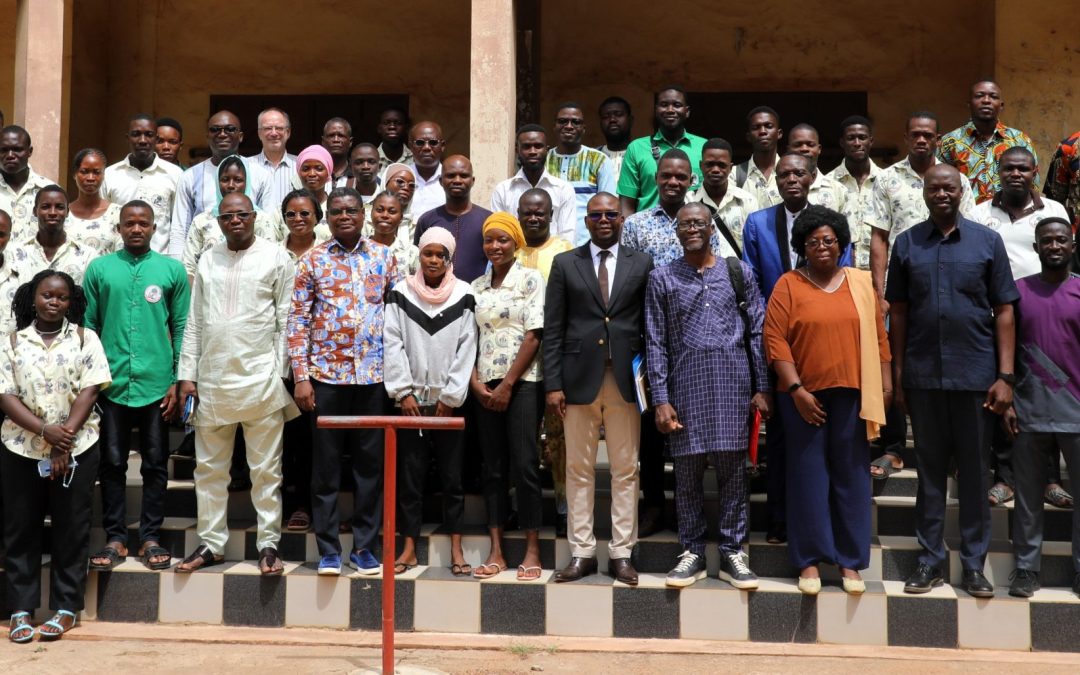
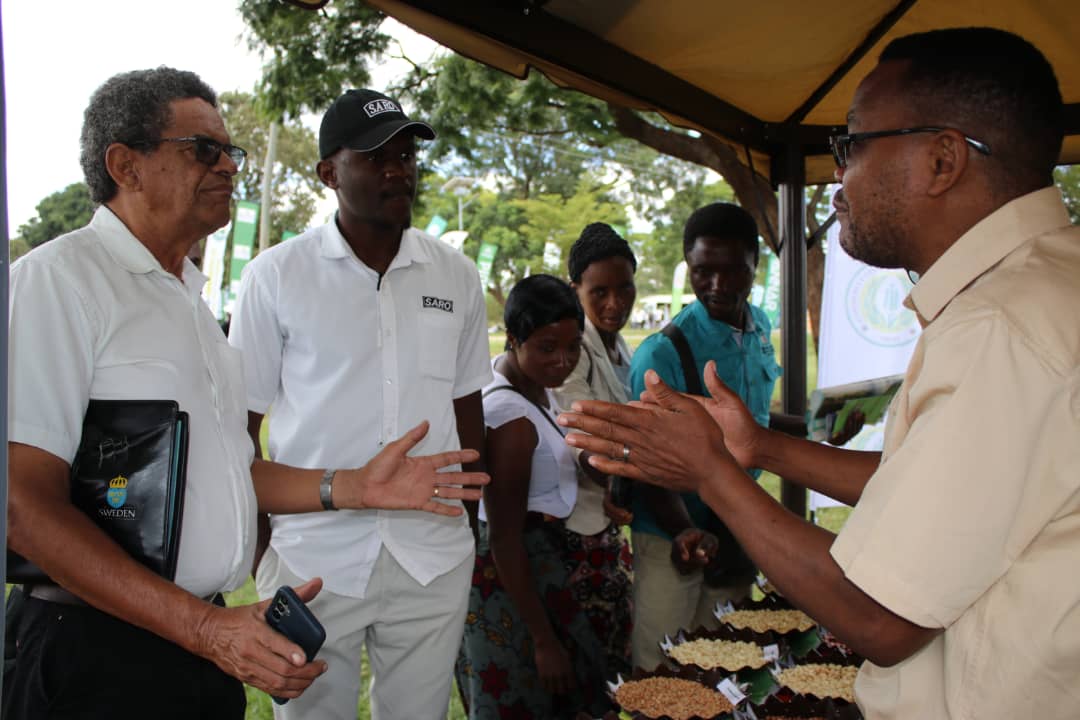
Without land, agriculture is not possible. The importance of soil resources for current and future generations therefore no longer needs to be demonstrated. This is why several projects and programs are dedicated to it with a view to optimal and sustainable land management. “The Declare project aims to set up a decision support tool to enable stakeholders to make appropriate decisions with a view to improving the resilience of their production systems,” said Prof. Rodrigue Diogo, Coordinator of Declare. During these two days of the workshop which brought together different actors from the agricultural world and livestock systems, the discussions were very interesting and resulted in more concrete visions to be able to continue to optimize actions in favoring sustainable land management. To do this, “The question of innovative solutions was debated. Among the solutions that I think we must be able to find is to link research to training. It is essential to link research to training to continue training the next generation,” insisted the Vice-Rector in charge of scientific research at the UP, Prof. Mohamed Nasser Baco in his opening speech. “Sustainable land management should contribute to food security, agriculture, forestry and environmental protection. », indicated the Dean of the Fa Prof. Valérien Amégnikin ZINSOU.
During these two days of discussions, several communications were presented. In particular on the INTERFACES and DeClaRe projects respectively by Doctors David Anaafo and Kisito Gandji from the Competence Center of the West African Center for Scientific Services on climate change and adapted land use (WASCAL) in Burkina Faso; on the Forum for Agricultural Research in Africa (FARA) by Benjamin Abugri from FARA, Ghana; and on the theory of change by Doctor Peter Asare-Nuamah of the University of Bonn in Germany. After the opening ceremony and the various communications, space was given to participants for discussions on the project’s theory of change.
Participants contributed through exchanges to co-develop with researchers from the INTERFACES and DeClaRe projects the theory of change that will enable the project’s results to be effectively achieved. “The theory of change is a tool that allows us to better understand the needs of target communities, to describe the change we want to bring as well as the activities to carry out. » informed Dr. Gandji. Through the various works and exchanges, the participants better described the change to be made in sustainable land management in northern Benin, with a proposal for the activities to be carried out to achieve this. DeClaRe aims to reduce conflicts between farmers and breeders, adapt SLM to climate change and promote ecological agriculture in the face of climate change with a view to improving food security. The same actors will be invited to the Parakou campus next year for a workshop to disseminate the first results of the project.
It is with profound sadness and a heavy heart that the Executive Director of FARA, Dr. Aggrey Agumya announces the passing of FARA’s founding Executive Director, Prof Monty Patrick Jones, a national of Sierra Leone. His death occurred on Sunday 28th April 2024. He was 73 years.
Prof Jones (or “MPJ” as his staff fondly called him) led the FARA Secretariat as Executive Secretary / Executive Director from its inception in June 2002 to June 2013 when he completed his second term. He also served as the Chairperson of the Global Forum on Agricultural Research (GFAR) from 2010 to 2013.
Prof. Monty Jones was the first African to be awarded the World Food Prize. He won the award in 2004 for his discovery of the genetic process to create the New Rice for Africa (NERICA). In 2007, Time Magazine named him one of the 100 most influential persons in the world. He masterfully leveraged the reputation and prestige that came with this recognition to advance agricultural research and innovation in Africa and globally, and to elevate the profile of FARA and the sub-regional agricultural research organisations. Prof. Monty Jones was a visionary. He was instrumental in laying the foundation of FARA and in shaping what the organisation has become. At FARA he served Africa with unwavering dedication and passion, and with relentless drive.
Upon leaving FARA in 2013 Prof. Monty Jones returned to his country, Sierra Leone, to serve as a Special Advisor to the President and Ambassador-at-large. In February 2016 he was appointed Minister of Agriculture, Forestry and Food Security, a position he held up to April 2018. He leaves behind a strong legacy in Africa’s agricultural research and innovation domain which FARA will honour in his memory.
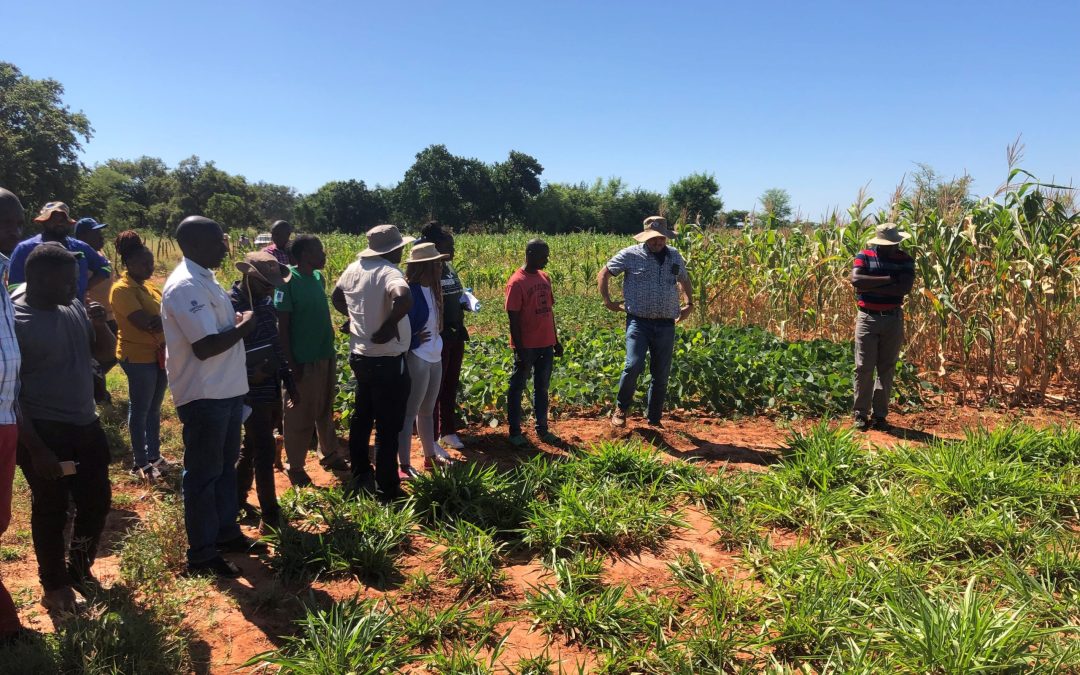
The International Maize and Wheat Improvement Center (CIMMYT) working with smallholder farmers in Southern Province is fostering the production of Crop-livestock integration and diversification trials aimed at increasing fodder production among smallholder farmers in the province.
Speaking with National Agricultural Information Services in Mazabuka district, Christian Thierfelder, who is a Principal Scientist at the International Maize and Wheat Improvement Centre, highlighted that most farmers do not usually produce fodder in their fields.
Dr Thierfelder believes this is a new intervention and that it is necessary for farmers to adopt the technologies that have been tested with them on larger portions of land. By doing so, they can effectively harvest the crops and use them to make hay or silage, or for other ways of fodder conservation. This will ensure enough feed to sustain their livestock during the dry winter season.
“What we introduced here is new options for fodder production which involve green manure cover crops lablab and velvet beans but also new potential grasses like Brachiaria mulato which is a fodder grass of very high value, we heard from farmers that they can increase the milk production by 30 to 50 percent with this feeding strategy and also the meat production can be increased, in six weeks farms reported a 40kg weight gain in cattle,” he said.
George Malambo is a host farmer on the Ukama Ustawi Project working on an Innovation Research Trial in Ngwezi B of Mazabuka district. He stated that his dairy animals enjoyed the fodder he produced which led to an observed increase in milk production.
“What I tried was to feed 1 dairy animal and what I found was that it increased its milk production from 2.5 litres to 15 litres,” Mr Malambo said.
The Ukama Ustawi Initiative has set a goal to provide support for climate-smart agriculture and livelihoods in 12 countries in Eastern and Southern Africa. This initiative aims to assist millions of small-scale farmers in intensifying, diversifying, and reducing the risks associated with maize-mixed farming.
To achieve this, the initiative will offer improved extension services, strengthen institutional capacity, provide targeted farm management bundles, offer policy support, develop enterprises, and attract private investment.
Climate change has continued to be a global concern that threatens food security resulting in pests and diseases with increased or decreased potency.
Among the major crops in Zambia, Cassava is affected by Cassava Mosaic Disease (CMD) and Cassava Brown Streak Disease. Sweet potato is affected by Sweet Potato Virus Disease (SPVD. Maize is affected by the fall Army Worm pest (FAW) which causes significant damage to maize. this calls for accurate identification and sustainable management of the FAW, Cassava diseases, and sweet potato diseases among major stakeholders, the small-scale farmers, which is lacking and inadequate due to mainly inadequacies in the extension services.
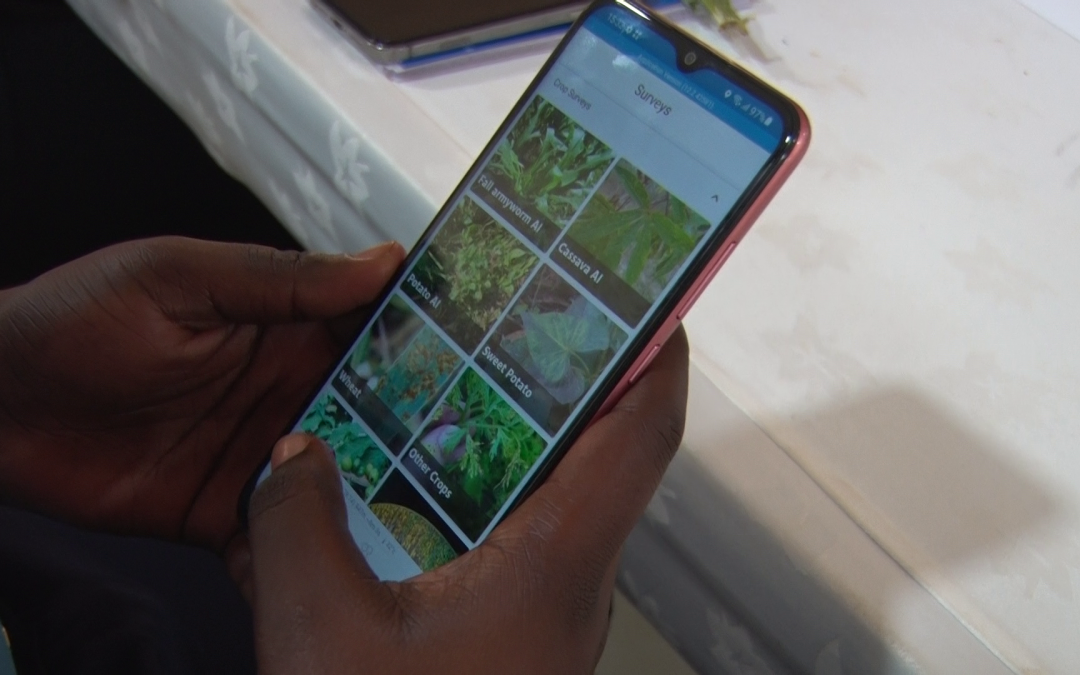
Therefore, the development of the PlantVillage app as an innovative solution that uses Artificial intelligence (AI) through Google’s open-source TensorFlow technology is being proposed to be used to identify symptoms of CMD, CBSD, the feeding damages of Cassava Green mites (CGM) and maize fall armyworm (FAW) infestations. The app will be used in the development of risk assessment tools, predicting the potential distribution and damage of the targeted pests and diseases due to climate change, and supporting farmers at scale in pest and disease management.
The newly launched Plant Village project, funded by the United States Agency for International Development (USAID) aims to upscale the PlantVillage application for monitoring, forecasting, and mitigating the effects of climate change on pests and diseases of maize, cassava, and sweet potato in Zambia.
Speaking at the training workshop for PlantVillage Zambia Field technicians, which was held at Relaxin Lodge in Nchelenge district, Mathias Tembo who is the Senior Agriculture Research Officer under the Zambia Agriculture Research Institute (ZARI) in the Ministry of Agriculture says they are promoting the use of the PlantVillage application which uses Artificial intelligence (AI) among farming communities. This is an app that is installed on a mobile smartphone, and it is free of charge with a lot of information.
“The current problems we are facing are the effects of climate change, this season Zambia has been hit by the effects of climate change, with over 70 percent of the country failing to receive rainfall” He said.
Mr. Tembo who is also the principal Investigator for the PlantVilage project in Zambia expressed concern that crop production among farmers has adversely been affected by different pests and diseases. The PlantVillage application comes in very handy as it will be used by the farmers in their fields to identify problems of different types of diseases and pests.
Mr. Tembo said for now, the project is targeting Maize, Cassava, and sweet potato.
“In the first phase of the project we want to upscale this technology so that more farmers can be able to accept and utilize it, the target within the next six months is to reach out to about 20,000 farmers who will be utilizing this technology” Hehe said.
Mr. Tembo said they are utilizing the newly recruited Technicians who are graduates from different universities, who will be working with camp extension officers who are on the ground and will go out in the field to train farmers to adopt this technology.
“They will go out in the field to survey for pests and diseases out there in the fields, and this app will be able to collect this data and once the information is sent it will be used to solve future problems” Tembo said.
“This technology has been tested against experts from the International Institute for Tropical Agriculture in its ability to identify pests and diseases, it was equal in strength in identifying these pests and diseases, and it was further tested against the extension officers, “ he said.
He said that AI technology is a new tool that should be welcomed and applied, it will not eliminate the jobs for human beings, itbut willrather speed up the process of finding solutions to problems.
And officiating at the same event, Nchelenge District Agriculture Coordinator Arnold Muimui says the PlantVillage application has come at the right time when the population of Nchelenge district is growing and needs good yields.
The DACO said factors such as climate change, pest infestation, and disease infections have become an important issue that affects crop production which has resulted in reduced yields hence food security is threatened.
He explained that said due to the effects of climate change pests and diseases have become evasive to the human eye and more evasive to his crops.
“For CBSD and CMD, mankind has not sat idle, people are working day and night to invent several means to resolve these stumbling blocks to food production, this is through utilization of Artificial Intelligence” He said
He said through financial support from USAID, Feed the Future program, ZARI has adopted the use of the PlantVillage app an artificial intelligence tool for detecting pests and diseases in crops.
The PlantVillage app is a game changer, I would rather call it a next-age extension service technology, it would not have come at a better time than this, I am happy we have this kind of technology in agriculture” he said.
Mr. Muimui said the objective of this training is to orient the field technicians on the utilization of the PlantVillage app to establish and facilitate data transfer, and development of approaches and means to control plant pests and diseases.
“My appeal is to the facilitators of this project, let them extend the PlantVillage app to the camp extension officers so that they can also be empowered to utilize this tool which will help our farmers to increase their crop yields” he said.
The app can be used to gather information on the dynamics of these crop protection matters to develop approaches and tools that can be used to control pests and diseases in crops, such as the use of natural enemies to control pests.
Authored by National Agricultural Information Services (NAIS)
The agriculture sector in Zambia is key to the economy of the country as it contributes average about 19 percent to the Gross Domestic Product (GDP) and employs about three quarters of the population.
However, the current food system and the livelihood of people is facing a hard time due to the advent effects of climate change, whereby calling for a strong transformation in both food production and consumption patterns in a sustainable way.
Further, strengthening climate resilience of agricultural livelihoods calls for farmers to adapt and build resilience to the increasing challenges of climate change where nutritious food is available for all.
It is against this backdrop that agricultural experts are calling for farmers to develop an efficient, competitive, and sustainable agricultural sector which assures food and nutrition security, increased employment opportunities and incomes.
And one of the ways to build resiliency in agriculture is for farmers to adapt the agroecological approachwhich strengthens the capacity for farmers to plan for climate risks that threaten to derail development gains, promote climate resilient agricultural production and diversification.
Agroecology is a holistic approach that seeks to reconcile agriculture and local communities with natural processes for the common benefit of nature and livelihoods.
The farmer’s traditional knowledge combined with innovations in practices and the sustainable use of technologies is at the core of an agroecological farming system.
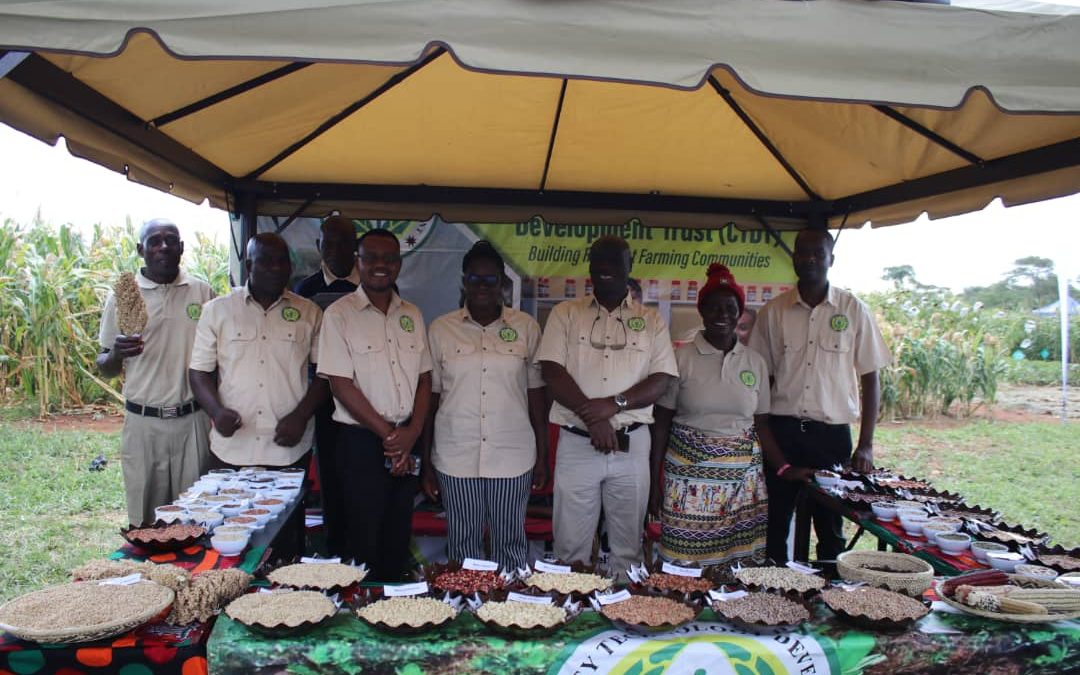
Joseph Ngenda Mwitumwa from the Community Technology Development Trust says agroecological approach is naturally designed to mitigate the effects of climate change as it is a natural way of farming.
He said that the approach is a holistic way of farming which promotes planting of trees, the use of manure and indigenous crop varieties.
“As Community Technology Development Trust, we are promoting a number of agroecological practices and among them is promoting the utilisation of bokashi and the use of indigenous seeds because they are resilient to climate change, considering the environmental challenges caused by climate shocks,” he said.
He said indigenous seed varieties that are late maturing perform better than hybrid crops adding that indigenous seeds easily adapt to the local environment which makes them perform well compared to hybrid seeds.
He further stated that despite the high cost of fertilizer, farmers are able to produce with the utilization of manure which is less costly when using indigenous crops.
Mr. Mwitumwa however said they face challenges when implementing the agroecological approach due to the knowledge gap when it comes to the use of manure that can help preserve other traits found in indigenous seeds.
“There is significant knowledge gap on the benefits of agroecology approaches and most farmers especially smallholder farmers are not aware of indigenous seeds which promotes diversification of farming practice,” he said.
He said diversification can help farmers to become food secure and households will have different types of sources of nutrition from different crops produced.
He however commended the government’s efforts in recognizing and improving agroecological practices through the introduction of the Comprehensive Agricultural Support Programme (CATSP) which seeks to promote the adoption of the approach.
“Government has changed the policy on plant variety and seeds act while breeders act is being changed and we are optimistic that these approaches will be included in the new seed loans,” Mr. Mwitumwa said.
Indeed, building an effective agricultural adaptation strategy is imperative to ensure food security in a country challenged by climate change constraints.
Government and the private sector in the country should work together to adopt short and long- term response strategies to cope with erratic climate change impacts.
Authored by National Agricultural Information Service
Consultancy Services to facilitate Country Foresight Exercise (CFE) in Kenya, Madagascar and Nigeria
Name of Project:
FARA/FAO/CFE
Activity Ref No:
FARA/FAO/CFE/ICF/2024/01
Procurement Ref:
FARA/FAO/CFE/CS/IC/2024/01
Issue Date:
Wednesday, April 24, 2024
Submission Deadline:
Wednesday, May 08, 2024
The Forum for Agricultural Research in Africa (FARA), through its Institutional Capacity & Future Scenarios (ICF) Cluster, contributes to the CAADP-Malabo 2025 targets of ensuring that Africa’s AR4D institutions have adequate capacity to plan and respond to national capacity requirements leveraging on foresight methodologies to foster food system transformation. Through its CAADPXP4 Program, FARA has been advancing foresight processes at regional and country levels, leveraging on its diverse partners through the Africa Foresight Academy (AFA).
The Food and Agricultural Organization (FAO) of the United Nations (UN), through its Regional Office, commissioned the FARA to facilitate the implementation of regional foresight expert consultation, bringing experts from across Africa to examine country-relevant triggers and drivers of transformation based its series, “The Future of Food and Agriculture: Drivers and Triggers of Transformation (FOFA-DTT).”
Focusing on the African landscape, the consultation is poised to dissect nuanced case studies from Madagascar, Nigeria, and Kenya, unravelling the intricacies that propel agricultural and food systems evolution. In leveraging the FOFA-DTT series, this technical discourse aims to extract contextually relevant insights specific to African nations, decoding the intricate interplay of triggers and drivers shaping the transformational trajectory. The Regional Expert Consultation is to convene key stakeholders from diverse sectors, including government, academia, private sector, and civil society.
As a starting point, FARA and FAO will convene country foresight experts’ consultations in key countries to develop and validate country foresight reports. This assignment aims to assess the existing country foresight activities and initiatives detailing modes, structure, and use. It will quantitatively analyse stakeholders’ opinions on what and how the country foresight report should look like for easy adaptations and used as a reference guide. It will run a stakeholder survey and identify the trigger of change in the sector.
To achieve the above, FARA proposes engaging a suitable consultant for each country to support the process.
This request for expression of interest aims at engaging a consultant to carry out the following functions:
Facilitate the development of the Country Foresight Report (CFR).
Support the identification of significant system gaps affecting the foresight process and adaptation in Kenya, Nigeria or Madagascar from stakeholders’ perspectives in different systems/ sectors.
Support the development and application of online surveys.
Contribute to stakeholder engagement meetings and validation forums.
Support the development of context-specific country foresight reports using lessons learned and innovations from the survey.
The Executive Director of FARA invites interested consultants to express interest in carrying out this assignment.
Consultants interested in this call must provide an Expression of Interest no longer than 10 pages, outlining proposed methodologies, references related to the execution of similar assignments, experience in similar areas, or evidence of knowledge and a proposed timeline. Brochures, CVs, and other supplementary materials submitted shall not be accounted for as part of the 10-page limit.
The anticipated period of performance for this consultancy is 20 man-days spread over three months (May 2024 to August 2024).
The individual consultant shall be selected based on procedures defined in the Procurement Guidelines of FARA. The contract will be awarded separately for each country—Kenya, Madagascar, or Nigeria. Therefore, all applicants are encouraged to submit their Expressions of Interest (EOIs) for each specific country.
Interested consultants may obtain further information from the FARA Institutional Capacity & Future Scenarios. Cluster Lead Specialist,Dr Abdulrazak Ibrahim[[email protected]], and copy the Procurement Expert, Callistus Achaab [[email protected]] and Dr. Mark Fynn[[email protected]] during the following hours: 9h00 to 16h00 GMT.
Please download the Terms of Reference below, for further information on this opportunity.
Expressions of Interest should be submitted electronically to [[email protected]] and addressed to Dr. Aggrey Agumya, Executive Director of FARA, No 7 Flower Avenue, New Achimota, Mile 7, Accra, Ghana, no later than Wednesday, May 08, 2024, at 16h00 GMT. Tel: +233 302 772823/744888.
FARA Affirmative Action Statement on Recruitment: there is no discrimination based on gender race, religion, ethnic orientation, disability, or health status.