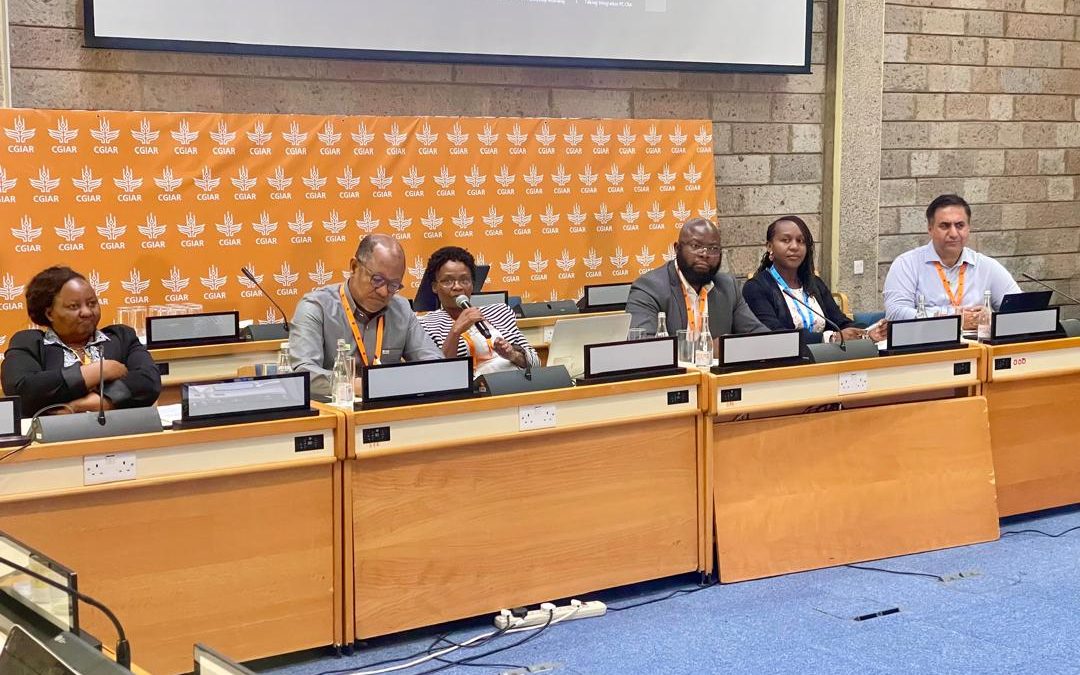
Nairobi, 11 April 2025 – At the recently concluded CGIAR Science Week side event titled “Breeding for Tomorrow: Inclusive Delivery,” Ms Beatrice Egulu from the African Union Commission (AUC) delivered a compelling address, advocating for deeper continental integration and innovation in seed systems to ensure equitable access and regional impact. The high-level panel session, held at the United Nations Office in Nairobi, brought together prominent voices from the African agricultural sector under the theme of “Inclusive Delivery”, a strategic framework aimed at transforming breeding programmes for greater reach, uptake, and farmer impact.
Unlocking the Potential of Regional Harmonisation
Ms Egulu highlighted the disparity between promising regional frameworks—such as the COMESA Variety Catalogue, ECOWAS seed regulations and SADC’s Harmonised Seed Regulatory System – and their actual implementation. Despite protocols for mutual recognition, numerous African countries continue to impose redundant variety testing, outdated national laws, and limited regulatory capacity, thereby hindering access to improved varieties.
To address these challenges, the AUC proposes:
A Continental Mutual Recognition Accord under the AfCFTA (https://au-afcfta.org/) to accelerate varietal release and certification.
Collaborative investment in digital infrastructure for the real-time sharing of diverse data and certification information.
Establishing a trust-based harmonisation mechanism, coordinated with Regional Economic Communities (RECs) and development partners.
“Harmonisation must not remain a mere promise on paper,” Ms Egulu emphasised. “It must serve as an engine for integration, innovation, and empowering farmers.”
South-South Cooperation: A Strategic Pathway to Scale
Discussing the significance of South–South Cooperation, Ms Egulu described it as a cornerstone for democratizing agricultural innovation in Africa. She noted that SSC facilitates the exchange of technologies and institutional best practices—from East African seed traceability systems inspired by Asia to participatory breeding models adapted across African regions.
Utilising triangular cooperation to mobilise financial and technical support.
Mainstreaming SSC within broader frameworks such as STISA-2024 and the African Agribusiness Strategy.
“SSC is not just a tool,” she stated. “It is a pathway to shared sovereignty and resilience in seed systems.”
The Way Forward: Systems for Delivery, Not Just Science
Ms Egulu concluded by emphasising that impactful breeding goes beyond developing superior varieties—it relies on the systems that deliver them. Bridging policy gaps, empowering NARES, fostering digital interoperability, and scaling partnerships through SSC are essential if African farmers are to reap the benefits of scientific innovation.
Her address echoed the session’s core vision of “Inclusive Delivery,” aligning with CGIAR’s mission to ensure that agricultural innovations are scalable, equitable, and regionally integrated.
About Ms Beatrice Egulu
Ms. Beatrice Egulu is a Policy Officer at the Department of Agriculture, Rural Development, Blue Economy and Sustainable Environment (DARBE) of the African Union Commission (AUC). With extensive experience in agricultural policy, seed system development, and regional integration frameworks, she plays a crucial role in advancing the AUC’s strategic agenda for food systems transformation. Ms. Egulu promotes the alignment of science, governance, and partnerships, particularly through the African Seed and Biotechnology Programme and the implementation of the Comprehensive Africa Agriculture Development Programme (CAADP).
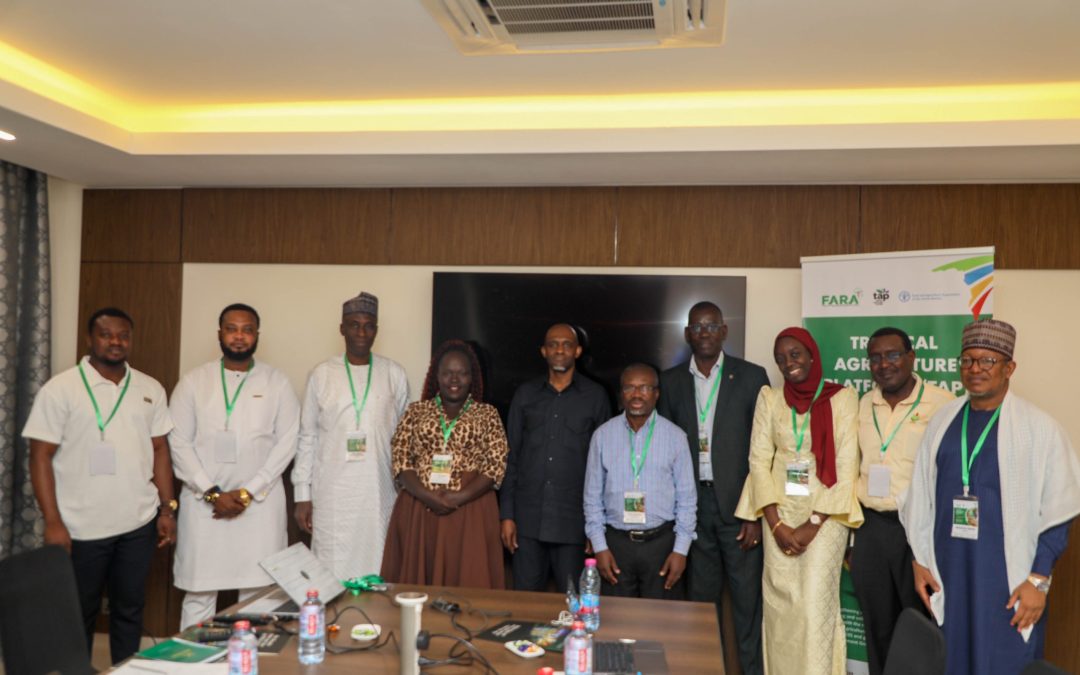
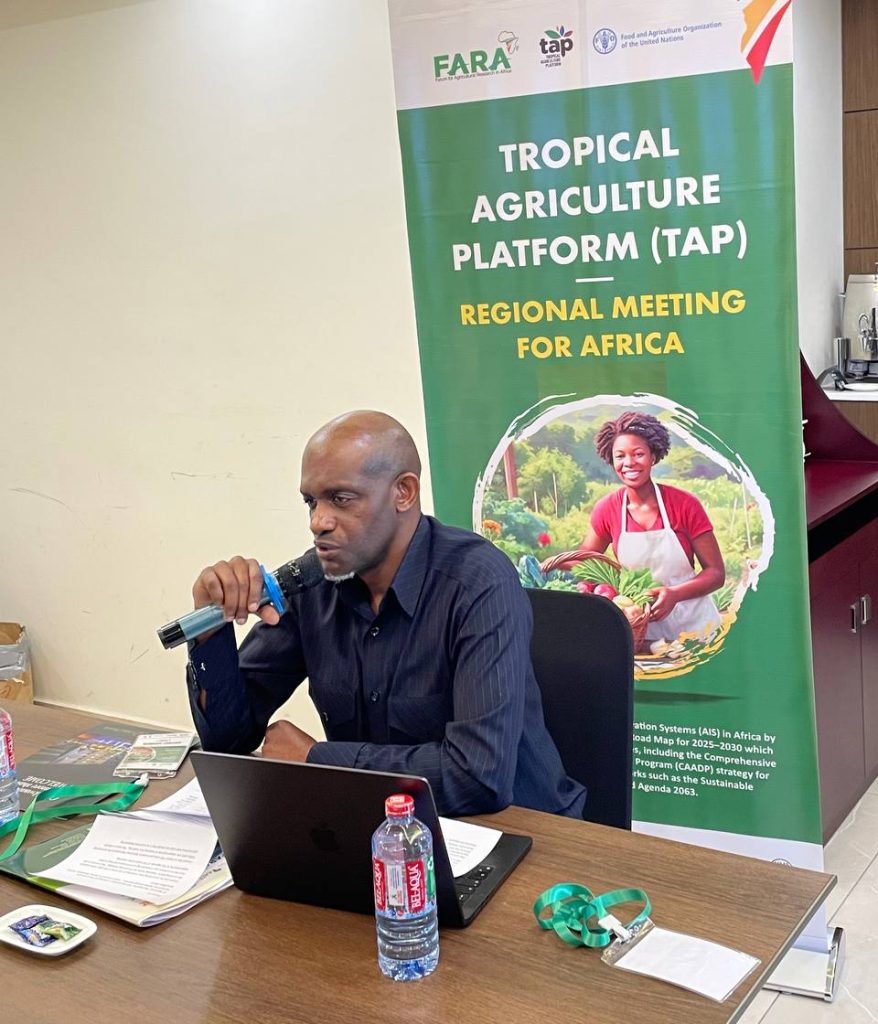
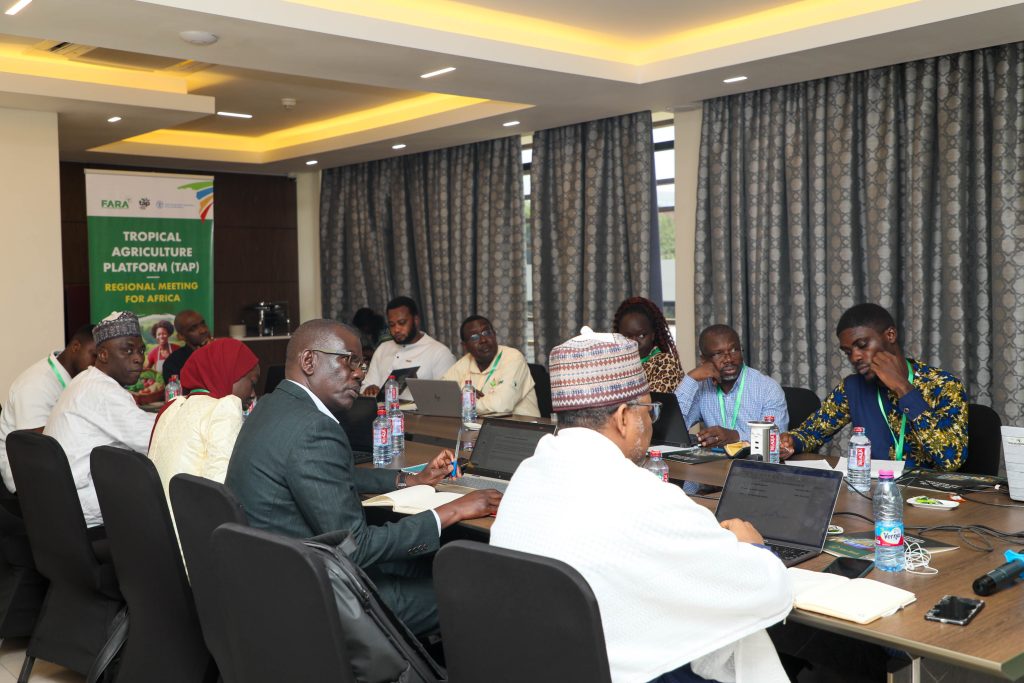
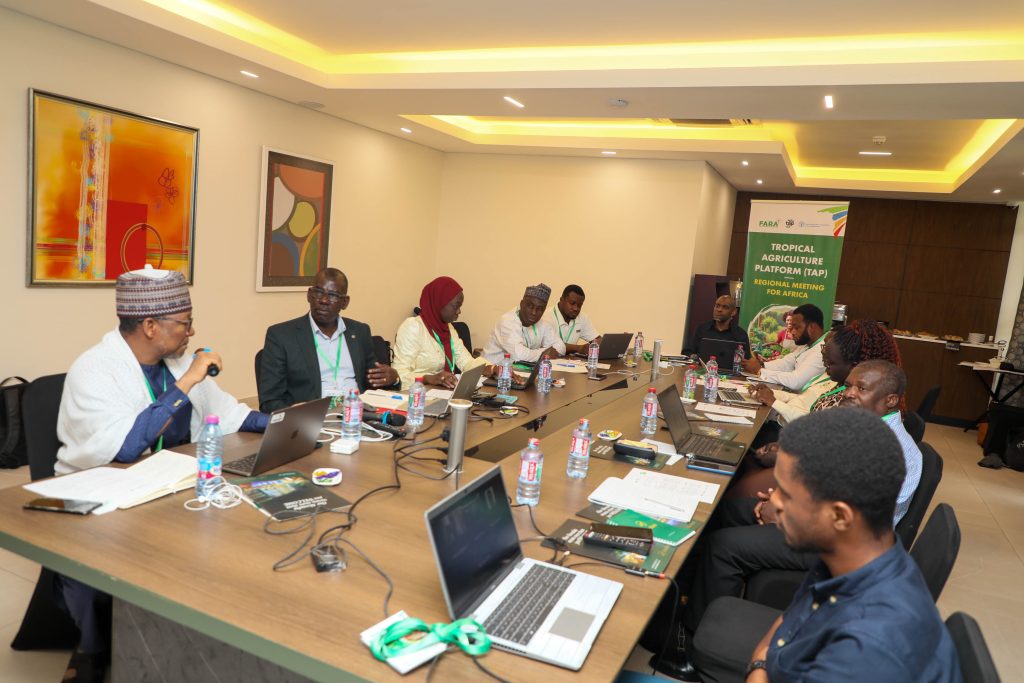
Accra, Ghana – The Forum for Agricultural Research in Africa (FARA) welcomed stakeholders from across the continent to Accra for the Regional Meeting for Africa on the Tropical Agriculture Platform (TAP). The gathering, held under the auspices of the Food and Agriculture Organization (FAO), focused on strengthening capacity development to address Africa’s agricultural challenges.
In his opening remarks, Dr. Aggrey Agumya, Executive Director of FARA, lauded participants for their commitment to advancing TAP’s agenda despite the busy end-of-year season. “Your choice to prioritize this meeting is a testament to your unwavering dedication to improving African agricultural systems,” he remarked.
Dr. Agumya thanked the FAO for partnering with FARA to host the event. He also reflected on his personal association with TAP, tracing its evolution from concept to operationalization. “I was privileged to witness TAP’s journey from its inception at the G20 meeting in Paris in 2011 to its official launch in 2012 during the G20 Chief Agricultural Scientists’ meeting in Guadalajara, Mexico,” he shared. He credited FAO’s leadership for transforming the idea of TAP into a globally recognized initiative.
A central theme of the meeting seeks to address the capacity challenges that hinder agricultural development in Africa. Dr. Agumya highlighted the paradox of underutilized resources in agriculture. “While funding is often cited as a constraint, many countries face difficulty absorbing available resources due to capacity gaps. These gaps are not just about numbers but also about fragmentation within the agricultural sector,” he explained.
He pointed to an imbalance in Africa’s research ecosystem: “National Agricultural Research Institutes (NARIs) receive 75% of research funding but possess only 25% of the research capacity. Meanwhile, universities hold 75% of the capacity but receive just 25% of the funding.” Dr. Agumya called for greater integration between universities and research institutes to unlock Africa’s potential in research and innovation.
The timing of the workshop was noted as particularly significant, coming just ahead of the launch of the CAADP-Kampala roadmap. Dr. Agumya commended TAP for engaging the African Agricultural Research and Innovation Institutes (AARIEIs) in validating the next phase of its strategy. “This roadmap belongs to all of us. Its successful implementation will be crucial in scaling up TAP’s tools and methodologies across the continent,” he emphasized.
He reaffirmed FARA’s commitment to addressing capacity challenges in Africa’s agricultural sector. “By harnessing the research capacity in our universities and aligning it with national priorities, we can drive the transformative change needed to meet Africa’s agricultural goals,” he said.
About TAP
The Tropical Agriculture Platform (TAP) is a G20 initiative aimed at strengthening agricultural capacity development worldwide. Focusing on fostering collaboration and innovation, TAP has become a key partner in addressing the systemic challenges facing agriculture in Africa.
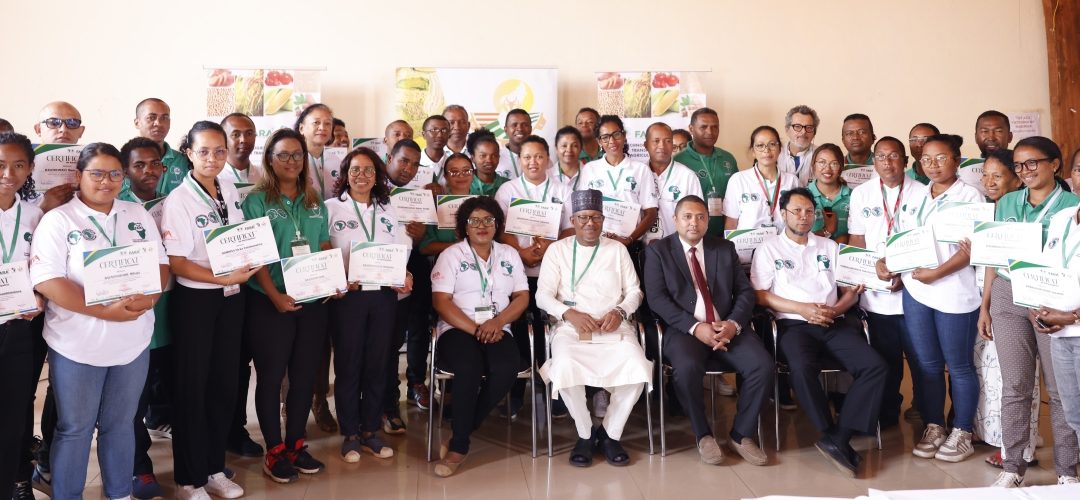
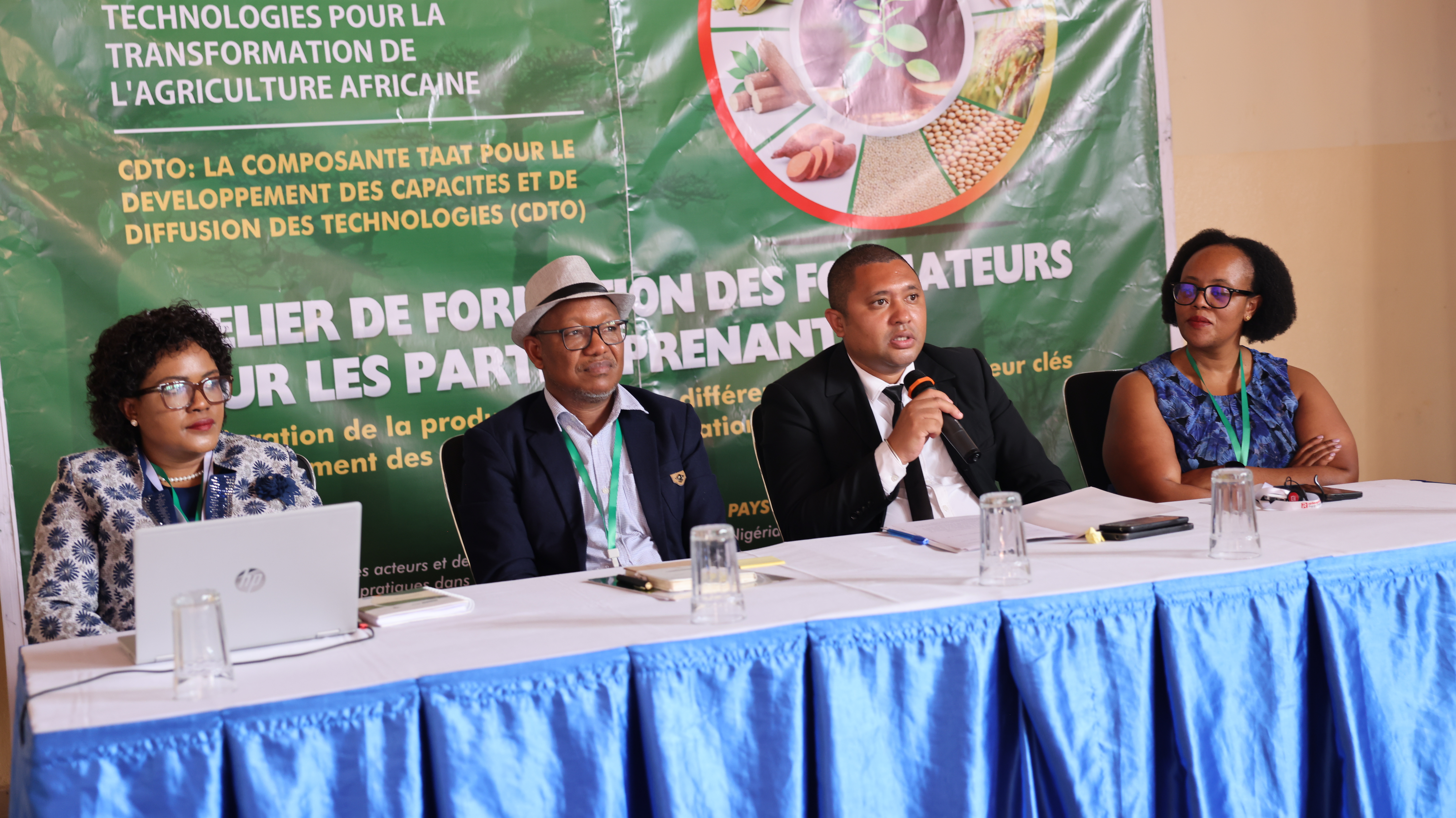
The Centre for Coordination of Agricultural Research and Development for Southern Africa (CCARDESA) attended a pivotal Stakeholders’ Training of Trainers (ToT) workshop from October 28 to 31, aimed at enhancing agricultural value chains and strengthening Innovation Platforms (IPs) under the Technologies for African Agricultural Transformation (TAAT) initiative. The workshop brought together about 60 participants from various sectors of the agricultural community in Madagascar.
The event was officially opened by Mr. Randrianaivomanana Andritiana Luc, Director General of La Coordination Générale des Projets et Partenariats (CGPP), who underscored the Madagascan government’s commitment to promote agriculture, food security, and nutrition. He acknowledged the collaborative efforts by regional and continental partners such as CCARDESA, the Forum for Agricultural Research in Africa (FARA), the African Development Bank (AfDB), and CGIAR Centers to strengthen the agricultural sector.
In her address, Ms. Futhi Magagula, CCARDESA Programmes Officer, highlighted CCARDESA’s crucial role in the SADC region in coordinating collaborative research to develop and disseminate improved agricultural technologies. She discussed CCARDESA’s leadership in the regional implementation of the Food Systems Resilience Programme (FSRP), which includes Madagascar along with Malawi, Tanzania, and Comoros.
The workshop was facilitated by FARA, as the organization that has been commissioned by the AfDB to lead the Capacity Development and Technology Outreach (CDTO) compact of the TAAT initiative. CDTO’s mission is to enhance capacities within the TAAT ecosystem by deploying an IP approach to meet the objectives of the AfDB’s Feed Africa Initiative.
TAAT aims to double productivity for crops, livestock, and fish, targeting over 40 million smallholder farmers by 2025. The initiative seeks to generate an additional 120 million metric tons of food and lift 130 million people out of poverty across the continent.
Dr. Abdulrazak Ibrahim, FARA’s Institutional Capacity & Future Scenarios Cluster Lead Specialist, emphasized the importance of collaboration among TAAT partners and stakeholders.“TAAT is all about taking technologies from the shelf and delivering them to the last mile,” he remarked. This collaborative approach aims to ensure the rapid dissemination of knowledge and technology in agricultural practices across Africa.
During the workshop, participants established around 12 IPs focusing on key commodities such as cassava, maize, rice, sorghum, beans, peanut, sweat potato, irish potato, cocoa, bio fertilizer, and dairy milk. These platforms were encouraged to register on the FARA portal to access small grant support from TAAT, enabling them to implement activities and seek additional funding opportunities.
The successful hosting of this workshop marks a significant step towards improving food systems in Madagascar and underscores the commitment of stakeholders working together to create lasting change in the agricultural landscape of Africa.
In Africa, the agriculture sector contributes to the economic development and livelihood improvement of a majority of the population. In 2022, this sector contributed 17% of sub-Saharan Africa’s GDP. As a continent with a vibrant youth population and productive land, Africa possesses the potential to provide sufficient and nutritious food for its people, thereby mitigating hunger and poverty. However, challenges such as insufficient resources, climate change, inability to leverage and implement technological innovations, limited access to knowledge and many others continue to hinder advancement within the sector.
With the rise in innovation technologies, it is inherent for the sector to leverage some of these to improve agricultural yield. Innovation platforms (IPs) serve as a space for learning, experience sharing, collaboration, identification of challenges, and provision of possible solutions. These platforms bring together different stakeholders from every level of the agricultural value chain to discuss issues towards attaining a common objective. Based on data from the Observatory for Africa Agriculture Knowledge Hub, FARADataInformS, there are more than 400 agricultural Innovation Platforms established across Africa. Some countries with the highest number of IPs include Nigeria (93), Kenya (43), DRC (40) and Ghana (31). However, some of the stakeholders within these IPs lack the required capacity and resources to maintain and support the scaling of technologies and good practices for which they were formed in the first place. This is often due to low engagement among stakeholders at different levels of the value chain, discordant views and understanding of the IPs and their visions, as well as paucity of up-to-date information to allow them to thrive.
There is therefore a need to provide these stakeholders with the required capacity and opportunity to network and collaborate to ensure synergy amongst these actors. This will contribute to providing them with a better understanding of the IP model, address working in silos, and provide a close link between technology providers and those who will take up and upscale these technologies.
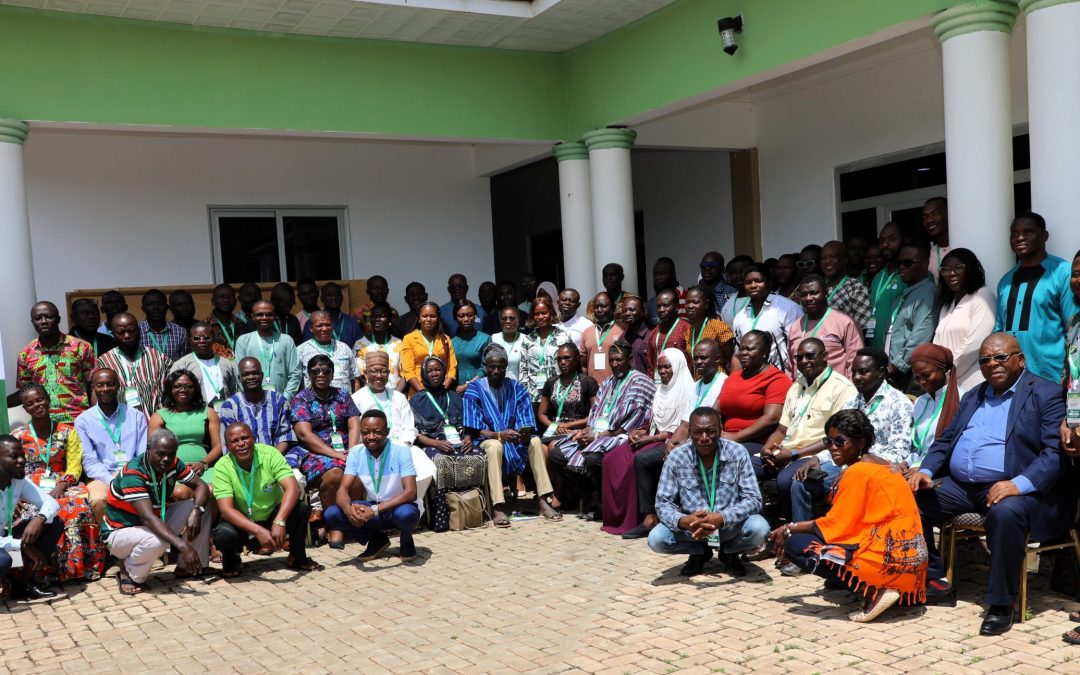
In a stakeholders’ training of trainers’ workshop held at the Pioneer Hotel in Tamale, Ghana, the Technologies for African Agricultural Transformation (TAAT) through its Capacity Development and Technology Outreach (CDTO) compact and partners, including IITA, AATF, World Vegetables, FARA and CSIR-SARI, sought to address some of these IP challenges. The workshop, which was held between September 2nd and 6th, 2024, brought together over 120 stakeholders of the maize, rice, soybean, and vegetable value chains to strengthen their capacities in the establishment and management of IPs to facilitate the adoption of proven technologies for sustainable impact in the agricultural sector.
In their welcome and introductory remarks, the speakers commended the participants for their commitment and admonished them to be ambassadors in promoting good agricultural practices in Ghana.
The highly interactive sessions were filled with discussions, teamwork, case studies, and presentations, and aimed at fostering a culture of experience sharing and peer learning among participants. The modules covered included setting up an IP, governance of an IP, and resource mobilization in an IP, amongst others. Through these sessions, participants were able to understand the fundamentals of an IP, including key concepts and principles, setting up, functioning, facilitation, governance, monitoring, evaluation, and learning, conflict management, negotiation, and contracting.
Group of Maize IP Members pose for Picture during the Training workshop
Despite their significance, Innovation Platforms (IPs) cannot operate effectively without stakeholders’ ability to mobilize and manage resources. To address this, participants engaged in sessions on resource mobilization, financial models within IPs, and business plan development. Through value chain analysis exercises, participants identified key activities and stakeholders at each stage of the value chain, mapped the relationships and functions between them, and highlighted the challenges faced by each stakeholder. This practical exercise allowed participants to apply the theoretical knowledge they gained during the sessions, bridging the gap between theory and practice.
The module on conflict management sparked very interesting discussions and diverse perspectives from participants who shared their experiences on some conflicts they had been involved in and how they tackled them.
‘A difference in perception is at the heart of conflicts.’ – Dr Latifou Idrissou, Lead IP Trainer and Facilitator, University of Parakou, Benin.
The discussion on innovation versus invention brought thought-provoking examples and explanations for participants’ understanding of the two concepts.
An important workshop highlight was a session during which various Commodity Compacts (maize, soybean, rice, and vegetables) collaborated in teams to develop work plans, applying the concepts learned throughout the five-day program. These work plans enabled each group to identify key stakeholders, outline objectives, define indicators, plan activities, assign roles and responsibilities, estimate costs, set timelines, and project expected results.
Several actions common to all compacts focused on strengthening the capacity of seed producers and enhancing partnerships and collaboration across all levels of the value chain to boost yields and reduce post-harvest losses. These efforts align with the primary objectives of the training.
“If Africa is an agrarian community, we can’t rely on the West to feed us. The jobs that most of us are looking for are within our reach. All we need to do is to adopt the strategies and knowledge we have gained and within the next 12 months, we will have improved.” – Omikunle Oluwaseun Ayoola, Soybean compact representative, IITA.
“I came as a trainee and I can say that I am well equipped on how to establish, run, and govern an IP and I believe the stakeholders are also well equipped.” – Joyce Njuguna, Maize compact representative, AATF.
In his concluding remarks, Dr Abdulrazak Baba Ibrahim, Lead Specialist for Capacity Development and Future Scenarios, and the TAAT-CDTO Coordinator assured participants of the commitment of all compacts to the activities and sustainability of the IPs. To close the event, Chief Mohammed Rashad Abdulai, Secretary to the Paramount Chief of the Gukpegu Traditional Council, Tamale, commended the participants and organizers for their active participation. He emphasized the need to think outside the box to support the advancement and sustainability of Ghana’s agricultural transformation agenda.
“We must put into practice all that we have learned from here and bear in mind that there is more room to learn. To realize our full potential, we need to start self-organizing and avoid relying solely on donor agencies for support”, Chief Rashad concluded.
Author Affiliations
[1] Mabel Shu Lum is KM4AgD Fellow, Certified KM Manager for Sustainable Development and the Knowledge Management Assistant at the West Africa Civil Society Institute (WACSI)
[2] Benjamin Abugri is a KM and Project Management Practitioner and the KM, Digitalization and Learning Cluster Lead Specialist at the Forum for Agricultural Research in Africa (FARA)
[3] Abdulrazak Ibrahim is a Scientist and Capacity Development and Futures Cluster Lead Specialist at the Forum for Agricultural Research in Africa (FARA)
Malawi’s Richard Mkandawire and Nigeria’s Umezuruike Linus Opara have been awarded with the inaugural Research and Innovation Competence in Agriculture Awards.
The two were awarded for their notable contributions to the research development and capacity building of Africa’s agriculture and food systems.
The awards were given by the Forum for Agriculture Research in Africa (FARA) and the African Export Import Bank (Afreximbank) during the Bank’s annual meetings in the Bahamas.
Mkandawire, the Africa Director at the Alliance for African Partnership, was awarded with the ‘Impactful and Evidence based Policies Award’ for his foundational role in conceptualising the Comprehensive African Comprehensive Africa Agriculture Development Programme (CAADP) and catalysing its domestication in African countries.
Mkandawire is also the Chair for Malawi National Planning Commission, and the Former Head of CAADP at the New Partnership for Africa’s Development (NEPAD) where he was the principal architect in the design and adoption of CAADP.
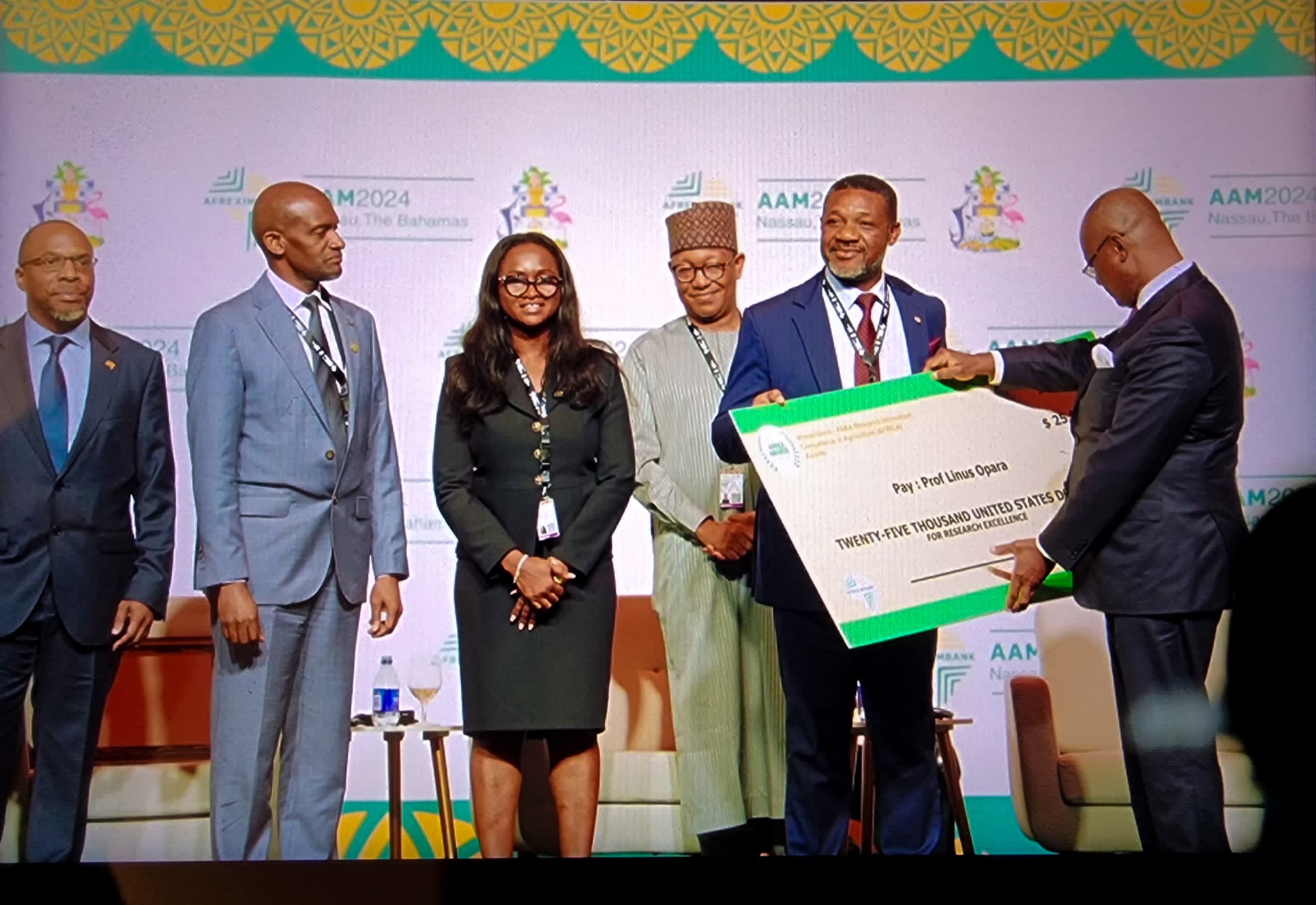
Linus Opara Umezuruike, Distinguished Professor in Post-harvest Technology, Faculty of Agri-Sciences at Stellenbosch University, was awarded the ‘Africa Research Excellence Award’ in recognition of his contribution to developing and validating a novel integrated value chain approach to post harvest research, innovation and capacity building in Africa.
Prof. Linus Opara receiving his Award and $25,000 Prize
Umezuruike is also the Director of UNESCO Biotechnology Centre in Nigeria.
Umezuruike received $25,000 prize, while Mkandawire received $10,000 prize.
African Export-Import Bank (Afreximbank) and the Forum for Agricultural Research in Africa (FARA) are pleased to announce winners of the inaugural Afreximbank-FARA Research, Innovation and Competence in Agriculture (AFRICA) Awards.
These prestigious awards honour individuals, groups, or established organisations that have made outstanding contributions towards improving food and nutritional security, income generation, resilience and natural resource management in Africa through research, innovation, agriprenuership and policy advocacy in the food and agriculture domain.
The AFRICA Awards encompass three categories: (i) the Africa Research Excellence Award, (ii) the Innovation-based Entrepreneurship Award, and (iii) the Impactful and Evidence-based Policies Award.
The AFRICA Awards selection process is overseen by an Independent Awards Selection Committee composed of globally recognised experts.
Following a highly competitive selection process, FARA and Afreximbank are pleased to announce the two laureates of the 2024 AFRICA Awards. They are:
Umezuruike Linus Opara
Distinguished Professor and holder of the South African Research Chair in Postharvest Technology, Faculty of AgriSciences, Stellenbosch University, South Africa. Professor Opara, a national of Nigeria, is the recipient of the Africa Research Excellence Award in recognition of his contribution to developing and validating a novel integrated value-chain approach to post-harvest research and innovation, one crop at a time. His work is acclaimed for reducing post-harvest losses, enhancing value addition, and connecting production to local, regional, and international African markets. Additionally, Professor Opara is recognised for his contributions to building Africa’s capacity for research and innovation in post-harvest science and technology through cutting-edge research, new knowledge creation, and mentoring young, outstanding researchers. Professor Opara holds a Bachelor of Engineering and Master of Engineering degree from the University of Nigeria, Nsukka, and a PhD from Massey University, New Zealand. Professor Opara has published extensively, is a highly cited researcher, and has received several other prestigious awards.
Professor Richard Mkandawire
Africa Director, Alliance for African Partnership; Chair, Malawi National Planning Commission and formerly the Head of the Comprehensive Africa Agriculture Development Programme (CAADP) at NEPAD
Professor Mkandawire, a Malawian national, is the recipient of the Impactful and Evidence-based Policies Award for his foundational role in conceptualising CAADP and catalysing its domestication in African countries. CAADP is credited with elevating the attention and increasing the investments African countries are devoting to agriculture.
Professor Mkandawire has consistently and vigorously advocated for policy processes that are inclusive and supported by evidence. He has catalysed very productive partnerships among policy analysts, policymakers, the private sector, knowledge institutions and other actors in the food and agriculture system. These partnerships have been instrumental in improving the policy environment needed to drive Africa’s agricultural transformation. Professor Mkandawire holds a PhD in development studies and an MSc in agricultural extension from the University of East Anglia, United Kingdom. He also holds an MA in Rural Sociology from the University of Missouri, USA. He has published extensively on agriculture development policy and related areas and has been honoured with several other notable awards.
About Afreximbank:
African Export-Import Bank (Afreximbank) is a Pan-African multilateral financial institution mandated to finance and promote intra-and extra-African trade. For 30 years, the Bank has been deploying innovative structures to deliver financing solutions that support the transformation of the structure of Africa’s trade, accelerating industrialization and intra-regional trade, thereby boosting economic expansion in Africa. A stalwart supporter of the African Continental Free Trade Agreement (AfCFTA), Afreximbank has launched a Pan-African Payment and Settlement System (PAPSS) that was adopted by the African Union (AU) as the payment and settlement platform to underpin the implementation of the AfCFTA. Working with the AfCFTA Secretariat and the AU, the Bank is setting up a US$10 billion Adjustment Fund to support countries in effectively participating in the AfCFTA. At the end of September 2023, Afreximbank’s total assets and guarantees stood at over US$33.4 billion, and its shareholder funds amounted to US$5.8 billion. Afreximbank has investment grade ratings assigned by GCR (international scale) (A), Moody’s (Baa1), Japan Credit Rating Agency (JCR) (A-) and Fitch (BBB). Afreximbank has evolved into a group entity comprising the Bank, its impact fund subsidiary called the Fund for Export Development Africa (FEDA), and its insurance management subsidiary, AfrexInsure, (together, “the Group”). The Bank is headquartered in Cairo, Egypt.
About FARA: FARA is the continental apex body for agricultural research and innovation (R&I). Mandated by the African Union Commission (AUC), FARA facilitates pan-African actions to effectively deploy R&I to increase the continent’s agricultural productivity and competitiveness to feed its fast-growing population. FARA works with Sub-Regional Organisations (SROs), which are the West and Central African Council for Agricultural Research and Development (CORAF/WECARD), Association for Strengthening Agricultural Research in Eastern and Central Africa (ASARECA), Centre for Coordination of Agricultural Research and Development for Southern Africa (CCARDESA) and North African Sub-Regional Organization (NASRO) as well as the African Forum for Agricultural Advisory Services (AFAAS). FARA aims to facilitate strategic (continent-wide) collective agricultural research and innovation actions to increase agricultural productivity and competitiveness. The collaborative efforts are focused on strengthening the capacity for agricultural innovation on a country-specific basis. FARA is an international organisation with full diplomatic status in Ghana.




 “
“

 “If Africa is an agrarian community, we can’t rely on the West to feed us. The jobs that most of us are looking for are within our reach. All we need to do is to adopt the strategies and knowledge we have gained and within the next 12 months, we will have improved.” – Omikunle Oluwaseun Ayoola, Soybean compact representative, IITA.