By: Benjamin Abugri, Shaquille Penanneach & Daniel Kweitsu
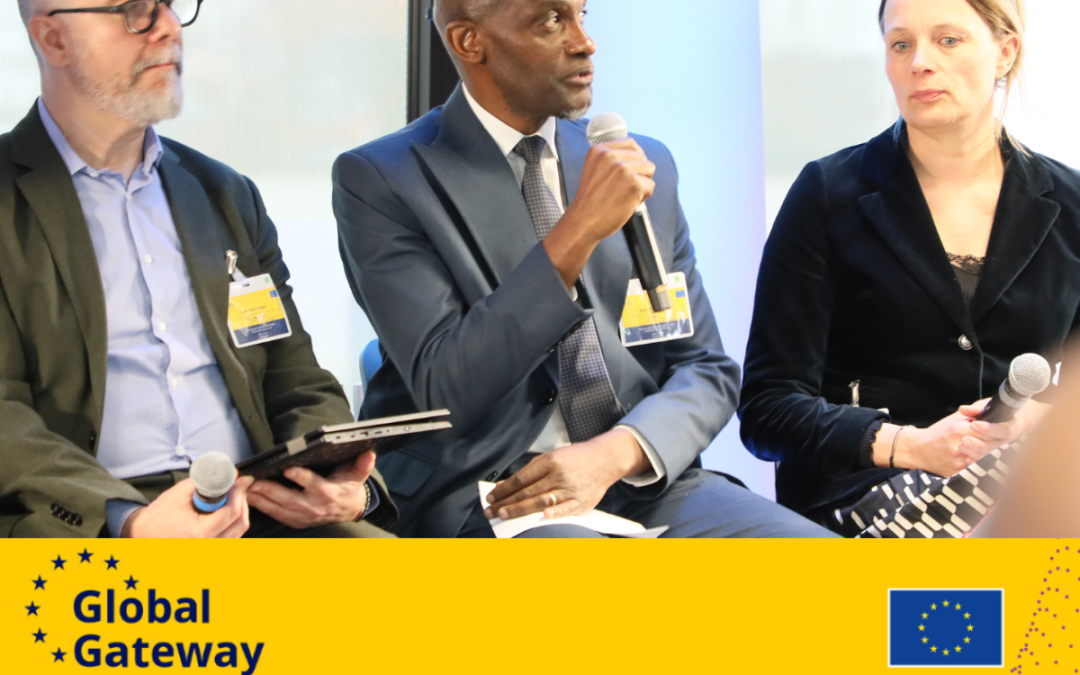
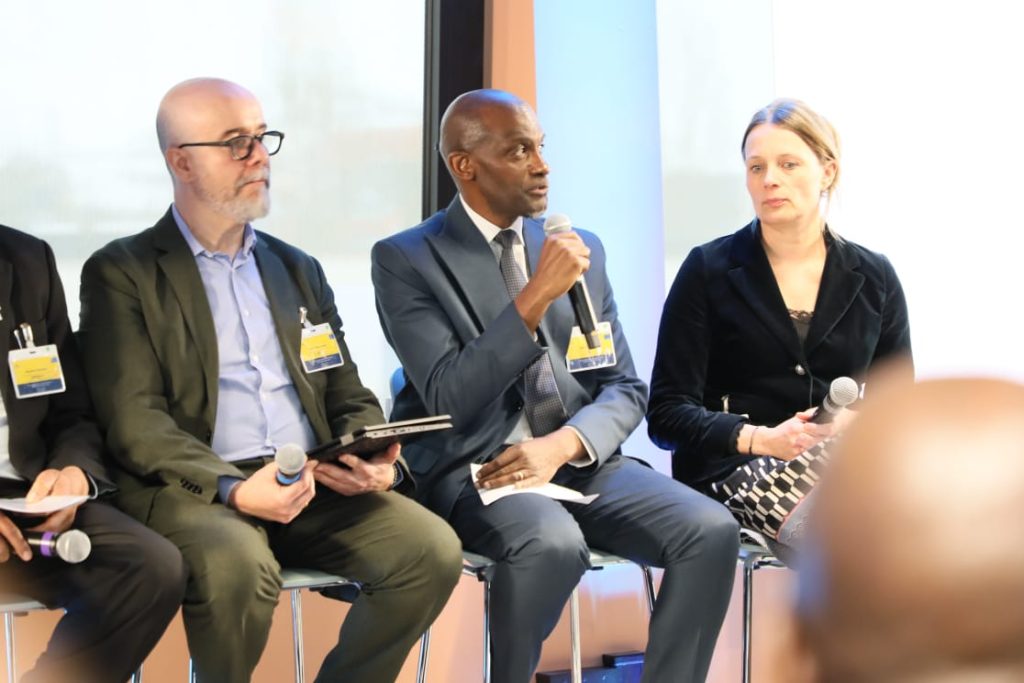
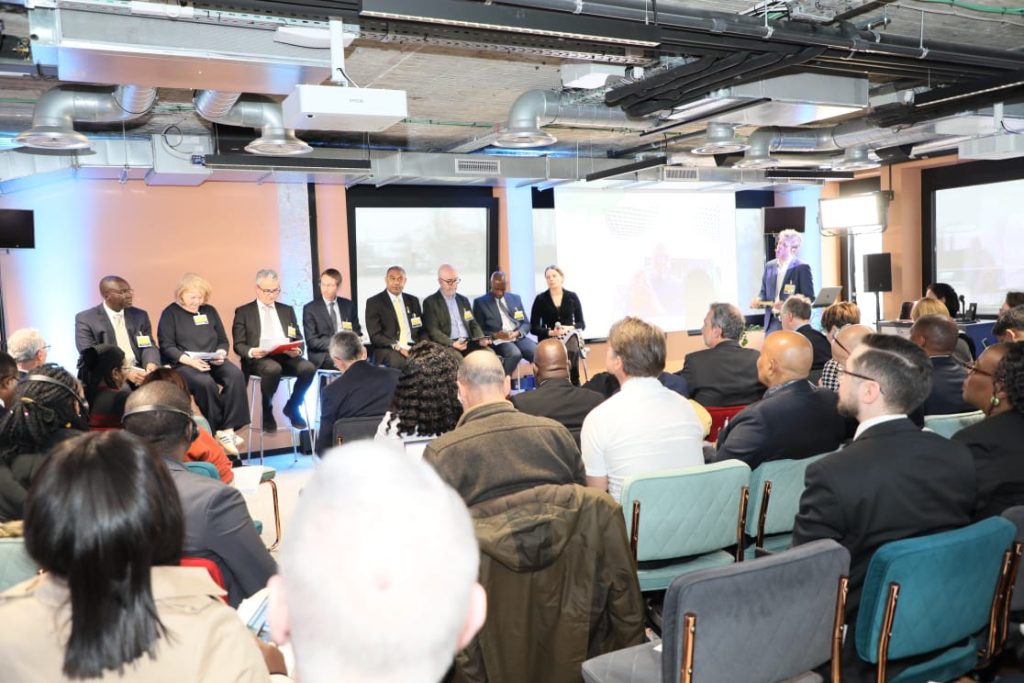
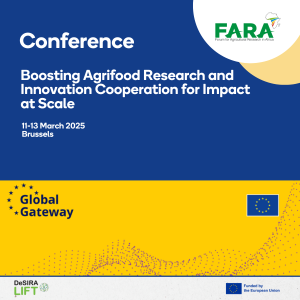
Brussels, March 11, 2025 – The Executive Director of the Forum for Agricultural Research in Africa (FARA), Dr Aggrey Agumya, took center stage at the ongoing European Union (EU) Conference, “Boosting Agrifood Research and Innovation Cooperation for Impact at Scale”. His participation in a high-level plenary panel underscored the critical role of EU-Africa partnerships in driving impactful research and innovation in Food, Nutrition, and Sustainable Agricultural Systems (FNSSA).
Addressing the session titled “What is the EU R&I Cooperation Landscape: Policies, Partnerships and Instruments?”, Dr. Agumya emphasized the necessity of a mutually beneficial Africa-Europe partnership. As the continental apex organization for R&I in FNSSA and the technical arm of the African Union Commission (AUC) and the African Union Development Agency (AUDA), FARA is at the heart of Africa’s agricultural research and innovation ecosystem.
In his intervention, Dr. Agumya provided insights into the institutional structure of agricultural research and innovation in Africa, highlighting its multi-tiered framework. At the national level, the National Agricultural Research Systems (NARS) play a crucial role, complemented by Sub-Regional Organizations (SROs) such as ASARECA, CCARDESA, CORAF, and NAASRO. At the continental level, FARA and the African Forum for Agricultural Advisory Services (AFAAS) provide leadership and coordination.
Dr Aggrey Agumya addressing the session
Speaking on priorities for R&I in FNSSA, Dr. Agumya stressed the importance of enhancing the impact of research investments by embedding them within broader development goals, market systems, and knowledge-sharing initiatives. He also called for scaling up innovations, particularly in investments, capacities, and processes, to ensure that impactful agricultural research outputs reach their full potential.
Reflecting on best practices, he cited successful examples where research has been effectively integrated into development programs. Notable among them are the Technologies for African Agricultural Transformation (TAAT), the Desira Initiative, and the Platform for African-European Partnership on Agricultural Research for Development (PAEPARD). The Comprehensive Africa Agriculture Programme (CAADPXP4) was also highlighted as a crucial initiative fostering a strong R&I ecosystem.
Dr. Agumya further underscored the significance of science-policy engagement in advancing Africa’s agricultural agenda. He referenced key initiatives such as the Soils Initiative for Africa, the Comprehensive Africa Agriculture Development Programme (CAADP) – Kampala Declaration, and the African Food Systems Initiative, stressing that while commitments have been made, implementation has been lacking. He noted that over 93% of AU decisions from 2021 to 2023 remain unimplemented, calling for greater accountability and execution.
Looking ahead, he urged stakeholders to bridge the gap between aspiration and action, noting that no African country is currently on track to meet CAADP targets. He identified improved planning, execution, and investment in R&I as critical steps toward achieving these goals. Additionally, he emphasized the need to move beyond traditional Africa-Europe collaborations, advocating for triangular partnerships with Latin America, the Caribbean, and the Asia-Pacific region through a Global NARS Consortium.
Dr. Bernard Mallet delivering the keynote address
The session was set in motion by a keynote address from Dr. Bernard Mallet, a senior scientist specializing in tropical forestry and international agricultural research. His extensive experience in leading EU-AU partnerships on food security and sustainability provided a strong foundation for the discussions.
Joining Dr. Agumya on the distinguished panel were key representatives from European and African institutions, including:
Mahaman Bachir Saley, Officer-in-Charge, Science, Technology, and Innovation Division, African Union ESTI Department
Nienke Buisman, Head of Unit, International Cooperation (Asia, Pacific, Africa, Middle East), Directorate-General for Research and Innovation, European Commission
Luis Viva-Alegre, Team Leader, Research and Innovation Unit, Directorate-General for Agriculture and Rural Development, European Commission
Peter Werheim, Head of Unit, Food Systems and Bioeconomy, Directorate-General for Research and Innovation, European Commission
Agnieszka Skuratowicz, Head of Unit, Youth, Education, Research, and Culture, Directorate-General for International Partnership, European Commission
Mathieu Le Grix, Head of Division, Agriculture, Rural Development, and Biodiversity, Agence Française de Développement (AFD)
This engaging panel discussion contributed to ongoing policy and investment conversations aimed at enhancing agrifood R&I cooperation between Africa and Europe. The insights shared are expected to inform future collaborations and drive impactful agricultural innovations at scale.
By Benjamin Abugri, Richard Kombat and Shaquille Pennaneach
February 20, 2025 – The Forum for Agricultural Research in Africa (FARA), in collaboration with the ORCaSa project and OCP Africa, successfully hosted a webinar on “Strengthening Collaboration on Soil Carbon: Roles and Opportunities for the Africa Chapter of the International Research Consortium (IRC-SC).” The event attracted about 200 participants from across the world, reflecting a growing global interest in soil carbon management and its implications for sustainable agriculture and climate resilience.
Moderated by Prof. Oluwole Fatunbi, Director for Research and Innovation at FARA, the webinar featured a distinguished panel of speakers, including Dr Aggrey Agumya (Executive Director, FARA), Dr Suzanne Reynders (ORCaSa Project), Dr Joseph Kugbe (OCP Africa), and Mathieu Nogues (ORCaSa Project). The discussions centered on the importance of soil carbon management and strategies to enhance Africa’s contribution to global efforts in soil health, climate change mitigation, and food security.
In his opening remarks, Dr. Aggrey Agumya emphasized four key points:
1. Soil Carbon Management is Fundamental: Dr. Agumya highlighted the critical role of soil carbon in processes essential to life, resilience, and sustainable development. He linked soil health to climate change mitigation, adaptation, food security, and nutrition security, stressing the urgency of addressing soil degradation.
2. Science and Capacity Building: Recognizing the importance of scientific research, he underscored the need for Africa to develop its own capacity in soil carbon management. He called for investments in generating new knowledge while also intelligently borrowing from global research advancements.
3. Overcoming Fragmentation: Dr. Agumya noted that fragmentation has been a significant barrier to Africa’s development, affecting political, economic, and scientific cooperation. He stressed the need for mechanisms that enhance coordination and cooperation, citing FARA and the ORCaSa project as critical initiatives driving collaboration and economies of scale.
4. Strengthening Africa’s Role in Global Initiatives: He acknowledged that while other continents have established their International Research Consortium (IRC) nodes, Africa is in the process of catching up. He emphasized that this webinar serves as a platform for strategizing how Africa can accelerate its engagement and contribute meaningfully to global soil carbon management efforts.
Dr. Agumya concluded by encouraging active participation from stakeholders, assuring that FARA will follow up on the discussions and ensure continuous engagement beyond the webinar.
In his closing remarks, Dr. Agumya extended his gratitude to the key stakeholders driving this initiative, particularly acknowledging the leadership and dedication of those leading the process.
“My first comment is to thank you for leading this process, for being the champion, for the passion that you put into this work, and for the intellectual leadership that you provide.”
Dr. Agumya also acknowledged Mathieu Nogues for his global efforts in establishing IRC nodes across different continents and leading the ORCaSa project and Dr. Joseph Kugbe’s enlightening presentation, highlighting Africa’s capacity in soil carbon management. However, he noted that while Africa has the expertise, it remains scattered and fragmented, emphasizing the need for mechanisms like the IRC to unify these efforts and create a critical mass for meaningful progress.
He further appreciated all participants for investing their time in this first engagement and recognized their valuable contributions to shaping the African chapter of the IRC on soil carbon.
“At FARA, we believe in inclusivity in continental initiatives, and this is one of them. This is just the beginning of a series of engagements, and we will continue to refine and build upon the insights shared today. We will share the key takeaways, and I invite you all to participate in subsequent discussions,” he added.
With these remarks, Dr. Agumya formally closed the webinar, reinforcing FARA’s commitment to following up on the discussions and ensuring continued engagement in improving soil carbon management in Africa.
The webinar marks a significant step in fostering international collaboration, knowledge-sharing, and policy advocacy for African soil carbon management. As discussions continue, this initiative is expected to catalyze tangible actions that contribute to improved soil health, sustainable land management, and climate resilience across the continent.
Kindly find the presentations by Mathieu Nogues and Dr. Joseph Kugbe below
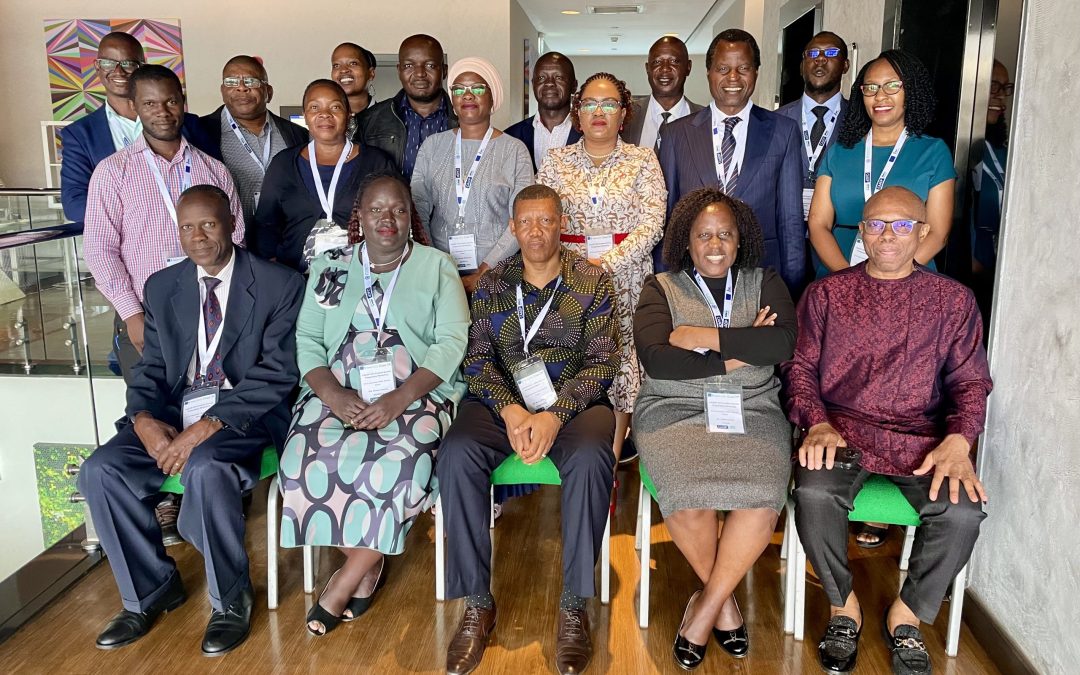
The Comprehensive Africa Agriculture Development Programme Ex-Pillar IV (CAADP-XP4) partners have successfully concluded a five-day preparatory workshop in Nairobi, Kenya, marking a significant step towards finalizing the project’s endline survey and developing critical knowledge management (KM) products that will showcase the initiative’s impact across Africa.
Hosted by CCARDESA, with the participation of FARA, CORAF, AFAAS, and ASARECA, the workshop was instrumental in aligning methodologies, consolidating project learnings, and charting a roadmap for project closure in 2025.
Key Outcomes from the Workshop
✅ 13 Most Significant Change Stories were drafted for finalization and publication, capturing the real-life impact of CAADP-XP4 on agricultural research, innovation, and policy influence.
✅ Sustainability measures were clearly defined to support post-project resource mobilization and ensure continued impact beyond the project’s closure.
✅ The Monitoring, Evaluation, and Learning (MEL) database was updated with refined indicators, allowing for a more robust measurement of project outcomes, particularly in gender equity, youth empowerment, and capacity-building.
✅ Gender-based reporting was recognized as a critical driver in achieving CAADP-XP4’s goals, with survey findings demonstrating how gender-responsive interventions have contributed to progress.
✅ A detailed roadmap was established for conducting the endline survey and preparing for the final project closure in 2025, ensuring compliance with donor requirements and maximizing knowledge dissemination.
Commitment to Sustainable Agricultural Innovation
The workshop participants, who were largely technical leads from CAADP-XP4’s implementing organizations, reaffirmed their commitment to ensuring that the endline survey and KM products effectively capture the program’s achievements. This effort is expected to provide valuable lessons for scaling innovative partnerships and agricultural research models across the continent.
Through structured working sessions, the consortium members developed strategies for strengthening partnerships, mobilizing future resources, and positioning African agricultural research organizations for long-term impact.
Next Steps: Capturing and Showcasing CAADP-XP4’s Legacy
📌 Finalize and publish the Most Significant Change Stories to illustrate key transformations driven by the project.
📌 Conduct the endline survey to assess CAADP-XP4’s impact comprehensively and inform future agricultural initiatives.
📌 Develop strategic knowledge products, including reports, policy briefs, and digital content, to enhance visibility, advocacy, and uptake of best practices.
📌 Leverage findings to mobilize resources and influence continental agricultural policy and innovation frameworks.
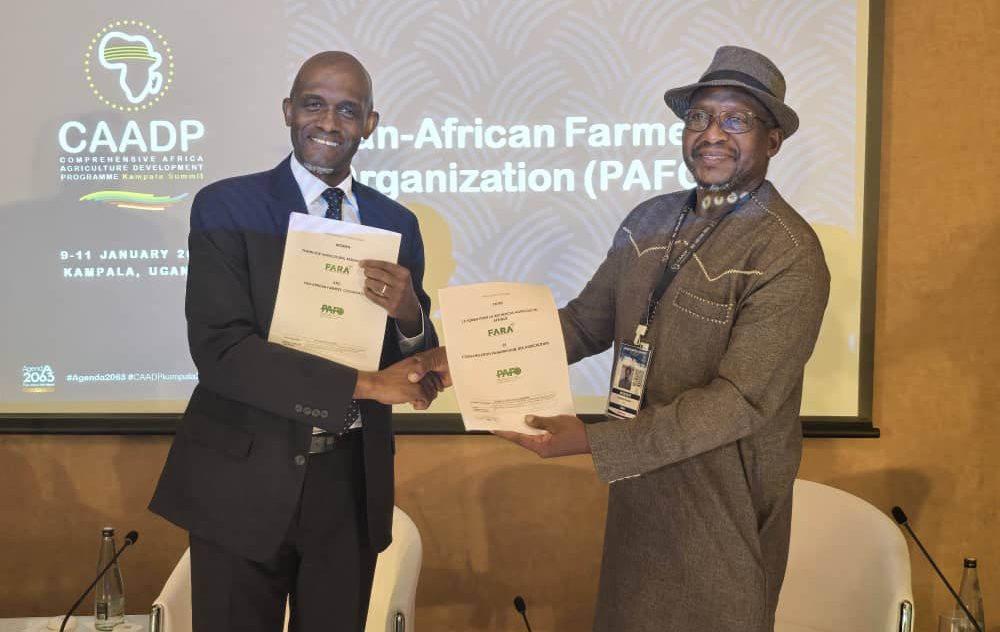
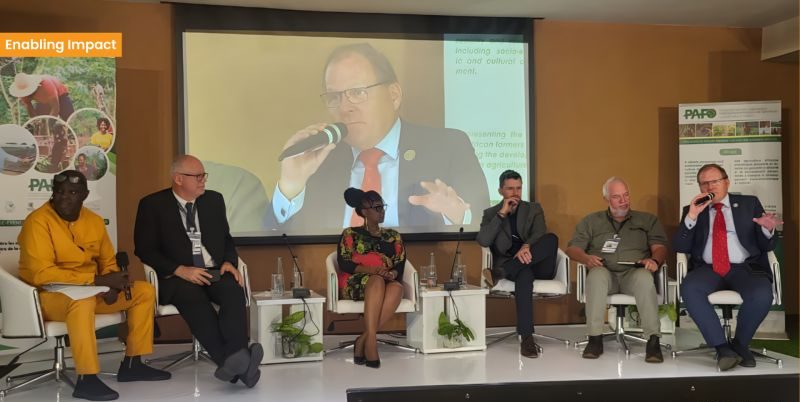
Kampala, Uganda – January 10, 2025: In a significant move to advance African agriculture, the Forum for Agricultural Research in Africa (FARA) and the Pan-African Farmers Organization (PAFO) signed a Memorandum of Understanding (MoU) at the CAADP-3.0 Summit in Kampala. This partnership aims to address key issues in agricultural development, emphasizing the central role of farmers in transforming the continent’s food systems.
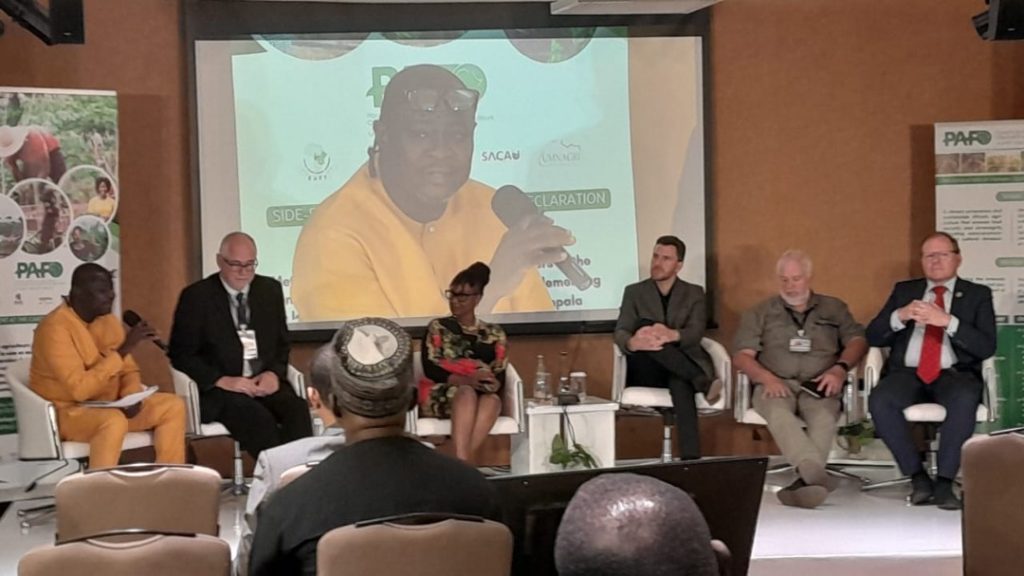
The MoU signing ceremony marked the conclusion of a PAFO-led side event titled “Putting Farmers at the Center of CAADP-3.0 Implementation.” The event brought together stakeholders to discuss how to empower farmers and ensure their voices guide agricultural policies and interventions.
Farmers at the Heart of Agricultural Progress
During a panel discussion, Prof. Oluwole Fatunbi, Acting Director of Research and Innovation at FARA, highlighted the pivotal role of farmers in Africa’s agricultural and food systems transformation. Prof. Fatunbi outlined several critical benchmarks for measuring the success of the CAADP-3.0 agenda, including:
Profitability and Sustainability: Enhancing farmers’ business enterprises and livelihoods.
Quality of Life: Improving the overall well-being of farmers.
Proactive Engagement: Encouraging farmers to lead and demand the outputs they need from research and development actors.
“Africa’s farmers must move from being passive participants to proactive leaders in agricultural development,” Prof. Fatunbi asserted. He emphasized the need for farmer organizations to take the initiative in articulating their challenges and driving the agenda for solutions. “Farmers have the right to demand the technologies they need and should not wait to be engaged but should actively engage others.”
Lessons from CAADP’s Past and a Vision for CAADP-3.0
Reflecting on the previous phases of the Comprehensive Africa Agriculture Development Programme (CAADP) agenda, participants called for a more robust and efficient implementation framework for CAADP-3.0. Delays in structuring proper modalities have hindered progress in the past, and stakeholders agreed that Africa’s agricultural challenges cannot afford to wait.
Prof. Fatunbi reiterated that the success of CAADP-3.0 depends on learning from past experiences and ensuring farmers’ needs remain central to the program’s design and execution.
A Partnership for Change
The partnership between FARA and PAFO signals a commitment to building a farmer-centered agricultural future for Africa. By working together, the organizations aim to create actionable pathways to enhance the profitability, sustainability, and quality of life for African farmers while addressing systemic challenges in agriculture.
The collaboration underscores the urgency of transforming Africa’s agriculture and food systems to meet the continent’s aspirations. As CAADP-3.0 takes shape, the active leadership and engagement of Africa’s farmers will be crucial in achieving its vision of a prosperous agricultural sector.
Call to Action
With the signing of this MoU, FARA and PAFO have set the stage for a collaborative approach to addressing the pressing issues in African agriculture. Stakeholders are encouraged to join this movement to ensure that Africa’s farmers are not only at the table but leading the discussions and decisions that will shape the future of the continent’s agriculture.
Kampala, Uganda – January 10, 2025: During a high-profile side event organized by AUDA-NEPAD and the Forum for Agricultural Research in Africa (FARA) at the extraordinary presidential summit for CAADP-3.0, experts underscored the critical role of the private sector in achieving the aspirations of the Soil Initiative for Africa (SIA) and the Africa Fertilizer and Soil Health Action Plan (AFSH-AP).
Prof. Oluwole Fatunbi, Acting Director for Research and Innovation, delivered a poignant message, highlighting that without meaningful engagement with the private sector, these initiatives risk becoming unattainable aspirations. “The private sector operates on profit motives, not charity or development aid frameworks,” Prof. Fatunbi stated. He called for a paradigm shift, urging governments to focus on creating enabling environments rather than direct involvement in fertilizer production, importation, or subsidy schemes.
Addressing Fertilizer Trade Challenges
Prof. Fatunbi revealed a troubling paradox: while much of Africa’s fertilizer production is exported to earn foreign currency, local farmers rely heavily on imported fertilizers. This dynamic poses significant challenges to local manufacturers, particularly due to governments’ inability to provide sufficient hard currency to facilitate fertilizer trade.
Prof. Wole Fatunbi, Acting Director for Research and Innovation, FARA moderating the panel on ‘achieving the aspirations of the Soil Initiative for Africa and the Africa Fertilizer and Soil Health Action Plan
“Fertilizer business is conducted in dollars but sold locally in national currencies,” he noted, emphasizing the financial strain this creates for manufacturers. Moreover, government subsidy programs and payment delays further discourage private sector participation. To address these issues, participants proposed a dual strategy of increasing local fertilizer production and reducing reliance on imports.
Pathway for Sustainable Fertilizer Development
The event highlighted the Africa Fertilizer Finance Mechanism (AFFM) as a vital tool to support local fertilizer manufacturing and promote the use of both organic and mineral fertilizers. Prof. Fatunbi called for the optimization of the AFFM to strengthen Africa’s capacity for self-sufficiency in fertilizer production.
A newly formed Coalition of Private Sector Organizations for Fertilizer Development aims to tackle financing barriers, attract investment, and de-risk fertilizer trade across the continent. This coalition is poised to drive transformative change by ensuring Africa’s fertilizer resources remain on the continent to benefit local farmers, thereby advancing the goals of SIA and AFSH-AP.
A Call for Action
The discussions at the summit reflected a growing consensus: to achieve agricultural sustainability and food security, African governments must facilitate private sector-led fertilizer production while addressing trade and financial barriers. As stakeholders intensify efforts toward implementing the SIA and AFSH-AP, the collaboration between public and private sectors will be critical to ensuring Africa’s soils remain healthy and productive.
The call to action is clear—Africa must seize the opportunity to localize fertilizer production, minimize imports, and empower the private sector to lead the charge for agricultural transformation.